

The 4000 PSI gas pressure washer is one of the most powerful cleaning devices available in both household and light commercial markets. However, “greater power” does not necessarily mean “better results” – for many ordinary household users, it might mean damaging the exterior protective panels, eroding the concrete surface, or completely scuffing the wooden deck. This article will provide you with an in-depth analysis: who truly needs this pressure level of equipment, and who should take a step back and choose a lighter machine.
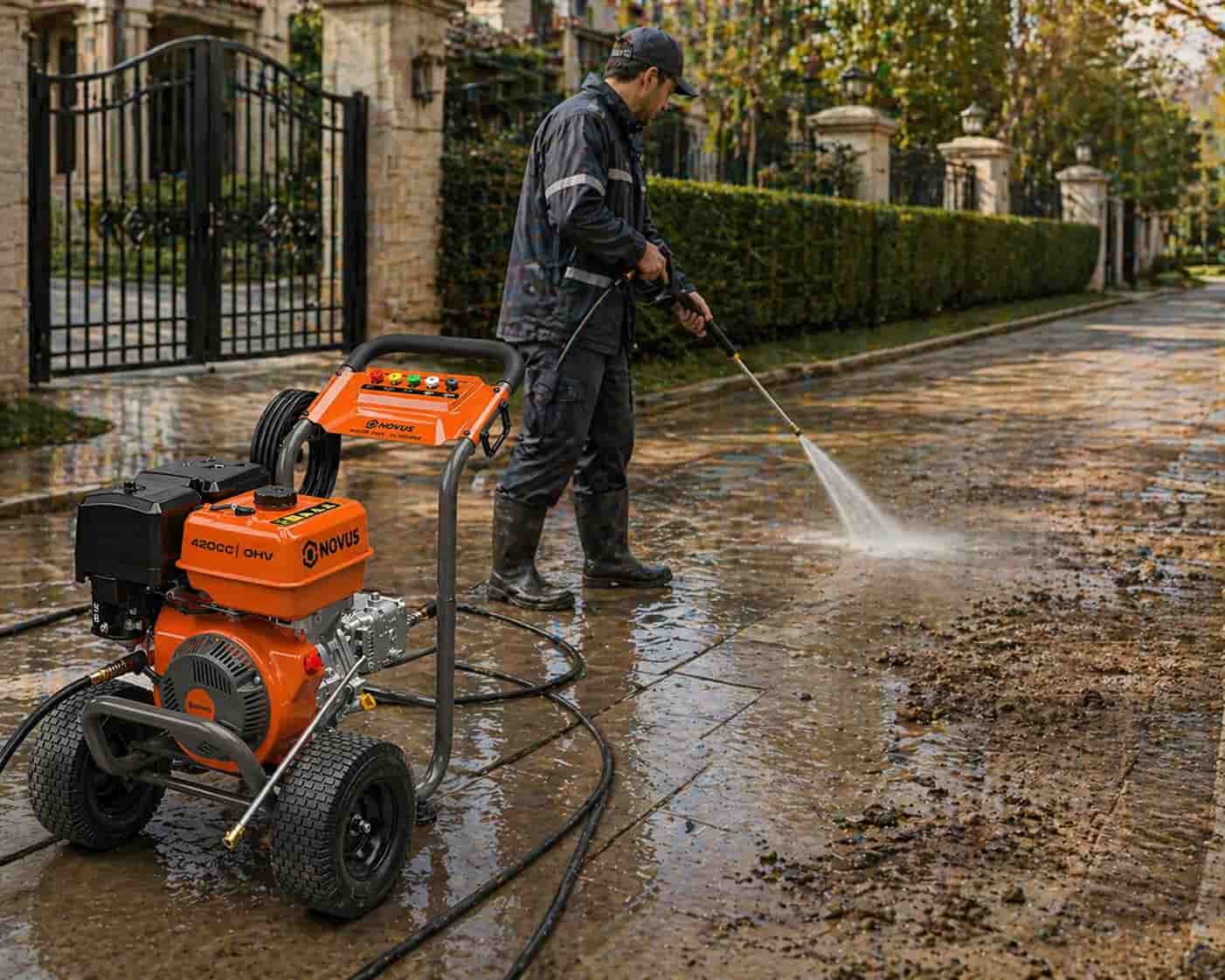
What Does “4000 PSI” Actually Mean?
PSI is the abbreviation for “pounds per square inch”, representing the water pressure strength output by the cleaning machine. GPM serves as another important indicator which measures the flow rate through machines to determine their dirt removal speed. Machines with 4000 PSI typically have a flow rate of 3.5 to 4.0 GPM, and their comprehensive cleaning efficiency (Cleaning Units, CU) can reach 14,000 to 16,000, belonging to the heavyweight category.The upper limit of standard household electric gas pressure washers reaches 1800 to 2300 PSI while mid-range gasoline models operate between 2800 and 3200 PSI. And machines with 4000 + PSI already belong to the professional contractor field, commonly used for fleet cleaning, industrial equipment decontamination, and deep cleaning of concrete with years of oil stains.
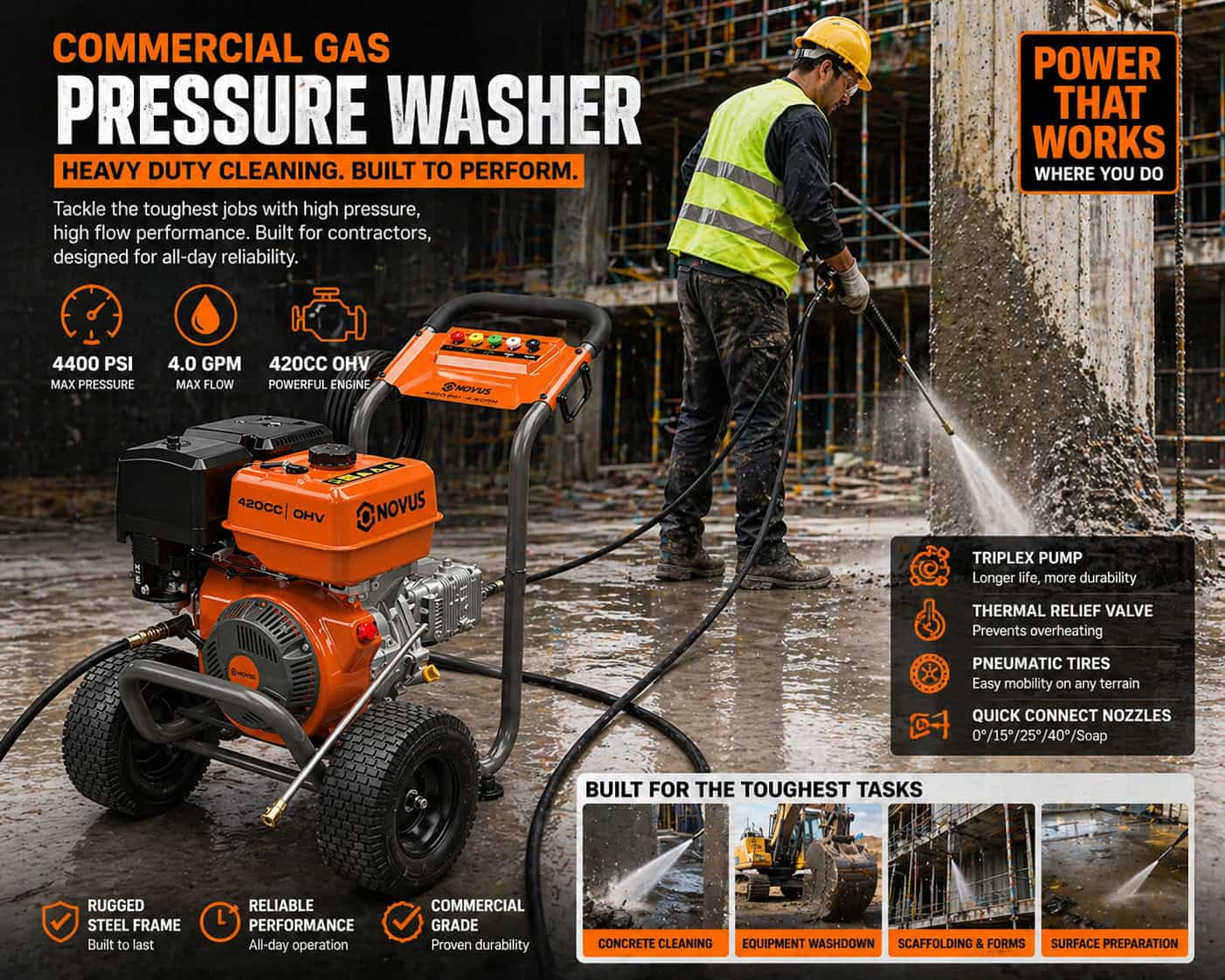
Who Actually Needs a 4000 PSI Gas Pressure Washer?
Let’s be frank: most residential users don’t need 4000 pounds per square inch of pressure. But the following users do:
- Construction industry
For construction workers, 4000 PSI is often not a “choice”, but a “must”. Removing the remaining concrete from the construction site, cleaning the construction equipment, and removing the old coatings/paints. - Contractors and professionals
Vehicle fleet cleaning, building facades, graffiti removal, surface treatment before industrial coating. - Farmers and Ranchers
Cleaning heavy agricultural machinery, livestock pens, concrete barns and muddy trailers. - Light industrial users
Machine processing workshops, automotive repair studios, or manufacturing facilities that have accumulated stubborn grease. - Large property owners
Those who own multiple buildings, have extremely long driveways, retaining walls, and a cleaning area of over 500 square meters. - Car detailing shop
Engine compartment degreasing, chassis cleaning, and surface preparation before crystal coating. - Ship and yacht users
Ship hull cleaning, dock maintenance, and removal of barnacles from ships moored in the sea.
What About Regular Homeowners?
If all you want to do is clean your driveway, wooden deck, exterior guardrails or outdoor furniture a few times a year, 4000 PSI is way overkill – and it might even backfire. PVC exterior guardrails could crack, wooden decks could get frayed, and concrete could be eroded by the pressure if it’s too close. For everyday household use, models with 2000–2800 PSI are safer, have a lower purchase cost, and are easier to store.A pressure of 4000 PSI can cause severe skin lacerations. The pressure washer functions as a power tool which requires users to wear protective shoes while they must avoid directing its spray at people or pets and select appropriate nozzles according to the surfaces they will clean.
4000 PSI vs Lower PSI Models: Comparison
| Feature | 1800–2300 PSI (Electric) | 2800–3200 PSI (Gas) | 4000 PSI (Gas) |
| Best for | Cars, patio, light deck | Driveways, fences, most home tasks | Industrial, farm, heavy concrete |
| Safe on wood | Yes | With care | Risk of damage |
| Safe on siding | Yes | Yes (with wide tip) | High risk |
| Removes tough stains | Limited | Most cases | Yes |
| Portability | High (cord-limited) | High | Moderate (heavy unit) |
| Price range | $100–$350 | $350–$600 | $600–$1,200+ |
| Maintenance | Low | Moderate (oil, spark plug) | Moderate–High |
Key Features to Look for in a 4000 PSI Gas Washer
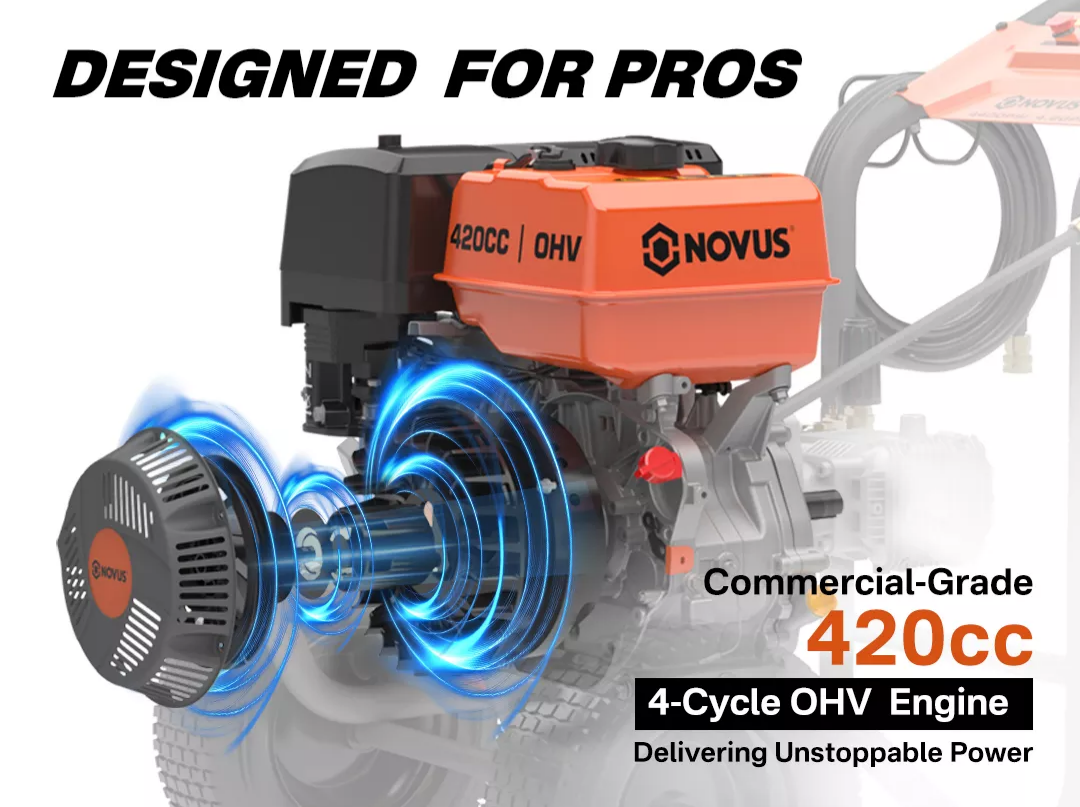
Engine quality
The engine is the heart of any gas pressure washer. Look for cast-iron cylinder sleeves — they significantly extend engine life compared to aluminum-bore alternatives.
Pump type
At 4000 PSI, only an axial cam or triplex plunger pump is appropriate. Triplex pumps last two to three times longer than axial pumps and run cooler. If you plan to use the machine commercially, invest in a triplex.
Frame and mobility
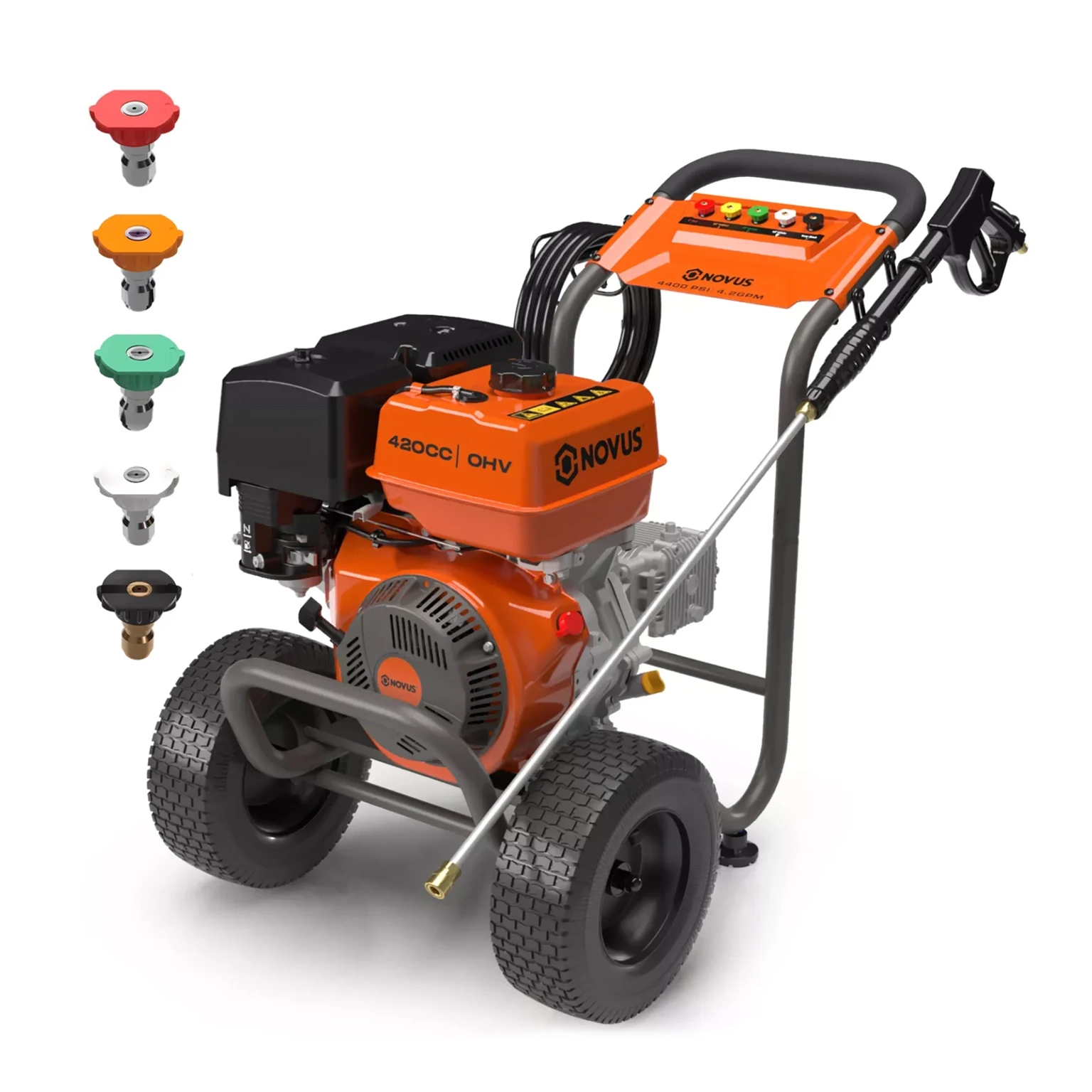
A 4000 PSI unit weighs between 80 and 130 lbs. Look for a welded steel frame, pneumatic (air-filled) tires for rough terrain, and an ergonomic handle. Some models include hose reels, which significantly reduce job setup time.
Nozzle set
A complete 4000 PSI washer should come with at least five nozzles: 0°, 15°, 25°, 40°, and a soap/detergent nozzle. The 0° nozzle produces a pencil-thin stream which can cut through almost all materials except for surfaces that require protection, so it should be stored in a separate location and handled with extreme caution.
Maintenance Tips for 4000 PSI Gas Pressure Washers
At this power level, maintenance is non-negotiable. Neglect the pump or engine and you’ll face costly repairs — or a paperweight.
Change the engine oil every 50 hours of operation or at the start of each season. Use pump oil (not engine oil) in the pump reservoir and inspect it seasonally. Flush the system after every use with clean water to prevent detergent buildup. Before winter storage, use pump saver fluid to prevent cracking from frozen water in the pump head.
Inspect the high-pressure hose annually for cracks, especially near fittings. A burst hose at 4000 PSI is a serious safety hazard. Replace it at the first sign of wear.
Final Verdict
A 4000 PSI gas pressure washer functions as the ideal equipment solution for professional users and agricultural workers and heavy-duty property owners who need to clear concrete surfaces that have accumulated dirt over multiple years and remove industrial equipment that has substantial grease buildup and wash large areas which would require multiple days to complete with less powerful machines. The equipment provides homeowners with excessive capabilities that exceed their requirements while posing a hazard to fragile surfaces. Buy for the task, not the spec sheet.


Leave feedback about this