

For household backup power, camping, RV travel or outdoor work, the runtime of the generator is often more important than the fuel tank capacity. Even with the same size fuel tank, different usage methods can result in runtime differences of several hours. Therefore, learning to improve fuel efficiency not only reduces fuel costs but also decreases the frequency of refueling, allowing the generator to provide stable power supply in critical moments.
So, how can we make the generator more fuel-efficient and run longer? The following are several effective methods that have been verified through practice.
Why Generator Fuel Efficiency Matters
The fuel efficiency of the generator not only determines how long each tank of fuel can last, but also affects the overall operating cost and maintenance frequency of the equipment.
Improving fuel efficiency can bring the following advantages:
- Extend the continuous operation time of the single tank oil
- Reduce long-term fuel costs
- Decrease the frequency of refueling during outdoor operations
- Reduce engine wear and extend service life
- Reduce exhaust emissions and become more environmentally friendly
Whether it is dealing with power outages or long periods of outdoor work, a well-performing generator can provide a more reliable power supply.
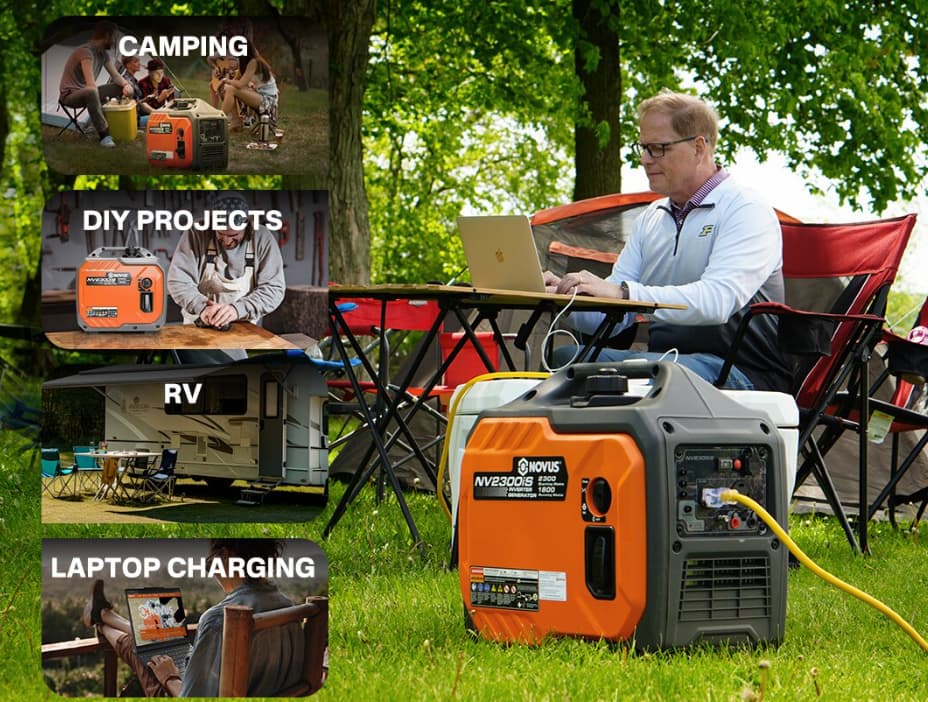
What Affects Generator Fuel Consumption?
Many users believe that fuel consumption is solely determined by the size of the engine. In fact, there are many other factors that affect fuel consumption, among which the most important ones are the load size, engine speed, and equipment maintenance status.
1. Load Size
The generator does not always operate at its maximum power. Instead, it adjusts its output based on the electricity demand of the connected equipment.
Generally speaking:
- The higher the load, the faster the fuel consumption.
- Operating at full load for a long time not only increases fuel consumption but also raises engine temperature and causes wear.
2. Engine Speed (RPM)
The higher the engine speed, the more fuel is consumed per minute.
For inverter generators, when the load is low, the speed can be automatically reduced to achieve better fuel economy.
3. Daily Maintenance
Clogged air filters, worn-out spark plugs, or un-replaced engine oil for an extended period will all reduce the combustion efficiency, causing the engine to consume more fuel to produce the same power output.
Tip 1: Operate Your Generator at the Right Load
This is one of the most effective ways to improve fuel efficiency.
Many users believe that the generator operates more fuel-efficiently when it approaches its rated power. However, this is not necessarily the case. For most inverter generators, they usually achieve better fuel economy within the load range of 25% to 50% of their rated power.
For example, an inverter generator with a rated power of 4000W:
- When carrying a load of around 1000W to 2000W for a long time, it usually operates for a longer period.
- If it continuously operates at nearly full load of 4000W, the engine needs to maintain a high rotational speed, and fuel consumption will significantly increase.
Of course, it is also not recommended to run the vehicle in a completely idle state for an extended period. Although running without load consumes less fuel, the fuel efficiency is not high, and it may also lead to an increase in carbon deposits.
Suggestion: Try to keep the daily load within the range of 30% to 60% of the rated output power. This will not only ensure stable power supply but also take into account fuel efficiency.
Tip 2: Use ECO Mode Whenever Possible
Currently, most inverter generators are equipped with ECO Mode, which is an important feature for extending operating time.
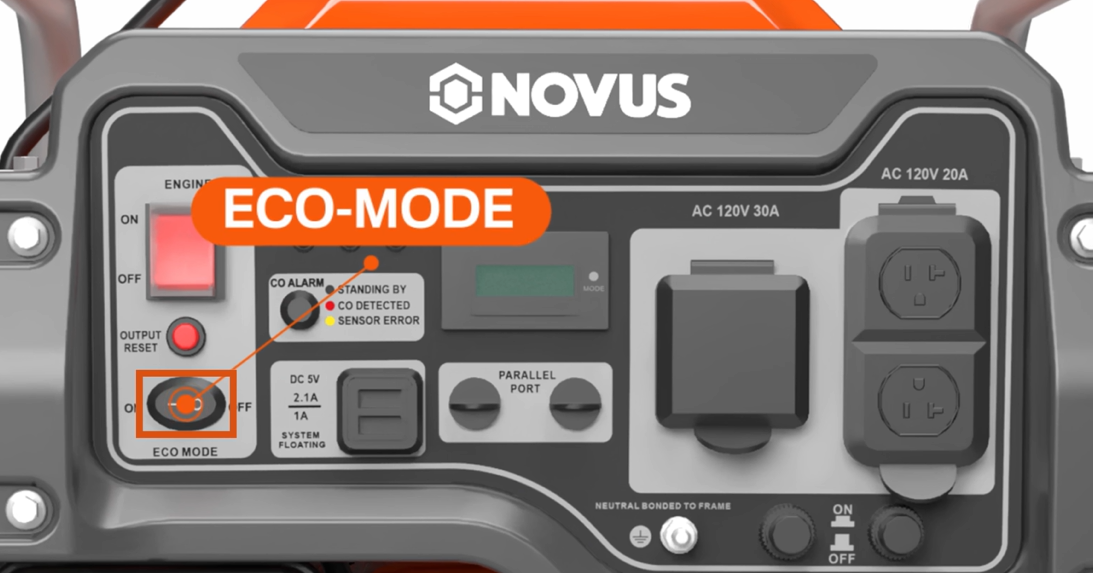
How Does the ECO Mode Work?
When the power demand of the connected device is low, the ECO mode will automatically reduce the engine speed, allowing the engine to output only the required power instead of always running at high speed.
The working process is as follows:
- Load reduction
- The engine automatically reduces its speed
- Fuel injection volume decreases
- Fuel consumption reduces
- The running time per tank of fuel is prolonged
For devices with relatively low continuous power consumption such as lights, chargers, televisions, and refrigerators, the ECO mode usually significantly improves fuel efficiency.
In stable scenarios with 25%-50% load, activating ECO mode can save 20%-40% of fuel while significantly reducing noise, making the equipment run more quietly and comfortably. User tests show that when camping, activating ECO mode significantly extends the running time on a single tank of fuel, making it suitable for long-term low-to-medium load needs.
When You Should Turn ECO Mode Off
If you need to start equipment with high starting current such as air conditioners, water pumps, electric saws or compressors, you can temporarily disable the ECO mode and keep the engine at a higher speed to respond more quickly to the instantaneous load demand. After the equipment is started, you can then re-enable the ECO mode.
Tip 3: Avoid Long Periods of Idle Running
Some users keep generators running idly even when the equipment is not in use, believing it convenient to resume power supply at any time.
In fact, even without any connected devices, the engine will still consume fuel continuously.
If it is expected that power will not be needed for a long time, the generator can be directly turned off. For shorter intervals of work, it should be decided based on the actual situation whether to keep it running.
Tip 4: Choose the Right Generator Size for Your Power Needs
Many people believe that the larger the generator, the better. However, in fact, overly large equipment may actually reduce fuel efficiency.
For instance, if the daily power consumption is only for lighting, routers and refrigerators, with a total load of around 1000W, but a 8000W high-power generator is used for a long time, it will lead to fuel waste.
When purchasing a generator, one should select the appropriate rated power based on actual electricity consumption needs, avoiding the situation of “using a large engine to drive a small vehicle”.
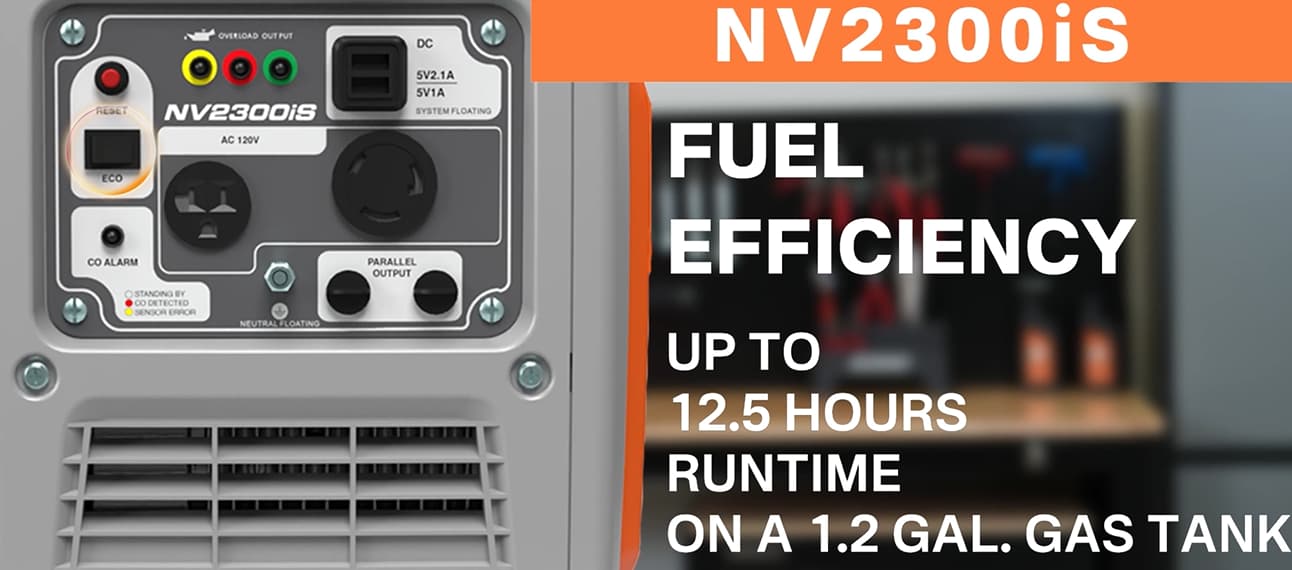
Tip 5: Keep Your Generator Well Maintained
A well-maintained generator not only operates more stably but also consumes less fuel.
It is recommended to conduct regular checks on the following items:
Clean or replace the air filter to ensure adequate air intake.
Replace the engine oil according to the instructions to reduce engine friction.
Check if the spark plugs are clogged or worn.
Use fresh and qualified fuel to avoid a decrease in combustion efficiency due to long-term storage.
Good maintenance can help the engine maintain its optimal combustion state, thereby reducing fuel consumption.
Conclusion
To make the generator last longer, it’s not just about having a larger fuel tank; the key lies in adopting the correct usage methods.
Maintaining a reasonable load of 30% to 60%, making full use of the ECO mode, avoiding long periods of no-load operation, choosing a generator suitable for actual needs, and persisting in regular maintenance can all effectively improve fuel efficiency and extend the operating time of a single tank of oil.
If you are looking for an inverter generator suitable for household backup power, camping or outdoor work, it is recommended to give priority to products that are equipped with ECO Mode and have stable output and good fuel economy. This not only reduces the usage cost but also provides more lasting and reliable power support in critical situations.


Leave feedback about this