

Whether you’re pushing new things in a vegetable patch or you’re aerating an established garden bed, a tiller is one of those hardest-working tools that just sits in your shed. But, just like any engine-powered equipment, tillers tend to end up with mechanical issues — mostly after heavy use, or if they sat too long in storage. In this guide, we’ll move through the usual tiller problems, why they happen, and what you can do to resolve them before they knock you out of your gardening season, completely.
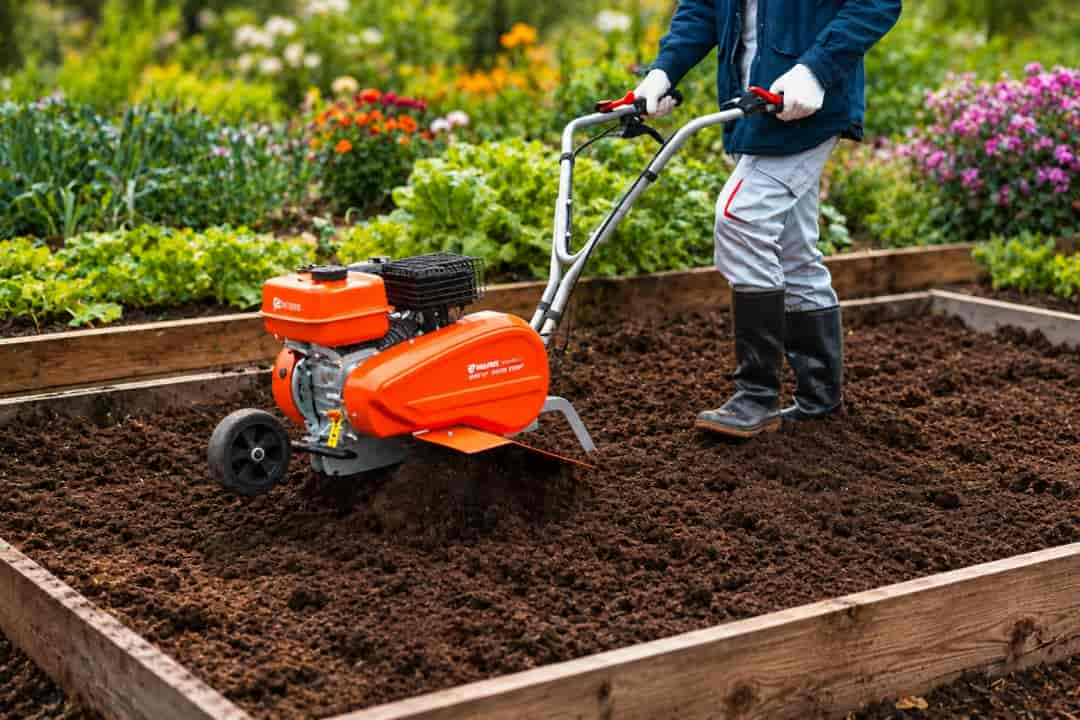
1. Tiller Won’t Start
This is the most frequently reported tiller problem, and it’s usually caused by one of four culprits:
- Clogged air filter – A dirty air filter starves the engine of oxygen.
- Stale fuel – Gasoline degrades after 30 days. Old fuel leaves a sticky residue that clogs the carburetor.
- Faulty spark plug – A fouled or worn spark plug won’t generate the ignition needed to fire the engine.
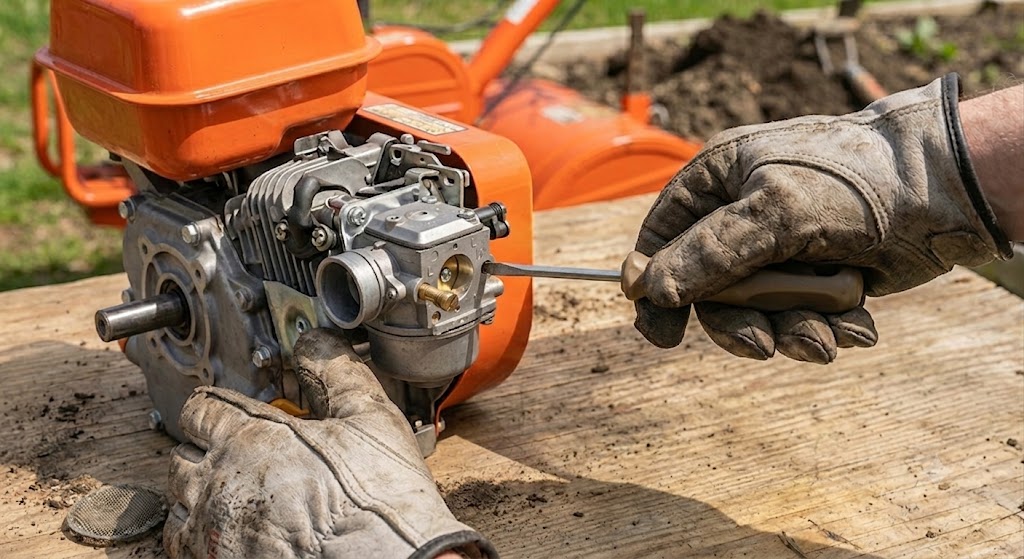
- Dirty carburetor – Blocked jets prevent the correct air-fuel mix from reaching the engine.
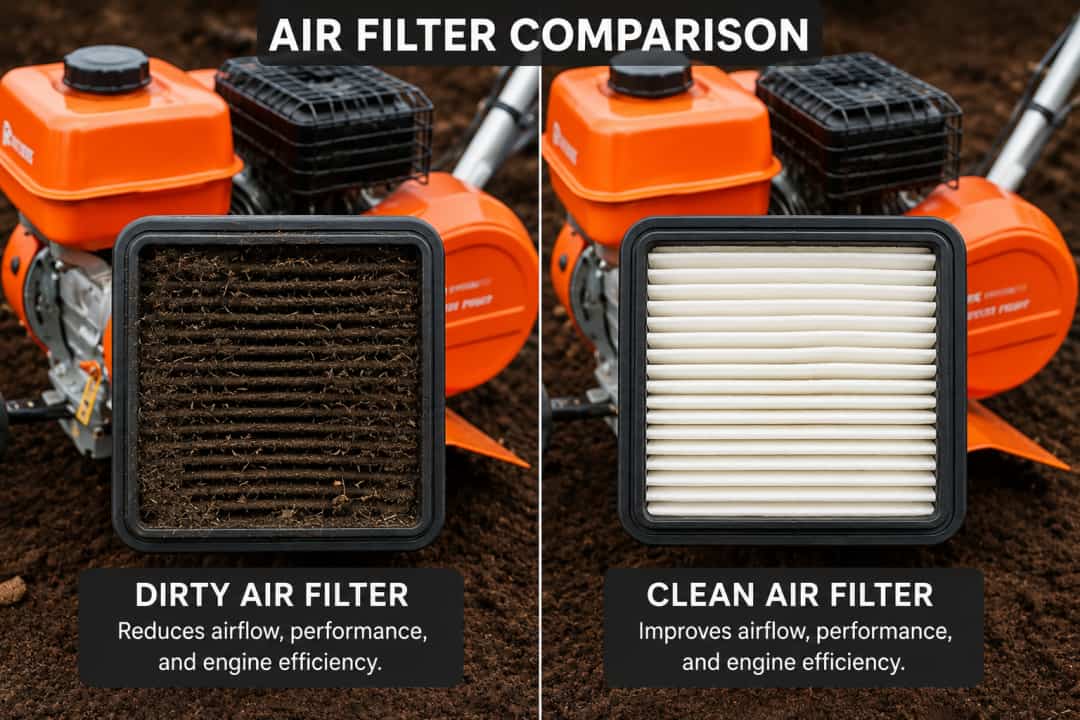
How to fix it: you can start by getting rid of the old fuel ,then put in fresh gasoline . Next, take out the spark plug and inspect it, change it if the electrode is worn down or coated with carbon buildup . If the engine still wont start then try cleaning the carburetor with a carburetor cleaner spray ,or swap it out if it looks damaged . After that, look at the air filter and clean it or replace it ,depending on what you see.
2. Engine Runs Rough or Stalls
If your tiller starts but sputters, surges, or shuts off unexpectedly, the engine isn’t getting a consistent fuel supply.
Common causes:
- Incorrect carburetor fuel-to-air ratio
- Clogged fuel filter
- Partially blocked fuel line
How to fix it: Try to tweak the carburetor mixture screws till the idle feels a bit smoother. Also replace the fuel filter , it’s a kind of cheap fix that lots of people just skip. If the fuel line looks cracked or kind of kinked , swap the whole line out rather than “patching” it. Then take a look at the fuel cap vent too , if that vent is blocked the cap can end up sealed way too tight and make a vacuum, so the engine gets starved of fuel.
3. Tines Won’t Turn or Spin Properly
The tines are the rotating blades that actually break up the soil, so if they stop spinning, your tiller becomes useless.
Common causes:
- Worn or broken drive belt
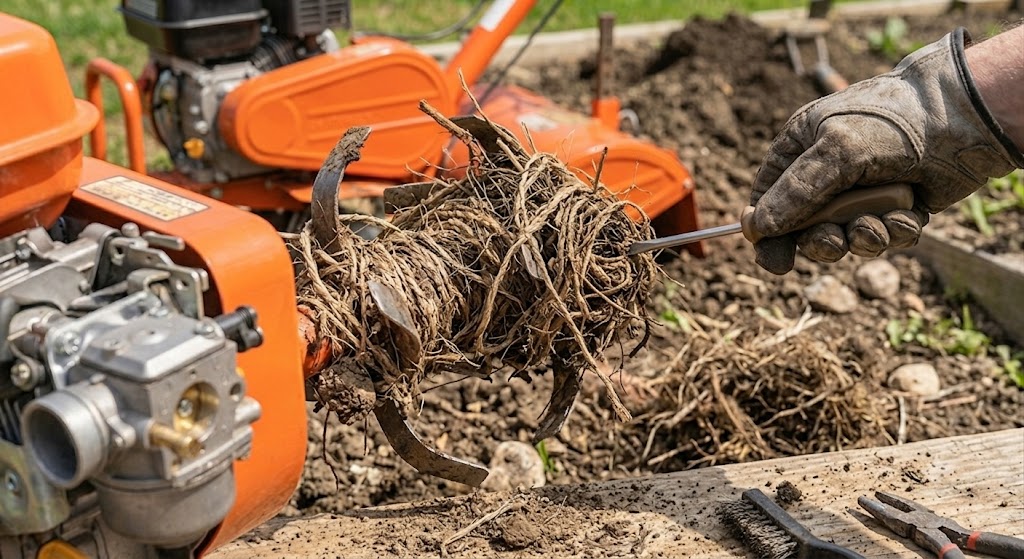
- Debris (roots, wire, rocks) wrapped around the tine shaft
- Clutch cable stretched or broken
How to fix it: Shut the engine off, and take a look at the tine shaft for tangled stuff , it’s usually the common cause when the tines quit spinning. Clear out any material that’s looped around the axle, you know, caught up in there. Then move on to the drive belt : if you see cracks or fraying, or if it’s kinda slipping, swap it out. If the tines still won’t engage, inspect the clutch cable for wear and adjust or replace it.
4. Tiller Not Digging Deep Enough
A tiller that skims the surface instead of penetrating the soil wastes time and doesn’t deliver the soil-loosening benefits you need.
Common causes:
- Soil is too dry or compacted
- Drag bar (depth stake) set too high
- Tines are worn down
How to fix it: Water the area thoroughly 24 hours before tilling to soften the soil. Check your drag bar adjustment—lowering it allows the tines to dig deeper. If the tines are visibly worn or rounded at the tips, it’s time to replace them. Running a second pass at a slower speed can also improve depth on stubborn ground.
5. Excessive Vibration
Unusual shaking or rattling during operation is a warning sign that something is mechanically wrong.
Common causes:
- Bent or damaged tines
- Loose bolts on the tine assembly or engine mount
- Unbalanced tine set
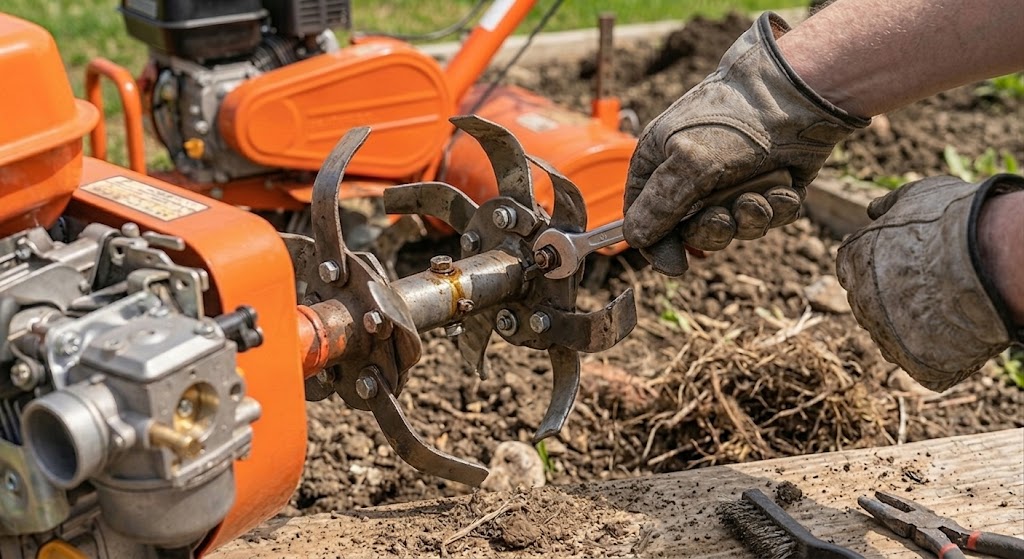
How to fix it: Stop the machine immediately and inspect all tines for bends or cracks. Replace any damaged tines and ensure the remaining set is balanced. Tighten all bolts on the tine assembly, handlebar, and engine mount. If vibration persists after these steps, the issue may be internal—consult a service technician.
6. Oil or Fuel Leaks
Leaks are a safety hazard and a sign that seals or components are deteriorating.
Common causes:
- Cracked fuel lines or loose fuel line clamps
- Worn gaskets or seals around the engine
- Damaged oil drain plug
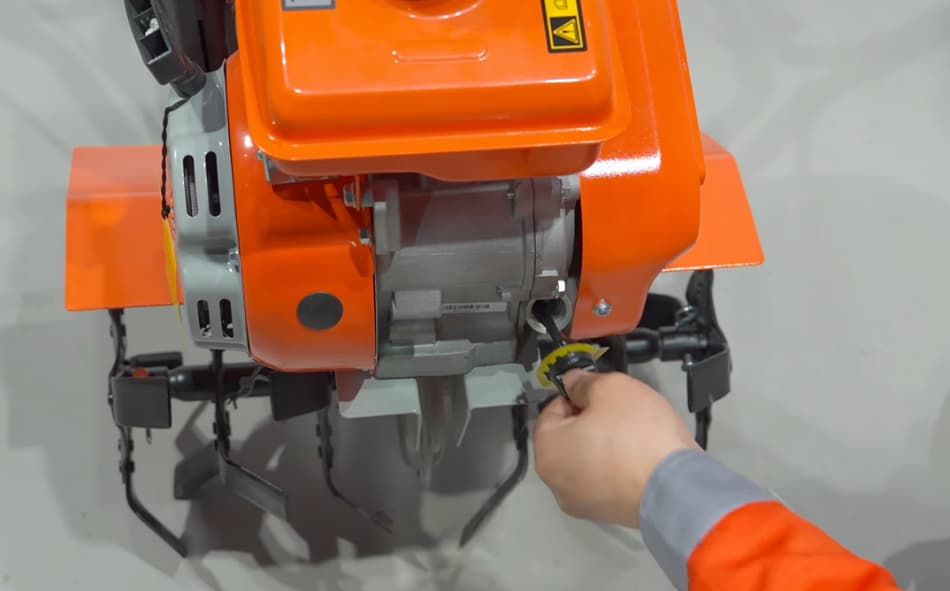
How to fix it: Wipe down the tiller and run the engine briefly to identify the source of the leak. Replace cracked fuel lines and tighten or replace clamps. Gasket replacement is a more involved repair but is manageable for DIYers with the right tools. Always replace the oil drain plug washer when changing oil.
7. Tiller Overheating
An overheating engine can seize permanently if ignored.
Common causes:
- Blocked cooling fins clogged with dirt and debris
- Low engine oil level
- Running the machine at full load for too long
How to fix it: After each use, brush away debris from the engine’s cooling fins. Check the oil level before every session—low oil dramatically increases operating temperature. Allow the engine to cool for 10–15 minutes after every 30–45 minutes of heavy use.
Preventive Maintenance Tips
Avoid most of these problems with a simple maintenance routine:
- Change the oil every 25–50 hours of use or each season
- Inspect and clean tines after every use
- Replace the spark plug annually
- Winterize properly — drain fuel, fog the cylinder with oil, and store in a dry place
- Check belts and cables at the start of each season
FAQ
Q: Why does my tiller start but then immediately die? Usually a carburetor issue or a blocked fuel supply. Clean the carburetor and replace the fuel filter first.
Q: How do I know if my tiller belt is broken? If the engine runs but the tines don’t move, inspect the drive belt under the tine housing—a broken belt is often visible.
Q: How often should tiller tines be replaced? Tines typically last 3–5 seasons depending on soil type and usage. Replace them when the tips appear smooth or rounded.
Q: Can I till wet soil? Avoid tilling waterlogged soil—it compacts rather than aerates and can damage the tines and gearbox.
Conclusion
Most of the time, tiller problems really boil down to three main things fuel system troubles , tired mechanical parts, and not doing regular maintenance like you should. If you catch issues early and stick to a simple service routine, you can help the tiller last way longer and keep your garden moving along through the whole season. And if you’re unsure about anything , check your owner’s manual or just take the machine to a certified small engine repair shop.


Leave feedback about this