

Compared to traditional open-type generators, portable inverter generators have significantly better noise performance. Thanks to the enclosed body design and adjustable speed operation mode, their operating sound is much softer and it is one of the most quiet generator types available on the market at present.
However, even so, it cannot be completely silent. In quiet environments such as campsites, RV campsites or residential areas, the generator’s operation sound is still quite noticeable, which can easily disturb oneself and others.
Many users are concerned: Can the inverter generator be further reduced in noise? Actually, it can. Although the mechanical noise of the engine cannot be completely eliminated, as long as the placement position is selected correctly, the correct usage habits are formed, and daily maintenance is carried out consistently, the operating noise can be significantly reduced without damaging the machine performance or affecting normal use.
The following are 8 safe and practical noise reduction methods, which can easily solve the problem of excessive generator noise.
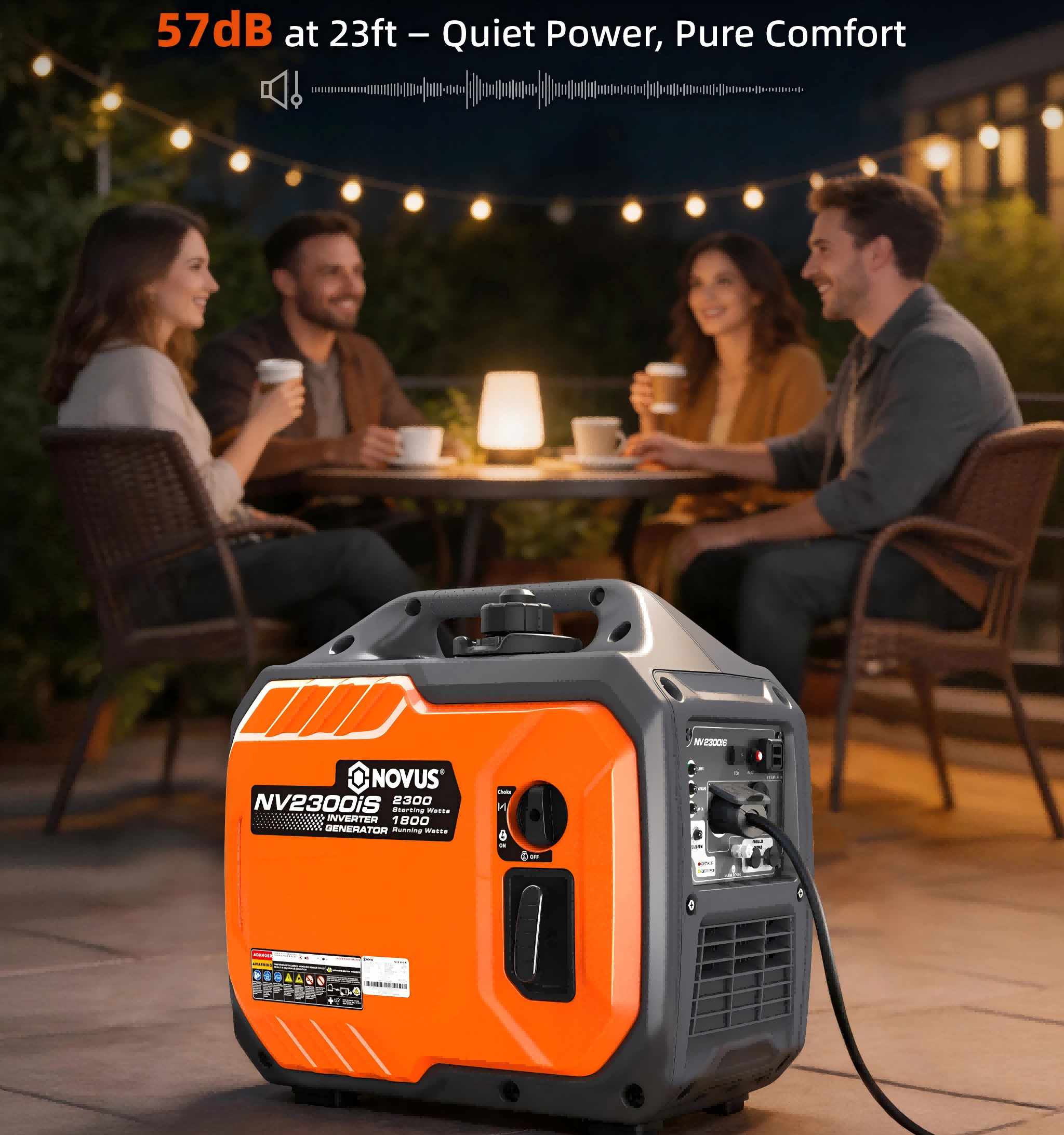
Typical Noise Levels of Portable Inverter Generators
When comparing the noise levels of inverters, the product parameters usually indicate decibel values (dB), but this figure cannot be directly used for horizontal comparison.
The noise testing standards of various manufacturers are not uniform. The testing conditions, such as the load on the machine and the measurement distance, vary, so the obtained decibel data are naturally not comparable. We can only regard the noise levels as a rough reference and cannot judge the actual sound differences between different brands and models solely based on the numbers.
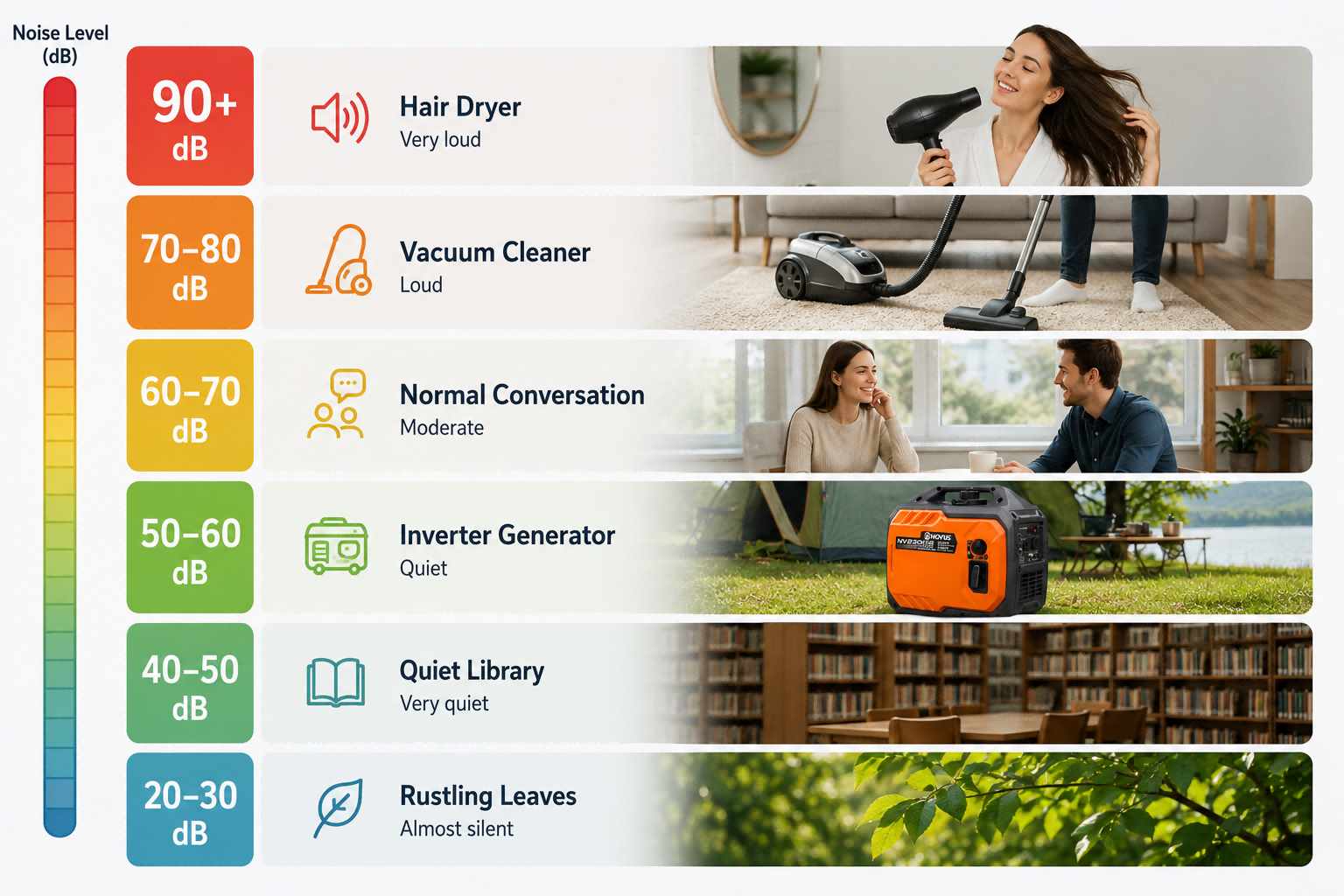
The table below summarizes the noise reference ranges of the mainstream inverters available on the market.
| Noise Level | Typical Perception | Suitable Applications |
| 50–55 dB | Very quiet, similar to a normal conversation | Camping, RV parks, outdoor recreation |
| 56–60 dB | Quiet and comfortable | Home backup, tailgating, outdoor events |
| 61–65 dB | Moderate operating noise | General outdoor use, job sites |
| Above 65 dB | Noticeably louder | Higher-output portable generators |
The decibel values marked by the machine should only be regarded as a reference. When actually using the generator, its noise will be affected by many factors: the load power, whether the energy-saving mode is enabled, the surrounding environment, wall obstructions, as well as the distance between people and the machine. All these will alter the auditory perception.
Even if your inverter generator has a good silent performance, there are still many practical methods that can further reduce the operating noise.
Related Articles:
Why Inverter Generators Are Quieter Than Traditional Generators
8 Ways to Make Your Inverter Generator Quieter
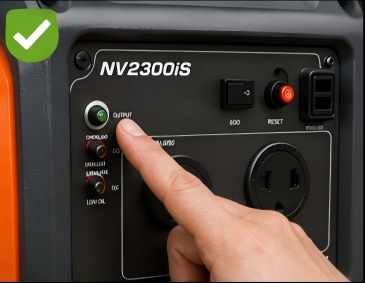
1. Use Eco Mode Whenever Possible
Most of the new inverter generators nowadays come with an energy-saving mode, which is often referred to as the economical mode. Once activated, the generator will automatically adjust its rotational speed according to the current power consumption load.
If only small devices such as mobile phones, lamps, and small fans are being powered, the power consumption load is relatively small. In this case, the engine will automatically reduce its rotational speed and operate. This not only reduces fuel consumption and is more fuel-efficient, but also effectively lowers the operating noise. When the daily power consumption load is not high, turning on the energy-saving mode is the simplest and most convenient way to make the generator run quietly.
2. Place the Generator on a Stable, Solid Surface
Uneven ground and soft foundation can amplify the vibration of the equipment, making the noise seem much louder.
When placing it, try to choose a flat and hard surface to ensure the stability of the machine. Many users will install rubber shock-absorbing pads at the bottom of the generator to reduce the vibration sounds transmitted to the ground.
All shock-absorption operations should be based on the stability of the equipment. Remember not to block the ventilation and cooling openings of the machine body.
3. Increase the Distance
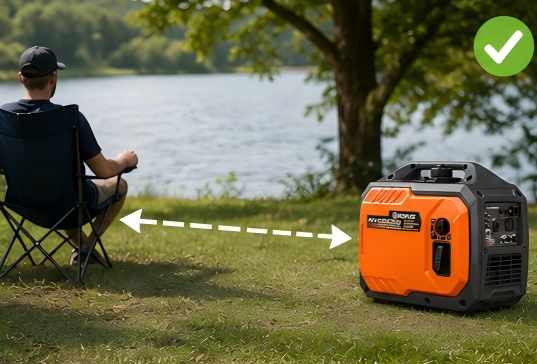
The sound will gradually weaken as the distance increases.
If conditions permit, try to move the generator to a location far away from tents, caravans, terraces or areas where people are active. When operating, be sure to follow the safety guidelines provided by the manufacturer. Compared to placing the generator close together, using a matching extension cord for a compatible specification will result in much better noise reduction.
4. Direct the Exhaust Away from Occupied Areas
The exhaust port of the generator not only generates noise but also emits toxic carbon monoxide gas.
When placing it, try to position the exhaust port facing away from the rest area, windows, doors, and adjacent campsites. This can not only reduce the sound transmission but also avoid the risk of carbon monoxide poisoning.
Placement and use must strictly follow the manufacturer’s safety guidelines. It is absolutely not allowed to start the generator indoors or in a confined space.
5. Avoid Running at Maximum Load for Long Periods
As electrical demand increases, the engine usually operates at higher speeds, resulting in higher noise levels.
If your generator is consistently operating near its rated output, consider reducing unnecessary loads or distributing power more efficiently. Running within the generator’s recommended operating range often results in quieter operation.
6. Keep Up with Regular Maintenance
Regular maintenance can ensure that the inverter generator remains in its original working condition upon delivery.
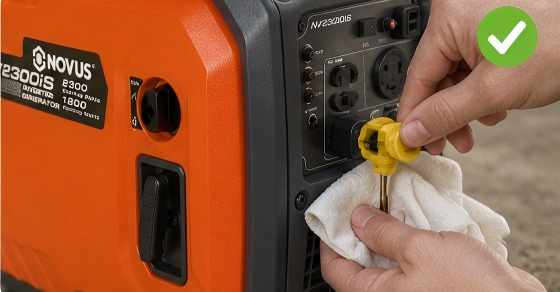
If the air filter becomes clogged, the spark plugs age, the engine oil deteriorates, or the exhaust components are damaged, it will cause damage to the engine’s performance. Over time, the running noise will also increase. Following the maintenance schedule specified in the equipment manual is the most convenient way to maintain a low-noise and efficient operation of the generator.
7. Use a Sound Deflector Instead of an Enclosed Box
Some users build sound barriers or sound deflectors to redirect generator noise away from occupied areas.
If you choose this approach, make sure it does not restrict airflow or interfere with cooling. Completely enclosing a running generator is not recommended because inadequate ventilation can lead to overheating and create serious safety risks.
8. Choose a Generator Designed for Quiet Operation
All noise reduction techniques can only play a supplementary role. The hardware design of the generator itself is the core factor determining the noise level.
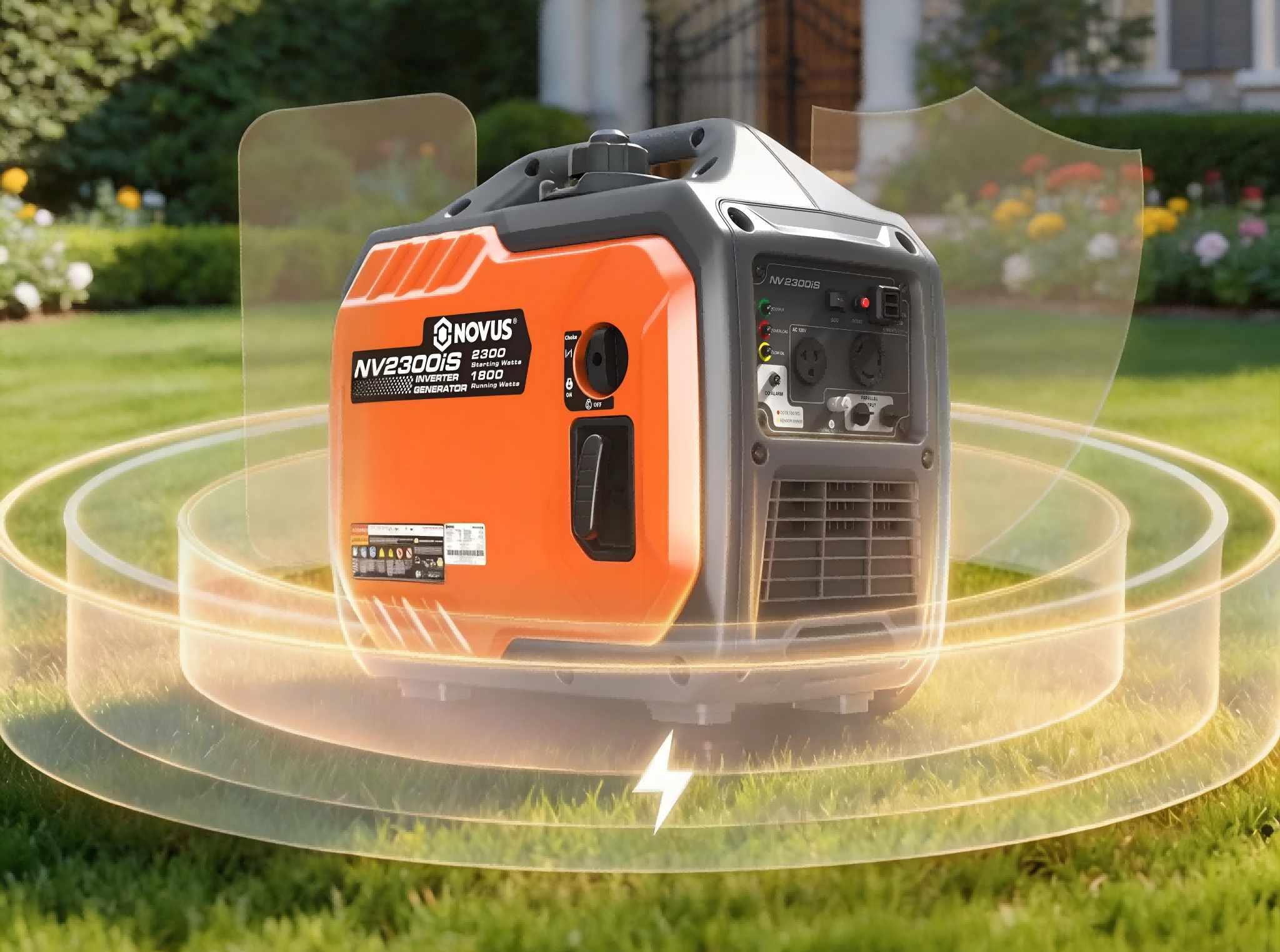
A sealed soundproof enclosure, an adaptive speed control system, a high-performance muffler, and the original factory’s low-decibel adjustment can all reduce the operating noise at its source. If you have a high demand for silence, when making a purchase, focus on comparing the above configurations, which can significantly enhance the comfort during long-term use.
Common Mistakes That Can Make a Generator Louder
Even for the silent version of the inverter generator, improper usage can make it extremely noisy. Here are several common mistakes that people often make:
- Placing it on soft, uneven ground, which intensifies the overall vibration of the machine;
- Operating at full power even when the electrical load is not high;
- Skipping regular maintenance and not replacing air filters, spark plugs, and other components in time;
- Directing the exhaust port towards areas where sound is reflected, such as resting people or walls, thereby amplifying the noise;
- Building a completely enclosed soundproof box by oneself, which hinders the equipment’s heat dissipation and ventilation.
Avoiding these operational mistakes can not only effectively reduce the operating noise but also enable the generator to work safely and stably fo
FAQ
Is 60 dB considered quiet for an inverter generator?
Overall, it belongs to a low-noise model. The noise level of portable inverter generators is generally between 50-60 decibels. This range of models is very suitable for camping, RV travel, or home emergency power supply. However, the actual volume felt by the human ear can vary due to the usage environment and official testing standards.
Does Eco Mode reduce generator noise?
Basically, yes. When there are fewer electrical devices and lower loads, the energy-saving mode will automatically reduce the engine speed, not only saving fuel but also significantly reducing the operating noise.
Can I build a soundproof box around my generator?
Completely enclosing a generator while it is operating is not recommended because it can restrict airflow and create overheating and safety hazards. If using a sound deflector, always ensure adequate ventilation and follow the manufacturer’s safety guidance.
Why does my inverter generator sound louder than expected?
A generator may seem louder due to high electrical loads, uneven placement, poor maintenance, nearby reflective surfaces, or because the published noise rating was measured under different test conditions than your actual operating environment.


Leave feedback about this