

In outdoor camping, lights, refrigerators, coffee machines, mobile phones, cameras, air conditioners… Modern camping cannot do without reliable power sources. Inverter generator have been the popular among the camping power sources with the technological advancements. Due to their qualities such as reliability, silence, low consumption of gas and easy to carry they got the right blend of both old-style generators and mobile supply lines.This guide will help you start from scratch, determine the camping power configuration you truly need, and choose the inverter model that suits you.

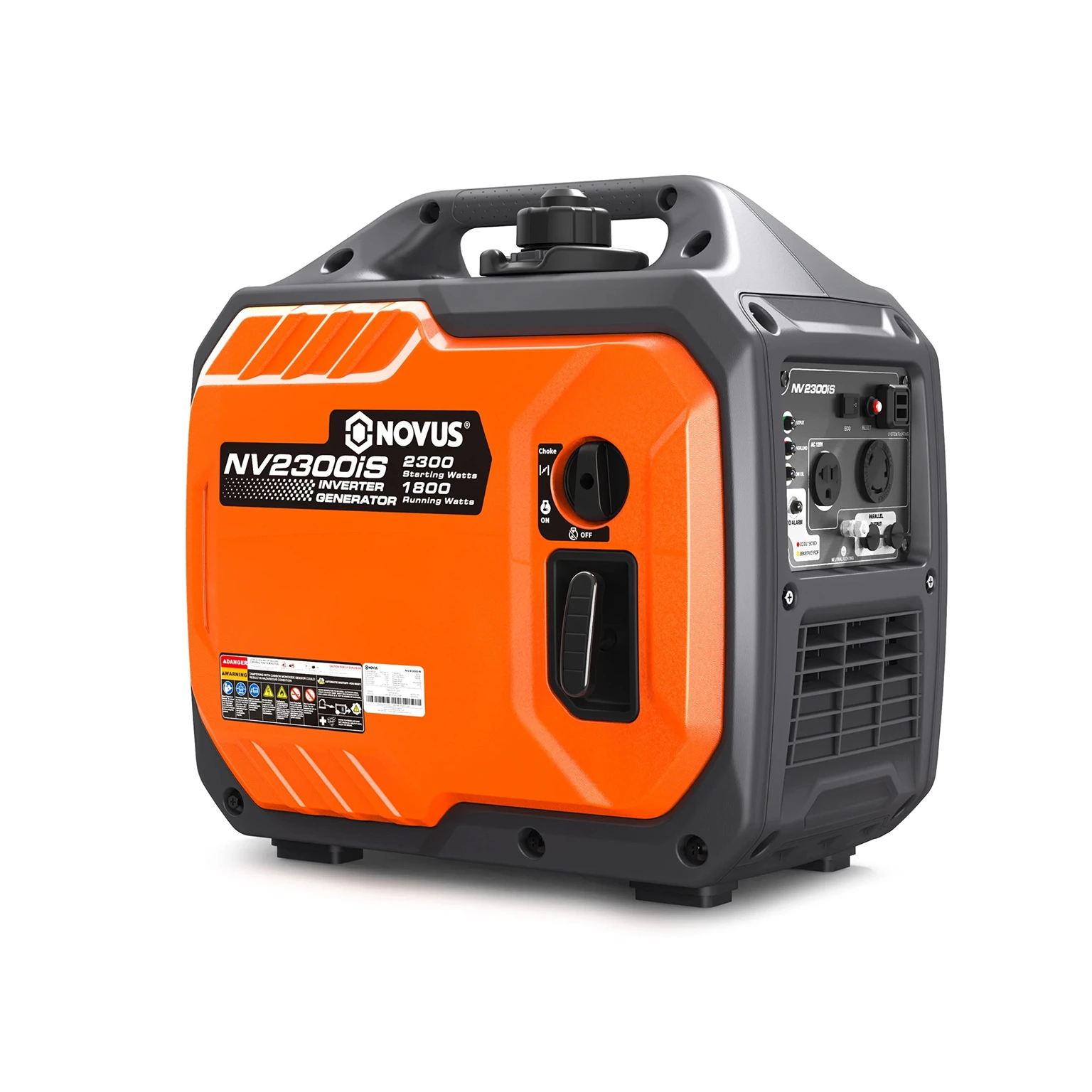
Understanding Inverter Generators – The Smart Power Source For Campers
What is an inverter generator? How does it work?
In simple terms, an inverter generator is a type of generator that provides high-quality power through advanced electronic technology. Its workflow is divided into three steps:
- Inversion: Further “purify” the direct current into stable, smooth and reliable pure sinusoidal alternating current.
- Power generation: The engine generates high-frequency alternating current.
- Rectification: Converting alternating current into direct current.
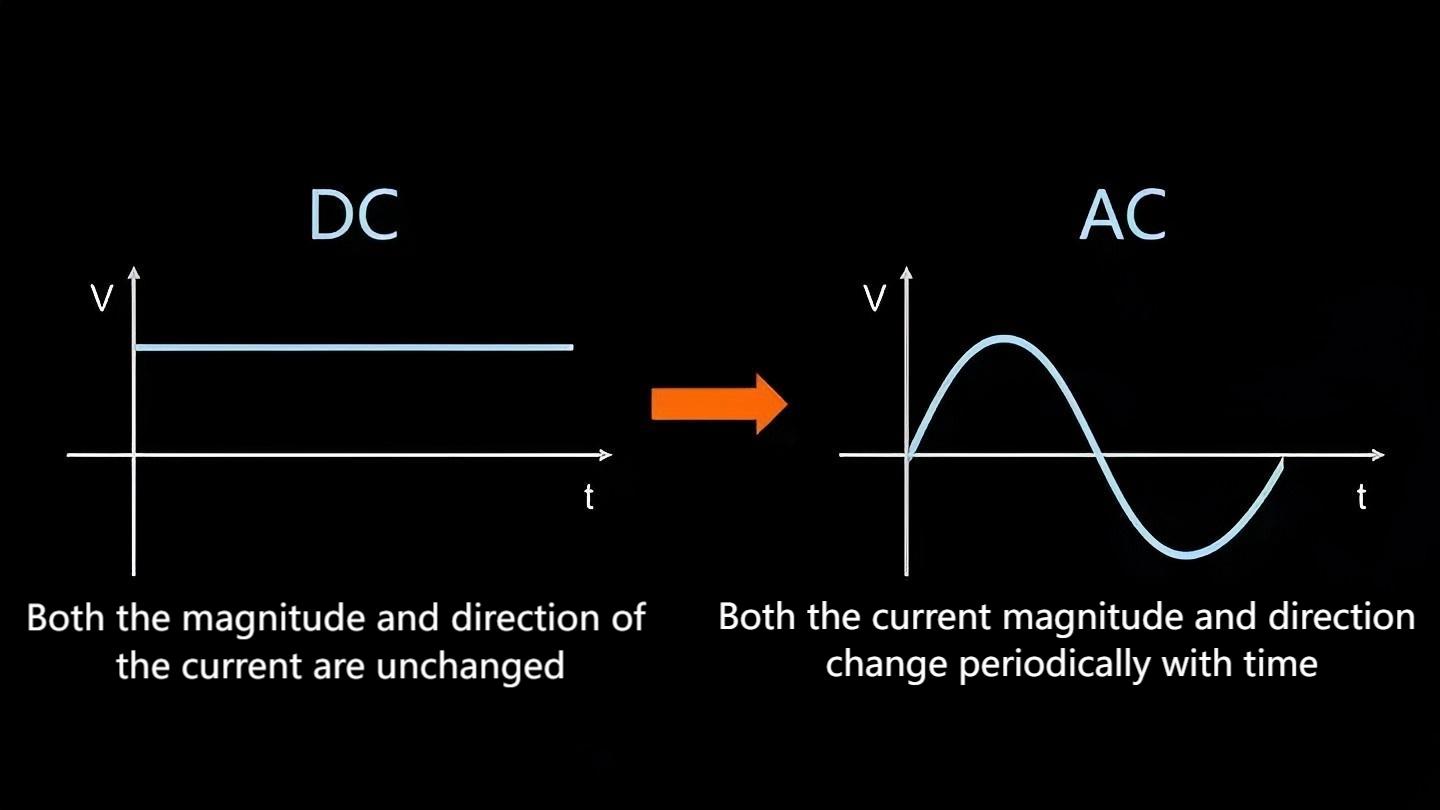
This multi-step process is precisely the key to its superiority over traditional generators.
| Characteristics | Traditional generator | Inverter generator |
| Current mass | It fluctuates greatly and the power quality is poor | Pure sine wave, absolutely safe for electronic products |
| Noise level | High, continuous high-speed operation | Ultra-quiet, with the speed adjusted according to the load |
| Fuel efficiency | Low, always running at full speed | Variable frequency technology saves more fuel and provides energy as needed |
| Weight and volume | Bulky | Lightweight, compact and easy to move |
The three core advantages of inverter generators for campers
- Safe power supply: The output is a pure sine wave, perfectly protecting your sensitive electronic products such as laptops, cameras, smart phones, and tablets from device damage or data loss.
- Camp-friendly: A complete silence operation is a signature of inverter generators. You are not going to annoy your friends or the people in the campsite next to yours, and you are better integrated into nature. It also meets the noise regulations set by the majority of modern campgrounds which are very strict.
- High efficiency and energy saving: Thanks to the intelligent frequency conversion technology, the engine speed will automatically adjust according to your actual electricity demand. This means that under low load (such as only charging your phone), it operates at a low speed, significantly saving fuel, extending the battery life per charge, and reducing the frequency of your trips to remote gas stations to refuel.
Power calculation – What wattage of generator do you need?
Guide you step by step to calculate the total power demand for camping
The most common mistake made when purchasing a generator is the improper selection of power. Follow the steps below to accurately calculate your needs:
Core concept:
- Operating wattage: The continuous and normal use power of the device.
- Starting wattage (peak wattage) : The extra peak electricity needed by machinery or compressors (e.g., refrigerators and air conditioners) at the time of startup, usually 2 to 3 times the operating wattage.
Calculation formula
The required generator power is greater than the sum of the maximum starting wattage of all equipment and the operating wattage of other equipment
Reference table of Common Camping Equipment Power
| Equipment | Operating wattage(W) | Startup/Peak wattage(W) |
| Mobile phone/camera charger | 10-25 | – |
| LED camping lamp | 5-20 | – |
| Laptop | 50-100 | – |
| Electric fan | 50-100 | 150-200 |
| Small refrigerator | 60-80 | 150-200 |
| Coffee machine | 600-1000 | – |
| Electric frying pan | 1000-1500 | – |
| Microwave oven (700W | 1000-1200 | – |
| RV air conditioner (13,500 BTU) | 1300-1500 | 2200-3000 |
For example: if at the same time you have to use a small refrigerator (200W as starting), a mobile phone and a laptop (totaling 100W), an electric fan (100W), then the total power required is: 200W + 100W + 100W = 400W. But it is better to go for an 800W-1000W generator in order to have a little leeway and be able to deal with any future demand.
Quiet is Paramount – Enjoy a Peaceful Camping Experience
Why is noise level the primary indicator for camping generators?
The noise from the generator can disturb the peace of nature, annoy the other campers, and even result in a warning being given by the manager of the campsite. Using a silent generator indicates respect not only for others and nature but also for your own experience.
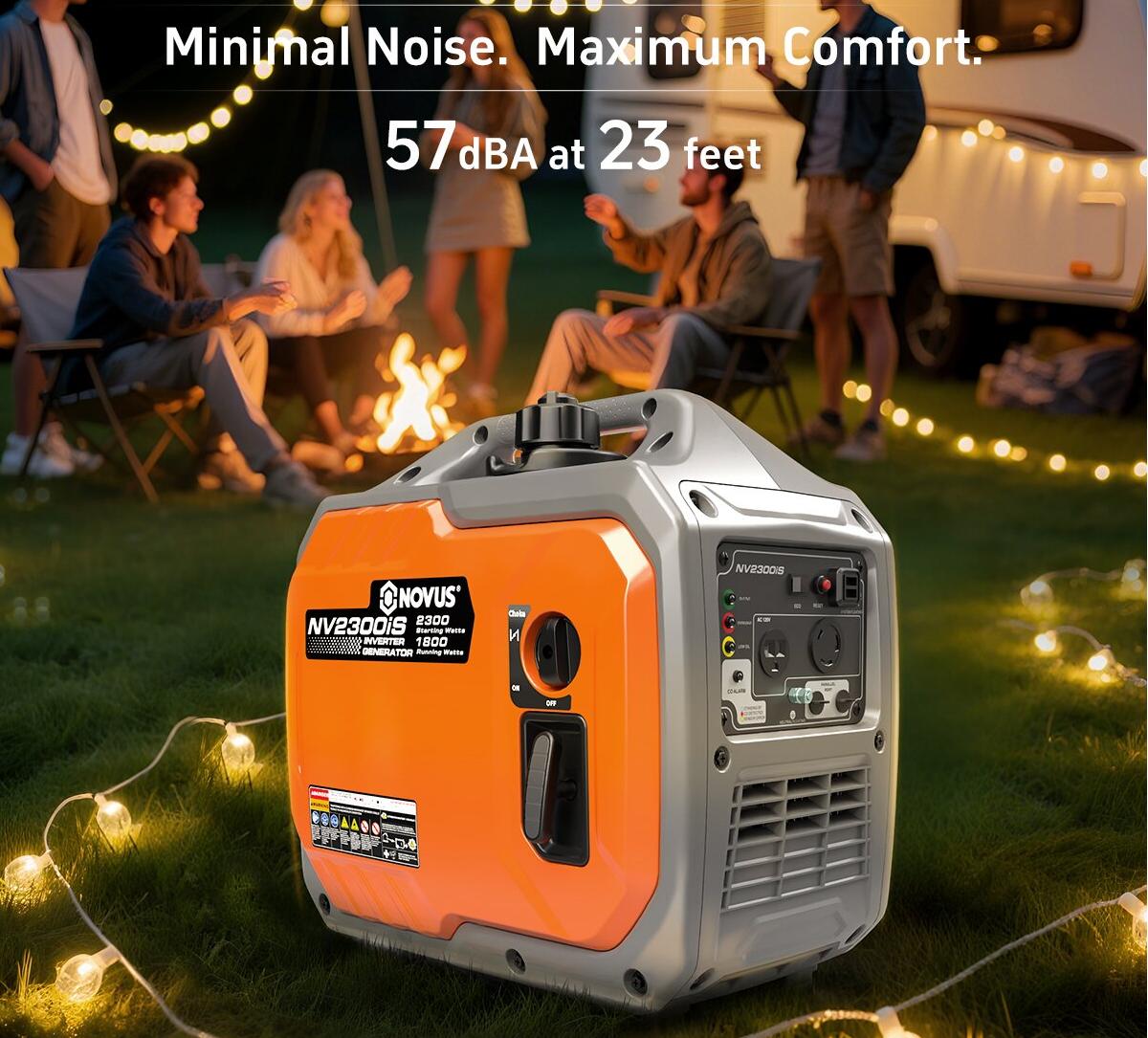
Decibel (dBA) Deciphering: How Much noise is considered “Quiet”?
Decibel (dBA) is a unit for measuring the intensity of sound. The following are references for common sounds:
- 25 dBA: Whisper volume
- 50-60 dBA: The level of normal conversation
- 70 dBA: The noise of the vacuum cleaner
- 85 dBA: Busy urban traffic
Conclusion: For camping use, choosing a generator with an operating noise of less than 60 dBA is a basic requirement, while 50-58 dBA is regarded as the gold standard for “ultra-quiet”. This means that at a distance of 7 meters from the generator, its noise level is only equivalent to a normal conversation.
How can inverter generators achieve ultra-quiet operation?
- Variable frequency technology: The engine does not need to run at high speed all the time. It operates at low speed under low load, which is naturally quieter.
- Soundproof enclosure: The elaborately designed soundproof cover and sound-absorbing materials can effectively absorb and block noise.
- Advanced mufflers: Similar to cars, highly efficient mufflers significantly reduce exhaust noise.
Portability and Durability – It’s a Breeze To Take It On The Road
Weight and size: Hard indicators of camping portability
Less than 50 pounds (about 23 kilograms) is generally regarded as a threshold that is easy for a single person to carry and load. In addition, a compact design is crucial for storage in crowded car trunks or RV storage compartments.
Humanized design makes handling easier
- Folding handle: Saves space and is easy to hold.
- Balanced weight distribution: A well-designed generator does not feel top-heavy when lifted and moved.
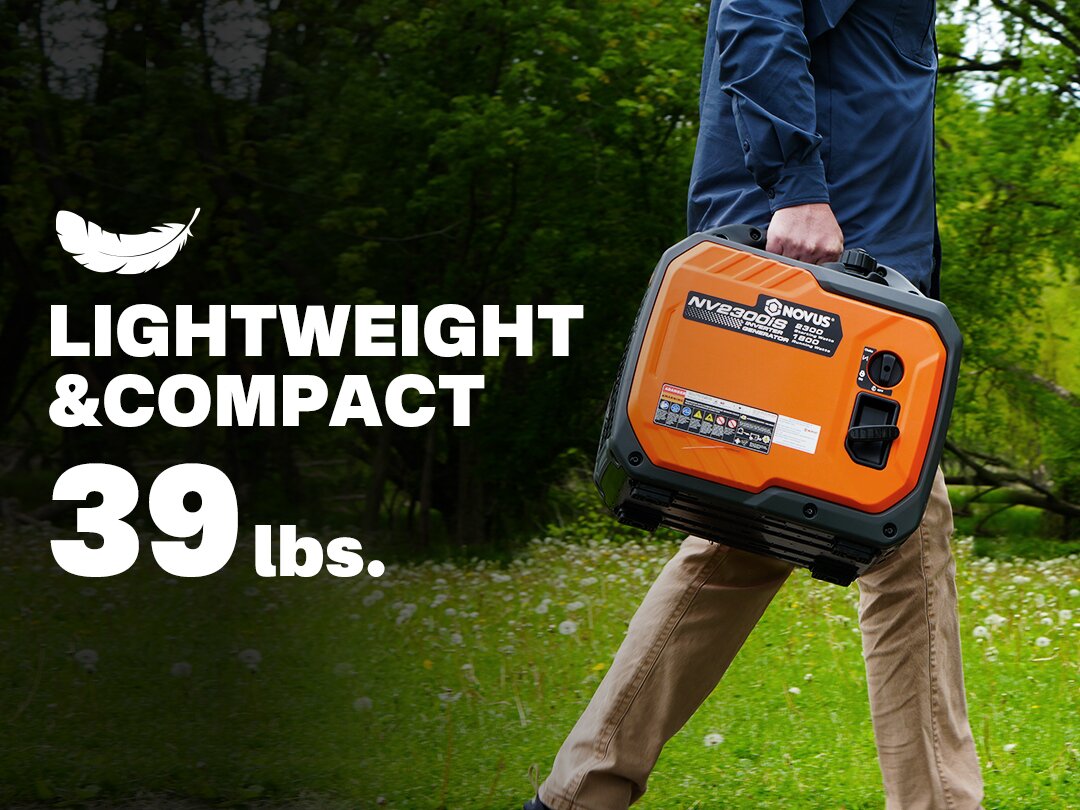
Designed for outdoor use: Robust and durable construction
Check the frame material of the generator. Metal frames offer better protection against bumps and knocks during travel compared to all-plastic shells. At the same time, pay attention to its rainproof design. Although it is not completely waterproof, it can withstand occasional dew or light rain.
Fuel Type, Fuel Consumption
Fuel options
Gasoline (the most common)
LPG liquefied gas (cleaner and easier to store
Dual Fuel dual-fuel model
– Advantage: Flexible
– Disadvantage: The power will slightly decrease in LPG mode
How to judge fuel consumption performance?
Look at two indicators:
Rated Fuel Consumption
Does Eco Mode support load sensing speed regulation
Key Functions That Cannot Be Ignored
Pure sine wave: Why is It the Guardian of Electronic Devices?
This is the core value of the inverter generator. It simulates the perfect current waveform of the power grid, ensuring that all your precision electronic products, such as smartphones, computers, cameras, medical equipment, etc., can operate safely and efficiently without data errors, equipment damage or abnormal noises.
Parallel function: How to Double Power at Low Cost?
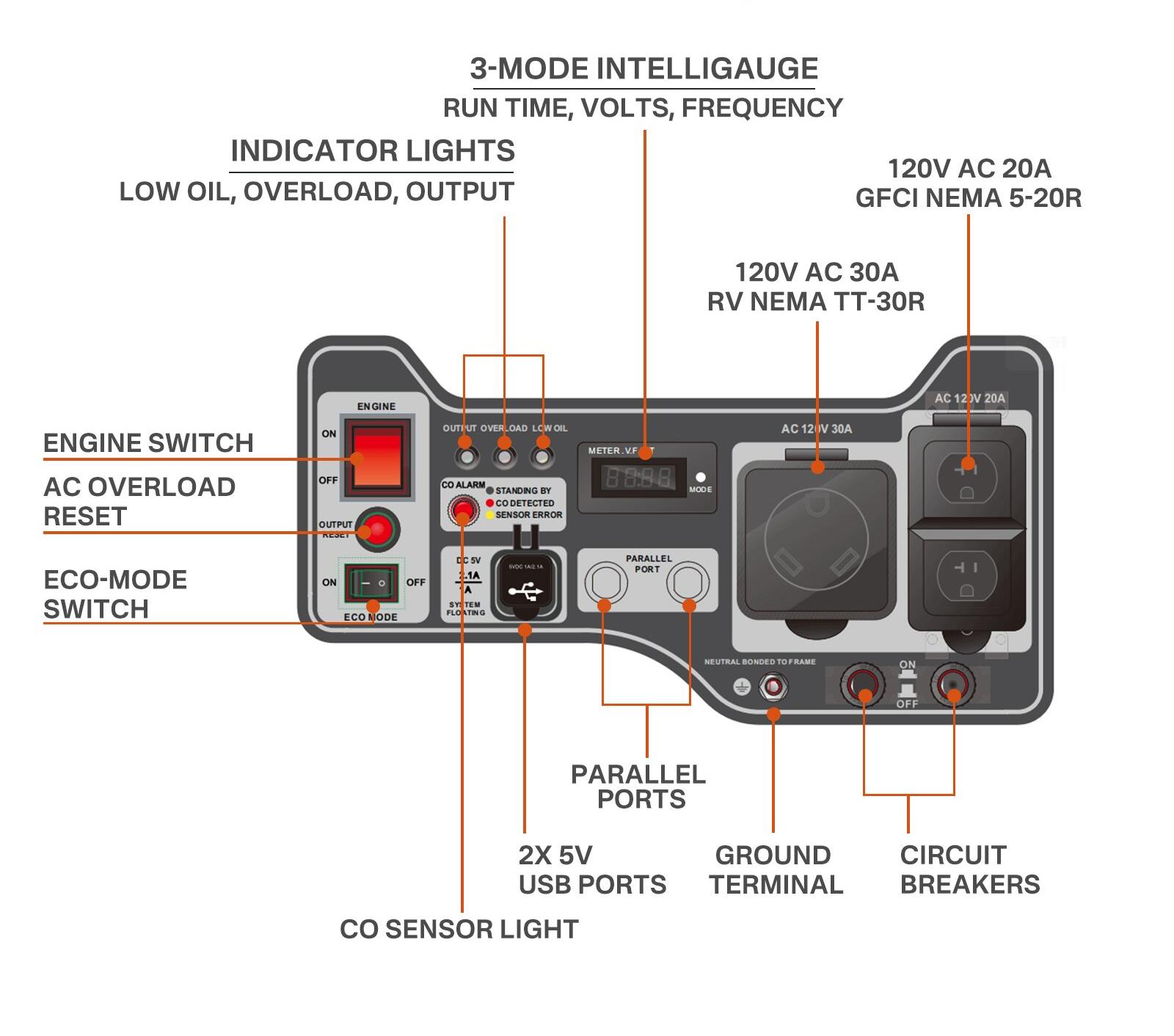
This is a highly valuable function. The power of two generators of identical model can be melted together through a parallel connection line. So, it is like having a 2000W generator first and later on, you could buy another one when needed and thus you have 4000W of power, this is very versatile in terms of expanding power.
Interface Panel: What interfaces do you need?
Check whether the output interface on the generator meets your requirements:
- 5V USB-A/USB-C interface: Directly charge mobile devices without the need for a charging head.
- 12V DC interface (such as cigarette lighter interface) : It can supply power to the car refrigerator or other 12V devices.
- 120V AC interface (household socket) : Is the quantity and type (with or without a protective cover) sufficient?
Modern safety barrier: CO detection and automatic shutdown
Carbon monoxide (CO) is a colorless and odorless lethal gas. Many modern inverter generators are equipped with CO sensor automatic shutdown technology. When the detector detects that the generator is operating in a closed or semi-closed space (such as near tents or garages), causing the CO concentration to rise, it will automatically shut down the engine to prevent poisoning accidents. This is a crucial safety feature.
Inverter Generator vs. Portable Power Station
When is it necessary to choose an inverter generator?
It is necessary to drive high-power devices (air conditioners, microwave ovens, electric kettles).
It can stay off the grid for several days or weeks and cannot be recharged in time through solar panels.
As an emergency backup power source for the home.
When is a portable power station a better choice?
There are absolute requirements for noise and emissions (zero noise, zero emissions).
Only charge low-power electronic products (mobile phones, lamps, laptops).
It needs to be used in a confined space indoors, in a tent or in a vehicle.
Strong Alliance: Hybrid Solution of generator + power station
This is an increasingly popular strategy: during the day, generators are used to quickly charge large-capacity portable power stations within a short period of time, while at night, quiet, zero-emission power stations are used to supply power to the camp. This not only meets the demands of high power and rapid energy replenishment, but also ensures absolute tranquility at night.
Recommended Generator Power Based On Camping Style
Family self-driving/tent or small roof tent
Requirements: On the basis of the above, add a small refrigerator, rice cooker, electric fan, projector, etc.
Recommended power: 1500W – 2300W.
Feature: This is the most popular power range, balancing power and portability.
Rv travel/Luxury camping
Demand: Drive high-power devices such as microwave ovens, air conditioners, electric kettles, and electric baking trays.
Recommended power: 3000W or above, or choose a model with parallel connection function.
Features: Power is the primary consideration, and usually the weight and volume are also larger.
Camping Generator Safety Tips
1. Placement method
- At least 5 meters away from the tent
- The bottom is stable, well-ventilated and dry
- Do not run on the roof or trunk of the vehicle
2. Fuel safety
- Do not store gasoline in high-temperature environments
- Stay away from open flames and fire sources at night
- Try to use metal safety fuel tanks
3. Maintenance suggestions
- Change the engine oil every 20 to 50 hours of use
- Clean the air filter regularly
- Empty the fuel tank when not in use for a long time
- Start once a month to maintain the status
Conclusion
When making your final choice, remember these three key points:
1. Match power to your equipment needs
Don’t blindly pursue excessive power, but ensure sufficient starting power.
2. Portability affects the camping experience
Weight, size, and towing design all determine whether you’re willing to carry it.
3. Quiet operation determines your camping atmosphere
The quieter the operation, the better the experience and the less it will disturb other campers.
Once you clearly define your camping style, power needs, and budget, you can easily find the most suitable camping inverter for you.


Leave feedback about this