

decreases accordingly. Gasoline engines rely on oxygen for combustion. Insufficient oxygen supply reduces the engine’s output power, and the power generation capacity of the generator is also affected.
If an inverter generator is frequently used in high-altitude areas, it is crucial to understand this. Especially when driving equipment with relatively high starting power and continuous power consumption, whether in the selection process or in actual operation, the performance degradation caused by altitude should be taken into consideration.
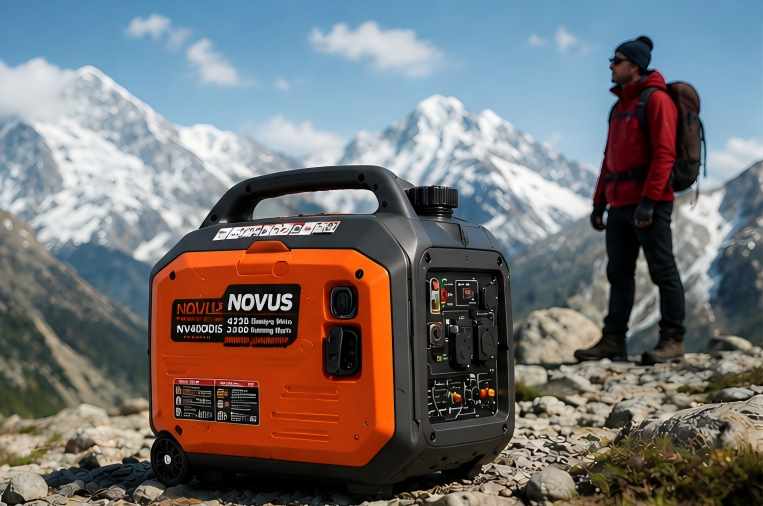
Why Does Altitude Affect Inverter Generator Performance?
The main influence comes from air density. As altitude increases, atmospheric pressure decreases, and the number of oxygen molecules in the same volume of air decreases.
A gasoline engine relies on the right combination of fuel and air to produce power. When less oxygen is available, the engine may not be able to produce the same output that it can at a lower elevation.
The basic relationship is:
Altitude increase → Air density decrease → Oxygen content reduction → Engine output power decrease → Generator available power decreases accordingly
The affected part is the engine itself, not the inverter module. The inverter unit can still convert the mechanical energy output by the engine into stable alternating current, but the mechanical energy output by the engine decreases, and the power that can be supplied to external electrical appliances naturally decreases.
The actual performance degradation degree is also constrained by the following conditions:
- Operating altitude: The higher the altitude, the more significant the power degradation
- Engine structure: Different models have different tolerance to changes in air density
- Fuel supply method: Carburetor models and electronic fuel injection models, the degree of influence by high altitude varies
- Environmental temperature: Higher environmental temperature will further reduce air density, exacerbating power loss
- Load size: The larger the load carried by the generator, the more prominent the performance shortcomings brought by high altitude will be
Therefore, the rated power indicated on the generator nameplate cannot be equivalent to the actual power that can be output in all environments. When preparing to use in high-altitude areas, it is necessary to consult the manufacturer’s provided model parameters and usage instructions.
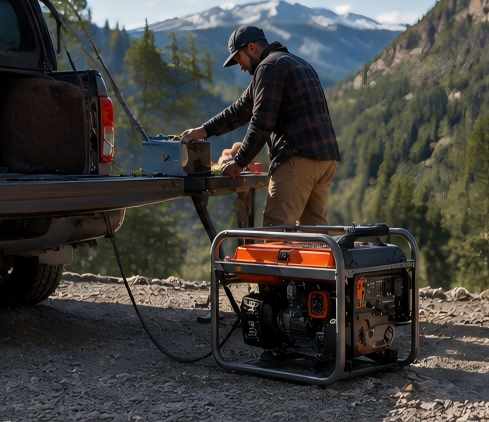
How Does High Altitude Affect Generator Power, Starting, and Fuel Consumption?
The main problem brought by high altitude is the decrease in available power. Although the generator can operate normally, the engine’s ability to withstand heavy loads will weaken.
Devices such as refrigerators, air conditioners, water pumps, compressors, and power tools require much higher peak power when starting than during normal operation. If the engine has already experienced power reduction due to altitude, the generator may not be able to withstand the instantaneous peak power.
This does not mean that the generator will immediately shut down at a certain altitude; rather, the power reserve margin is compressed. Loads that can be easily driven at low altitudes will become more difficult to handle at high altitudes.
The starting performance will also be affected. Due to differences in the engine and fuel supply system, starting difficulties and unstable operation may occur at high altitudes. Among them, carburetor models are most sensitive to changes in air-fuel ratio, and the intake oxygen volume will change with atmospheric pressure.
The fuel consumption cannot simply be determined to increase or decrease. It is actually affected by multiple conditions such as engine structure, load, environmental temperature, air-fuel ratio, and working mode.
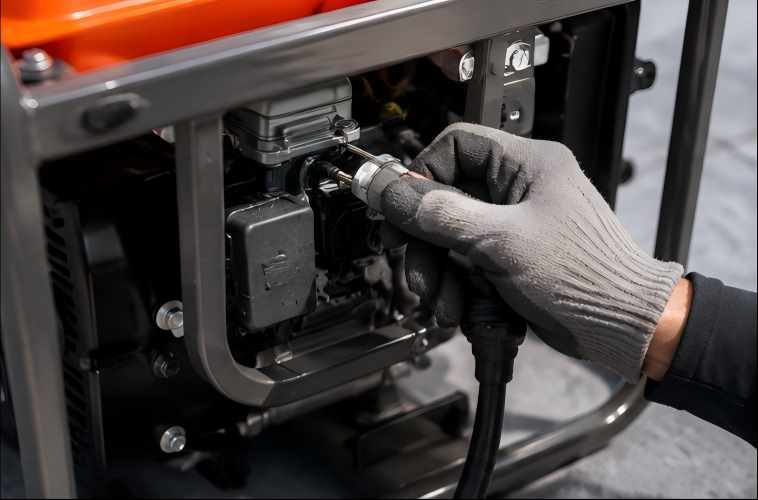
For example, power reduction makes it impossible to handle heavy loads, and the working conditions will change accordingly; when operating at light loads or near full power, the fuel consumption gap is also very obvious.
In summary, high altitude weakens the engine’s output, directly limiting the generator’s ability to handle large power electrical loads.
How to Use an Inverter Generator at High Altitude
If you plan to use an inverter generator at elevation, the first step is to check the manufacturer’s operating recommendations. Do not assume that every generator requires the same high-altitude procedure.
Some engines may require an altitude adjustment for an inverter generator, while others may have specific high-altitude kits, settings, or operating limits. If an adjustment is recommended, follow the instructions provided for that particular engine rather than applying a generic procedure.
It is also important to consider the actual electrical load. Instead of simply adding up the running wattage of every appliance, consider both running watts and starting watts.
For example, a campsite might use a refrigerator, lights, chargers, and a small television under normal conditions. Adding a high-demand appliance such as an air conditioner or microwave at the same time can significantly increase the total load.
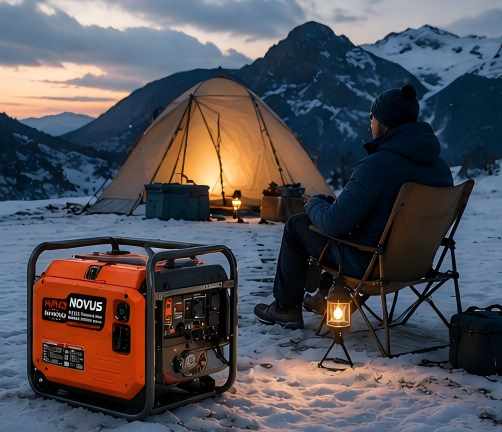
A practical approach is to leave some power headroom rather than continuously operating the generator at or near its maximum capacity. This becomes particularly useful at higher elevations, where the engine may not have the same output available as it does at lower altitudes.
When planning your load, pay particular attention to motor-driven equipment, including:
- Refrigerators and freezers
- Air conditioners
- Water pumps
- Compressors
- Power tools
These appliances can create short startup surges that require more power than their normal operating consumption.
Another important consideration is operating temperature. High-altitude locations can experience significant temperature changes, and both temperature and elevation influence air density. Following the manufacturer’s recommendations for the expected operating conditions is therefore more reliable than relying on a general altitude rule.
Finally, high altitude does not change the basic safety requirements for generator operation. Always operate the generator outdoors in a well-ventilated location. Keep exhaust away from tents, RVs, buildings, doors, and windows, and never use a gasoline generator inside an enclosed space.
Final Thoughts

Altitude does indeed affect the performance of inverters. The higher the altitude, the lower the air density, and the engine will have insufficient oxygen supply for combustion, resulting in a decrease in output power and a subsequent limitation on the actual available power of the generator.
Regardless of whether an inverter generator or a conventional generator is used, when operating at high altitudes, three key points need to be focused on: the altitude compatibility recommendations provided by the manufacturer, the available power under actual working conditions, and the startup power requirements of the electrical equipment.
If high-altitude adaptation adjustments are needed, please strictly follow the equipment manual. Reserve sufficient power margin, consider the startup load of the equipment, and abide by the original manufacturer’s operation guidelines. This will enable the generator to operate stably in high-altitude environments.


Leave feedback about this