

In situations where heavy rain, typhoons, and sudden water accumulation events have become the norm in many areas. Whether it’s a flooded basement in a household, water accumulation on farmland, or poor drainage at construction sites, once a flood occurs, the speed of drainage directly determines the extent of damage. Among all emergency equipment, the selection of pumps is often the most crucial aspect.
Many people only realize they made the wrong choice of equipment when they actually encounter a flood – the drainage speed is slow, the machine frequently gets clogged, and even fails to start at critical moments. This article will start from practical applications and take you through a systematic understanding: How to choose a truly efficient and reliable pump in an emergency flood drainage scenario.
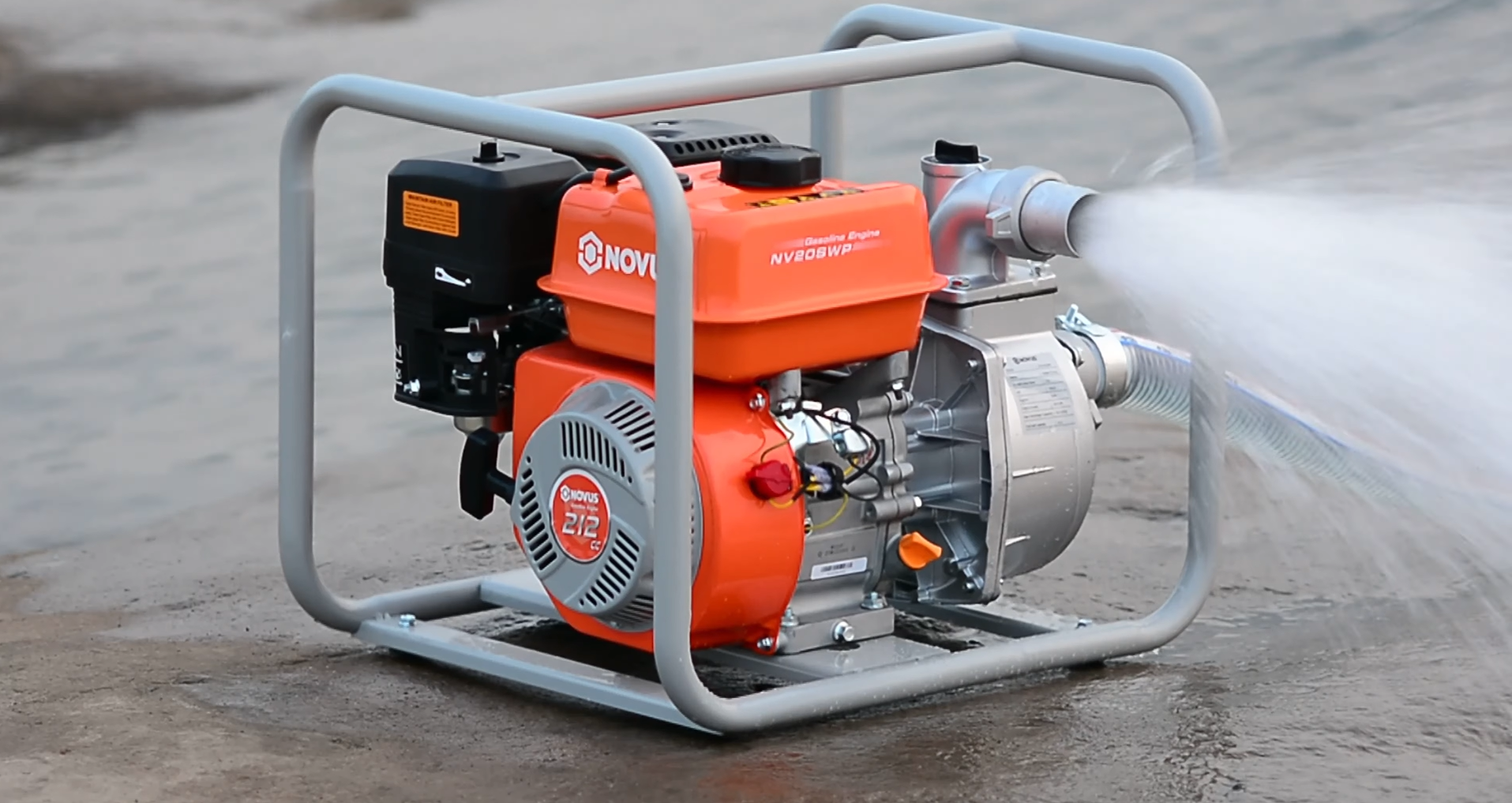
Why is Choosing The Right Water Pump Crucial for Flood Drainage?
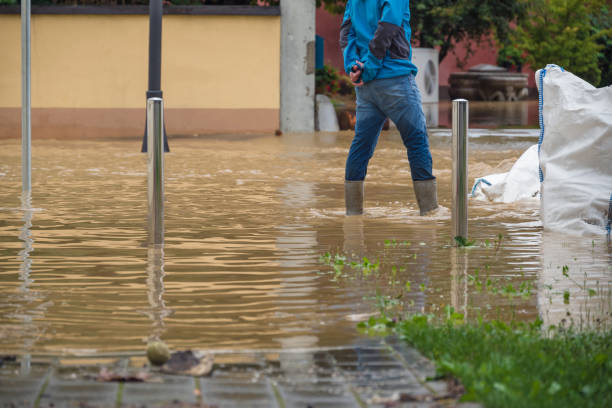
Flood water drainage requires different methods than standard water pumping procedures. Flood water contains various materials including sand and leaves and rocks and garbage which create greater challenges for the pumps. The use of ordinary water pumps will result in equipment failure because the pumps will become clogged and damaged.
More importantly, flood drainage often occurs under extremely tight time constraints. A pump with insufficient flow or head will directly slow down drainage efficiency, preventing water levels from dropping for an extended period and thus exacerbating losses. Therefore, selecting the right pump is not only a matter of efficiency but also a matter of cost and risk control.
What type of water pump is used for flood drainage?
| Clean Water Pump | Can only extract clean water (tap water, water immediately after it rains) |
| Semi-Trash Pump | Can filter out mud, small particles and impurities |
| Trash Pump | Can filter out mud, leaves, small stones, etc. |
Key point: Flood water is never pure water. It contains mud, leaves, and debris. Therefore, when draining the flood water, at least a semi-polluted pump should be selected; it would be even better to choose a fully-polluted pump.
5 Key Factors for Selecting Pumps for Flood Drainage
When making a purchase, many users only focus on “power”, but in fact, the parameters that truly affect the drainage efficiency are the following several more crucial ones.
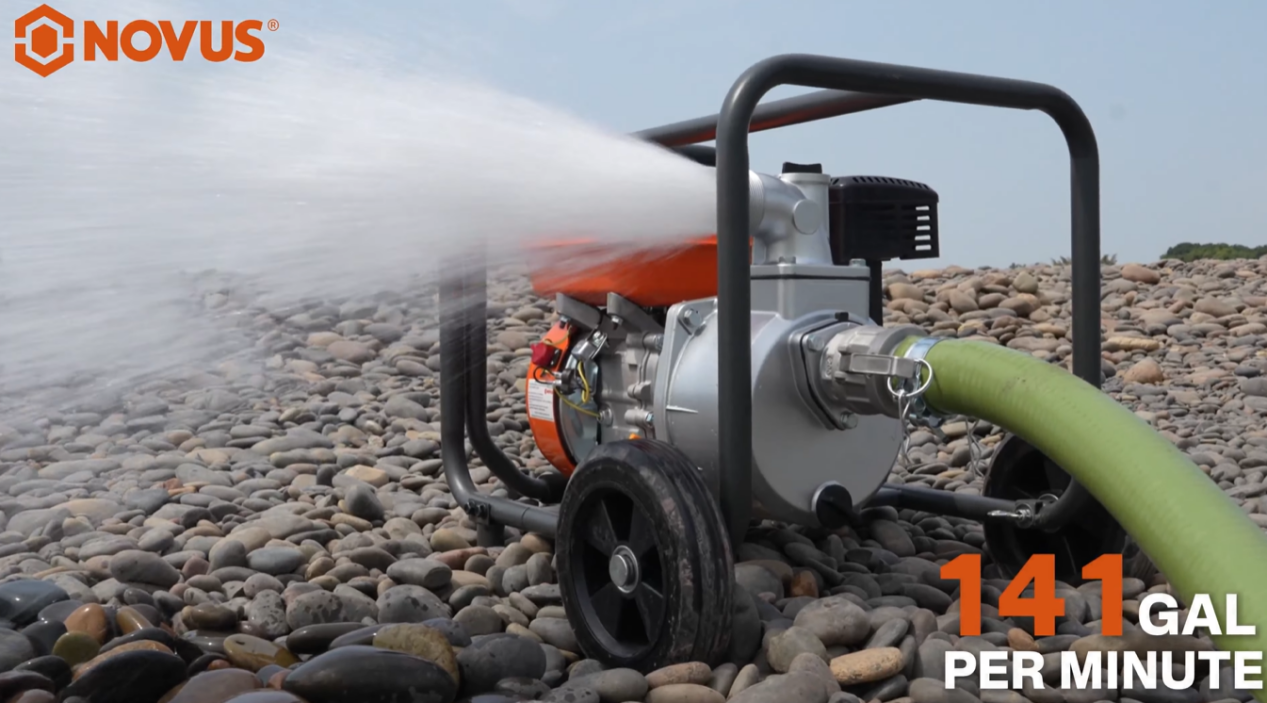
Flow rate – Determines drainage speed
The unit is usually m³/h or GPM. The greater the flow rate, the faster the drainage speed.
- Small area water accumulation (basement, courtyard): 2-inch pump, flow rate 88 – 130 GPM
- Large area flood (construction site, farmland): 3-inch or larger, flow rate 180 GPM
Head – The height to which water needs to be lifted
Head determines how far water can be “raised”. The process of draining water from low-lying areas and underground spaces becomes ineffective because insufficient head height limits water flow through the system. The head requirement for basement-to-ground-level water pumping needs to reach a minimum of 3-5 meters. The system needs a higher head requirement when it must pump water across multiple tens of meters.
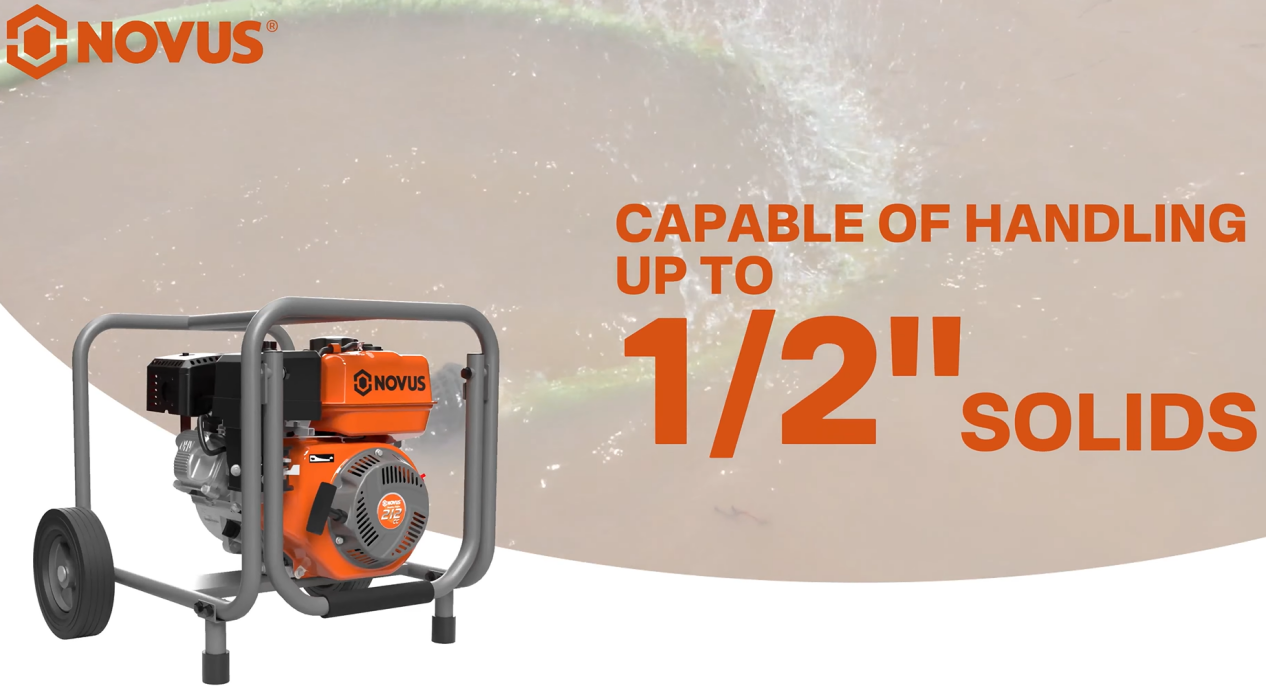
Based on particle size – will it cause blockage?
The impurities in floodwater are complex. If the water pump is unable to handle particles of a certain size, it is very likely to encounter a blockage problem. Therefore, when choosing, it is necessary to confirm the maximum particle size that the equipment can pass through.
Power Type – Gasoline vs Electric
| Type | Advantages | Disadvantages | Applicable scenarios |
| Gasoline pump | No need for power supply, highly mobile | Requires fuel, generates noise | Power outage scenario, outdoor emergency first choice |
| Electric pump | Quiet, no fuel required | Dependent on power supply | Indoor, with stable power supply |
Emergency core recommendation: If power failure is inevitable, the gasoline pump must be selected.
Portability and startup speed
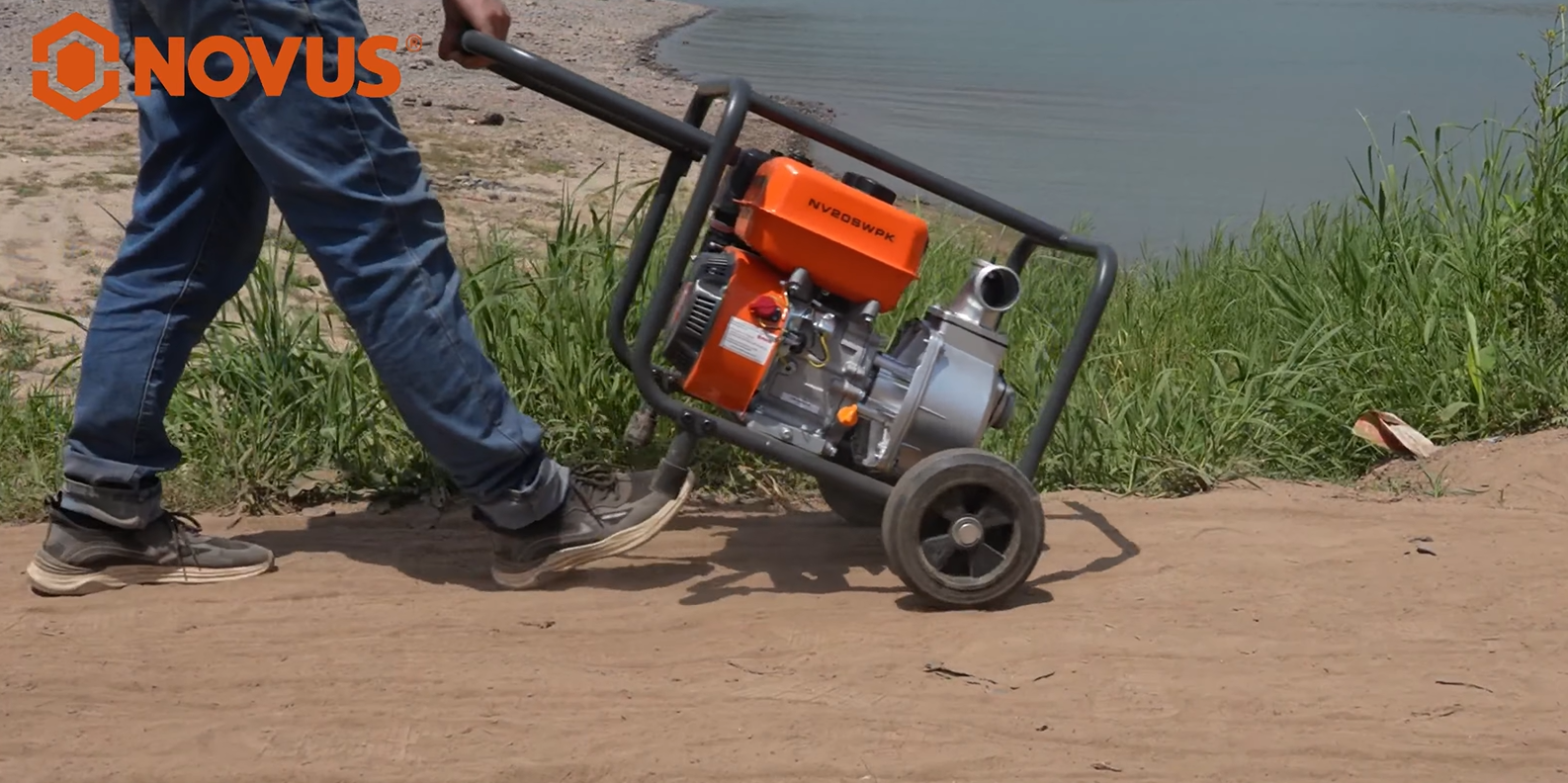
An emergency water pump must be able to be deployed and started quickly. Otherwise, even if it has excellent performance, it will be difficult to play a role in critical situations. Floods do not wait for anyone. The simpler and faster the equipment is, the more practical it is.
Selection suggestions for different scenarios
| Scene | Recommendation types | Core reasons |
| Basement flooding | 2-inch Semi-Trash Pump | Portable, quick drainage |
| Water accumulation in farmland/yard | 2-3-inch Semi-Trash Pump | Continuous drainage capacity |
| Drainage at construction site | 3-inch or Larger Trash Pump | Durable + anti-clogging |
| Urban flood emergency response | High-power gasoline sewage pump | Mobility + high efficiency |
Recommended Solution: An efficient choice for emergency drainage
In terms of specific product selection, semi-sewage pumps of different specifications can cover most application scenarios.
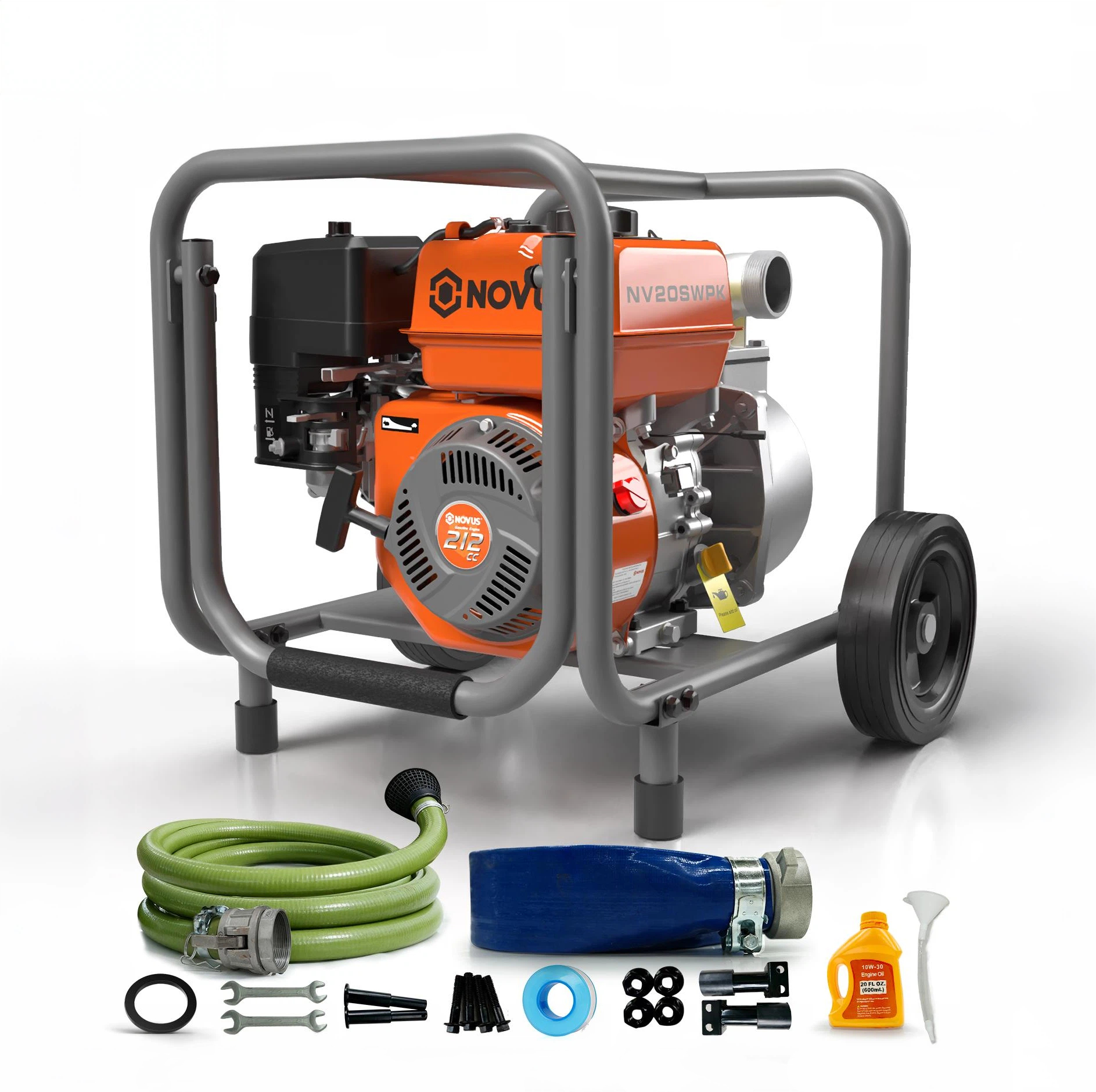
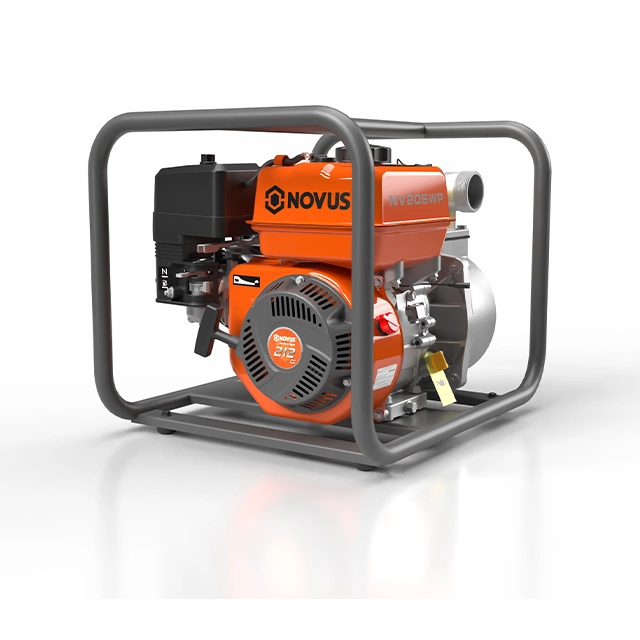
- Take the 2-inch semi-sewage pump as an example. It is more suitable for household users or light water accumulation environments. These devices are usually lightweight, easy to operate, and can be quickly deployed in a short time. They are the “first response equipment” in emergency scenarios.
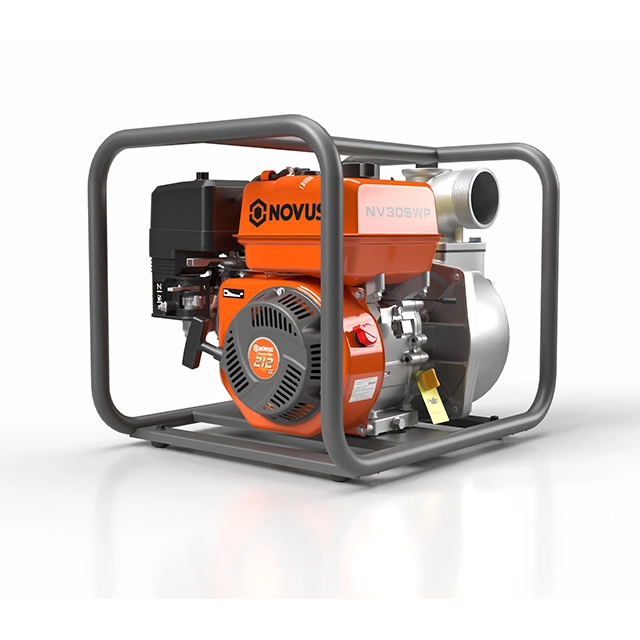
- While the 3-inch semi-sewage pump is more suitable for high-intensity usage scenarios. The larger flow means it can discharge a large amount of water in a shorter time, especially suitable for farms, construction sites, or severe flood environments. From a long-term usage perspective, its advantage in efficiency is very obvious.
If your goal is to balance efficiency and cost, choosing the appropriate size based on the actual situation is often more important than simply pursuing “high power”.
Practical Tips for Improving Drainage Efficiency
Placement location: Select the lowest point of water accumulation to ensure that the inlet is completely submerged.
Avoiding clogging of the suction pipe: Do not insert the suction port directly into the muddy bottom; leave a 2-3cm gap.
It is recommended to install a filter screen: To prevent large debris from entering, but do not use a too dense net (it will reduce the flow rate).
Continuous monitoring:
- Gasoline pump: Pay attention to the oil level and the engine oil
- Electric pump: Pay attention to the safety of the cables and avoid electric shock
Q&A
Can flood drainage be done using a water pump?
No. A water pump cannot pass through the sediment. It will get clogged or even damaged within a few minutes.
Which pump is better, the 2-inch or the 3-inch?
It depends on the water volume. For small areas with water accumulation (like basements), use the 2-inch pump; for large areas with floods (such as construction sites or farmlands), use the 3-inch pump.
Which pump is more suitable for emergencies – the gasoline pump or the electric pump?
In case of power failure, the gasoline pump is the only option. If there is a stable power supply, the electric pump can be used.
How long does the water pump take to drain the accumulated water?
Example: A 2-inch pump (25 m³/h) can drain 50 cubic meters of water in approximately 2 hours.
Conclusion
When it comes to flood drainage, the choice of equipment is never a trivial matter. A suitable pump can quickly remove the accumulated water, reduce property damage, and enhance the overall emergency efficiency.
In contrast, an incorrect choice not only slows down the progress but may also fail at critical moments. Especially in the current era of frequent extreme weather events, preparing a reliable drainage plan in advance has become the consensus of an increasing number of users.


Leave feedback about this