

Gas pressure washers offer cleaning capabilities unmatched by most electric and battery-powered models. They are ideal for large driveways, heavily soiled oil spills, equipment cleaning, commercial properties, and any situation requiring high pressure and high flow rate where a power source is inconvenient.
However, it’s easy to buy the wrong one. A lot of consumers tend to stare at the top PSI mark on the label only, which kinda leads to pressure washer machines that break down fast, don’t really deliver enough real world scrubbing power, or get fitted with the wrong level of equipment, either over equipped or too minimal. This guide will, uh, clear up what the truly key factors are, so you can pick a gas pressure washer that stays high-performing and built to last.
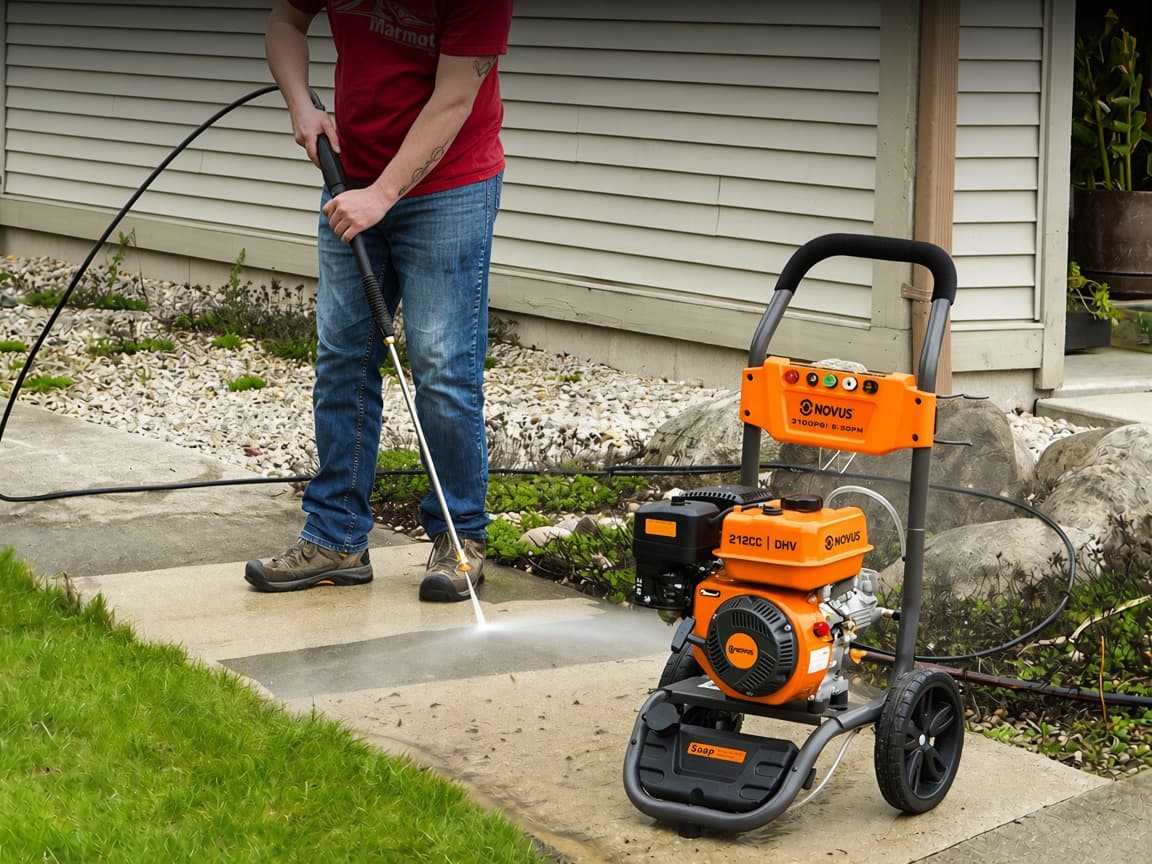
Who Should Buy a Gas Pressure Washer?
Gas pressure washers are suitable for:
- Frequent cleaning of large concrete or masonry surfaces
- Treating stubborn oil, grease, or industrial dirt
- Pre-painting treatments or cleaning heavy equipment
- Work away from power outlets
- Frequent use or semi-professional/professional applications
For light household tasks, gas cleaners are generally not the best choice. A high-quality electric motor will be quieter, lighter, easier to maintain, and perfectly adequate.
Quick comparison:
| Factor | Gas | Electric / Battery |
| Power & Speed | Higher PSI + GPM | Lower to moderate |
| Portability | Good (no cord) but heavier | Lighter, but cord or battery limited |
| Noise & Emissions | Loud, produces exhaust | Much quieter, zero emissions |
| Maintenance | Engine + pump care required | Minimal |
| Best for | Heavy-duty & large areas | Everyday home use |
Key Performance Specs That Matter
PSI (pounds per square inch)
Measures pressure. Higher PSI helps remove stubborn dirt. Gas pumps typically range from 2800 to 4000 PSI. Around 3000 PSI is considered solid medium to heavy-duty, suitable for most demanding home and light commercial applications. Simply pursuing extremely high PSI is often just a marketing tactic; actual performance depends on sales volume.
GPM (Galls per Minute)
Flow rate determines the speed at which dirt is washed away. Many professionals believe GPM is more important than PSI. A qualified gas cleaner is recommended to achieve at least 2.0–2.5 GPM. Higher flow rates can significantly reduce cleaning time for large areas.
Cleaning Units (CU = PSI × GPM)
This is a simple yet practical comprehensive indicator. For example: 3000 PSI × 2.5 GPM = 7500 Cleaning Units. It provides a more accurate reflection of cleaning capacity than looking at PSI alone.
The Engine: The Heart of Reliability
The engine largely determines a machine’s lifespan and user experience.
High-end engines tend to run, kind of smoother, they are more fuel-efficient , also quieter, and they usually last longer.
General-purpose engines cost less, but they typically cause more vibration, they age out sooner and they are harder to get repaired.
Don’t ignore safety minded things, like automatic shutdown when the oil level is low, or at least pay close attention.
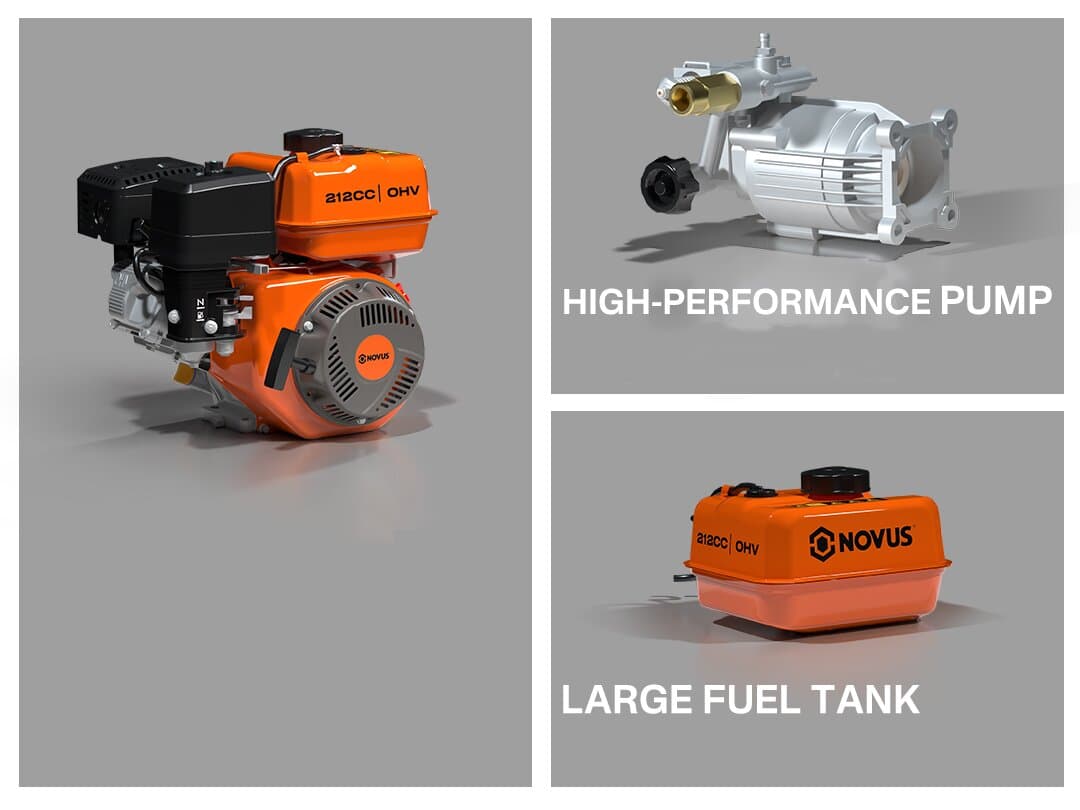
Pump Type: Axial vs Triplex
This is one of the most easily overlooked yet crucial decisions.
- Axial cam pump usually turns up on consumer-grade and light-duty gas machines. It’s small and pretty affordable, but not really a match for prolonged, nonstop, high-intensity workloads, you know.
- Triplex three-cylinder pump is the more common set-up for professional and heavy-duty work. It tends to run at a lower operating temperature, has a longer service life when things are under heavy load, and it’s typically repairable too.
If you plan to use your machine frequently or perform high-intensity work, prioritize a high-quality three-cylinder pump. Cheap machines often experience pump problems first.
Other Features Worth Paying Attention To
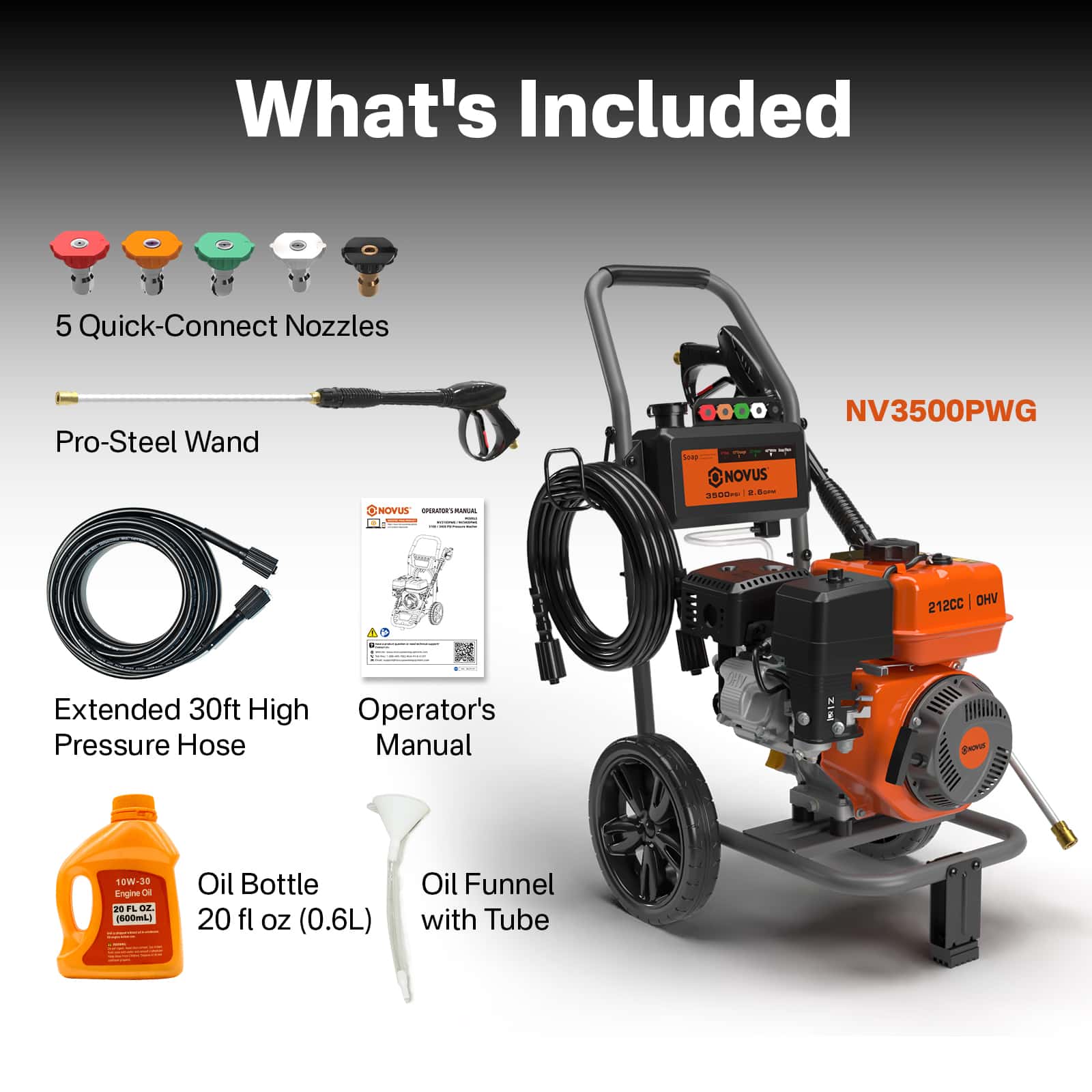
High-pressure hose: 25–50 feet long, made of high-quality, kink-resistant, and residue-free material.
Nozzles: Quick-connect interface, including common angles (0°, 15°, 25°, 40°) and soap dispenser nozzles. Turbine/rotary nozzles are effective on concrete, but should be used with caution.
Cleaning agent system: Downstream injection is more pump-friendly; some models have an onboard soap dispenser.
Frame, tires, and handlebars: A robust frame, pneumatic or non-pneumatic tires, and comfortable handlebars are essential for moving heavy gas machines.
Vibration and workmanship: Low vibration reduces fatigue and extends component life.
Accessory storage: Integrated storage design for guns, hoses, and nozzles keeps the machine neat and easy to use.
Durability, Warranty, and Long-Term Cost
Consumer-grade gas engines can take the odd heavier push, but they are kinda poor for everyday professional work. Real commercial or professional models ask for a bigger upfront payment, though usually you get a better engine, three-cylinder pumps, and sturdier frames along with it.
When comparing warranties, check the coverage for the engine, pump, and frame separately. A longer pump warranty is a good sign. Also consider maintenance costs (oil, spark plugs, pump protectant, winter maintenance) and the availability of local aftermarket services and parts.
Budget Reality Check
Entry-level gas engines: Mostly use general-purpose engines and axial pumps. Suitable for occasional use, but lifespan is limited under high-intensity conditions.
Mid-range models: Significantly improved engines and pumps, a sweet spot for most serious home and light commercial users.
Professional/commercial grade: Premium engine + three-cylinder pump + heavy-duty frame. Higher initial cost, but significantly longer service life.
Spending a little more on a premium engine and pump usually results in lower average annual operating costs.
Summary
The key to a good gas pressure washer lies in balanced performance (PSI + GPM), a reliable engine, and a durable pump, not the highest number on the packaging. Choosing the right machine to match your actual workload will result in faster cleaning and less hassle.
Focusing on Cleaning Units, engine reputation, and pump type will give you a head start over most buyers.


Leave feedback about this