

A pressure washer is a cleaning device that uses high-pressure water jets, typically used for outdoor cleaning and building exterior cleaning. So, can a gas pressure washer be used to wash a car? The answer is yes. If used properly, a gas pressure washer can be used efficiently and safely for car washing.
In this article, we will analyze the scenarios in which a gas pressure washer is suitable for car washing and how to use it safely without damaging your car’s paint, trim, or seals.
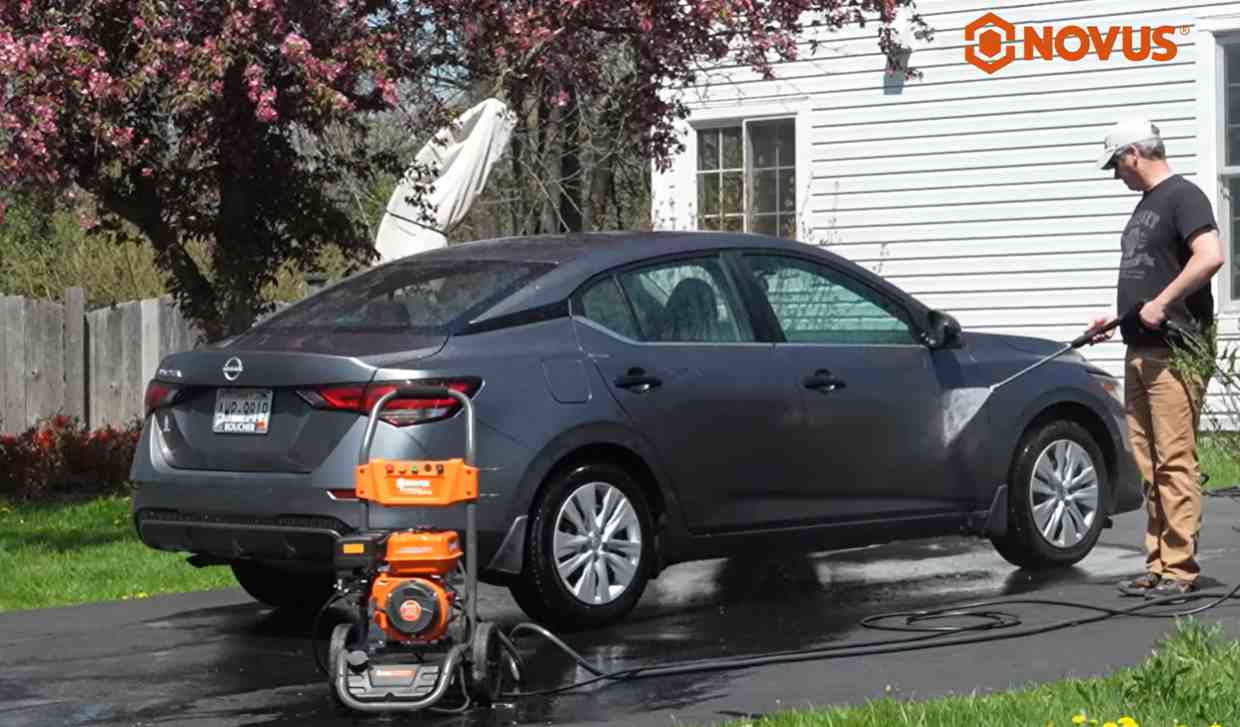
Why Gas Pressure Washers Are Often Considered “Too Powerful” for Cars
Gas power washers are meant for heavy-duty cleaning, such as driveways, decks, fences, and siding. Due to this, many power washers come equipped with high PSI, which is alarming to car owners. Hence, the reason why the gas power washer is normally considered “too powerful” for cleaning autos.
However, the important thing to understand is that:
The machine’s maximum PSI is not equivalent to the paint pressure that reaches your car’s paint.
The actual cleaning pressure is affected by a number of controllable variables:
- Nozzle angle
- Spray distance
- Water flow (GPM)
- Spray technique
A gas pressure washer becomes risky only when it’s misused. Common mistakes that can lead to damage include:
- Using 0° or 15° nozzles directly on paint
- Spraying too close to the surface
- Holding the spray on one spot for too long
- Directly blasting seals, wheel bearings, or loose trim
In short, gas pressure washers aren’t inherently unsafe for cars—poor technique is.
How to Safely Wash a Car with a Gas Pressure Washer
When used properly, a gas pressure washer can clean vehicles efficiently while minimizing contact, which helps reduce swirl marks and scratches. The following guidelines are essential for safe operation.
Recommended Pressure for Car Washing
While many gas pressure washers are capable of 3000+ PSI, car washing does not require anywhere near that level.
- Ideal working pressure: approximately 1200–2000 PSI
- Focus on controlled pressure, not maximum output
- Remember: increasing distance from the car significantly reduces impact force
High flow rate (GPM) is often more useful than extreme pressure, as it helps rinse dirt away without aggressive force.
Choose the Right Nozzle
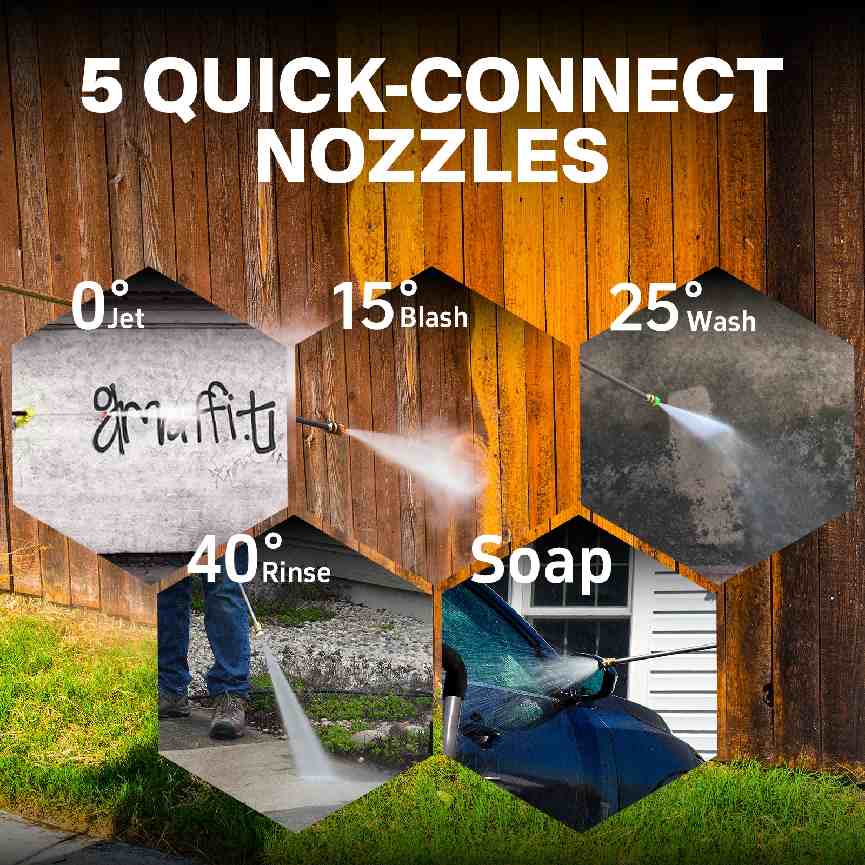
Nozzle selection is one of the most important safety factors.
Recommended nozzles:
- 25° nozzle – general rinsing
- 40° nozzle – gentle washing and final rinse
- Soap nozzle – low-pressure detergent application
Avoid:
- 0° (red) nozzle
- 15° nozzle on paint surfaces
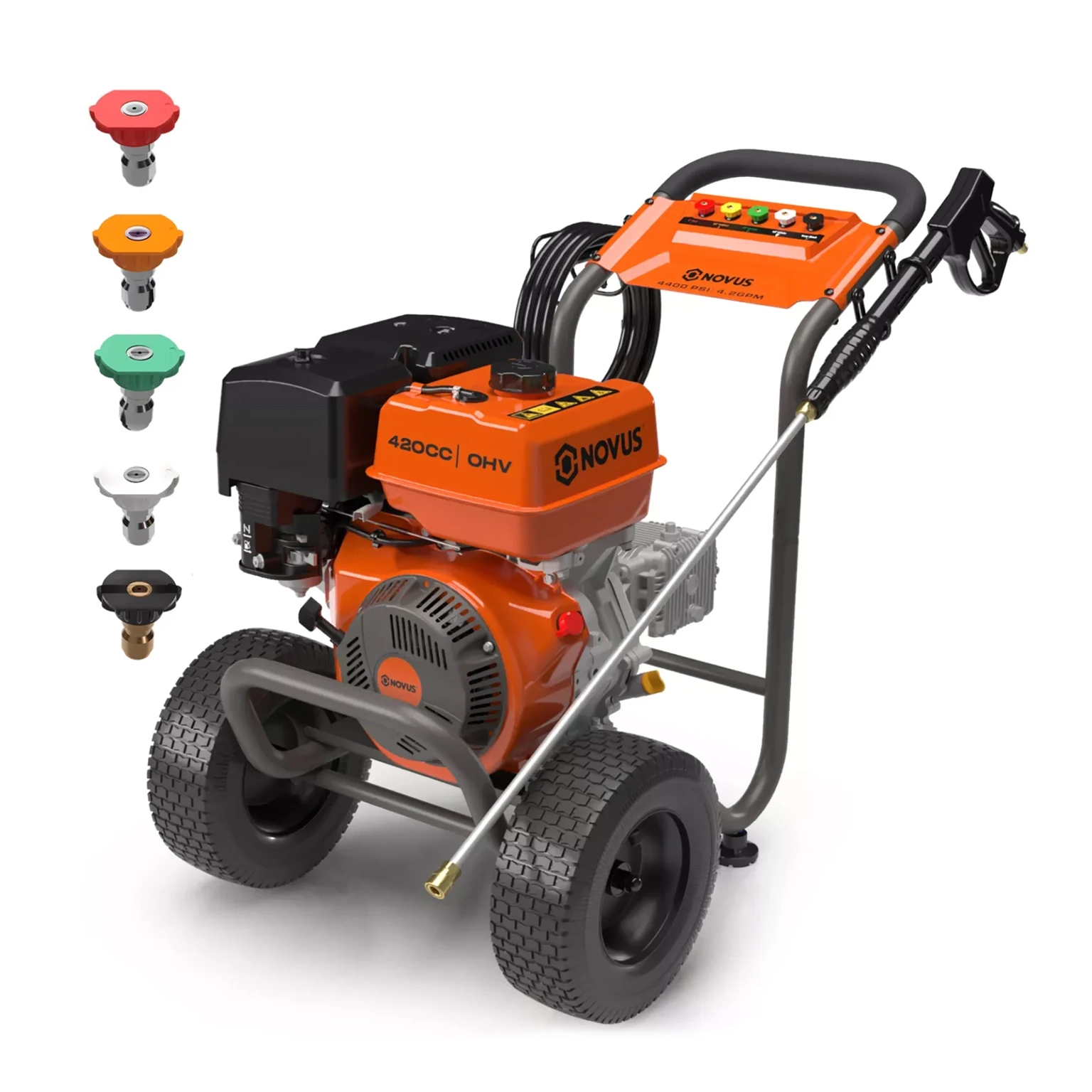
Many quality gas pressure washers include multiple color-coded nozzles, making it easy to adjust spray patterns depending on the task.
Maintain Proper Distance and Angle
- Keep the spray tip at least 12–18 inches (30–45 cm) away from the vehicle
- Spray at a slight angle, not straight on
- Keep the wand moving—never concentrate pressure on one area
This technique reduces the chance of damaging clear coat or forcing water into sensitive areas.
A Simple and Safe Car Wash Process
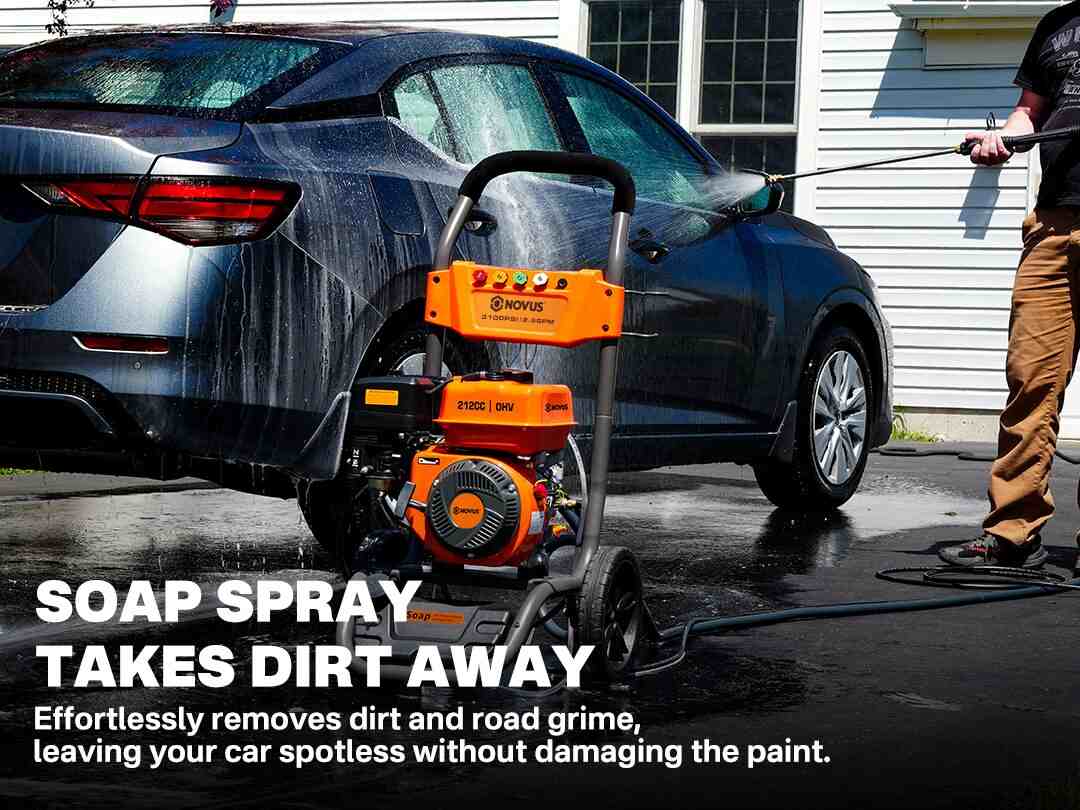
Pre-rinse:
Use medium pressure and a wide-angle nozzle to remove loose dirt.
Apply detergent:
Use a soap nozzle or built-in detergent tank to apply car-safe cleaner.
Let foam dwell:
Allow detergent to loosen grime without scrubbing.
Gentle rinse:
Rinse from top to bottom using a wide spray pattern.
Avoid sensitive areas:
Be cautious around mirrors, seals, badges, and wheel hubs.
Gas vs Electric Pressure Washer for Car Wash
When choosing between gas and electric pressure washers for cars, it’s important to consider usage scenarios rather than assuming one is universally better.
| Feature | Gas Pressure Washer | Electric Pressure Washer |
| Power | Higher PSI & GPM, faster cleaning | Moderate PSI & GPM, gentler on paint |
| Versatility | Cars + driveways, patios, heavy dirt | Mainly cars, light dirt |
| Ease of Use | Requires proper technique | Beginner-friendly, simple operation |
| Maintenance | Fuel, oil, routine care | Minimal, just plug in |
| Mobility | Operates anywhere | Limited by cord/outlet |
In short, gas washers are more powerful and versatile, but require care and technique, while electric washers are gentler and easier for beginners.
Who Should Consider a Gas Pressure Washer for Car Washing?
A gas pressure washer for car wash makes the most sense for users who need versatility and performance beyond basic vehicle cleaning.
Typical users include:
- Homeowners washing cars, driveways, and outdoor furniture
- Truck and SUV owners dealing with heavy dirt or mud
- Fleet vehicle operators
- Small commercial car wash businesses
- Contractors and property managers
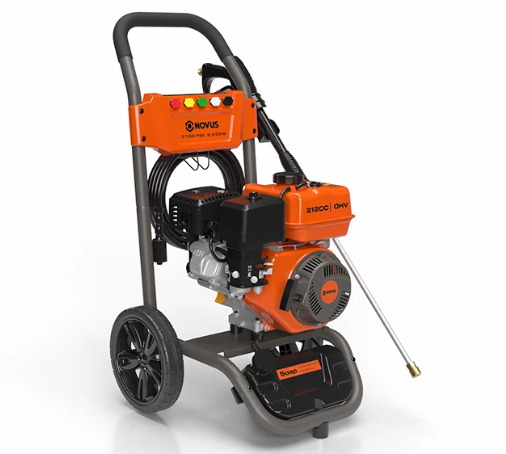
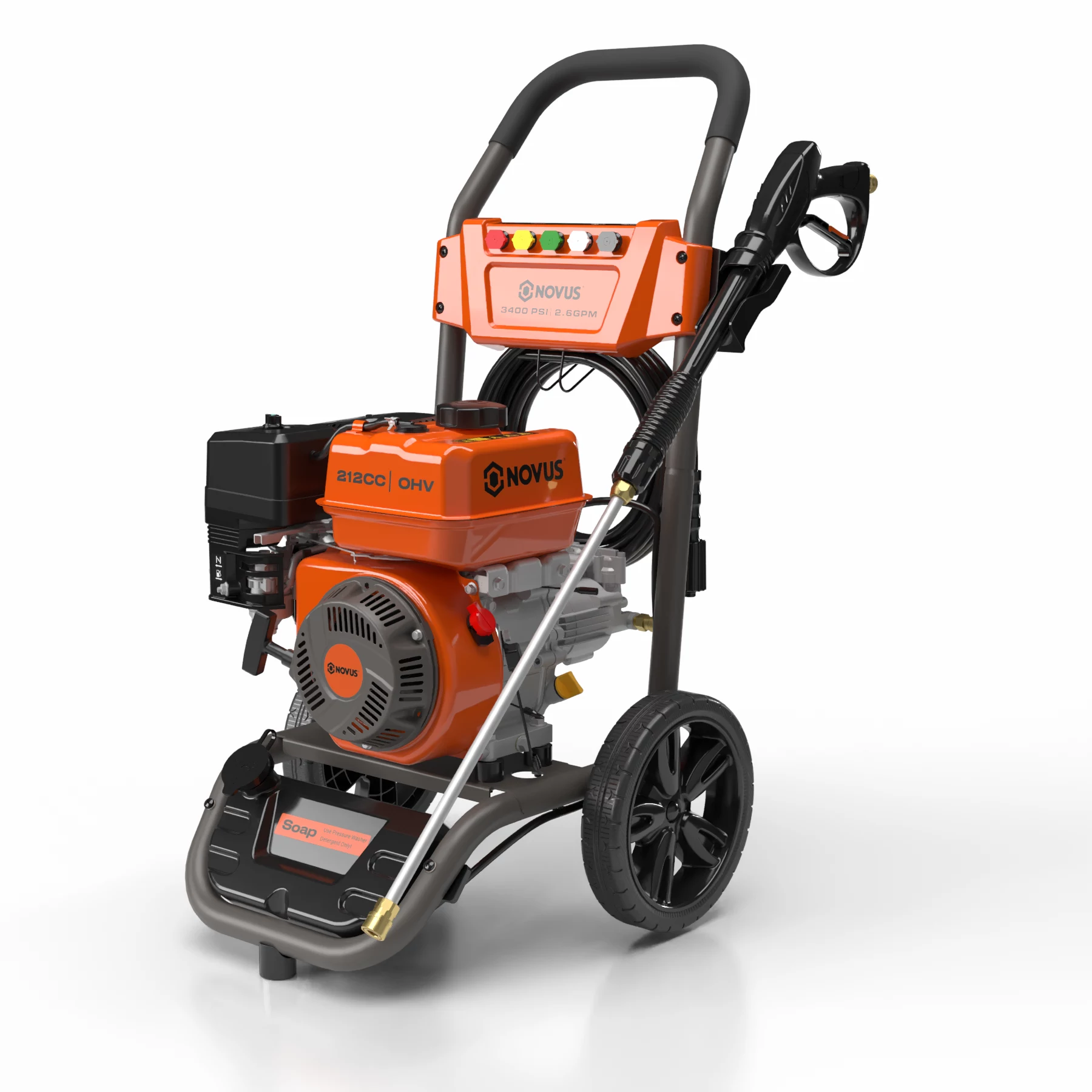
For instance, models like the Gas Pressure Washer NV3100PWG are usually preferred by users who intend to have one machine for multiple tasks. Equipped with a powerful 212cc horizontal engine, 3100 PSI, and 2.5 GPM output, along with features like five precision nozzles, a built-in soap tank, and a 30 ft abrasion-resistant hose, it grants the operator the ability to dial back pressure for cars while still having power available for tougher jobs.
Learn more about NOVUS Gas Pressure Washer
Practical design elements—such as flat-free wheels for easy transport, an axial cam pump requiring minimal maintenance, and low-oil protection with alarm—also make extended use more reliable, especially for users who rely on the machine regularly.
In Conclusion
So, is a gas pressure washer safe for car washing?
Yes—when used correctly.
Gas power washers can sometimes be confusing due to the power they offer, but power, nozzles, radius, and technique have a much bigger impact than PSI rating. Using the correct setup, gas power washers can effectively wash cars with a large reduction in manual physical contact, in addition to other techniques beyond washing cars.
If you are looking for an all-purpose option for cars, outdoor areas, and heavy-duty cleaning, a gas-powered pressure washer can be considered an investment worth making—as long as safety measures are considered.


Leave feedback about this