

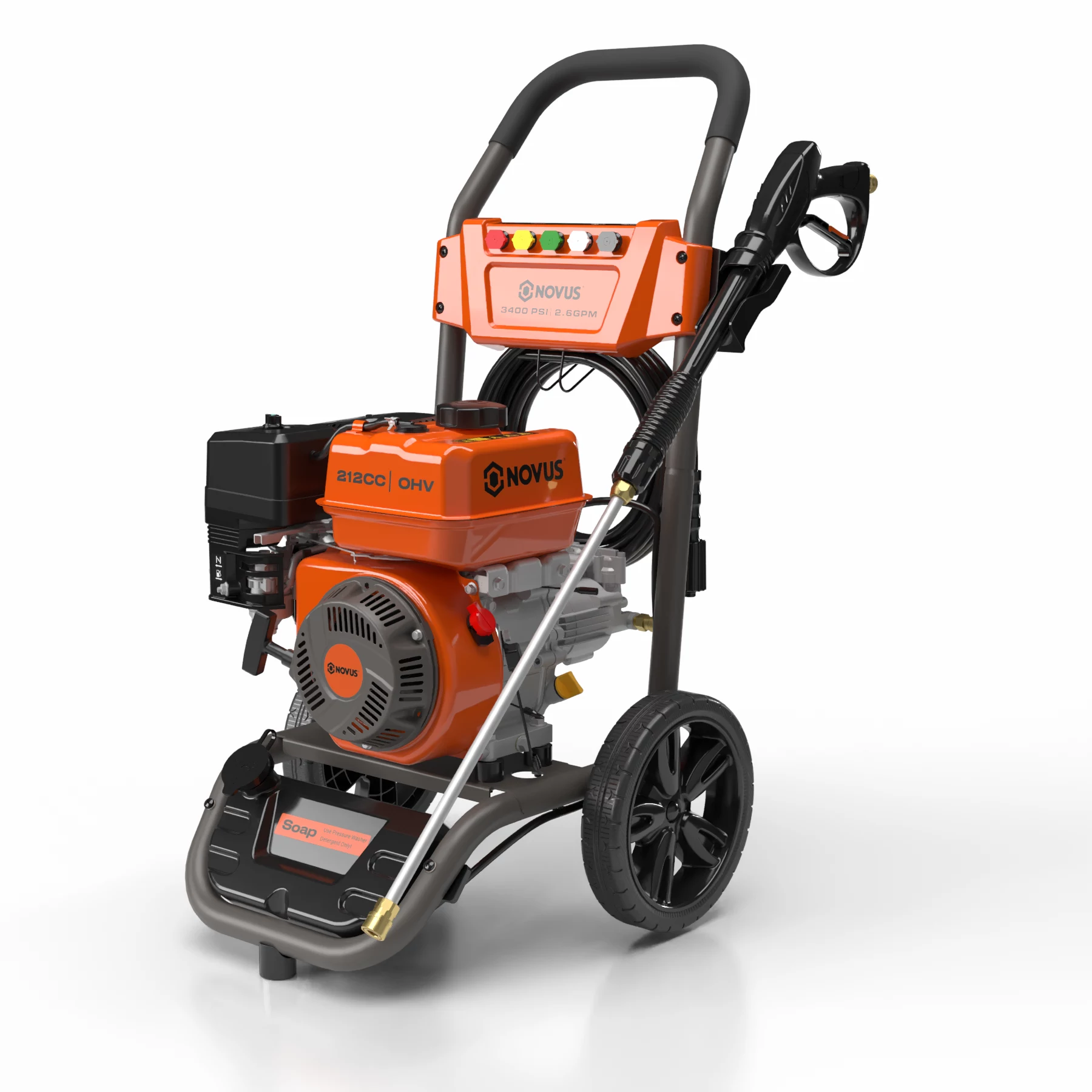
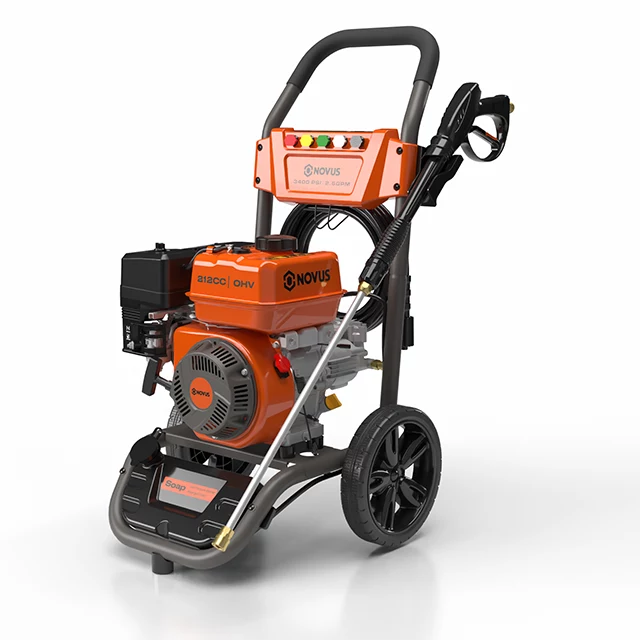
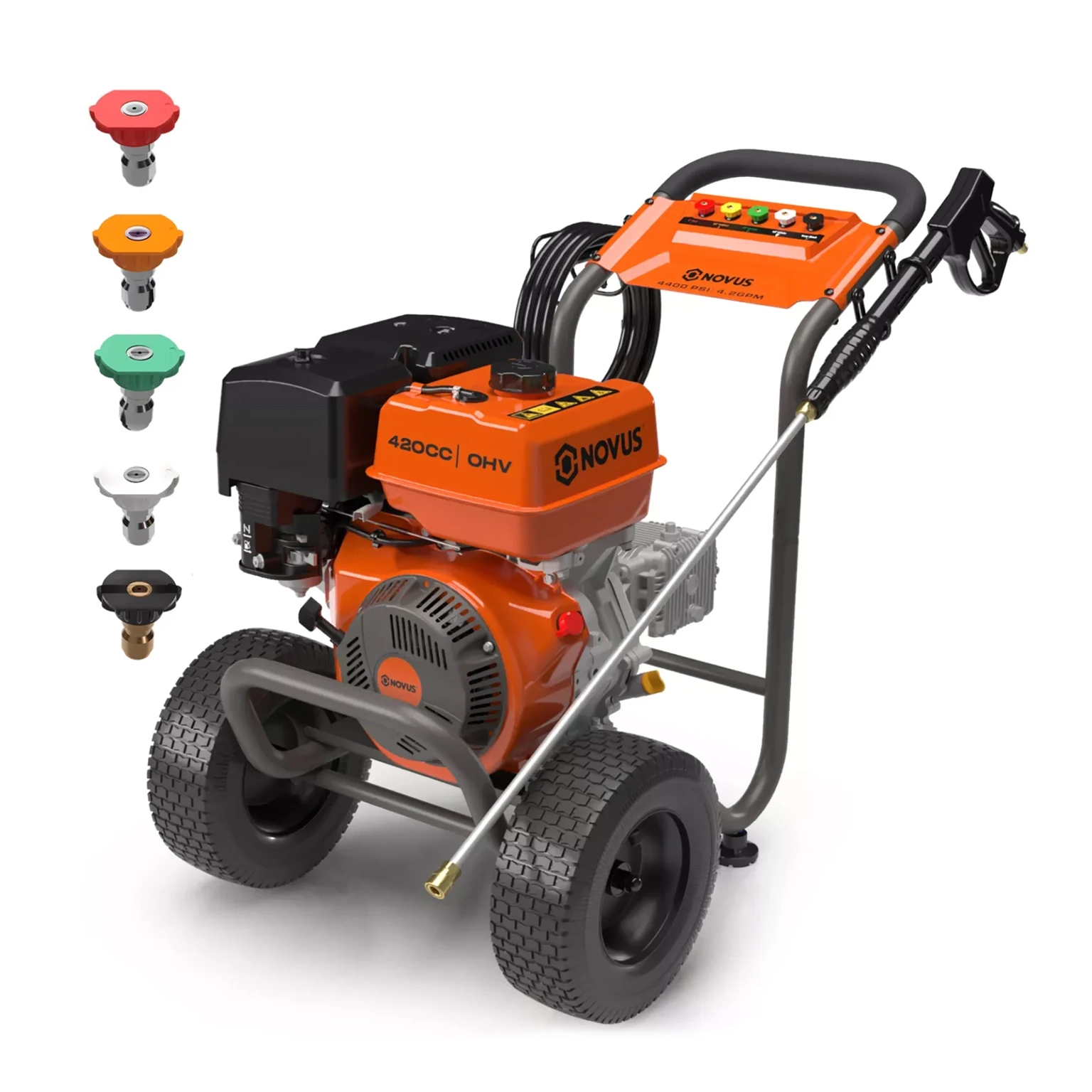
The gas pressure washer operates at high flushing power, which makes it suitable for cleaning vehicles, maintaining gardens, and decontaminating exterior walls. The gasoline models provide better operational flexibility for outdoor work because they do not depend on electricity, while electric models require an electricity source.
The high-power component of the system can create extra dangers due to the fact that they operate at high levels. Users need to be aware of security precautions since they will have to manage high-pressure water flow as well as engines, gasoline fuel and emissions from exhaust. Beginning users should be aware of the risks and procedures for operating since these knowledge will assist them to safeguard themselves and others.

Why is Safety Crucial When Using Gas Pressure Washer?
Unlike ordinary cleaning tools, this gas pressure washer has two major sources of risks:
Firstly, the high-pressure water flow. The equipment pressure can reach 2000–4000 PSI, which is sufficient to cause penetrating injuries to the skin.
Secondly, the risks brought by the gasoline engine, including:
- Carbon monoxide emissions (extremely dangerous in enclosed spaces)
- Risk of fuel leakage
- High noise and vibration
In addition, the kickback of the spray gun can also cause loss of control and falls, which is especially easy for beginners to overlook.
Preparations Before Using Pressure Washer
Adequate preparation is the foundation of safe operation.
Read the product manual
You need read the manual as it provides information regarding the rated pressure of equipment and the specifications of nozzles and security precautions. The operating instructions for different models of equipment are different. Do not base your estimates the operating conditions based on your experiences.
Check the equipment condition
Examine the hose’s high pressure for cracks, wear or indications of ageing.
Confirm that the connection is secure and leak-free.
Verify that the trigger for the spray gun safety lock is operating correctly.
Verify to ensure that the engine oil levels as well as the fuel level are in good order.
Fuel Safety Refueling
Refuel in a ventilated and open area, clear of fire sources and sources of heat. The engine must be cool prior to refilling, as fuel should not be added during operation and also immediately after the engine is been shut down. After refilling, be sure to seal the fuel cap tightly and then wipe off any fuel spills.
Wear personal protective equipment
- Safety goggles or a face shields: protect the eyes against high pressure water sprays and flying debris.
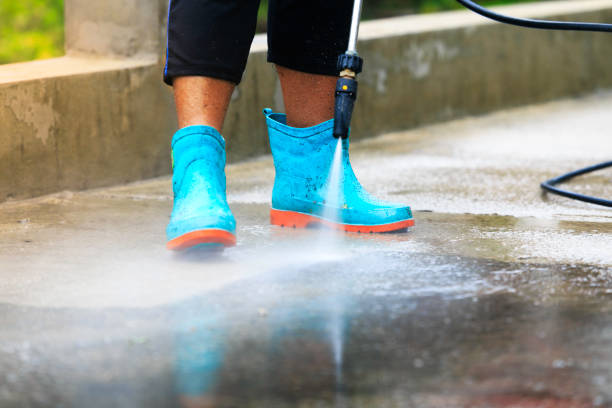
- Shoes for work that are non-slip: Reduces the risk of accidents due to recoiling on slippery, wet surfaces.
- Waterproof gloves: protect hands and improves grip.
- Earplugs and earmuffs: engine noise can be as high as 85 decibels. Long-term exposure to it can harm hearing.
Safe Startup and Standard Operating Procedures
Correct operation procedures can effectively reduce the risk of accidents. Please strictly follow the following steps:
1. Connect the hose to the water supply and ensure a steady water supply. Tighten all connections.
2. First, turn on the water then allow the water to flow through the system let out the air, then turn on the engine.
3. Select the nozzle that is appropriate to your object of cleaning (refer to the nozzle selection guide in the next section).
4. When operating, grip the gun in both hands, hold an upright posture and anticipate which direction the recoil force prior to.
5. Maintain the gun at a level, or directed downwards. Avoid spraying upwards toward the ceiling or power lines.
6. Maintain a suitable distance from the surface to be cleaned (start at thirty to sixty centimeters). Check the effect slowly from a distance until close.
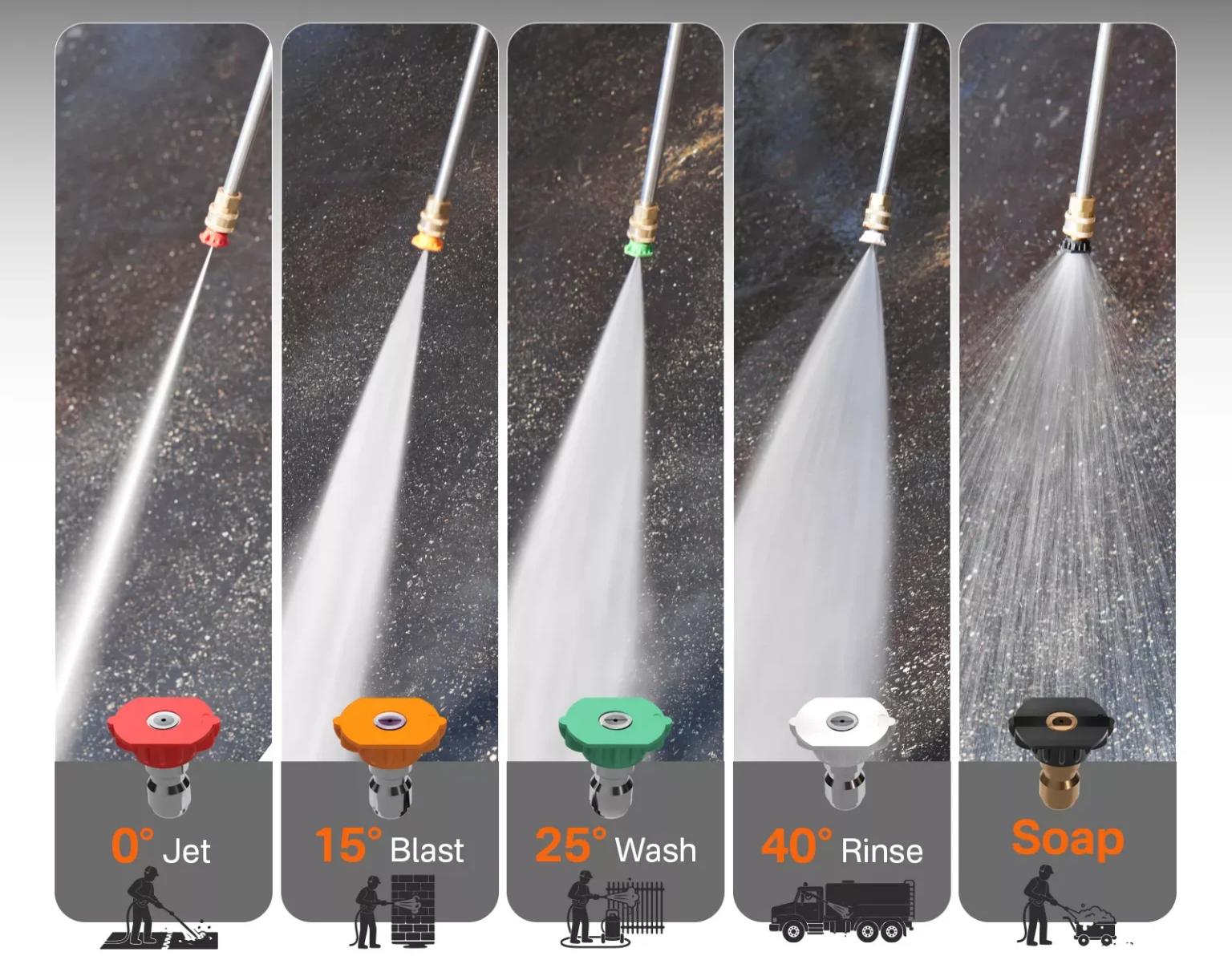
Nozzle color and applicable scenarios
| Nozzle Colors | Spray angle | Applicable scenarios |
| Red | 0° | Persistent dirt, localized deep cleaning (extremely strong pressure, use with caution) |
| Yellow | 15° | Hard surfaces such as concrete and bricks |
| Green | 25° | General daily cleaning (most commonly used) |
| White | 40° | Vulnerable materials such as car bodies and wooden surfaces |
| Black | 65° | Low-pressure pre-wetting, application of cleaning agent |
Common Hazards and Avoidance Methods
Understanding potential risks is the key to avoiding accidents. Here are the most common dangers faced by beginners and the corresponding measures to take:
▶ High-pressure water cutting injuries
High-pressure water can penetrate the skin and cause severe lacerations. The wound may appear minor on the surface which usually requires surgical treatment. The nozzle must never be directed toward people pets or bystanders. Immediate medical attention must be sought whenever skin contact occurs because people should not wait to receive help.
▶ Carbon Monoxide Poisoning
The gasoline engine produces colorless and odorless carbon monoxide, which is a lethal gas. The substance should only be used outside because it should never be used indoors and in garages and underground spaces and poorly ventilated areas. The windows need to be opened because it does not provide enough safety, so people must work outside in complete open space.
▶ Recoil Force Fall
Pulling the trigger generates a significant recoil force, making it easy to lose balance on wet, slippery surfaces. Always keep your feet firmly planted and spread your legs to increase your contact area with the ground. Exercise extreme caution when operating on slopes or steps.

▶ Electrical Hazards
When operating near wires, outdoor sockets, or distribution boxes, maintain a minimum safety distance of 3 meters. High-pressure water should not be used to clean any electrical equipment.
▶ Fuel Fire
After refueling, tightly close the fuel tank cover and carefully check for any fuel leakage. The engine surface reaches extremely high temperatures after operation. Smoking is prohibited near the equipment, and the equipment should not be parked near dry grass or fallen leaves.
Special Scene Precautions
Different usage scenarios have specific risks. Please take targeted preventive measures:
Cleaning the car
Use a 40° white nozzle and keep a distance of more than 50 centimeters from the vehicle body. Avoid directly rinsing the sealing strips, vehicle logos, side window rubber frames and intake area. Do not rinse the engine compartment for a long time to avoid damaging electrical components.
Cleaning of exterior walls and high places
It is strongly recommended not to operate the high-pressure washer while standing on a ladder – the water gun’s recoil force may cause a fall from the ladder, resulting in serious injuries. It is recommended to use a dedicated extended spray pole to complete the high-altitude cleaning operation on the ground.
Wooden and brittle surfaces
High-pressure water damage affects wood boards and brick joints and old coatings and all other materials. The cleaning area should be expanded only after testing for damage with the most effective pressure and proper distance and initial testing in an unnoticeable area.
Maintenance and Storage After Use
A proper approach to treatment after usage not just extends the life of the equipment, but it is also a crucial measure to prevent incidents:
- Turn off the engine, switch off water flow after which pull on the lever to let go of the remaining pressure in the pipeline. This will stop the hose from breaking when it is stored.
- Make sure the engine is allowed to completely cool before cleaning it or storage it. This helps prevent burns, and stops a fire from erupting in the event that the equipment is covered.
- Clean the nozzle, then rinse the nozzle as well as the water intake filter with clear water to get rid of any dirt that remains to stop the blockages.
- If the machine is not going to be used for a long period of time (more than thirty days) then empty the tank of fuel or include a stabilizer in the fuel tank to stop the fuel from degrading and blocking the carburetor.
- Place all equipment cool and dry location, away from places that are accessible to children. put in a safety lock to avoid the possibility of an accidental operation.
- Make sure to check the oil frequently and replace the air filter as directed, and then follow the guidelines for annual or quarterly maintenance.


Leave feedback about this