

You need a semi-trash pump if your work involves water that has tiny pieces of debris and leaves and soft solids and fine sand yet you do not require the complete capabilities of a heavy-duty wastewater pump. A semi-trash pump delivers an effective solution that exists between clean water pumps and complete wastewater pumps because its flow capacity exceeds clean water pump limits and it can handle specific solid materials while being less expensive and smaller than complete wastewater pumps.But which power source is right for your application? This guide delves into the gas vs. electric debate surrounding semi-trash pumps—covering performance, cost, application scenarios, maintenance, and safety—to help you make an informed choice before purchasing.
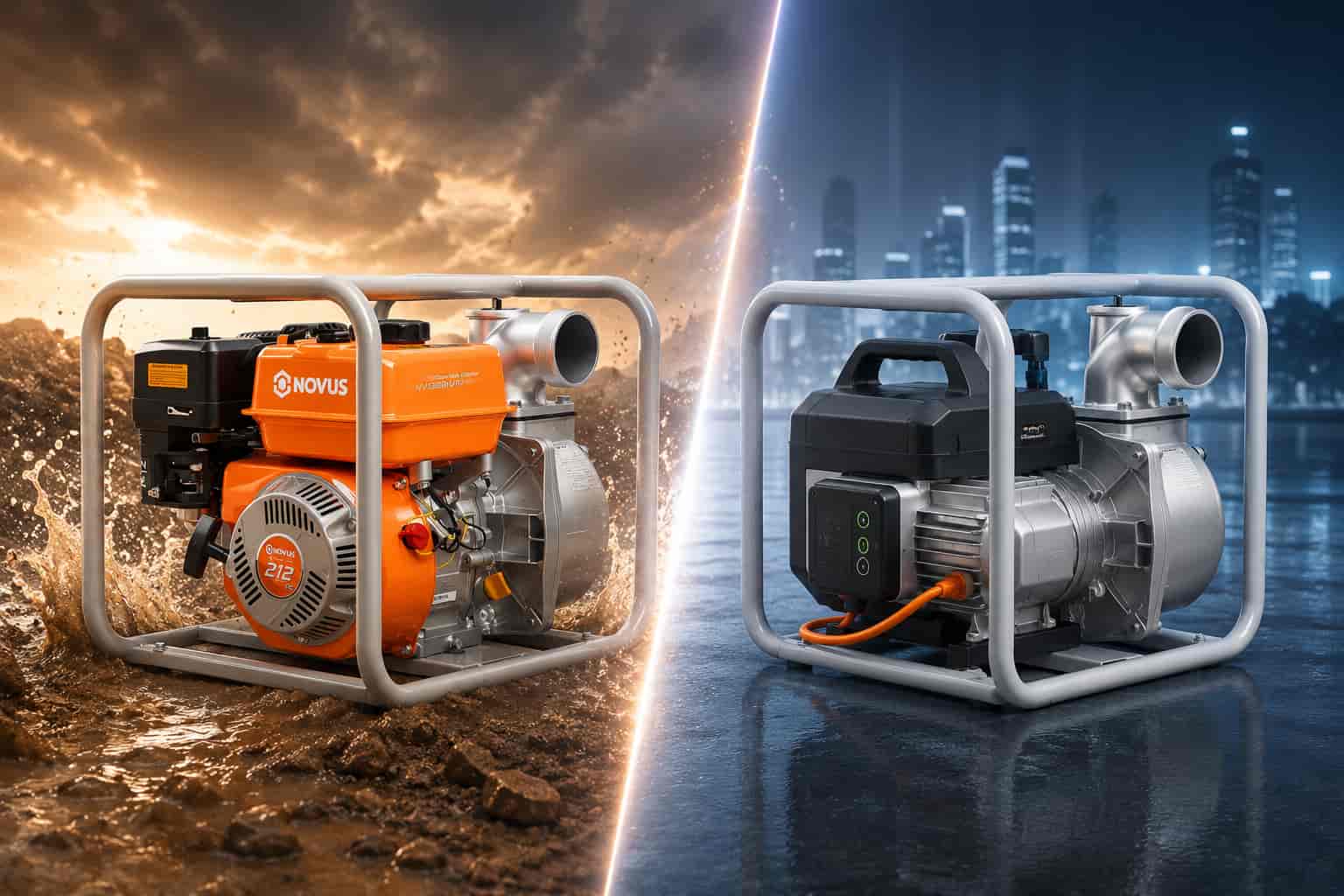
What Is a Semi-Trash Pump?
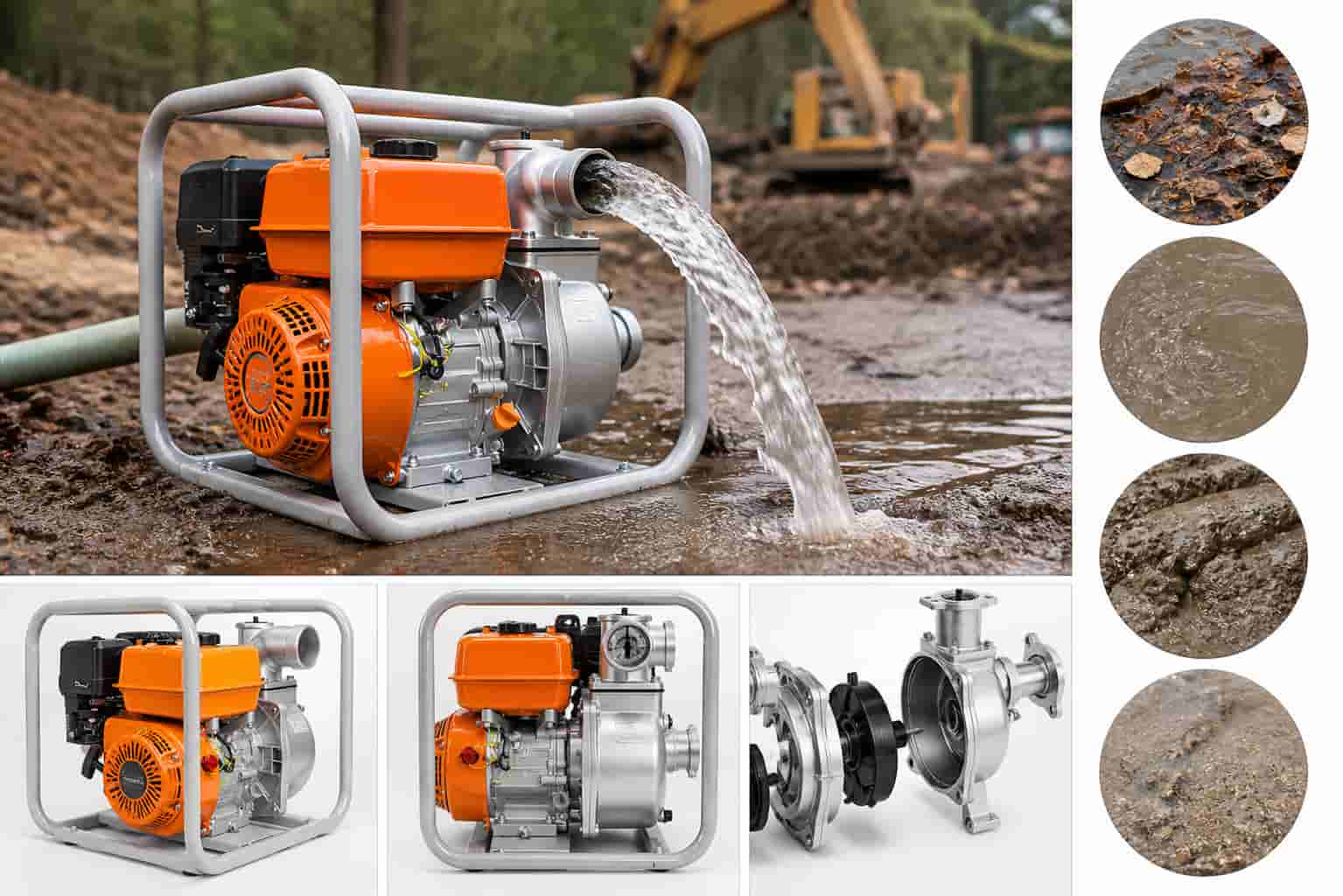
A Semi-Trash pump is a centrifugal pump designed to treat lightly contaminated water containing small amounts of soft, semi-solid impurities. Semi-Trash pumps are suitable for:
- Soft solids, such as leaves, grass clippings, algae, and sludge
- Light sediments, fine sand, and silt
- Water containing suspended organic matter (coverage, manure, irrigation runoff)
- Light construction runoff containing fine particles
The impeller design is typically semi-open or vortex-type which enables soft materials to pass through the system without causing any damage to the pump while the system maintains better efficiency than wastewater pumps that use fully open impellers. Semi-Trash pumps can typically handle solid particles which have a maximum diameter of 3/4 inch 19 mm.
Semi-Trash vs. Trash vs. Clean-Water Pump
| Pump Type | Solids Handling | Typical GPM Range | Best For |
| Clean-water pump | None | 50–500 GPM | Clear water only |
| Semi-trash pump | Soft solids, up to 3/4″ | 80–400 GPM | Light debris, sediment, sludge |
| Full trash pump | Hard solids, up to 3″ | 200–1,500 GPM | Rocks, gravel, heavy debris |
The water treatment system needs to locate the semi-trash pump in its operational hierarchy. You need to install a complete sewage pump system when your water contains stones and heavy construction materials. A standard pump operates at higher efficiency when your water quality reaches its purest state. A semi-trash pump operates best when your water quality falls between two extreme levels.
Further Reading:Semi-Trash Pumps vs Clear Water Explained
Working Principle: Gasoline and Electric Semi-Trash Pumps
Gasoline semi-trash pumps
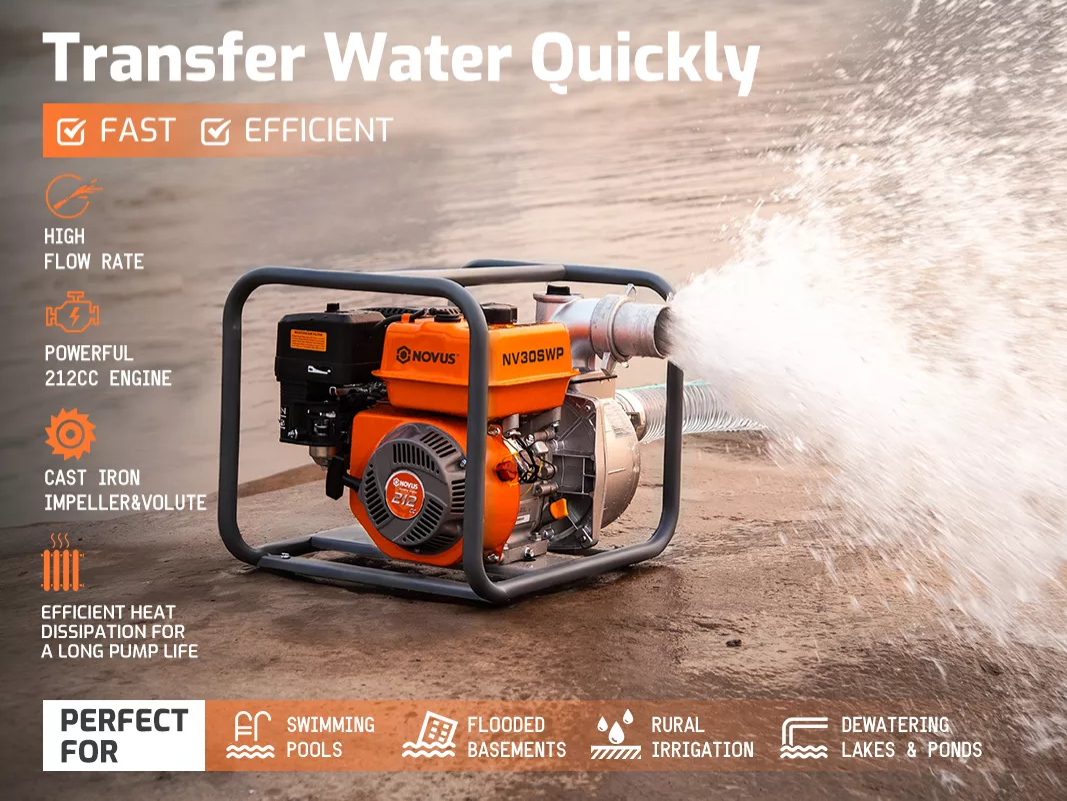
Gasoline semi-trash pumps use a four-stroke gasoline engine (typically 2 to 9 hp) to drive a centrifugal impeller at high speed. The entire unit is a single, integrated structure: the engine, fuel tank, pump housing, and frame are integrated into a portable component, typically weighing 35 to 90 pounds, depending on size.
Most gasoline semi-trash pumps are equipped with 2-inch or 3-inch inlet/outlet ports, an easy-start starter pump or float carburetor, and an automatic low-fuel-level shut-off device to protect the engine. They operate at approximately 3600 rpm and can run continuously as long as fuel is available.
Key Features:
- Completely independent of the power grid
- High flow rate even with larger pump size
- Refueling takes only a few minutes, unlimited runtime
- Noisier, heavier, and more complex to maintain than electric pumps
Electric Semi-Garbage Pumps
Electric semi-garbage pumps come in two types:
- Corded (AC): These pumps plug into a standard 110V or 220V power outlet, providing a stable and reliable power supply. They are the most common type of electric semi-garbage pump used in residential and light commercial applications. Motor power typically ranges from 0.5 hp to 2 hp, with flow rates from 80 to 200 gallons per minute (GPM).
- Battery-Powered (DC): Cordless models using 18V to 80V lithium-ion battery platforms are becoming increasingly common. Brands such as Milwaukee (M18), DEWALT (FLEXVOLT), and Ryobi are offering battery-powered semi-garbage pumps and multi-purpose pumps for contractors and homeowners. Battery-powered models offer excellent portability and zero emissions, but have limited flow rates and runtime.
Key features:
- Requires power (power cord) or battery power
- Instant start-up, no preheating required
- Near-silent operation, zero emissions
- Extremely low maintenance requirements
- Typically lower flow rate than comparable gas models
Core Performance Comparison
Flow (gallons per minute, GPM)
This is the area where the performance differences between gas pumps and electric pumps are most significant.
The typical flow rate of gas semi-trash pumps is:
- 2-inch model: 130–250 GPM
- 3-inch model: 250–400 GPM
The typical flow rate of electric semi-trash pumps is:
- Home wired pump (0.5–1 horsepower): 80–140 GPM
- Commercial wired pump (1.5–2 horsepower): 140–200 GPM
- Battery-powered type: 40–100 GPM
For most residential applications – such as draining water from flooded yards, emptying above-ground swimming pools, and cleaning drainage ditches – wired electric pumps have sufficient flow. However, for applications requiring high flow rates, such as agricultural or commercial drainage, gas pumps are superior.
Head
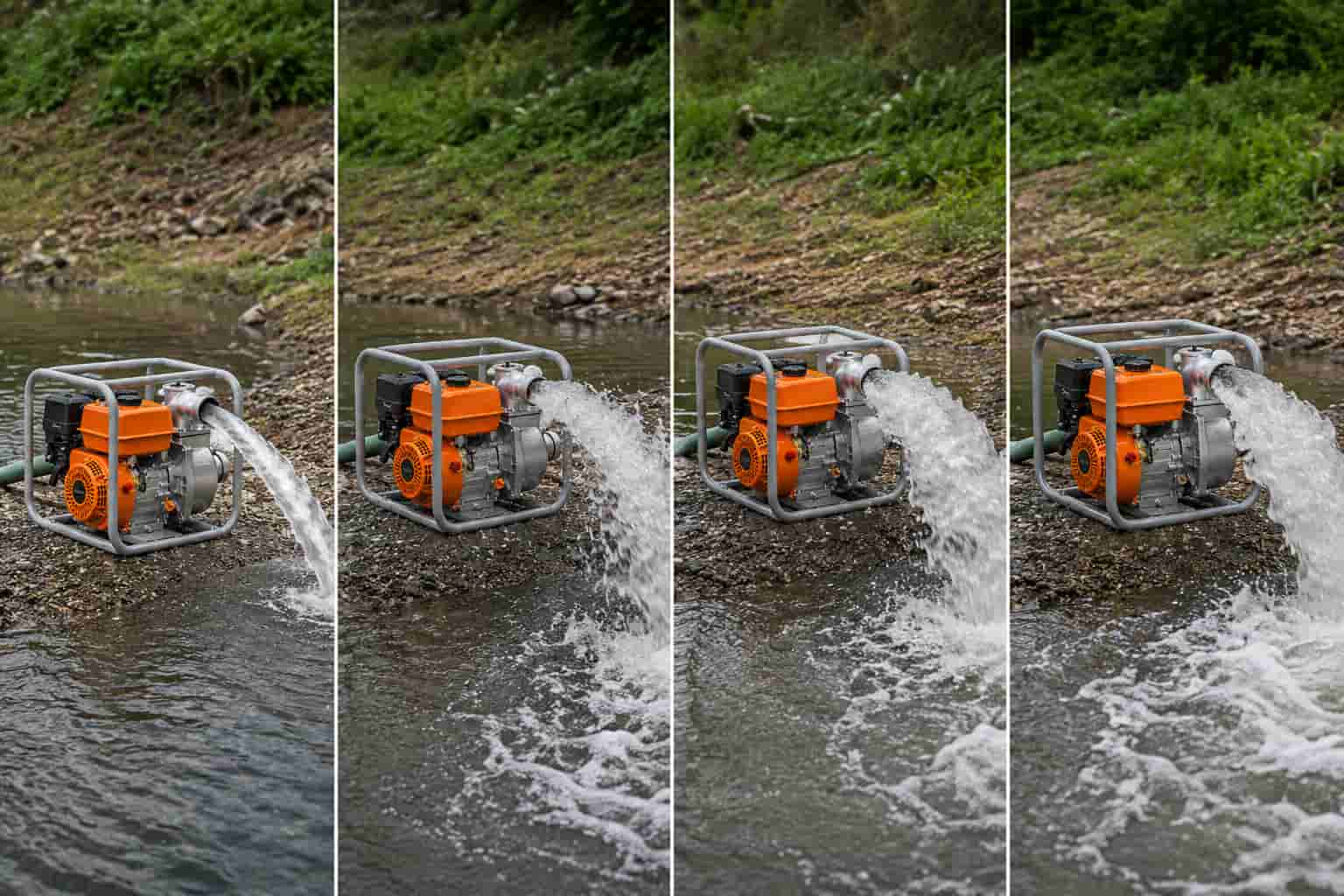
The total head determines how high and far the water can be lifted by the pump.
Gasoline sewage pump: Total head 15–30 meters
Wireless electric pump: Total head 8–18 meters
Battery-powered electric pump: Total head 6–12 meters
If your drainage hose needs to extend over a considerable slope or cover a long distance, then the higher head capacity of the gasoline pump becomes particularly important.
Solid passage capacity
The solid passage capacity of gasoline and electric semi-sediment pumps is basically the same, usually reaching up to 3/4 inch (19 millimeters) at maximum. The limiting factor is the design of the pump’s impeller, rather than the power source. The difference lies in that the flow rate of the gasoline pump is higher, so when debris partially blocks the impeller, it can more effectively remove soft blockages.
Performance Summary
| Metric | Gas Semi-Trash | Electric Corded | Electric Battery |
| Flow rate | 130–400 GPM | 80–200 GPM | 40–100 GPM |
| Max head | 15–30 m | 8–18 m | 6–12 m |
| Solids passing | Up to 3/4″ | Up to 3/4″ | Up to 1/2″ |
| Run time | Unlimited (refuel) | Unlimited (grid) | 1–3 hrs per charge |
| Weight | 35–90 lbs | 15–40 lbs | 10–25 lbs |
| Startup time | 30–60 sec | Instant | Instant |
Use Case Analysis: Pump and Operation Matching
Advantageous Application Domains of Gasoline Semi-Pollution Pumps
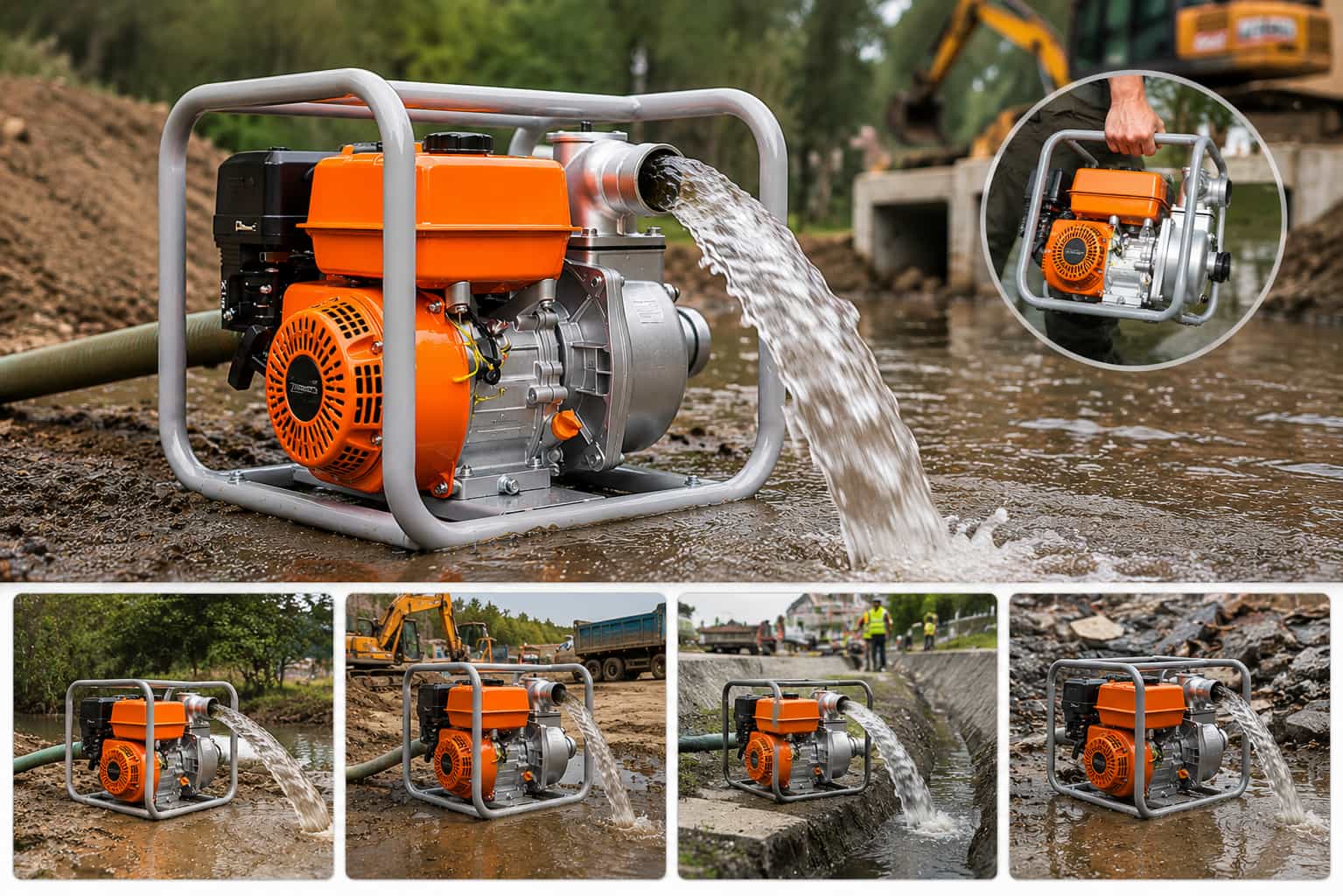
- Agricultural Irrigation and Drainage. Farms often need to transport water containing fine sediment, algae, and organic matter—a typical application scenario for semi-trash pumps. Gasoline-powered semi-trash pumps function as optimal equipment for operations that demand water movement because they enable transportation of large water volumes to locations without electrical power. A single 3-inch Honda Power semi-trash pump can continuously drain irrigation ponds or transport water across fields for hours at a flow rate exceeding 300 gallons per minute.
- Outdoor Building Drainage. After rain, excavated pits, ditches, and foundation pits can fill with muddy water. Gasoline-powered semi-trash pumps can be placed on-site and run continuously without a generator or external power source. Therefore, 2-inch gasoline models are particularly popular with landscaping companies and small contractors.
- Remote Flood Relief. Emergency response teams deployed to disaster-stricken areas often need to operate in locations without public power or in unsafe conditions. In these situations, a stand-alone gasoline pump is a crucial piece of equipment.
- Rental Fleet Applications. Most of the semi-trash pumps in the inventory of equipment rental companies (such as United Rentals, Sunbelt, and Home Depot Rental) are gasoline-powered for a simple reason: they need to be able to operate wherever the tenants use them.
Advantages of Electric Semi-Precipitation Pumps
- Residential Flooding and Drainage. The biggest application for electric semi-trash pumps is helping homeowners manage water accumulation in their yards, basements, window wells, or around the foundation. These jobs typically involve moderate amounts of light sewage and usually require electricity. Corded electric models can do this cleanly, quietly, and safely.
- Indoor Applications. If the pump can potentially operate indoors—such as in a basement, machine room, garage, or crypt—then electric is the only safe option. Gasoline engines produce carbon monoxide (CO), a colorless and odorless gas that can reach lethal concentrations indoors within minutes. This is a safety rule that cannot be compromised.
- The maintenance of pools and spas requires the removal of entire water bodies from the pool and spa and ornamental ponding areas. The situation needs electric semi-trash pumps which work silently to handle the task.
- Frequent Light Use. Property managers draining water features, landscapers clearing sediment from reservoirs, or farmers market operators cleaning up water after muddy events—anyone who needs to perform these operations repeatedly will benefit from the instant start-up and low-maintenance convenience of electric pumps.
- Battery powered: An emerging ideal. For jobs that require both portability and zero emissions—such as interior renovations, urban construction sites with noise or emissions restrictions, or any situation where laying power cords is inconvenient.
Scenario Quick Reference
| Job Scenario | Best Choice |
| Draining a flooded basement | Electric corded |
| Crawl space water removal | Electric corded |
| Above-ground pool draining | Electric corded |
| Backyard yard flooding | Electric corded or battery |
| Landscape irrigation pond | Gas |
| Construction site trenching | Gas |
| Agricultural field drainage | Gas |
| Remote outdoor flood cleanup | Gas |
| Urban job site (noise limit) | Electric battery |
| Sediment pond / retention basin | Gas or electric corded |
| Rental / multi-site use | Gas |
Maintenance and Reliability
Maintenance of Gasoline Semi-Garbage Pumps
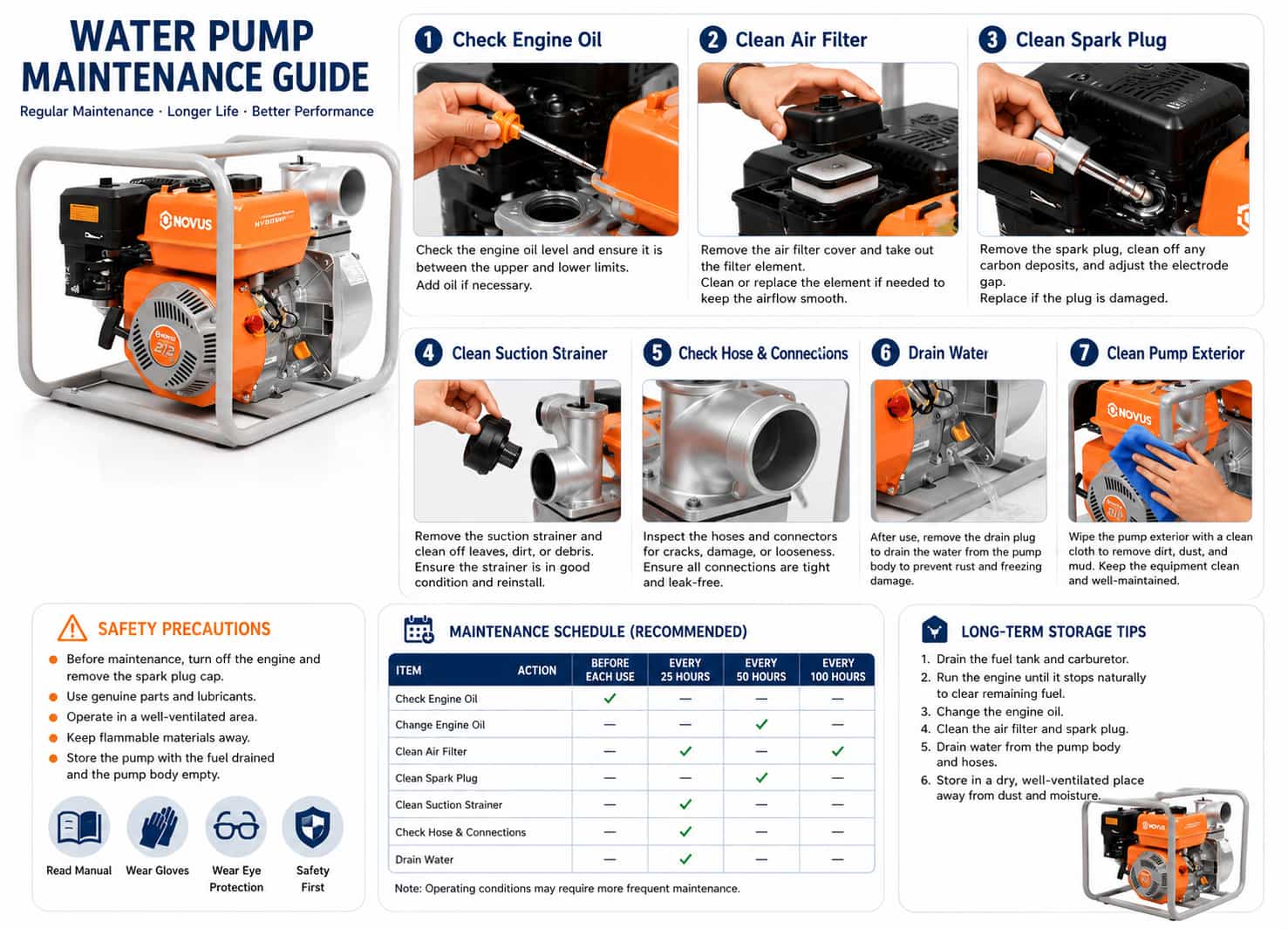
Gasoline engines are very reliable when properly maintained, but they also require regular servicing:
Daily Maintenance:
Replace engine oil every 50 hours (or at the beginning/end of the season)
Clean or replace the air filter every 100 hours
Check and replace spark plugs annually
Inspect and check fuel lines and the starting ball for cracks at the beginning of each season
Rinse the pump housing after each use in muddy or muddy environments
Seasonal Storage: This is where most users of gasoline pumps encounter problems. If the pump is idle for more than 30 days, empty the fuel tank or add a fuel stabilizer (such as Sta-Bil). Degraded ethanol-blended fuel will leave gum deposits in the carburetor, making it impossible to start – this is the most common failure mode for household gasoline pumps.
Impeller and Pump Housing: After handling abrasive deposits or fine sand, check if the impeller is worn. Due to the semi-open design, the impeller of a semi-enclosed sewage pump is more prone to wear than that of a fully enclosed sewage pump. The impeller should be replaced before wear causes a significant decline in performance.
Maintenance of the Electric semi-trash pump
The maintenance of the electric semi-trash pump is very simple:
Before each use: Check if the inlet filter is unobstructed
After each use: Rinse the pump body with clean water to remove sediment
Regularly: Check if the power cord has any cuts, knots or damage (especially important in the construction site)
Annually: Check if the shaft seal is leaking water; if there are relevant instructions in the manual, perform lubrication
Battery model: When stored for a long time, the battery charge should be maintained at 40% – 60%; avoid complete discharge for a long time
The motor itself is sealed, and usually no maintenance is required. No liquid needs to be replaced, the carburetor does not need to be cleaned, and spark plugs do not need to be replaced.
A crucial rule: Do not allow the electric semi-trash pump to idle. Most models use the water flowing through the pump to cool the mechanical seal. Even a few minutes of no water running will damage the seal and cause the pump to fail. This is especially important when the water level near the suction port drops at the end of the operation. Service life
A well-maintained gasoline semi-trash pump can operate for more than 500 to 1000 hours. Household electric pumps usually have lower power. Under normal usage conditions, motor wear may not become a problem until 3 to 7 years.
Safety Precautions
Gas semi-potable pump safety
Carbon monoxide is the main danger. Gas engines continuously produce carbon monoxide during operation. At a concentration of only 70 ppm, carbon monoxide can cause headaches and dizziness; at a concentration of 400 ppm, it can endanger life within several hours; and at a concentration of over 1600 ppm, it can cause death within several minutes. Using gas semi-potable pumps in any enclosed or semi-enclosed space is prohibited; otherwise, it may be fatal. This includes basements, closed garages with doors closed, sheds, and enclosed construction sites.
Other safety precautions:
Fire risk: Store fuel safely in approved containers and keep away from heat sources. Do not refuel when the engine is overheated.
Hot surfaces: The temperature of the engine block and exhaust manifold can cause immediate burns. Stay away from these surfaces during operation and for a while after operation.
Noise exposure: The noise level of most gas semi-potable pumps is 80–95 decibels at 3 meters. Any operation lasting more than 30 minutes should be accompanied by hearing protection.
Vibration: Long-term use of handheld pumps can increase arm vibration. During long work periods, wear appropriate protective gloves and take regular breaks.
Safety Instructions for Electric Semi-Potable Pump
The electric pump completely eliminates the risk of carbon monoxide poisoning and has lower noise levels (typically 55–70 decibels). Key electrical safety precautions:
- When working near water, be sure to use a socket with ground fault circuit interrupter (GFCI) protection – this is a mandatory regulation, and most electrical codes in various regions have corresponding requirements.
- Use an extension cord suitable for outdoor use and with a sufficiently thick wire diameter to avoid voltage drop. For a 1-horsepower motor with an approximately 8-ampere current, within a 100-foot (about 30 meters) range, use an extension cord with a wire diameter of at least 12.
- Do not operate the wired electric pump in water, unless the pump is explicitly marked as capable of submersion.
- Keep the motor housing dry; most semi-potable pumps are designed to pump sewage into the pump body, but the motor is not designed to be submerged in water.
Buyer’s Guide: 5 Questions to Find Your Perfect Pump
Before purchasing, answer these five questions honestly:
Question 1: Do you have reliable power at the job site?
- Yes, always: Start your search with electric corded. It will be cheaper, quieter, and lower maintenance.
- Sometimes: Consider a battery model as a backup or primary unit.
- No / inconsistent: Gas is your answer.
Question 2: Will the pump ever be used indoors or in an enclosed space?
- Yes: Electric only. Carbon monoxide poisoning is not a recoverable mistake.
- Strictly outdoors: Both options are available.
Question 3: How much water volume needs to move, and how quickly?
- Under 150 GPM: Most corded electric models will handle this.
- 150–300 GPM: Mid-range gas or heavy commercial electric.
- Over 300 GPM: Gas semi-trash pump, 3-inch or larger.
Question 4: How frequently will the pump be used?
- Occasional (under 20 hours/year): Electric wins on total cost, even accounting for purchase price.
- Regular (20–100 hours/year): Both are reasonable; weigh performance needs against convenience.
- Heavy-duty commercial (100+ hours/year): Gas delivers more output per dollar; the performance gap justifies the higher operating cost.
Question 5: Are there noise or emissions restrictions at the site?
- Noise-restricted urban sites, HOA areas, indoor use: Electric.
- Emissions-sensitive zones or CARB states: Verify gas model compliance, or choose electric.
- No restrictions: Either works; decide on performance and convenience.


Leave feedback about this