

Many people who are into gardening will sometimes select their water pumps for the garden depending on their instincts, such as “the higher, the better,” or simply purchasing any cheap pump. This will end up causing low water pressure that forces the sprinkler head to spit out the water as if you are squeezing toothpaste out.
Choosing the right water pump not only ensures even watering of plants, saving time and effort, but also significantly reduces electricity costs and equipment wear and tear.When it comes to choosing a pump size, going too small will result in stuttering spray at your sprinklers. If you go too big, you’re looking at increased energy costs, reduced longevity, and possibly damaging your dripline system. The best part is that determining pump size does not take an advanced degree in engineering. It only takes knowing two numbers.
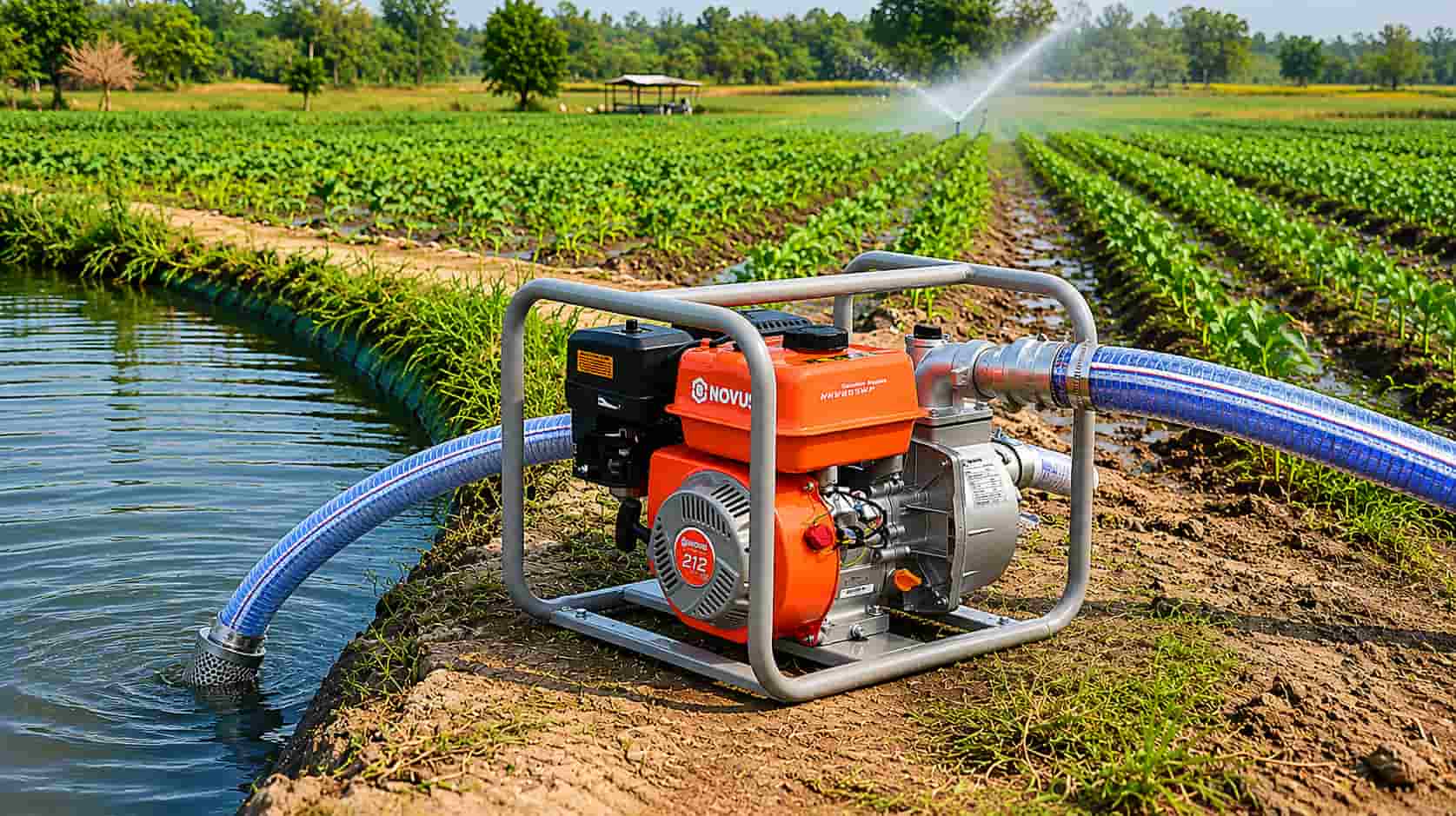
The Two Numbers That Determine Everything
Before you look at a single product listing, you need to understand flow rate and pressure (head). Every pump spec sheet lists both. If you don’t know what you need, those numbers mean nothing.
Flow Rate (GPM): How Much Water Do You Need?
Flow rate measures how many gallons per minute (GPM) the pump delivers. Think of it as the “volume” side of the equation.
Your required flow rate depends on how many emitters, sprinkler heads, or drip zones you’re running at the same time. Each one has a rated flow:
- Standard pop-up sprinkler head: ~1–3 GPM each
- Rotor/gear-driven head: ~1–4 GPM each
- Drip emitter: ~0.5–1 GPM per zone
- Soaker hose (per 100 ft): ~0.5–1 GPM
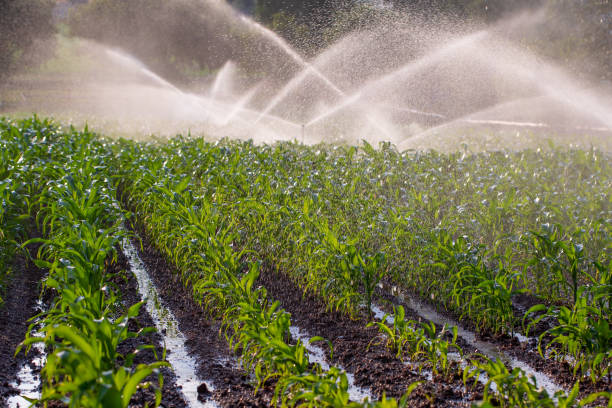
Add up all the heads running simultaneously — that’s your minimum flow rate requirement.
Pressure / Total Head (PSI or Feet): How Hard Does the Water Work?
Head (measured in feet) — or pressure (measured in PSI) — tells you how much force the pump generates to move water. You need enough pressure to overcome three things:
- Elevation difference between your water source and the highest outlet
- Pipe friction loss as water travels through your lines
- Operating pressure required by your sprinkler heads or drip system (typically 20–45 PSI)
A common rule of thumb: every 2.31 feet of head equals 1 PSI of pressure.
4 Steps to Calculate the Pump You Need
Step 1 — Measure Your Irrigation Area and Count Your Heads
Walk your yard. Note how many sprinkler heads or drip zones will run at the same time, and check each head’s rated GPM from the manufacturer label or product page.
Example: 6 rotor heads × 2 GPM each = 12 GPM required
Step 2 — Calculate Your Required Flow Rate
Add up the GPM of all simultaneously running heads, then multiply by 1.2 (a 20% safety buffer):
Required flow rate = Total GPM × 1.2 12 GPM × 1.2 = 14.4 GPM minimum
Step 3 — Calculate Your Required Head (Pressure)
Work through these three components:
| Component | Example Value |
| Elevation rise (source to highest head) | 8 ft |
| Pipe friction loss (approx. 2 ft per 100 ft of ½” pipe) | 4 ft |
| Sprinkler operating pressure (30 PSI × 2.31) | 69 ft |
| Total Head Required | 81 ft |
Add 20% safety margin: 81 × 1.2 = ~97 ft (about 42 PSI)
Step 4 — Match to a Pump
Look for a pump that can handle at least 15 GPM, and also reaches 42 PSI or more, you know the whole package. Don’t just judge it by wattage or HP by themself, because two pumps with the same horsepower can end up performing in very different ways, like, noticeably.
Quick Reference: Common Home Irrigation Scenarios
| Scenario | Area | Recommended Type | Typical Size |
| Patio containers / small raised beds | < 500 sq ft | Mini booster pump | ¼ HP, 3–5 GPM |
| Front or back lawn with sprinklers | 500–3,000 sq ft | Shallow well / jet pump | ½–1 HP, 8–15 GPM |
| Large yard with multi-zone system | 3,000–10,000 sq ft | Centrifugal / convertible jet pump | 1–1.5 HP, 15–30 GPM |
| Large property drawing from a pond or tank | 10,000+ sq ft | Submersible or surface centrifugal pump | 1.5–3 HP, 30+ GPM |
These are starting points. Always run the 4-step calculation for your specific setup.
Which Type of Pump Is Right for You?
Sizing is only half the battle — you also need the right kind of pump for your water source.
Jet Pump (Shallow or Deep Well)
Suitable for those using wells up to 25 feet deep (shallow well) or even up to 90 feet deep (convertible deep well). Popular among rural and suburban areas that rely on private wells. Very easy to maintain because its motor is positioned above ground.
Submersible Pump
Installed entirely underwater in ponds, cisterns, or deep wells. Completely silent, extremely efficient, and offers high head pressure. Perfect choice for pond or tank irrigation purposes or wells deeper than 25 feet.
Centrifugal / Surface Pump
Mounted above the water source and draws water through suction. Great for ponds, creeks, and large storage tanks. High flow rates make it a strong choice for large acreage. Note: max suction lift is typically 15–20 feet, so the pump can’t sit too far above the water surface.
Booster / Pressure Pump
Not a primary pump — it boosts existing water pressure from a municipal supply or storage tank. Perfect for low-pressure drip systems or rooftop gardens. Compact, affordable, and easy to install.
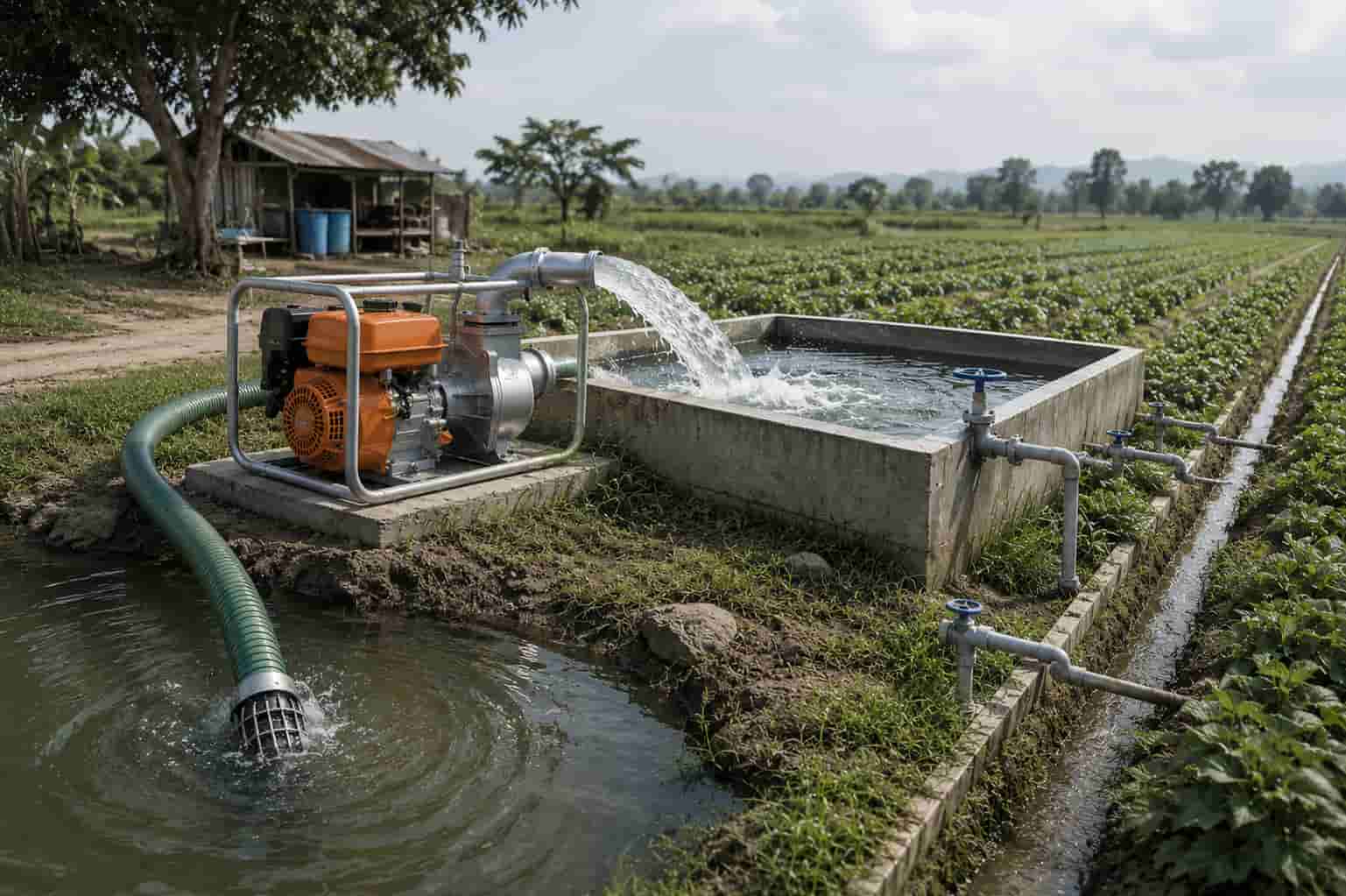
Semi Trash Water Pump
Best pump for when your water supply is dirty. The semi-trash pump works well in dirty water, which means that it won’t get blocked up by mud, leaves, sand, or other soft material, as opposed to regular irrigation pumps, which make them suitable for use from ponds, streams, ditches, or rainwater storage tanks. This makes them extremely portable and efficient, capable of supplying 50 – 160 GPM.
What to Look for When Buying
Read the Pump Curve, Not Just the Label
Marketing specs (like “max flow: 20 GPM” or “max head: 120 ft”) represent absolute limits, not working performance. At maximum head, flow drops to near zero — and vice versa. Look for the pump curve in the manual or product page, and find where your required GPM and head intersect. That point should fall comfortably in the middle of the curve.
Key Specs Checklist
- Flow rate (GPM): Must meet your calculated minimum
- Total head or max pressure (PSI/ft): Must exceed your calculated requirement
- Inlet/outlet size: Match your pipe diameter (common sizes: ¾”, 1″, 1¼”)
- Motor type: Continuous-duty motors handle daily irrigation cycles better than intermittent-duty models
- Voltage: Most residential pumps run on standard 115V; larger models may need 230V
Installation and Maintenance Tips
- Never run a pump dry. Even a few seconds without water can destroy the impeller and seal. Install a low-water cutoff switch if your source level fluctuates.
- Prime before first use. Jet and centrifugal pumps need to be primed (filled with water) before startup — skip this and you’ll burn out the pump.
- Install a check valve on the outlet to prevent backflow when the pump shuts off, which protects both the pump and your lines.
- Winterize before the first freeze. Drain all water from the pump and lines before temperatures drop below 32°F to prevent cracking.
- Inspect the inlet screen every season. Debris buildup is the #1 cause of reduced flow in garden irrigation pumps.
The Bottom Line
Pump sizing can be made simple by following a few easy steps:
- Determine your flow rate (sum of GPM from all heads used simultaneously, ×1.2)
- Determine your head (elevation + friction loss + operating pressure, ×1.2)
- Select the appropriate pump according to your water source
- Check the pump curve – not just the specifications alone
Performing these four basic steps will help you determine a pump which will work for you efficiently throughout its lifespan.


Leave feedback about this