

Many farms rely on nearby rivers to obtain stable irrigation water, eliminating the costs of drilling wells or connecting to municipal water supply pipelines. Portable water pumps can directly draw river water and transport it to farmlands, orchards, or water storage tanks to ensure the supply of irrigation water.
However, there is a significant difference between river water sources and sealed water storage tanks: river water levels fluctuate with the seasons, the water body is mixed with impurities such as sand and fallen branches, and the placement of the water pump will directly affect the water delivery efficiency. Simply placing the water pump on the bank and connecting a hose often fails to achieve the desired water delivery effect.
Whether it is small farms or large-scale agricultural bases building irrigation systems, understanding the water source conditions, selecting suitable water pumps, and standardizing installation can improve the stability of the entire irrigation equipment and reduce the maintenance workload during the crop growth period.
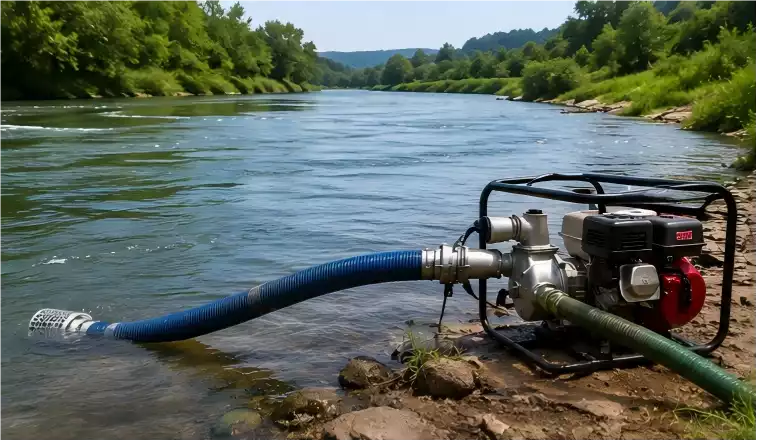
Before You Pump, Understand Your River
When launching a river irrigation project, the first step is to assess the water source rather than directly purchasing pumps. The water flow, water depth, and water quality conditions of different rivers vary greatly, directly determining whether the pumping system can operate stably.
First, a reliable water intake point must be selected to ensure that the intake point remains below the water surface during normal seasonal water level fluctuations. Sections with insufficient water depth and extreme water level fluctuations require frequent adjustments to the inlet pipe; areas with high sediment content will increase the maintenance burden for subsequent equipment.
River water contains impurities rarely found in the water supply system, such as leaves, algae, branches, and suspended sediment, which are easily sucked into the intake point. Although these impurities can be treated through the plan, when choosing pumps and water intake protection accessories, this must be taken into consideration in advance.
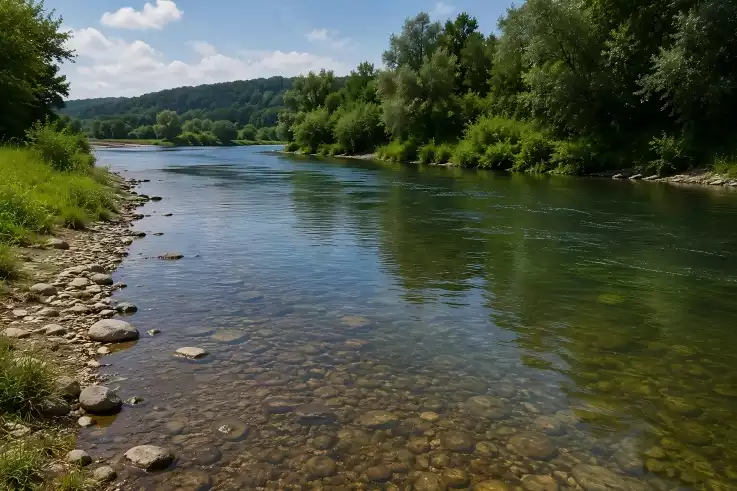
In addition, the transportation distance between the river and the irrigation area is also crucial. Farmland adjacent to the river and those hundreds of meters away from the river have completely different pumping equipment suitable for them. Understanding the actual working conditions on the ground before purchasing equipment can avoid costly renovations and rework in the future.
Why Portable Pumps Are the Preferred Choice Along Rivers
Many farmland irrigation areas have poor power supply, and portable gasoline pumps are an ideal solution. The equipment can be flexibly moved to different plots and adjust the water intake position according to the water level changes, providing irrigation water supply at any time and any place.
When using river water for irrigation, water quality is the core consideration for selection. Natural river water often carries light impurities such as sand, leaves, and algae. Therefore, semi-trash pumps are widely used in agricultural river water transportation scenarios. These pumps can tolerate small solid impurities in surface water while maintaining a stable large flow rate.
The pump specifications need to match the actual irrigation scale: for small farms or short-distance water transportation, compact portable pumps can be selected; for large irrigation projects, a larger flow rate is needed to shorten the pumping time. When purchasing, it is not necessary to solely focus on the engine power; prioritize calculating the required water volume and confirm whether the pump flow can meet the on-site requirements.
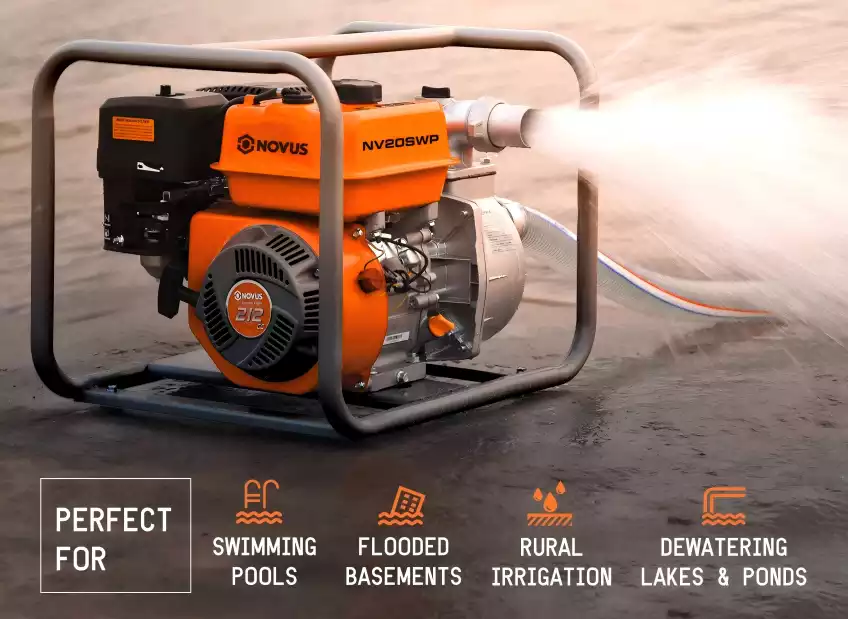
Building a Reliable River-to-Field Water Transfer System
A successful irrigation system depends on more than the pump itself. Every component between the river and the field contributes to overall performance.
A typical setup begins with an intake strainer placed in the river to help prevent larger debris from entering the suction hose. The suction hose connects the water source to the portable pump, while the discharge hose carries water to the irrigation area or a storage tank.
Pump placement is another important consideration. Positioning the pump as close to the water source as practical helps reduce the length of the suction hose, which generally improves pumping efficiency. The intake should remain below the water surface without resting directly on the riverbed, where it is more likely to draw in sand or sediment.
Routine inspection of hoses, fittings, and intake components also helps maintain consistent performance throughout the irrigation season. Even small air leaks or partially blocked strainers can reduce water flow and make the system less efficient.

What Experienced Farmers Do Differently
Experienced farmers pay more attention to the overall operation effect of the entire system rather than the single pump. River water quality fluctuates with the seasons. Irrigation equipment that functions normally in spring may need to be adjusted in the late summer or after heavy rain.
Farmers will carefully select the water intake points, prioritizing sections with clear water, few floating objects, and less sediment accumulation. Before each irrigation, they will promptly inspect the inlet filter and water pipes to ensure smooth water flow.
The selection of equipment should be in line with the actual needs of irrigation. It is not necessary to blindly pursue high-power pumps. Making the pump flow match the water demand can not only improve work efficiency but also save fuel.
Selecting the right water intake location, pairing with an appropriate portable pump, and building a reasonable water delivery system can provide a stable and flexible solution for agricultural irrigation. Compared to simply increasing the power of the pump, controlling the water intake location, conducting regular inspections, and other details can better ensure the long-term stable operation of the equipment.


Leave feedback about this