

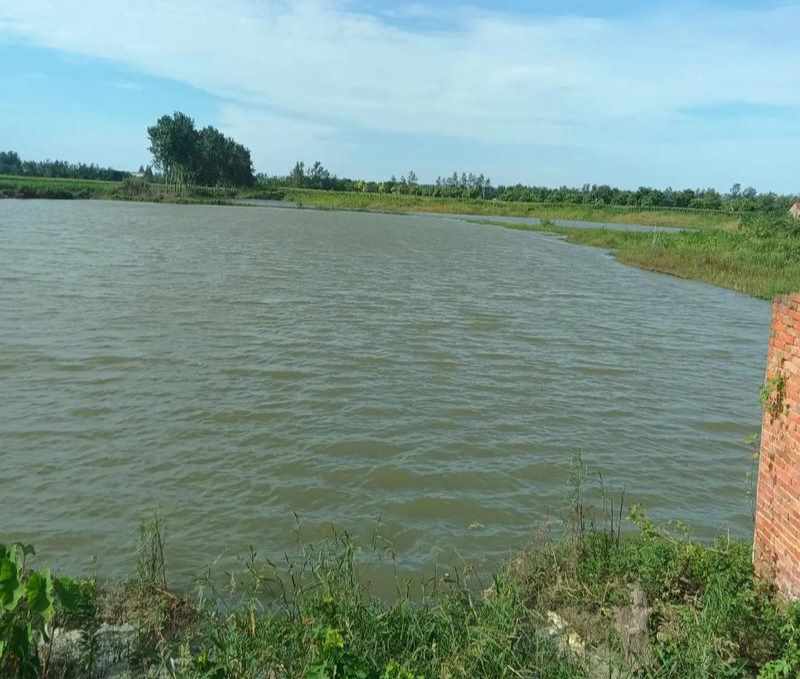
Every experienced farmer knows that the “Spring Fever” is often accompanied by waterlogging. In the 2026 sowing season, time is not just money – it is about your entire yield potential. If you watch helplessly as five acres of land that should have been full of corn turns into a “lake”, then there is not much time left.
Floods have never been “clear” – they are mixed with mud, leftover crop stalks and debris. To quickly remove this sludge, you need a high-quality pumping device so that water can be drained quickly in the event of a flood.
The 4-Step Strategy to Professional Field Drainage
If your farmland is flooded by water and you need to pump out the water, you can follow these 4 steps to ensure an effective and safe pumping process:
Step 1: The “Sump Pit” Advantage
Do not simply throw the water-absorbing hose into the shallow water area. The principles of physics can help you here. Locate the lowest point in the field. If possible, use an excavator or shovel to dig a small water collection pit (about 60-90 centimeters deep). This will concentrate the water flow and ensure that the water-absorbing filter is fully submerged in water. If the pump starts “sucking in air”, it will lose suction power and the mechanical seals may overheat and be damaged. A deeper collection pit means a more stable water flow and a faster drainage speed.
Step 2: The Logic of Gas-Powered Portability
In an emergency, you can’t rely on extension cords, and small electric submersible pumps lack the “head pressure” needed for long-distance water transfer. Engine-driven pumps are the industry standard for a reason. They offer the raw torque required to push thick, silty water through hundreds of feet of discharge hose. Plus, you can toss a gas-powered unit into the back of a UTV and drive it to the most remote corner of your property.
Step 3: Mastering the Intake
Even a semi-trash pump has its limits. Always use a square-hole strainer for field drainage. It blocks the large corn stalks and rocks that could jam the volute, but allows the “trashy” silty water to pass through. Keep the intake hose as short as possible; the harder the pump has to “lift” the water vertically, the lower your GPM (Gallons Per Minute) will be.
Step 4: The Proper Prime
Most high-quality semi-trash pumps are “self-priming,” but let’s clear up a common myth: they do not run dry. You must manually fill the pump casing with water through the top port before you pull the starter cord. This water cools the seal and creates the initial vacuum. Running a pump dry for even two minutes can permanently damage the silicon carbide seals.
Semi-Trash vs. Standard Pumps: Why You Need a Semi-Trash Pump
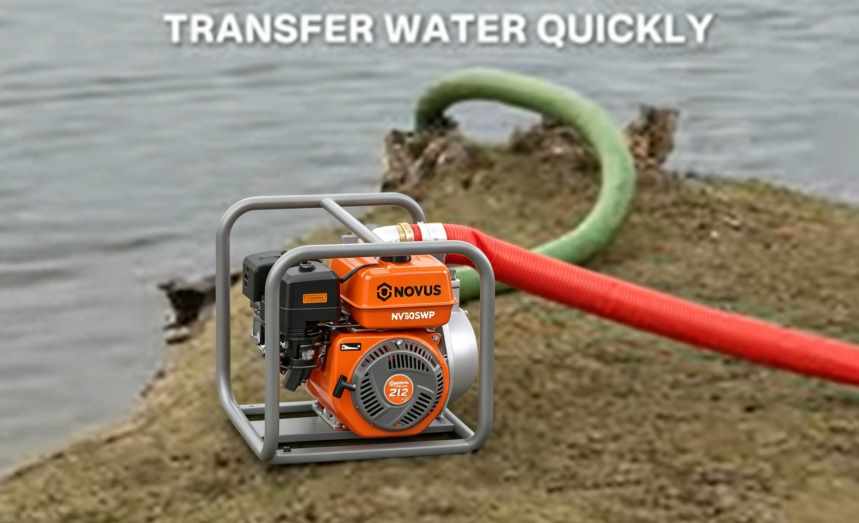
If you are shopping for a pump, you’ll see “Clear Water,” “Semi-Trash,” and “Full Trash.” For agricultural drainage, Semi-Trash is the “Sweet Spot.”
- Internal Clearances: A standard pump has tight tolerances. One pebble will lock it up. A semi-trash pump features a recessed impeller and a larger volute, designed to pass solids up to 1/2-inch (about the size of a marble) without a hiccup.
- Material Science: Look for pumps with Cast Iron Volutes and Impellers. Aluminum internals are fine for clean water, but sandy floodwater acts like liquid sandpaper. Cast iron survives the abrasion.
- The “Clean-Out” Factor: Flooding in the real world is not neat. The semi-trash pumps feature tool-less knobs on the front lid. In case you ingest any trash like plastic or large root balls, you can dismantle the pump and remove the debris within two minutes without having to bring your toolkit along.
Sizing Your Solution: The 2-Inch vs. 3-Inch Debate
Choosing the right pump size is a balance between Volume (how fast you need it done) and Portability (how easy it is to move across a muddy field). To help you decide, we’ve broken down the key performance differences between our two most popular retail models:
| Feature | 2-Inch Semi-Trash Pump | 3-Inch Semi-Trash Pump |
| Flow Rate (Max) | Approx. 150 GPM (9,000 GPH) | Approx. 260–290 GPM (17,400 GPH) |
| Inlet/Outlet Dia. | 2 inches (50 mm) | 3 inches (80 mm) |
| Solid Handling | Up to 1/2 inch (12 mm) | Up to 1/2 inch (12 mm) |
| Max Head (Lift) | ~85 – 95 Feet | ~85 – 95 Feet |
| Best Used For | Small pastures, garden ponds, localized flooding | Large-scale field drainage, irrigation transfer |
| Portability | High (Lightweight/One-man carry) | Moderate (Requires two people or a cart) |
Which One Should You Buy?
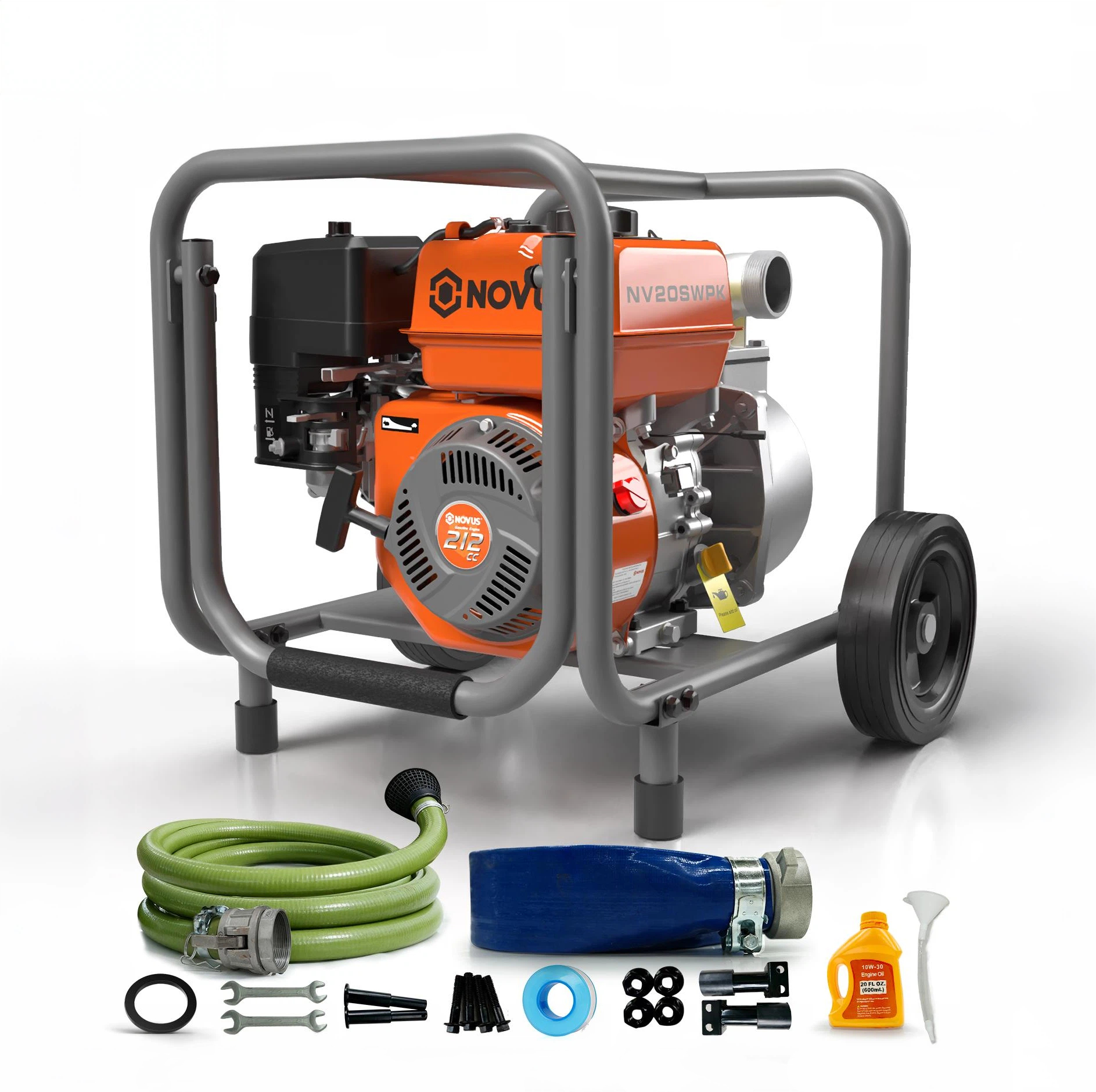
The 2-Inch Semi-Trash Pump
If you are a homeowner with a few acres, a horse paddock, or a backyard pond that occasionally overflows, the 2-inch model is your best bet.
- The “One-Man” Factor: It is compact enough to fit in the trunk of a car and light enough for one person to carry over a fence or through a muddy patch without breaking a sweat.
- Cost Efficiency: Not only is the pump more affordable, but the 2-inch discharge hoses are also significantly cheaper and easier to store.
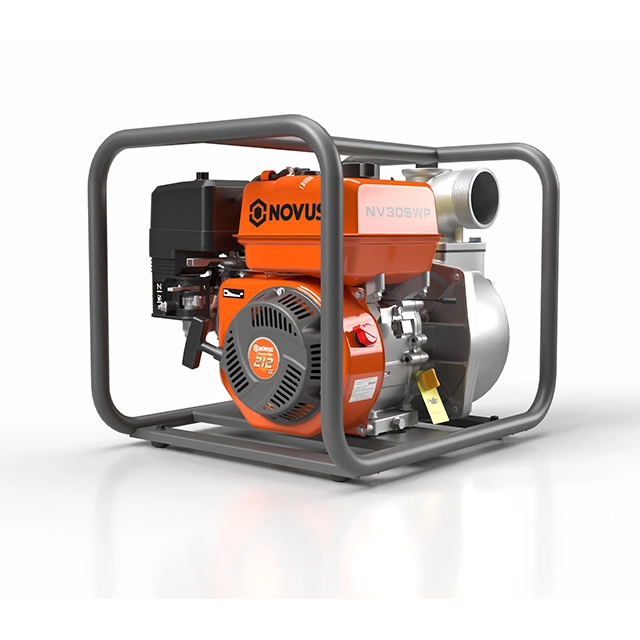
The 3-Inch Semi-Trash Pump
When you have several acres of standing water and a planting deadline that was “yesterday,” you need the 3-inch model.
- Massive Volume: It moves nearly double the volume of the 2-inch version. In a real-world drainage scenario, this could be the difference between getting your tractor back in the field this afternoon versus waiting until tomorrow.
- Pro Tip (Experience Insight): Remember that a 3-inch pump requires 3-inch hoses. These hoses, when full of water, are very heavy. We recommend using this pump if you can transport your equipment via a UTV, ATV, or tractor-bed to the water’s edge.
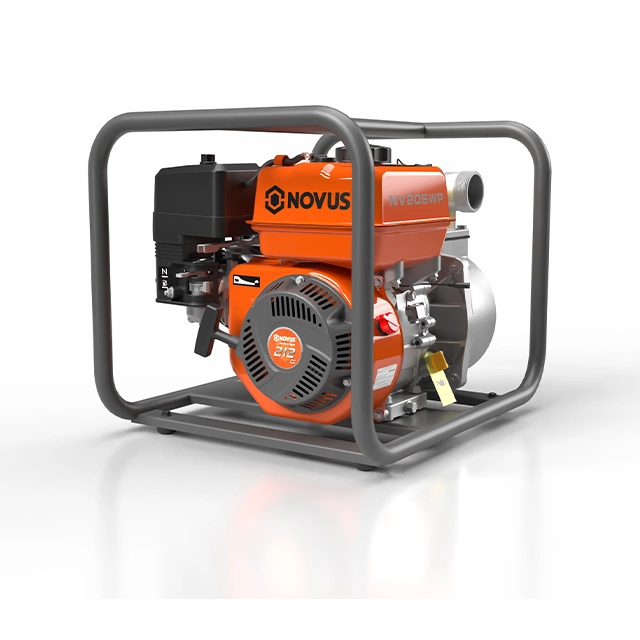
There are many reliable semi-trash water pump brands available on the market today. Some of the most popular options include Honda, Novus, Wacker Neuson, Tsurumi, and Generac.
If you’re facing drainage challenges during the spring farming season and need expert guidance, feel free to reach out to our technical team for professional support tailored to your specific conditions.


Leave feedback about this