

Whether you plan to store the pressure washer for several weeks, several months, or throughout the entire idle season, proper storage is essential to ensure that the equipment can be used immediately upon startup. Residual water in the pump body, deteriorated fuel, and improper storage conditions can all lead to additional maintenance issues and even high repair costs.
This article provides a complete set of operation procedures for equipment storage. By completing just a few basic preparations, you can effectively protect the pump body, engine and various components, extend the service life of the entire machine, and ensure that the equipment can still be smoothly put back into use after long-term storage.

Step-by-Step Guide to Long-Term Storage
Step 1: Disconnect Accessories and Flush the System
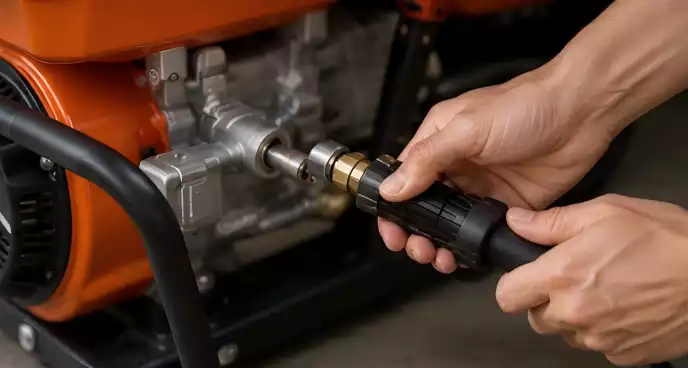
First, turn off the equipment, remove all components such as the water inlet hose, pressure hose, spray gun and nozzle.
If cleaning agents were used during this process, connect a water supply and run the equipment for several minutes to thoroughly flush out the remaining cleaning agents from the pipes. The cleaning agents remaining in the pump body and hoses for a long time can easily cause dirt and sediment to form, which will directly affect the subsequent performance of the equipment.
After completing the flushing and turning off the machine, pull the trigger of the spray gun to release the residual pressure in the pipeline, and then remove all the hoses.
Step 2: Drain All Remaining Water
Draining the accumulated water from the system is a crucial step during the storage of equipment. The water remaining inside the pump body and the hose will cause internal corrosion if left to stand for a long time; in cold environments, it may also freeze and expand, thereby damaging the seals and components of the pump.
To drain the water inside the equipment according to the following steps:
- Disconnect all hose accessories
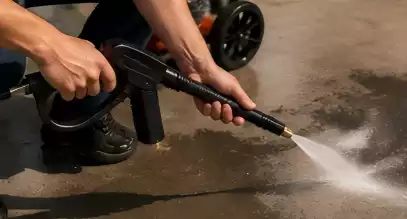
- Pull the trigger of the spray gun to discharge the remaining water in the pipeline
- Tilt the pressure cleaning machine moderately to fully drain the water in the pump body
- Drain the remaining moisture from the hoses and various attachments
After all the operations are completed, let all the components stand and dry for a few minutes before storing.
Step 3: Protect the Pump
If the pressure washer will remain unused for several months, consider using a pump protector (also called pump saver). This helps lubricate internal seals and reduces the risk of corrosion during storage.
Pump protection is particularly useful if the machine will be stored through winter or in areas where temperatures may fluctuate.
Follow the pump protector manufacturer’s instructions and ensure the product is compatible with your pressure washer model.
Step 4: Prepare the Engine (Gas Models)
When a gasoline-powered pressure cleaning machine is stored for a long time, fuel handling is a key point to pay attention to.
If the equipment is idle for only a few weeks, generally adding a fuel stabilizer will suffice. However, if it needs to be stored for several months, most equipment manufacturers recommend emptying the fuel system or starting the engine to burn off the remaining fuel.
In addition, it is necessary to check the condition of the engine oil. If the engine oil is approaching the maintenance replacement cycle, please complete the oil change in advance. New engine oil can better protect the internal components of the engine and smoothly pass through the long-term storage stage.
Step 5: Clean and Organize Accessories
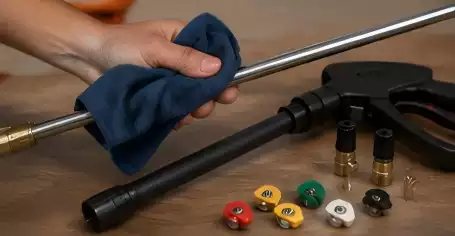
Before storing, please wipe off the dust and water stains on the surface of the equipment.
The pressure hose should be loosely coiled and stored. Do not forcibly bend or squeeze it. The nozzles, spray rods and other accessories can be stored in a dry container to prevent loss or damage from bumps or knocks.
By organizing and storing all the accessories properly, it will also facilitate the quick assembly of the equipment during the next use.
Step 6: Cover and Store the Machine
Once everything is clean and dry, cover the pressure washer to prevent dust accumulation while still allowing some airflow.
Avoid wrapping the machine tightly with plastic, which may trap moisture and encourage corrosion. A breathable protective cover is generally a better option for long-term storage.
Where Is the Best Place to Store a Pressure Washer?
The ideal storage location is dry, well-ventilated, and protected from rain, direct sunlight, and freezing temperatures.
| Storage Location | Recommended | Notes |
| Garage | ⭐⭐⭐⭐⭐ | Best choice for most homeowners. Keeps the machine dry and protected year-round. |
| Storage Shed | ⭐⭐⭐⭐☆ | Suitable if the shed stays relatively dry and temperatures don’t regularly drop below freezing. |
| Basement | ⭐⭐⭐⭐☆ | Good option if there’s enough ventilation and easy access. |
| Utility Room | ⭐⭐⭐⭐⭐ | Excellent for electric models or compact units. |
| Outdoor Covered Area | ⭐⭐☆☆☆ | Only suitable for short-term storage with proper protection. |
| Open Outdoor Space | ⭐☆☆☆☆ | Not recommended for long-term storage. |
Can a Pressure Washer Be Stored Outside?

In simple terms, outdoor storage is feasible, but it must meet the corresponding storage conditions.
If the equipment can only be placed outdoors, a sheltered location should be chosen to avoid rain erosion and direct sunlight. The equipment should not be in direct contact with the ground. It should be placed on a raised flat surface, and the accumulated water in the pump body should be completely drained before storage.
For regions where the winter temperature will drop below freezing point, outdoor storage is generally not recommended. Even if only a small amount of water remains in the pump body, it will freeze, thereby damaging the internal components.
Therefore, indoor storage is the preferred option and remains the most reliable solution to ensure the long-term stable operation of the high-pressure cleaning machine.
How Long Will You Be Storing Your Pressure Washer?
The amount of preparation depends on how long the machine will remain unused.
| Storage Time | Recommended Preparation |
| Up to 2 Weeks | Clean the machine, drain water, and store indoors. |
| 1–3 Months | Flush detergent, drain water, and add fuel stabilizer for gas models. |
| 3–6 Months | Use pump protector, inspect hoses, and cover the machine. |
| Over 6 Months | Complete all long-term storage steps, including engine preparation and pump protection. |
Taking a few extra minutes before extended storage can reduce maintenance and help ensure reliable performance when the pressure washer is used again.
How to Start a Pressure Washer After Long-Term Storage
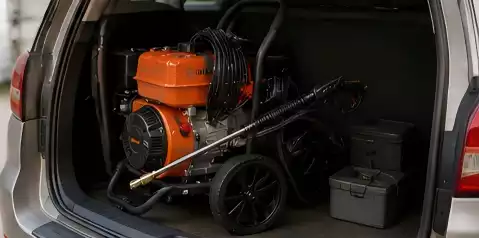
When reusing the equipment after storage, do not turn it on directly. Always complete a quick inspection first.
First, check the hoses, spray guns and all connections to ensure there are no cracks, wear or other damage marks. For gasoline models, check the engine oil level and add new fuel as needed.
Before starting the engine or motor, reconnect the water supply pipeline and let the water flow through the pump for a while to remove the air trapped in the pipeline.
After completing these steps, first start the low-pressure mode for a trial run to check for any leakage problems of the entire machine, and then switch to the normal working state.
As long as the initial storage operation is carried out in accordance with the specifications, the startup performance and operating performance of the high-pressure cleaning machine can be as stable and reliable as before the storage.


Leave feedback about this