

The sudden failure of your inverter generator to operate will surprise you because it happens at times when you need it most during power outages and camping trips and construction work. The good news is that most generator starting problems can be fixed through basic troubleshooting methods which lead to quick solutions.
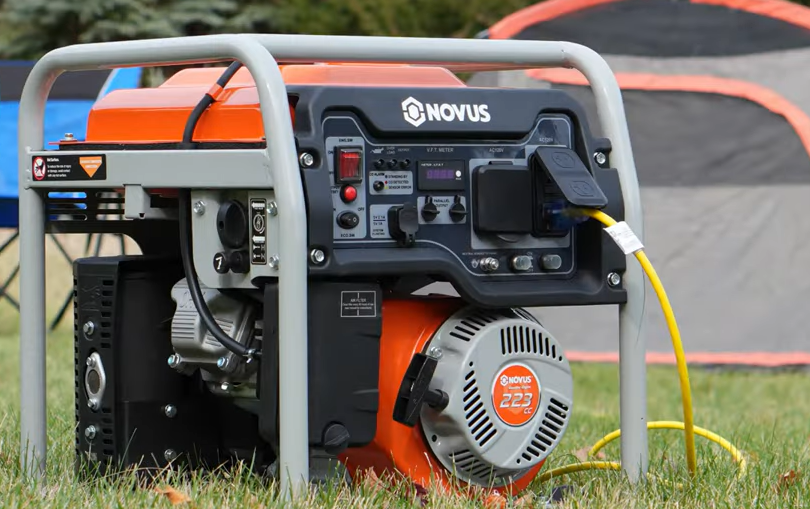
Quick Checklist: Perform These 5 Quick Checks First
Before proceeding with more complex troubleshooting, please check the following basic items. You might be surprised to find that many times the problem lies here:
- Is there sufficient fuel?
- Is the fuel valve open?
- Is the alternator switch in the “ON” position?
- Is the engine oil level too low (triggered by low oil protection)?
- Are the spark plugs securely connected?
In many cases, the problem lies here and can be resolved within minutes.If all checks are normal, but the alternator still won’t start, then continue.
Reason 1: Fuel issue
The generator fails to start because of a fuel problem which occurs mainly after extended periods without use.
The first step to solve the problem with empty fuel tanks requires checking the tank for fuel levels. The solution requires checking the fuel tank to determine its remaining content. Gasoline begins to deteriorate after only 30 days of storage. Deteriorated fuel will create a film that blocks the carburetor and stops the engine from starting. The old fuel needs to be removed while we need to put fresh fuel into the tank. Unleaded gasoline represents the better option.
Many generators come with manual fuel shut-off valves which control their fuel flow. The storage process needs to keep the valve closed to stop fuel from reaching the carburetor. The system needs to be opened before starting the process.
Solution:
- Add fresh gasoline
- If the fuel deteriorates, it is recommended to completely empty the fuel tank and replace it
- If necessary, clean the fuel system
Tip: When not in use for a long time, it is recommended to use fuel stabilizer.

Reason 2: Spark Plug Issues
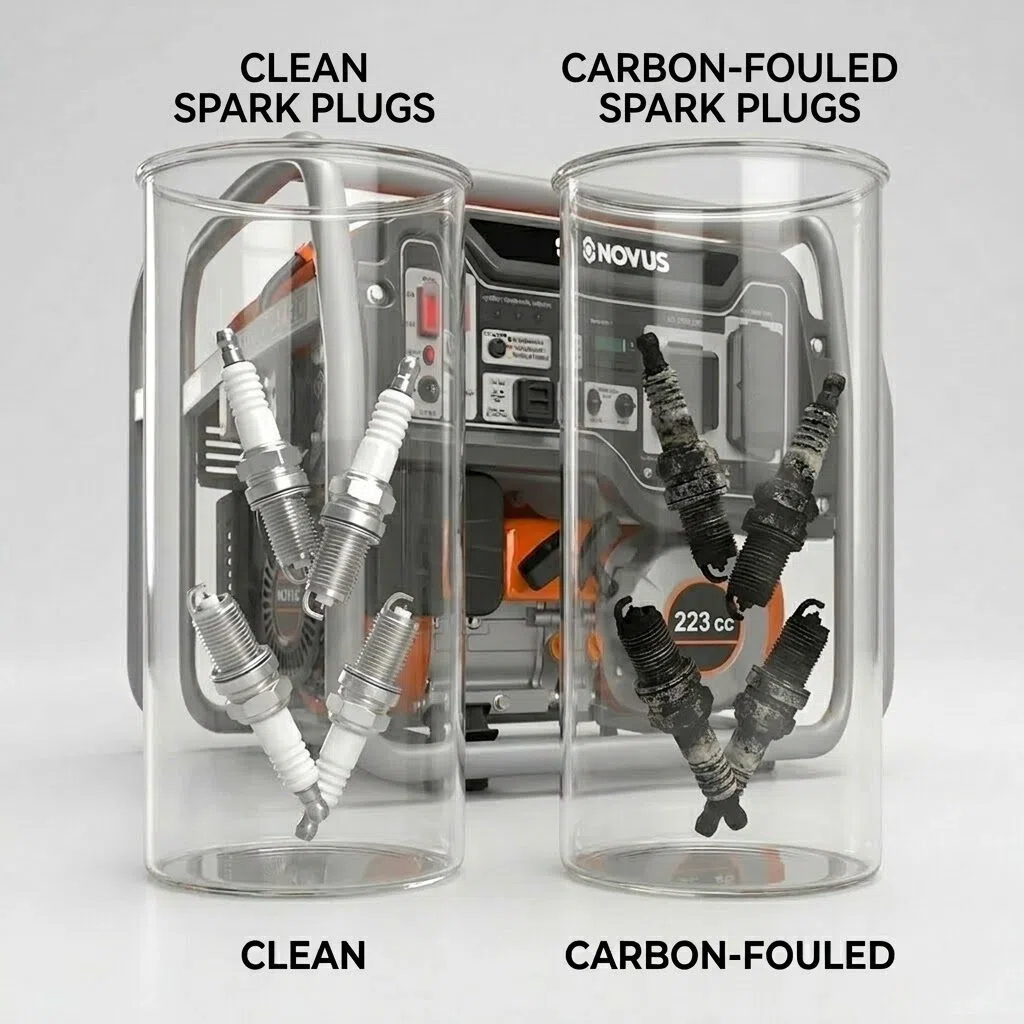
The spark plug creates an ignition process which burns the fuel and air combination. The generator fails to start because of two primary issues which include carbon buildup and worn spark plugs, and this problem occurs more frequently with generators that have not been operated for several months.
The maintenance process requires the technician to remove the spark plug before examining the electrode head for any carbon or other deposits. The presence of black soot-like deposits demonstrates that an excessive fuel-air mixture enters the engine or that the spark plug has reached its end of service life. The item allows users to clean it with a wire brush or choose to replace it with a main unit. The gap between the electrodes must be precise according to the standard which requires 0.71-0.79 millimeters. The technician needs to use a feeler gauge for both measuring and fixing the gap distance between the two objects.
The spark plug needs replacement when any damage occurs to its components which include the insulator and the electrode. Spark plugs are inexpensive, and it is recommended to replace them once a year.
Solution:
- Remove the spark plugs for cleaning.
- If they are severely worn out, replace them directly.
It is recommended to conduct regular checks, which is cost-effective but has a significant impact.
Reason 3: Incorrect position of the fuel valve or choke
Many users overlooked the startup steps, resulting in the generator “not malfunctioning but still not starting”.
Common mistakes:
- The fuel valve was not opened
- The choke was not activated during cold start
Solution:
- Make sure the fuel valve is in the open position.
- When starting the cold machine, turn on the Choke, and then gradually close it after the start.
Reason 4: Low oil protection triggered
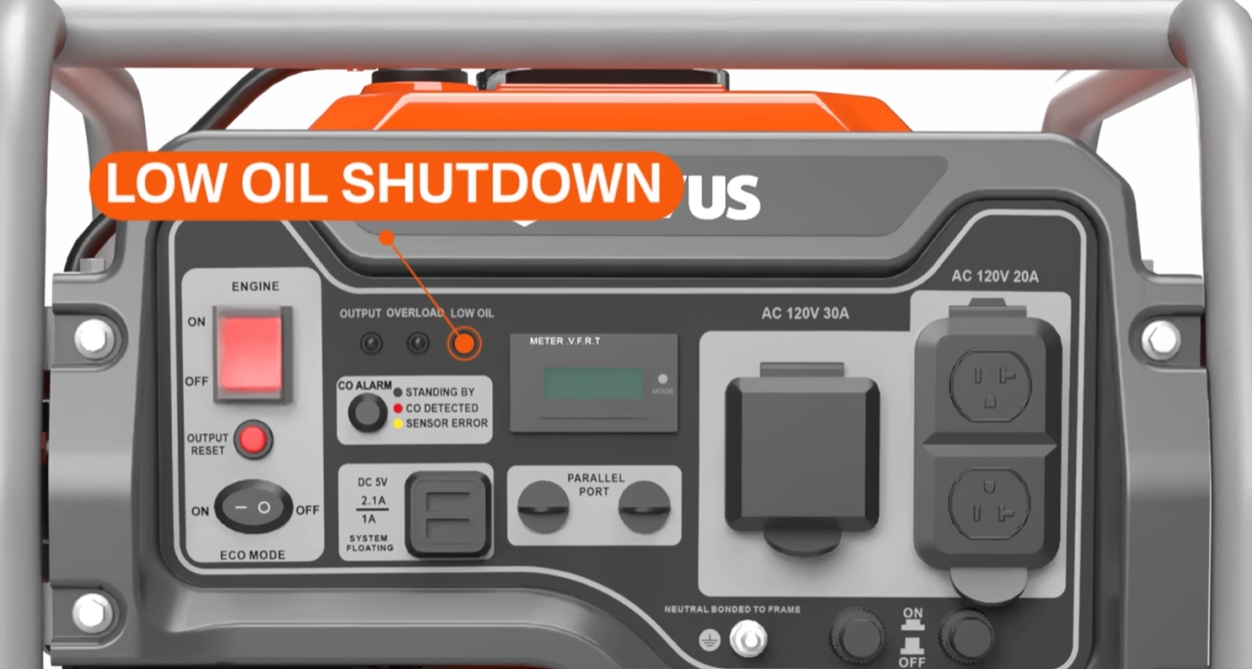
Modern variable-speed generators are usually equipped with a low oil protection system. If the oil level is insufficient, the equipment will automatically prohibit startup to prevent damage to the engine.
Judgment method:
- Generator fails to start, but there are no obvious mechanical problems
- Low oil indicator light is on (for some models)
Solution:
- Check the oil level
- Add to the recommended level
Note: Even slightly below the standard level may trigger protection.
Reason 5: Carburetor Blockage
If the generator has been unused for a long time, residual fuel may form deposits in the carburetor, thereby blocking the fuel supply system.
Typical symptoms:
- Unable to start after long-term idling
- Difficulty starting or intermittent starting
Solution:
- Use carburetor cleaner for cleaning.
- In severe cases, disassembly or replacement may be necessary.
This is a typical cause of “unable to start after being left for a long time”.
Reason 6: Battery Issues (Electric Start Model)
For inverter generator with electric start functionality, battery problems are also quite common.
Symptoms:
- No response when the start button is pressed
- Start motor failure
Solution:
- Charge the battery
- Replace the worn-out battery
If it can be started manually but the electric start fails, it is basically a battery problem.
Reason 7: Air Filter Blockage
Insufficient air supply can also affect the engine startup.
Possible scenarios:
- The air filter is heavily clogged with dust
- Air flow is restricted
Solution:
- Clean the filter element
- Replace the filter element if necessary
Reason 8: Overload and Safety Shutdown Protection
Modern inverter generators are equipped with a variety of automatic protection systems, which play a crucial role in ensuring safety. While these protection systems exist to safeguard the generator system, their concealed nature often makes troubleshooting difficult.
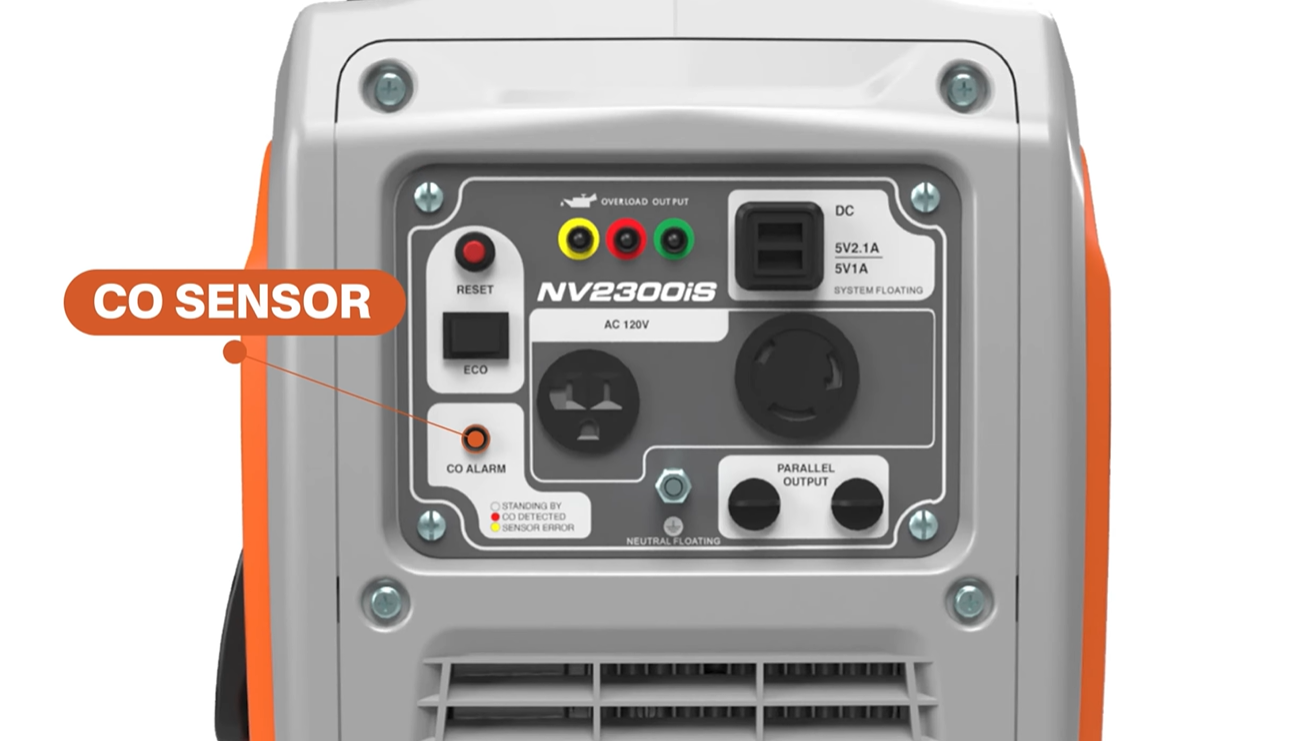
The generator will halt operation when the circuit breaker trips because the connected load exceeds the rated power of the generator. All loads must be disconnected, the reset button on the control panel must be pressed, and the generator must be restarted before connecting the electrical equipment one by one.
Many new generators are equipped with a carbon monoxide detector as a standard feature. The generator will shut down automatically when carbon monoxide levels in the environment rise above a certain threshold. The generator requires relocation to an outdoor area which has effective airflow. The carbon monoxide reset button can be activated if it exists.
Solution: Disconnect the load, press the reset button, and move the generator to an open and well-ventilated area.
When should you call a professional repairman?
While most problems can be solved by yourself, it is recommended to seek professional help in the following situations:
- Failure to start after multiple attempts
- Involves a problem with the circuitry or internal structure
- The generator is still under warranty
Avoid attempting to disassemble it yourself, which could cause further damage.
How to prevent generators from failing to start?
Prevention is better than repair. Proper routine maintenance can significantly reduce the failure rate.
We recommend the following:
- Start the generator at least once a month to keep the system active.
- Use fuel stabilizers to prevent fuel deterioration.
- Change engine oil regularly.
- Clean the air filter.
- Drain the fuel when not in use for extended periods.
These simple habits can significantly extend the life of your equipment.


Leave feedback about this