

Is it better to use a tiller on wet or dry soil? The clear answer is: dry or slightly moist, friable soil is far better. Tilling wet soil is one of the most common mistakes gardeners make, especially in early spring after rain or snowmelt.
Tilling the soil using either the tiller or shovel while the soil is wet will compact the soil particles, disturb the soil structure and create hard soil lumps that may persist for many years. The other case, which is not appropriate, is when the soil is completely dry since it creates a lot of dust and adds extra work to the machine. The best condition is where the soil contains little moisture and is easily broken down.
In this guide, you will gain a precise understanding of why wet soil is harmful, how to correctly test soil moisture, how long to wait after rain, and the best practices for successful tillage.
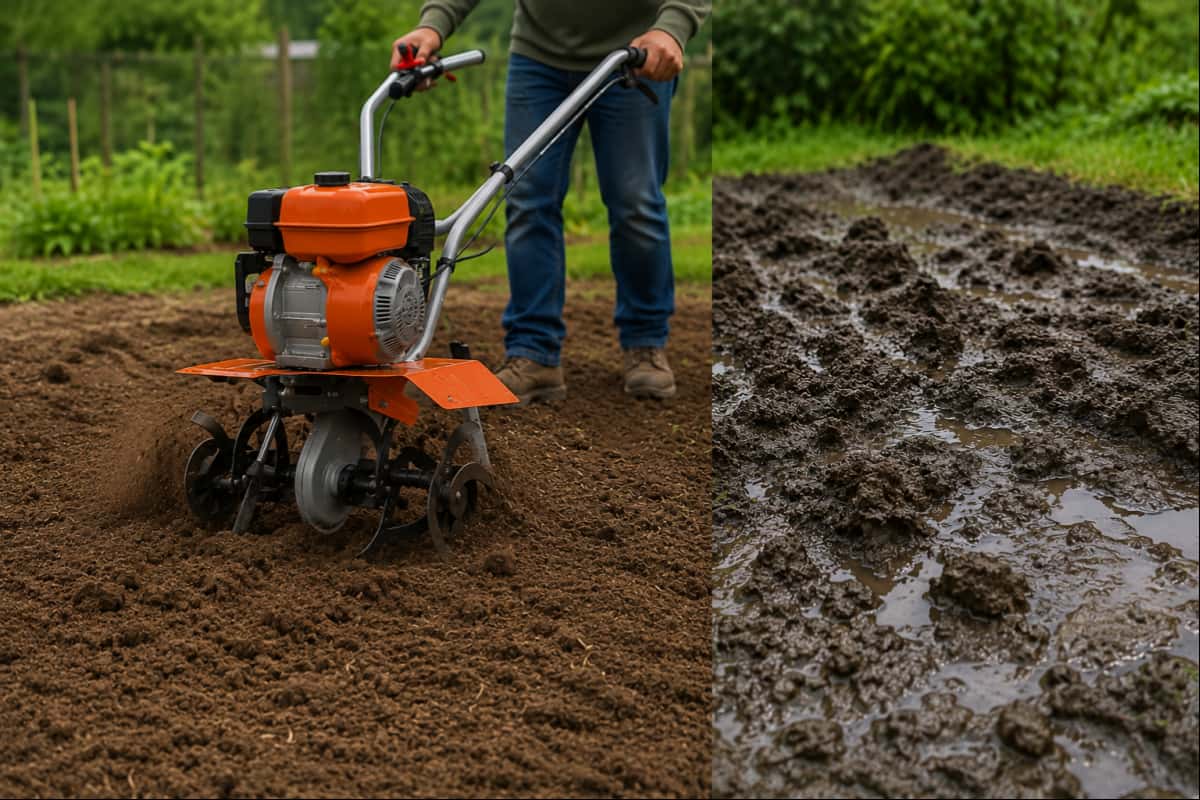
Why You Should Never Till Wet Soil
Tilling wet soil causes several serious problems:
- Compaction of soil: The lubrication of soil particles by water makes it possible for the weight of the rotary tiller (and your steps) to press them firmly against each other, decreasing the required volume of space for air, water, and roots.
- Formation of hardened soil lumps: Moistened soil turns into large sticky lumps that become hard as bricks in a dry state. Such lumps are very hard to crumble and prevent root formation.
- Destruction of soil structure: Soil aggregates that consist of soil particles bonded together with help of organic materials and microorganisms are destroyed. Once destroyed, it will take years to enrich the soil with compost and cover plants.
- Bad drainage and ventilation: Due to compaction, the soil becomes poorly drained and ventilated, which may cause waterlogging and root rotting.
- Problem of machine: The rotary tiller gets stuck easily, its blades get covered with mud, and its engine gets overloaded.
University extension services (such as Purdue University and the University of Nebraska) always warn gardeners to “resist the urge” and not to work on wet soil, as the damage is long-lasting.
Is Completely Dry Soil Ideal?
No. The extremely dry and dusty soil also poses a problem. The rotary tiller has difficulty penetrating hard and dusty ground, often bouncing or sending up fine particles. These particles may be further crushed, increasing the risk of erosion and reducing the habitat for beneficial soil organisms. The equipment also experiences greater pressure under such conditions.
A good state is found midway between the two. Moderately wet but loose and friable soil is like an expression of a squeezed-out sponge. It has a cool feeling, makes a soft ball when pressed, and disintegrates under mild pressure. The presence of moisture ensures easy penetration of the blades and leaves behind a proper seed bed that is neither dusty nor compacted.
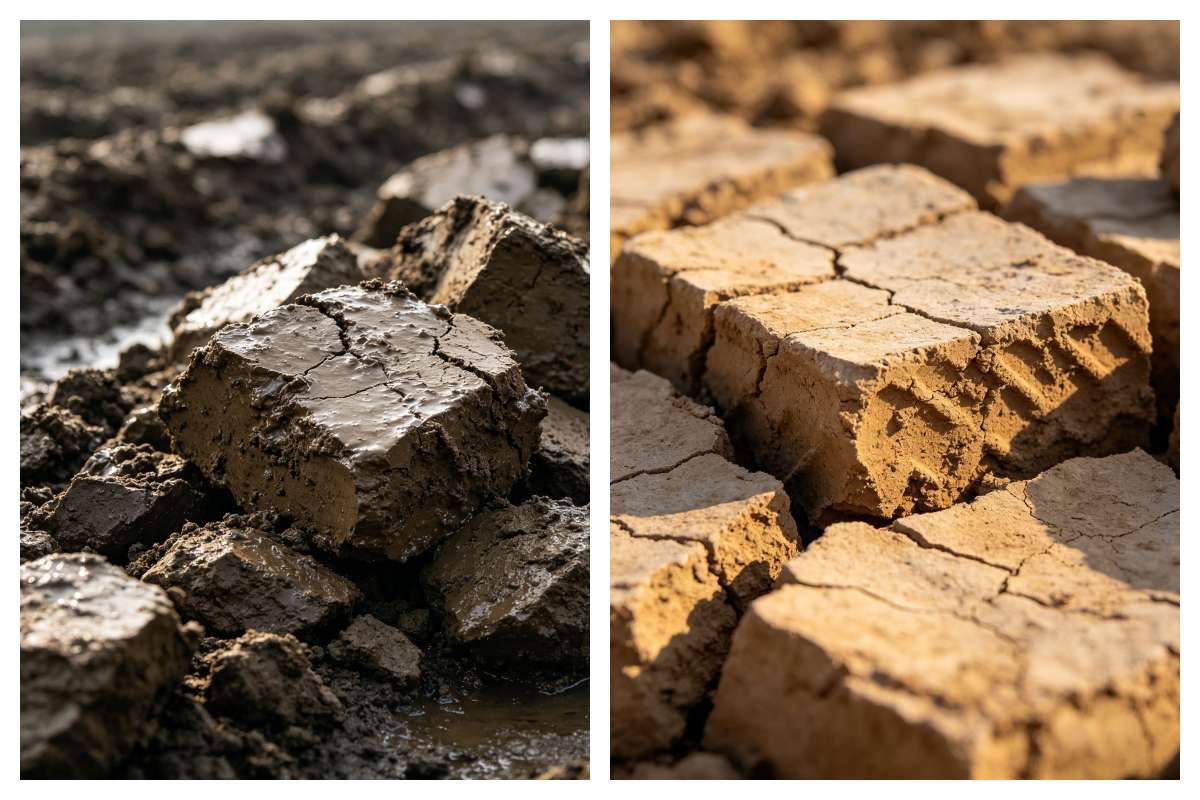
How to Test If Your Soil Is Ready to Till (The Squeeze Test)
This simple and reliable test is highly recommended by almost all gardening experts:
- The rotary tiller will be dug to the desired depth (usually 6–8 inches / 15–20 centimeters).
- Take a handful of soil from the bottom of the hole.
- Press it hard to form a ball.
- Observe the result:
- If the soil immediately crumbles and feels like powder → It’s too dry. Water it gently and wait for 1-2 days.
- If it can form a ball and maintain its shape, but it easily collapses when poked with your finger or dropped from a waist height → Perfect. You can till it by rotating.
- If the dough forms a sticky ball that doesn’t break apart or leaves wet marks on your hands → It’s too wet. Wait a little longer.
Additional signals indicate that the soil is too wet:
- Footprints deeply into the soil.
- Tools covered in thick mud on them.
- The surface looks shiny or has standing water.
How Long to Wait After Rain
The waiting time mainly depends on the type of soil, rainfall, temperature and the content of organic matter:
| Soil Type | Typical Waiting Time After Moderate Rain | Notes |
| Sandy soil | 1–2 days | Drains quickly |
| Loamy soil | 3–4 days | Most common garden soil |
| Clay soil | 5–7 days or more | Holds water longest |
Always retest using the compression method instead of relying solely on the calendar days. Higher levels of organic matter (from compost) help the soil dry out more evenly and resist compaction.
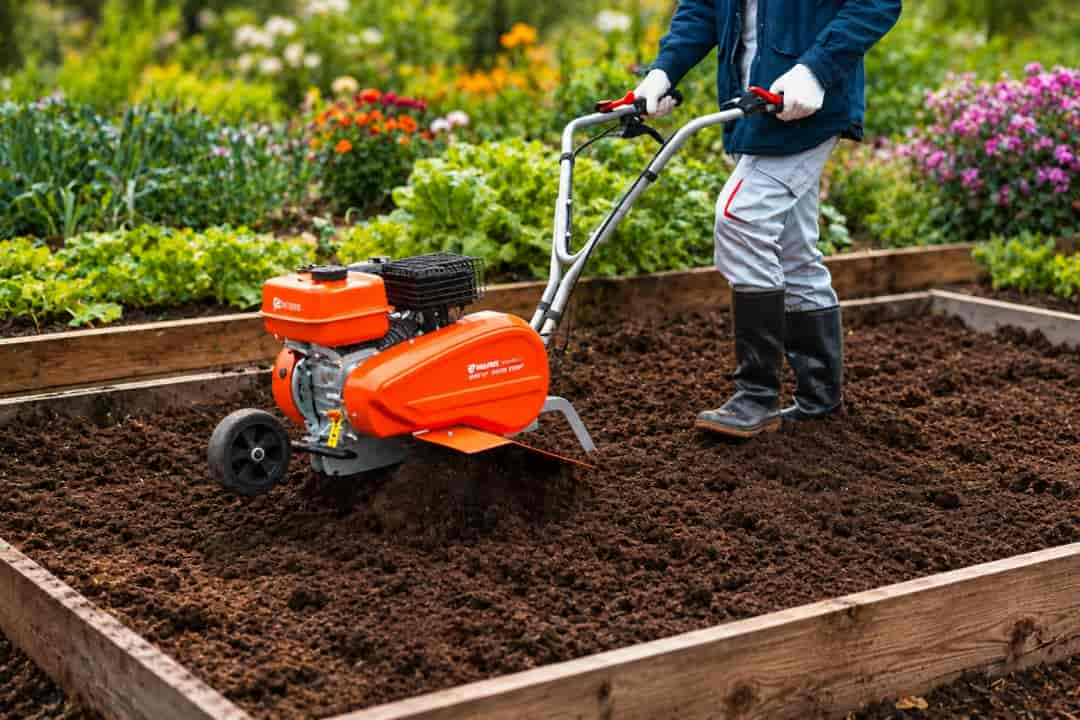
Best Practices for Successful Tilling
Successful spinning begins with restraint. Use the machine only when truly necessary – to cultivate new land, relieve severe compaction, or mix in large amounts of amendments. Frequent deep tillage can disrupt soil organisms and may negate the benefits of previous care.
Pick up equipment that will match your task. Rear-tine rotor tillers suit tough and clay soil; front-tine rotor tillers fit light work. Incorporate compost or other organic materials during tilling, and improve the soil structure. Tilling should be done at a uniform pace and should involve overlapping the rows until they do not become dust after some rows but before turning into fine dust. Too much tilling results in creating a layer of soil that tends to compact after the next rainfall.
Also, safety is a vital aspect of tilling. Wear closed shoes, protective glasses, gloves, and hold the handle firmly. Ultimately, many gardeners have noticed that less tilling or even no-till techniques yield healthy soil and vigorous plants.
What to Do If You Already Tilled Wet Soil
Immediately stop. In case there was damage, then you should immediately stop any further activities. After the soil has dried, then break any big chunks of soil using a rake or a wide fork rather than using machinery again. Add a layer of compost or completely decomposed manure to the surface, and you can plant cover crops like clover, rye, and buckwheat. They will be of great help in rebuilding the structure through their root system and organic matter. In the process of rebuilding, you need to reduce any unnecessary trampling.
Alternatives to Traditional Tilling
- Broadfork or garden fork for manual aeration.
- Sheet mulching / lasagna gardening.
- Cover crops and permanent mulch.
- Raised beds filled with quality soil mix.
These methods protect soil structure and often produce better long-term results.
Conclusion
To be specific, using a rototiller on dry soil or slightly moist, loose and brittle soil is much better than on wet soil. Wet soil can lead to compaction, hard soil clumps and irreversible long-term damage. Completely dry soil is also not ideal, but the real danger is working on a muddy ground.
Prior to turning on the rototiller, it is critical to perform a compression test. Waiting for just a little bit longer is better than wasting decades of time fixing the soil that was compressed. Good soil structure is crucial for a successful vegetable garden.
By following these guidelines, you will prepare better seedbeds, reduce setbacks, and support stronger plant growth in the coming seasons.


Leave feedback about this