

Friends who often go camping outdoors, undertake small construction projects, or need emergency power supply at home are likely to encounter a problem: a single inverter generator is not powerful enough to power an air conditioner, an electric drill, and a refrigerator, and it will break down; but buying a high-power generator is cumbersome to transport, wastes fuel when idle, and has a very low cost performance.
In fact, solving this problem is very simple – use multiple inverter generators in parallel. Parallel connection of inverters involves connecting two or more inverters of the same specification that have the capability for parallel operation through dedicated parallel cables / modules. These inverters then output voltage, frequency and phase simultaneously, forming a larger power supply system. The core of this process is to achieve “combination of small units and large output power”, while retaining the advantages of inverters, such as low noise and high power quality. It is widely used in outdoor projects, emergency power supply, recreational vehicle camping, and other scenarios.
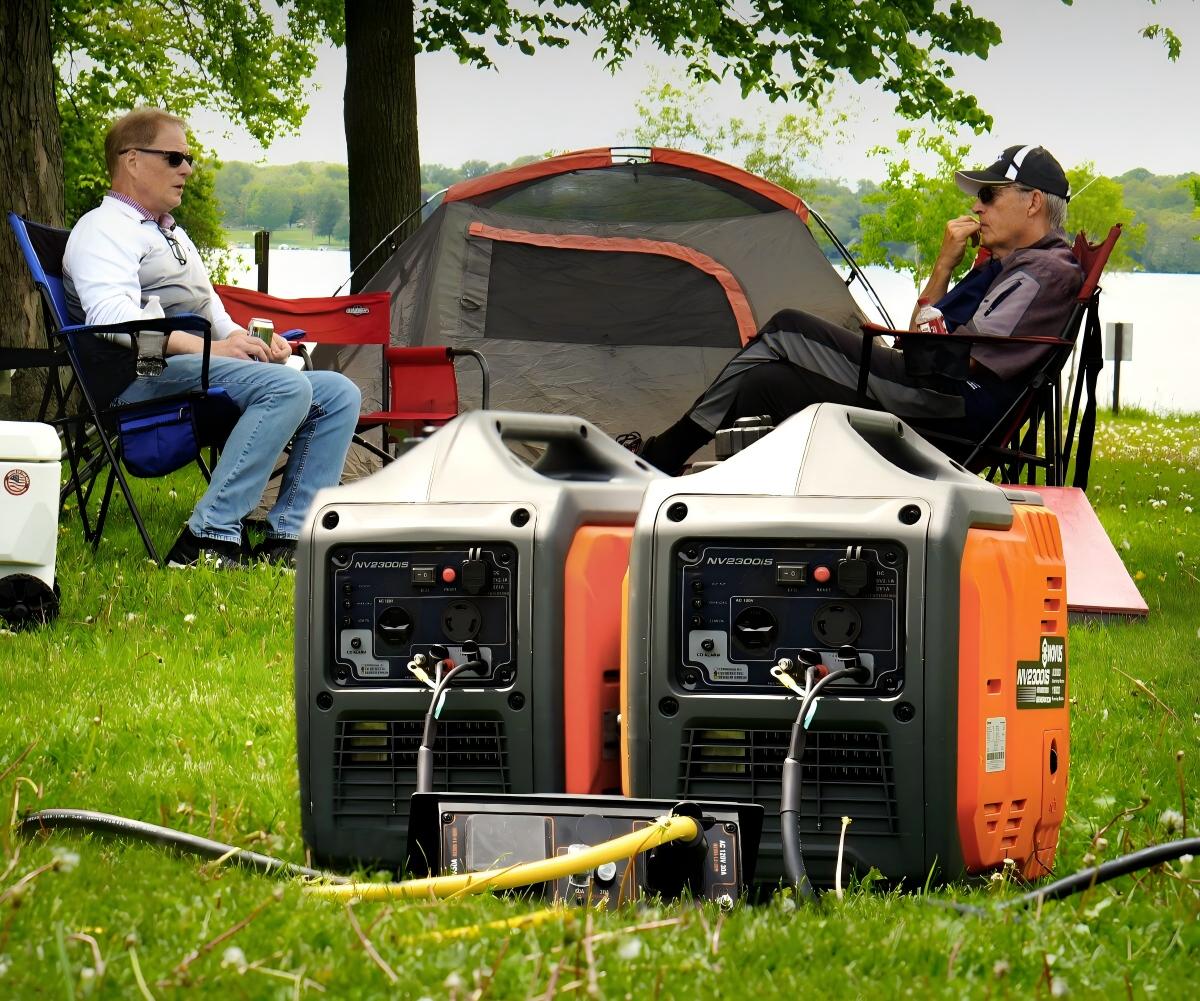
Which Inverter Generators Can Be Paralleled?
The key to parallel operation is to have units of the same model, the same parameters, and with the parallel function. None of these elements can be missing; otherwise, phase synchronization issues, uneven power distribution, and even equipment damage may occur:
- Model matching: It must be inverters of the same brand and with the same power (for example, two 2kW units of the same model, they cannot be mixed and connected with 2kW and 3kW). Ensure that the internal inverter circuits and control logic are consistent, and they can automatically synchronize frequency and phase.
- Function support: The units must have a “parallel mode” function, or support external parallel modules / cables. Old-fashioned pure frequency generators and ordinary inverters without parallel function cannot be directly connected in parallel.
- Parameter consistency: The output voltage (such as 220V), frequency (50Hz), and waveform must be exactly the same to avoid circulating currents caused by parameter deviations, which could burn out the generator windings or electronic components.
Why Use Inverter Generators in Parallel?
Compared to directly purchasing a high-power inverter generator and paralleling multiple small-power units, this approach better suits our daily usage scenarios.
- Flexible power expansion
Run one unit when power consumption is low, and two units when power consumption is high → Combine as needed, saving fuel consumption - Quieter
Small power units usually have lower noise levels, and paralleling multiple units is quieter than a single high-power unit - More fuel-efficient
The inverter generator will automatically adjust the speed. When the load is low, fuel consumption significantly decreases - More portable
Two small units are easier to transport than one heavy unit
Steps for Parallel Connection of Inverter Generators
Step 1
First, check the status of the two generators and ensure that the output switch is in the “off” position – if these details are not done properly, problems will arise later.
Then, prepare the special accessories: You must use the parallel cables provided by the manufacturer, as well as the grounding device and load cables. Make sure that all the accessories are undamaged and not aging.
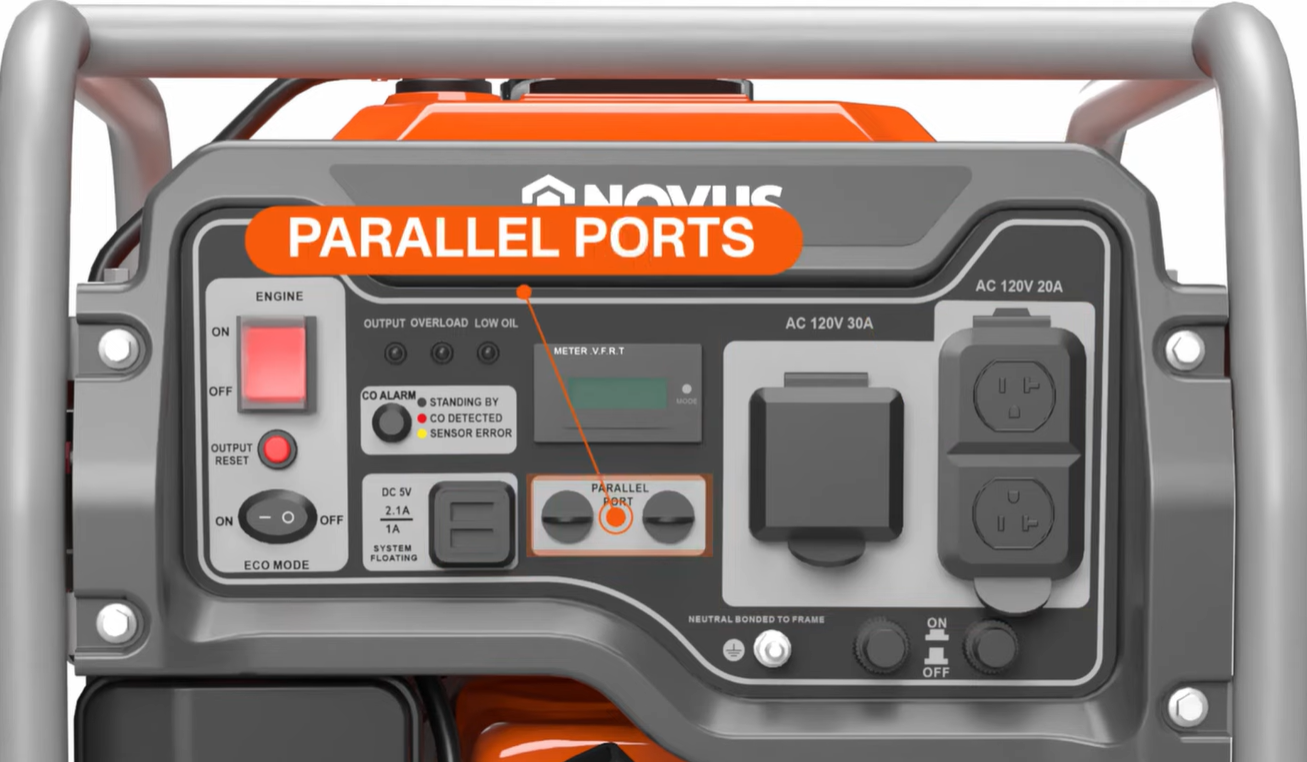
Step 2
1. Disconnect the output circuit breakers of the two generators to ensure that they are connected after power off to prevent electric shock;
2. Insert the ends of the parallel cables into the parallel interfaces of the two units and lock them to avoid loosening and causing poor contact, sparks or interface damage;
3. Implement grounding protection: Use grounding wires to reliably ground the grounding terminals of the two units, especially in outdoor humid or near metal equipment areas, which can effectively reduce the risk of electric shock;
4. Connect the load: Connect the main load cable to the output socket of any one unit or the parallel total output end; the total load power should not exceed the sum of the rated powers of the two units. It is recommended to reserve a 10%–20% margin (for example, two 2kW units, the total load should not exceed 3.6kW) to avoid overload causing the units to shut down or be damaged.
Step 3
After the wiring is completed, the unit can be started.
1. Start the first generator and let it run for 3-5 minutes until the idle speed is stable and the voltage/frequency display reaches the standard;
2. Switch the first unit to the “parallel mode”, at this point the unit will enter a “waiting for synchronization” state;
3. Start the second generator and let it run until it reaches a stable state, then switch it to the “parallel mode”;
4. Synchronization: The two units will automatically detect, adjust the phase and frequency. This process takes approximately 1-2 minutes.
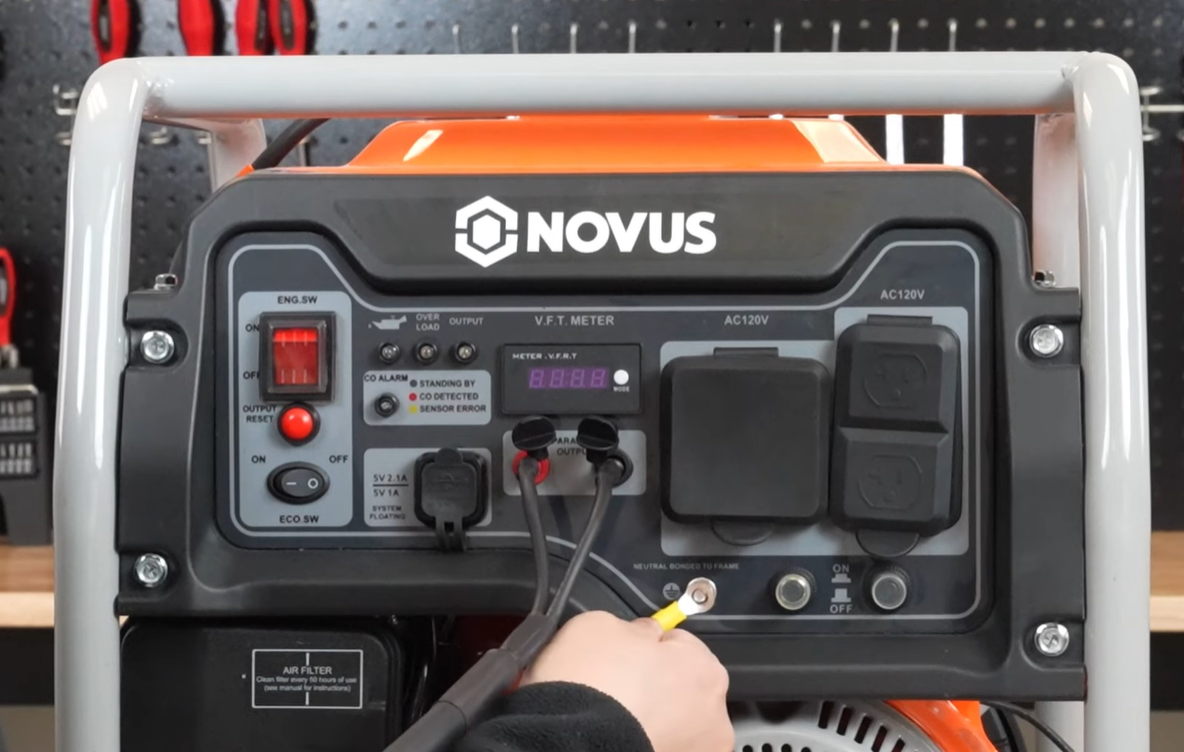
When the “parallel indicator light” of both units is constantly on (the specific indicator light identification may vary by brand, refer to the manual), it indicates that synchronization is complete and the units can be operated under load.
Best Applications for Parallel Inverter Generators
The inverter generator parallel system performs exceptionally well in various application environments, including:
- Outdoor camping and RV power supply
- Home emergency backup power supply
- Small construction site equipment power supply
- Outdoor event stage and lighting system
- Yachts and temporary docks power support
It is particularly suitable for occasions with strict noise control requirements and significant fluctuations in electricity demand.
Frequently Asked Questions About Parallel Inverter Generators
Can an inverter generator be connected in parallel with more than three units?
Some brands support multiple units in parallel, but the common design is usually for two units. Please refer to the specific product instructions.
Will the voltage increase after being connected in parallel?
No, the system will maintain the standard output voltage and only increase the available power.
Conclusion
The parallel use of inverters provides users with an efficient, flexible and economical power supply solution. By choosing models with parallel function reasonably and using them strictly in accordance with the operation procedures, not only can high power demands be easily handled, but also low noise and fuel economy can be achieved.Whether for outdoor activities, family emergencies or temporary work environments, parallel inverters can become a reliable power solution.


Leave feedback about this