

When renovating the garden, cleaning vehicles or maintaining the exterior walls of a shop, you will most likely come across two frequently used terms on your shopping list: “Pressure Washer” and “Power Washer”. Many people tend to unconsciously use these terms interchangeably because they believe the terms serve as different names that merchants use. However, this is not the case. The two devices appear to perform identical functions because their fundamental designs differ in major ways. Choosing the wrong one will not only waste your budget but also potentially damage the cleaning surface.
In daily communication, these two terms are often confused with each other, especially in the promotional materials for ordinary household scenarios. However, in the professional cleaning industry, the boundaries between them are very clear, and the core difference lies in whether they have a hot water heating function.
Pressure Washer
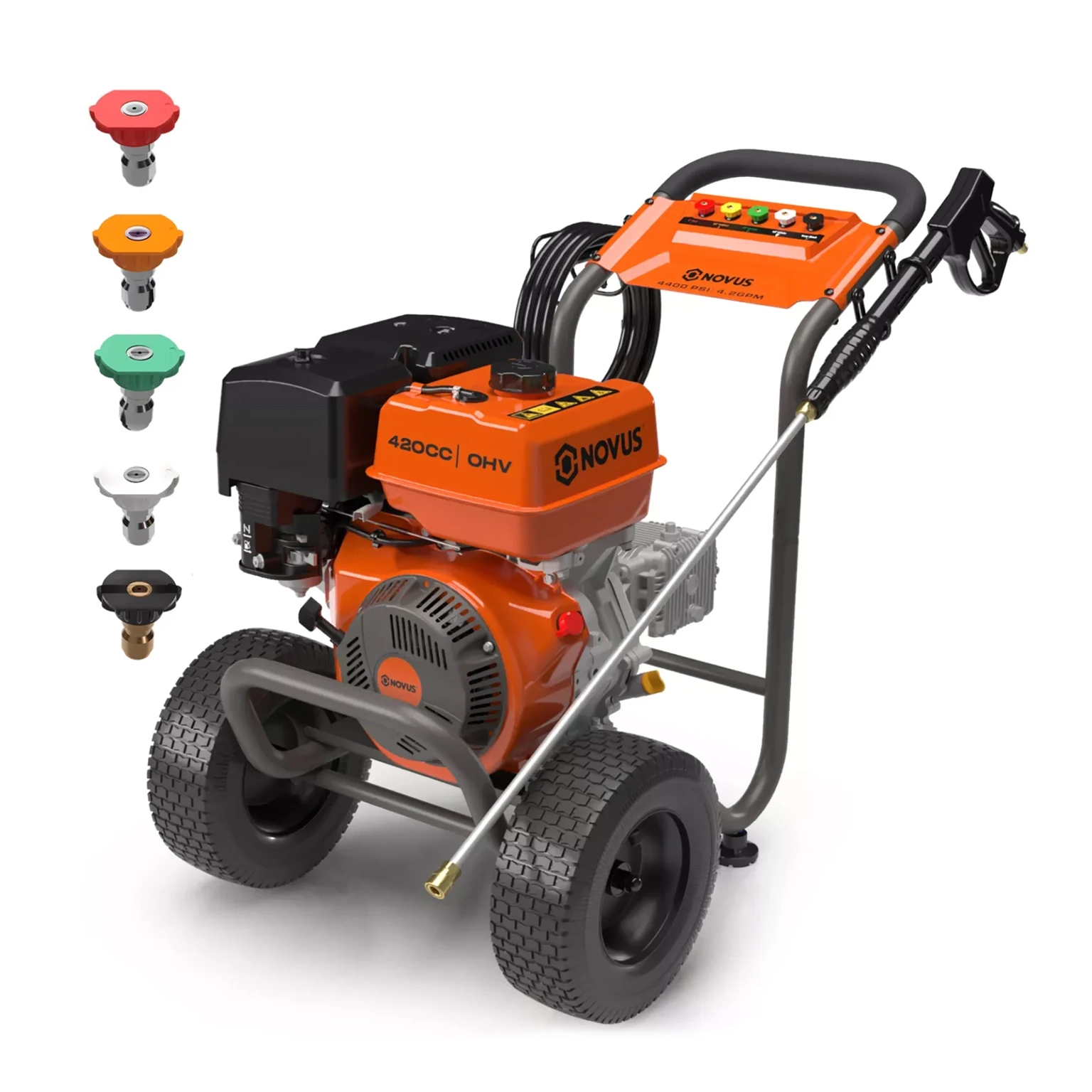
This is the most common all-purpose cleaning equipment. The core working principle is “using pressure to remove stains”. It uses the built-in high-pressure pump to increase the water pressure to an extremely high level, and then through the spray gun and nozzle, forms high-speed water flow. It only relies on the impact force of the water flow to break down and remove dust, silt and mild stains from the surface.
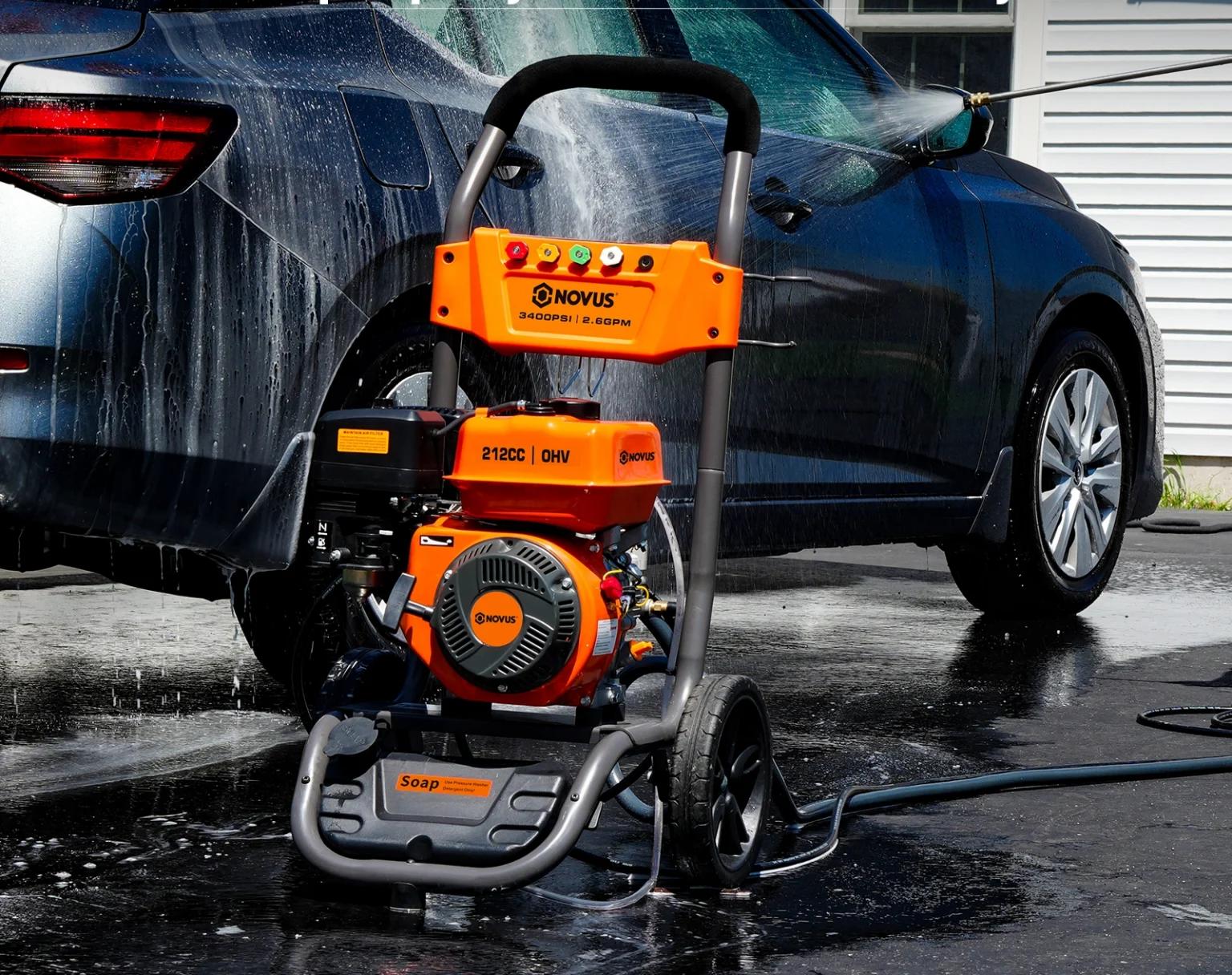
This type of equipment has no heating components. It uses either the normal temperature cold water from the tap or an external other warm water source. The structure is simple, and it is the mainstream choice for household and small-scale commercial cleaning.
Power Washer
It is essentially an “upgraded version of a pressure washer”, and its core working principle is “high temperature + high pressure for dual decontamination”. On the basis of the pressure provided by the high-pressure pump, it is additionally equipped with a heating system, which can heat the water flow to 82℃ – 104℃, and then spray it out under high-pressure conditions.

The high temperature can dissolve stubborn grease, mold, and aged stains at the molecular level, doubling the cleaning effect of the high-pressure water flow. Therefore, it is mainly applied in commercial and industrial-grade scenarios for heavy oil stains and heavy stains.
Power Washer vs. Pressure Washer: Core Differences
Although the two devices are very similar in structure and function, there are still several key differences between them.
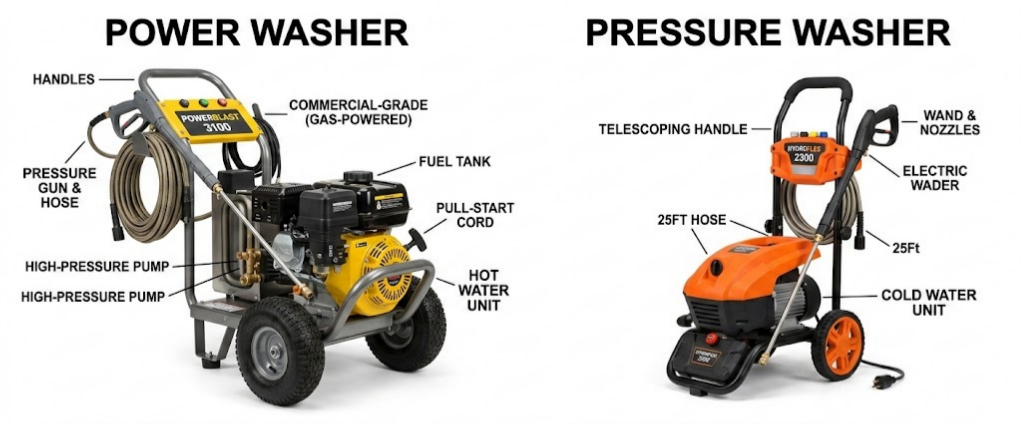
Water temperature
The most obvious difference between the two is water temperature.
Pressure Washer: Cleansing with cold or warm water
Power Washer: Cleansing with hot water or warm water
Hot water can more quickly break down grease and stubborn dirt, so it has obvious advantages in certain application scenarios.
Cleaning capability
The two devices produce equal cleaning results when they are used to clean regular dust and dirt. The hot water power cleaning machine proves more effective than other methods when it comes to removing oil stains and grease and industrial pollutants.
Equipment cost
The Power Washer equipment now requires more expensive components because its heating system has increased the operational complexity of its facility. The system needs hot water for heating purposes, which results in both increased energy needs and higher costs for running the system.
Application fields
Household and light cleaning tasks use pressure washer, whereas power washer exist as the standard cleaning solution for commercial and industrial cleaning operations.
When should one choose a Pressure Washer?
For most household users, a Pressure Washer is already capable of meeting the majority of cleaning needs. It is suitable for dealing with dust, dirt, and mild grime in everyday environments.
If your cleaning tasks mainly involve the following situations, then a pressure washer is usually a more economical and practical choice:
- Cleaning cars or bicycles
- Cleaning yards or driveways
- Cleaning wooden patios
- Cleaning fences or garden furniture
In addition, pressure washer are usually smaller in size, produce less noise, and are more suitable for home use.

When should one choose a Power Washer?
If more stubborn dirt needs to be removed, such as grease, engine oil or industrial pollutants, then the advantages of a Power Washer become even more apparent.
The following scenarios are typically more suitable for using a power washer:
- Industrial equipment cleaning
- Heavy vehicle maintenance
- Commercial kitchen cleaning
- Large building or construction site cleaning
In these environments, hot water can significantly enhance the cleaning efficiency while reducing the cleaning time.
Why Do Many People Use These Two Terms Interchangeably?
In daily life, people often do not strictly distinguish between Power Washer and Pressure Washer. These two terms are often used as synonyms.
The reasons for this situation are mainly two:
First, the appearance and basic structure of the two devices are almost the same.
Second, most household devices are actually cold water pressure washer, but they may still be called Power Washer in marketing promotions.
Therefore, in daily conversations, these two terms can often be used interchangeably. However, in the field of professional equipment, they still represent different types of technologies.
Summary
From a structural perspective, the working principles of Power Washer and Pressure Washer are very similar. Both of them use high-pressure water flow to remove surface dirt.
The core difference between the two lies in the water temperature:
Pressure Washer typically uses cold water, while Power Washer uses hot water or warm water for cleaning.
For most household users, an ordinary high-pressure cleaning machine can already meet their daily cleaning needs. However, in industrial environments or scenarios where oil stains need to be removed, power washing machines often have an advantage.


Leave feedback about this