

You have put everything together, you have plugged the hoses, and you have pulled the rope, but what comes out is nothing. A pressure washer not pumping water is the problem that is encountered most often in both professional and non-professional circles.
While it’s easy to assume the pump has failed, the reality is often much simpler. As manufacturers, we see that most “broken” machines are simply starving for water or trapped by air. Before you call a service center, follow this step-by-step troubleshooting guide to get your machine back to peak performance.
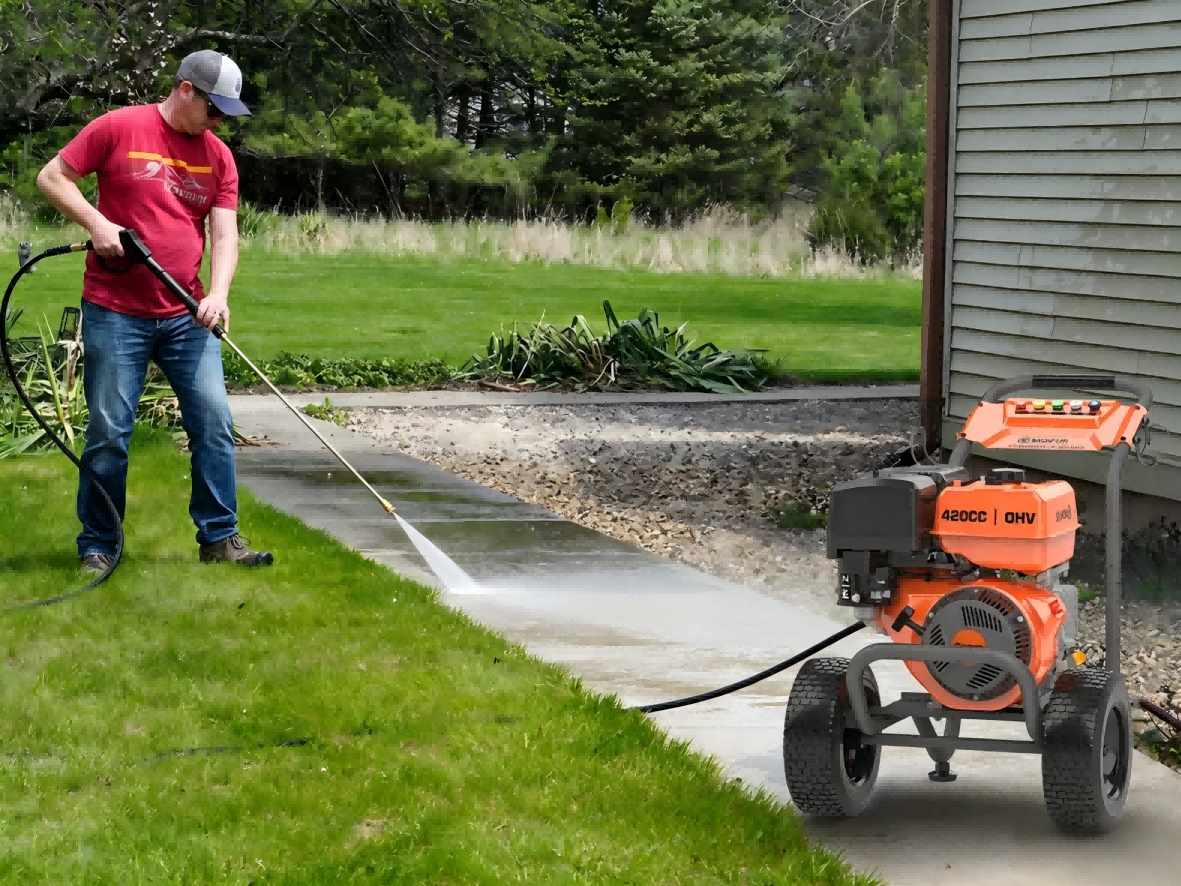
1. Check the Water Supply and Hose (The Basics)
It sounds simple, but a significant percentage of “pumping failures” are actually supply failures. If the pump doesn’t have a steady volume of water to compress, it cannot generate pressure.
- The Faucet: Make sure that your water source is completely open since an insufficiently opened faucet will supply adequate water to your garden hose but not for the high-pressure pump’s GPM.
- Hose Kinks: Check the entire length of your inlet hose. Any single kink or any heavy object placed on the hose can obstruct the water flow.
- Insufficient Flow: Most gaso-powered pressure washers require at least 5 gallons of water per minute. If you are using a longer extension hose (more than 50 feet), friction losses may cause the flow rate to be too low, preventing the pump from starting.
2. Eliminate Air Lock (The “Most Common” Fix)
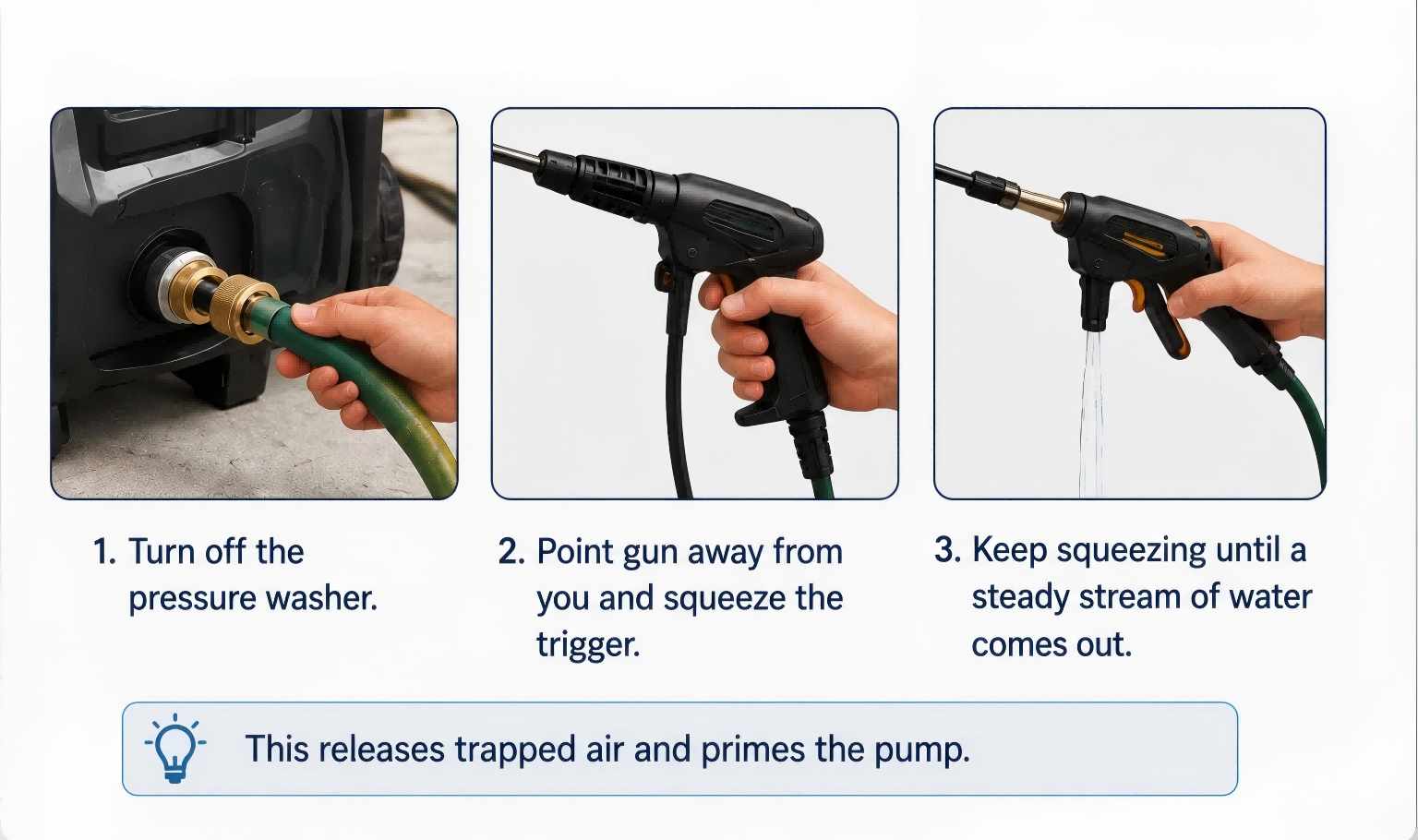
If your pressure washer fails to pump water, it is likely that there is air trapped inside the system. The purpose of the high-pressure pump is to convey liquids, not air. When air accumulates in the pump manifold, the piston will collide with the air pockets instead of sucking in water – this phenomenon is known as air lock.
How to Purge the System:
- Turn off the engine or motor.
- Disconnect the high-pressure hose from the pump outlet.
- Turn on the water supply and let it flow through the pump for 30 seconds until all sputtering stops.
- While the water is flowing, squeeze the spray gun trigger to clear the wand.
- Reconnect everything and restart. This “priming” process is the #1 solution for new machines or those stored for long periods.
3. Check for Air Leaks in the Inlet System
In order for a pump to successfully lift water, the intake end needs to be totally sealed off from air leaks. Even a small hole in your pipe can cause air to be sucked through by the pump instead of water.
- Check the connection: Inspect the junction where the garden hose connects to the water pump. If there are cracks in the plastic or brass connectors, air will enter.
- O-ring: If the O-ring at the hose connection is dry, cracked or missing, it will silently reduce the water pressure. Replace these small rubber seals annually to ensure airtightness.
- Water suction hose: If you are drawing water from the water tank (self-suction type), please ensure that the water suction hose is reinforced to prevent it from collapsing under the vacuum pressure.
4. Clean the Water Inlet Filter and Nozzle
If the water supply is fine but the machine is still struggling, you likely have a physical blockage.
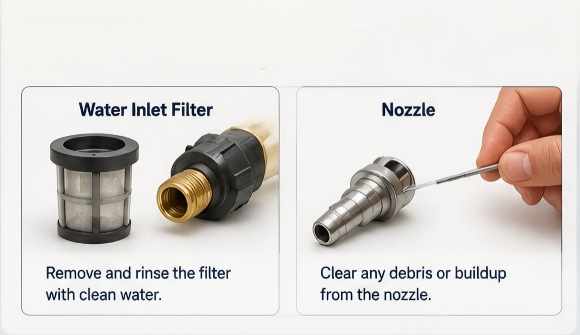
- The Inlet Filter: Most pressure washers are equipped with a mesh filter at the water inlet. However, as the usage frequency increases, it will gradually get clogged with sand, dirt and other minerals. At this point, the filter must be removed with pliers, washed clean, and then reinstalled. Without this filter, the pressure washer may damage the water pump.
- The Spray Nozzle: Due to the extremely small diameter of the pressure nozzle, a single grain of sand is sufficient to completely block it. If you feel that the pump is overloaded (the engine noise is strenuous) but no water is flowing out, please remove the nozzle and clean it with a fine wire or nozzle cleaning tool.
5. Free Stuck Check Valves Inside the Pump
If your machine was stored with water inside, mineral deposits or old soap residue can cause the internal check valves to stick. These are one-way valves that allow water to move into the high-pressure chamber. If they are stuck closed, the pressure washer will not pump water regardless of your water supply.
The Professional Fix:
- The “Tap” Method: With the water connected but the engine off, gently tap the brass pump head with a rubber mallet. The vibration can often “pop” the valves free.
- Pump Lubricant: For professional maintenance, it is advised to apply lubricant or pump protectant to the water inlet. This dissolves minerals present in hard water as well as lubricates springs and valves inside the valve for its proper opening and closing.
Precautions: If you notice that no water flows from your pressure washer, be sure to keep the engine running for no more than one minute while trying to diagnose the issue. Without water, the pump cannot cool itself, which will result in melted seals due to the friction of the pistons rubbing against each other.
Need Professional Support?
Are the existing problems still present? Despite the filter being cleaned and the air lock being eliminated, there is still an absence of pressure. The reason for that may lie in the wear of the discharge valve or the damage to the plunger seal. If you need more assistance and a professional diagnosis, please contact our technical support team.


Leave feedback about this