

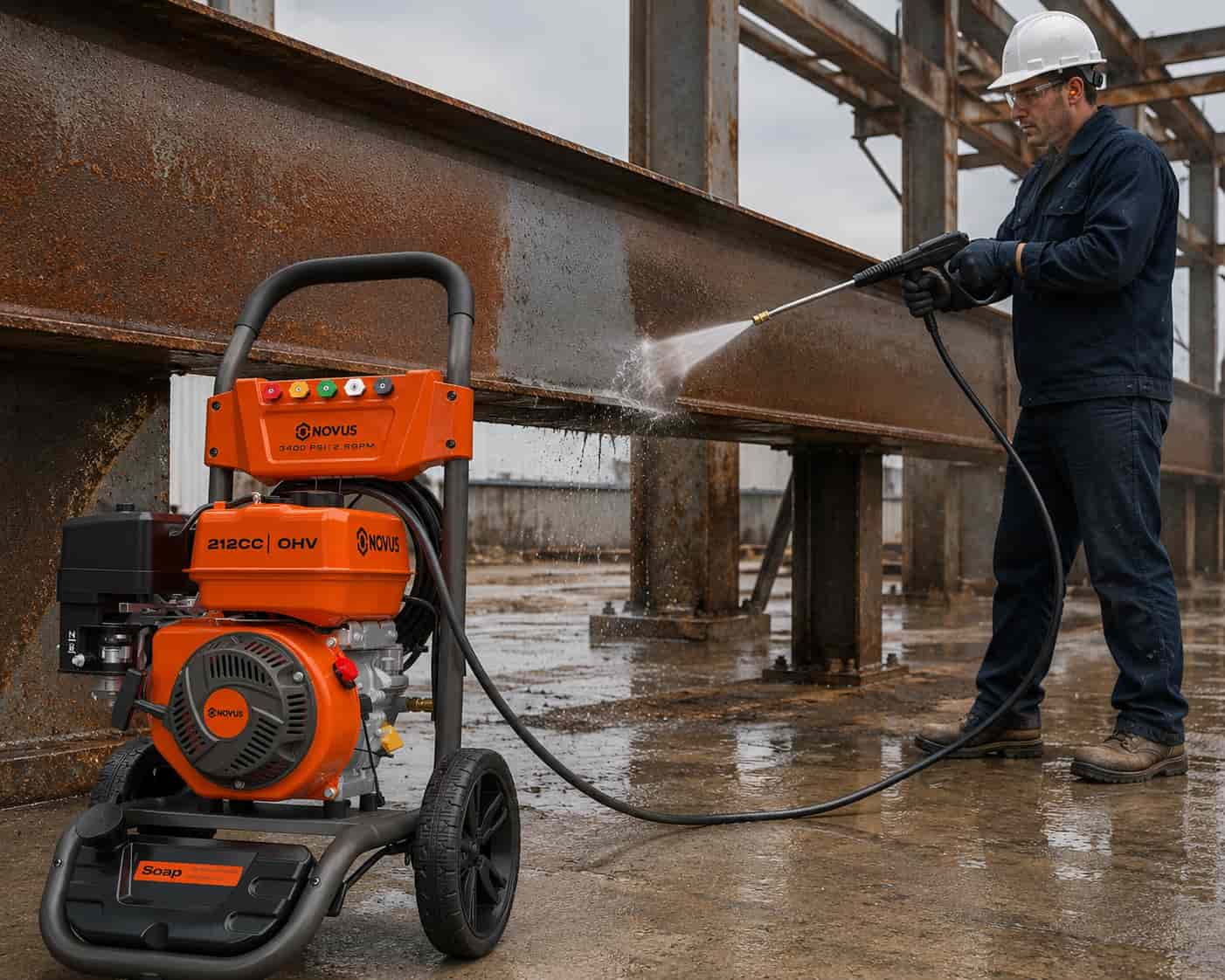
Yes — a pressure washer can effectively remove rust. That high pressure water stream kind a dislodges, then erodes those rust bits from metal , concrete, and other surfaces. But, just swinging the wand at a rusty area on its own usually is not enough. The correct PSI settings, the right nozzle, and how you actually use it, these things are what separate a clean finish from one that ends up looking worse or getting damaged. This guide will walk you through all the details you really need to know.
How Does Rust Form?
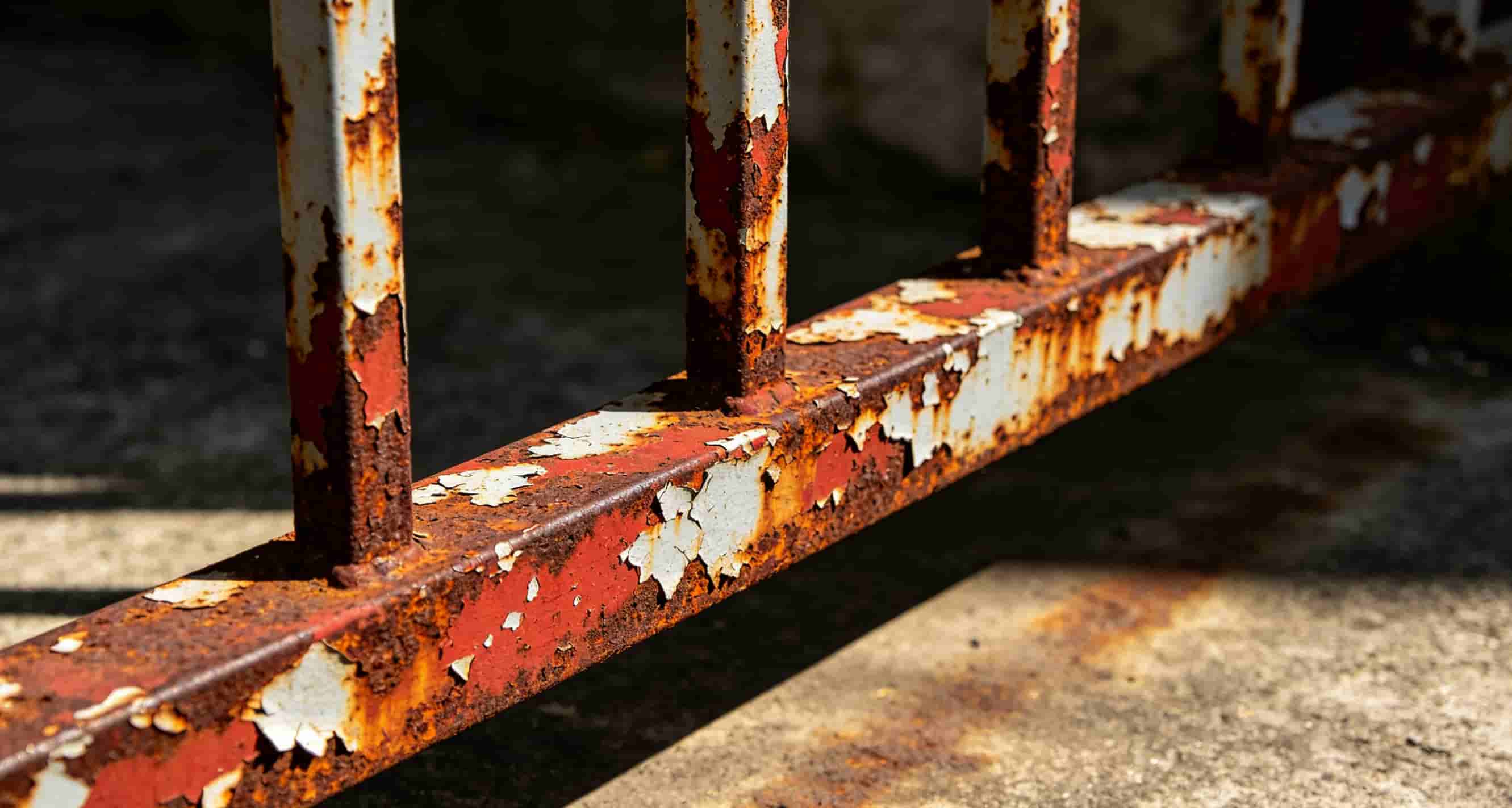
Rust is basically the outcome of a chemical reaction known as oxidation. When iron, or even steel, is left around moisture and oxygen for a while, it starts reacting to build up iron oxide. That reddish-brown, flaky stuff, the coating we usualy spot and call rust, forms as that reaction continues.
Some common signs you are dealing with it are pretty straightforward, like
- Red or brown spots on metal or concrete surfaces
- Flaking or peeling paint on fences, furniture, or railings
- Rough, uneven texture where the surface once felt smooth
And honestly, the longer rust stays alone without treatment, the farther it works its way in and the more it digs into the material. So taking it out early is far easier and usually more effective, in practice.
How Does a Pressure Washer Remove Rust?
A pressure washer kinda works by sending a high velocity spray of water that moves kinetic energy straight onto that rusted face. The impact kind of shatters the feeble link between the rust layer and the metal, or even concrete, and then it physically nudges those particles loose and carries them off, like flushing them away.
Water pressure by itself can deal with light, to sort of moderate rust. But for tougher corrosion, mixing in a rust removal detergent while you pressure wash, really improves things. That chemical solution seeps in and weakens the rust from the inside, while the water jet clears it out. In the end, how thorough the cleaning is depends on the pairing of water pressure, the flow rate (measured in GPM) and the correct cleaning solution, all together.
What PSI Do You Need to Remove Rust?
PSI (pounds per square inch) is the most critical factor in rust removal. Too low and the rust won’t budge; too high and you risk damaging the underlying surface. Here’s a practical breakdown:
| PSI Range | Rust Level | Best For |
| 1,500 – 2,000 PSI | Light surface rust | Small metal items, light staining |
| 2,000 – 3,000 PSI | Moderate rust | Concrete driveways, metal fences, outdoor furniture |
| 3,000 – 4,000 PSI | Heavy rust | Heavily corroded metal, industrial surfaces |
| 6,500+ PSI | Extreme / deep rust | Professional-grade equipment only |
Most consumer pressure washers sold at hardware stores max out around 3,000 PSI, which handles the majority of residential rust jobs. For deep industrial rust, professional services use equipment rated up to 6,500 PSI. A minimum of 2,000 PSI is generally recommended — anything below that may not generate enough force to break rust’s grip on a surface.
Pro Tip: For concrete surfaces, keep PSI below 3,000 to avoid cracking or etching. Always start lower and increase gradually.
Best Nozzle for Rust Removal
The nozzle controls the spray angle and concentrates the water pressure. Choosing the wrong one can either leave rust behind or damage your surface.
| Nozzle | Color | Angle | Best Use |
| Red Tip | Red | 0° | Extreme concentrated force — use with great caution |
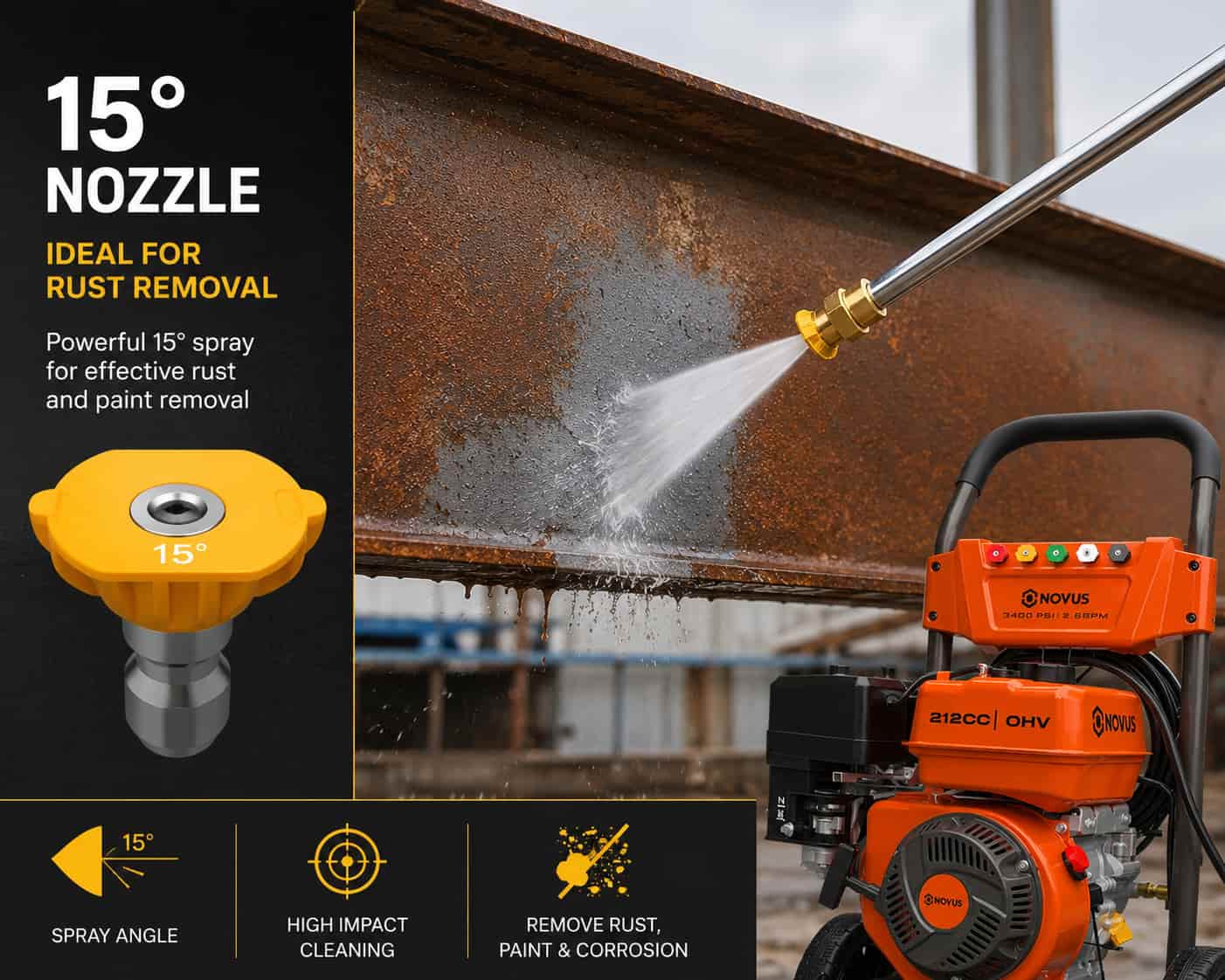
| Yellow Tip | Yellow | 15° | Heavy rust on hard surfaces like concrete |
| Green Tip | Green | 25° | General rust removal on metal furniture and fencing |
| Turbo / Rotary Nozzle | — | Rotating | Best for stubborn rust — combines rotation with concentrated spray |
For most DIY rust removal tasks, using a 15° (yellow) nozzle, or a turbo option, tends to be the most effective. Begin with the tip about 6–12 inches off the surface and then drift closer little by little, only if you need more bite. Try not to keep the nozzle fixed in one single place for too long, because that kind of lingering can bring about surface damage, even when you think it’s fine.
Step-by-Step: How to Remove Rust with a Pressure Washer
Follow these steps for safe results that actually work
Step 1 – Gear Up, Wear safety goggles, waterproof gloves and closed-toe shoes. Try to work in a well ventilated area if youre using chemical rust removers, just to be safe.
Step 2 – Assess the Rust, check the severity light surface staining vs deep flaking corrosion. This kind of decision helps you set your PSI plus figure out if a detergent is needed or not.
Step 3 – Set Up Your Equipment, pick a pressure washer with at least 2,000 PSI. Then attach the right nozzle (15° yellow or turbo if the rust is really tough).
Step 4 – Apply Rust Removal Detergent, spray a rust specific detergent onto the affected spot using the low pressure soap nozzle. Let it sit,dwell for about 5–10 minutes so it can penetrate and loosen that rust layer.
Step 5 – Pressure Wash the Surface, hold the nozzle roughly 6–12 inches away. Use overlapping strokes, move top to bottom, left to right, so you dont end up with streaks. If it still wont budge, raise pressure slowly, but dont jump too fast.
Step 6 – Rinse Thoroughly, switch to a wider spray angle and rinse off everything , all detergent and rust residue.
Step 7 – Dry and Protect, let the surface dry fully. Then apply a rust inhibiting sealant or protective coating, so the corrosion doesnt come back too soon.
Conclusion
A pressure washer is one of the most efficient tools for rust removal , pretty much. It works faster than manual scrubbing, it tends to cost less than sandblasting, and it can go after a wide range of stuff, like concrete driveways and also metal garden furniture, even in the crankier rust spots. The trick is matching your PSI and the nozzle choice to the surface type and how bad the rust really is, then pairing it with a rust-removal detergent when it gets stubborn. After that, finish up with a protective sealant so rust doesn’t come back later, as in not soon. Start on the low side , then ramp up slowly, and let the water handle the heavy lifting.


Leave feedback about this