

Semi-Trash Pump is mainly used to handle water accumulation containing a small amount of sand, leaves, and small particle debris. Compared to ordinary clean water pumps, it has a stronger adaptability to water quality. However, the performance of the pump itself is not the only factor determining the drainage effect. The compatibility of accessories such as suction pipes, drainage pipes, filters, and wheel kits also affects the flow rate, stability, and lifespan.
If the accessory selection is inappropriate, even if the pump itself has a large flow rate, problems such as insufficient water intake, pipe blockage, and decreased drainage efficiency may occur. Therefore, when choosing the accessories for the Semi-Trash Pump, they should be matched with the pump specifications and the actual usage environment.
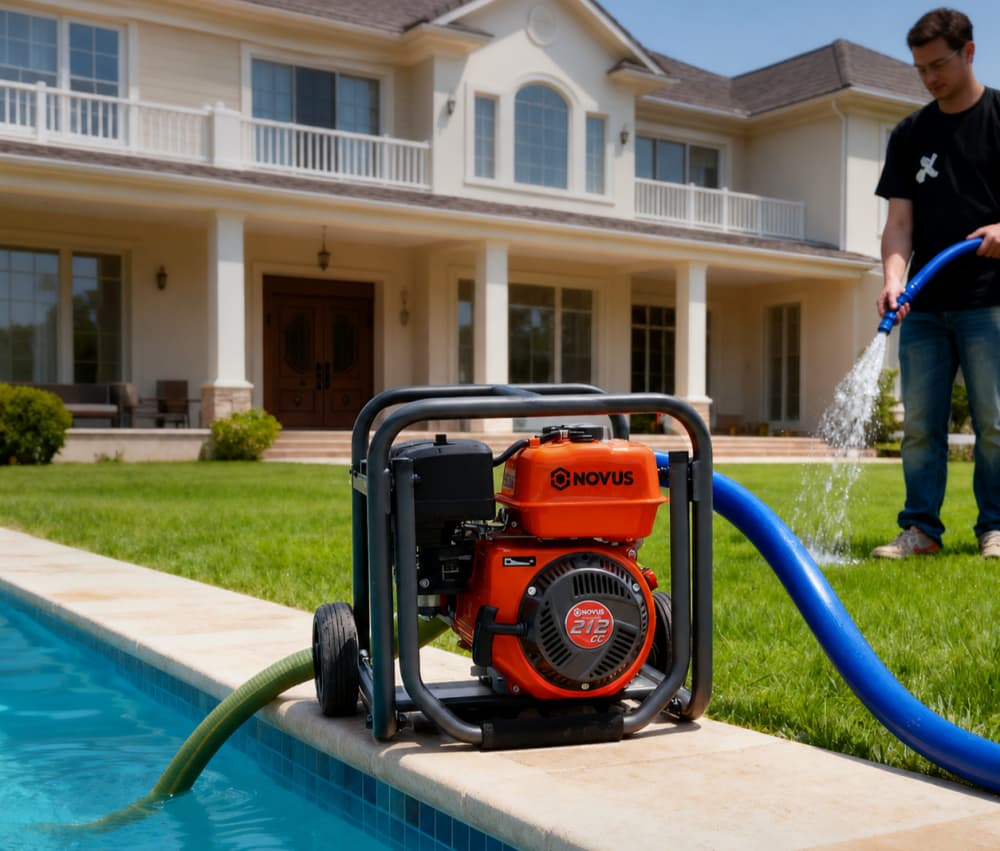
How to Choose a Suction Hose for a Semi-Trash Water Pump
The suction pipe is the “throat” of the semi-trash water pump system, directly determining whether it can achieve self-pumping smoothly, whether there is any leakage, and how much of the actual flow can be utilized. It is the most indispensable part among the accessories of the semi-trash water pump.
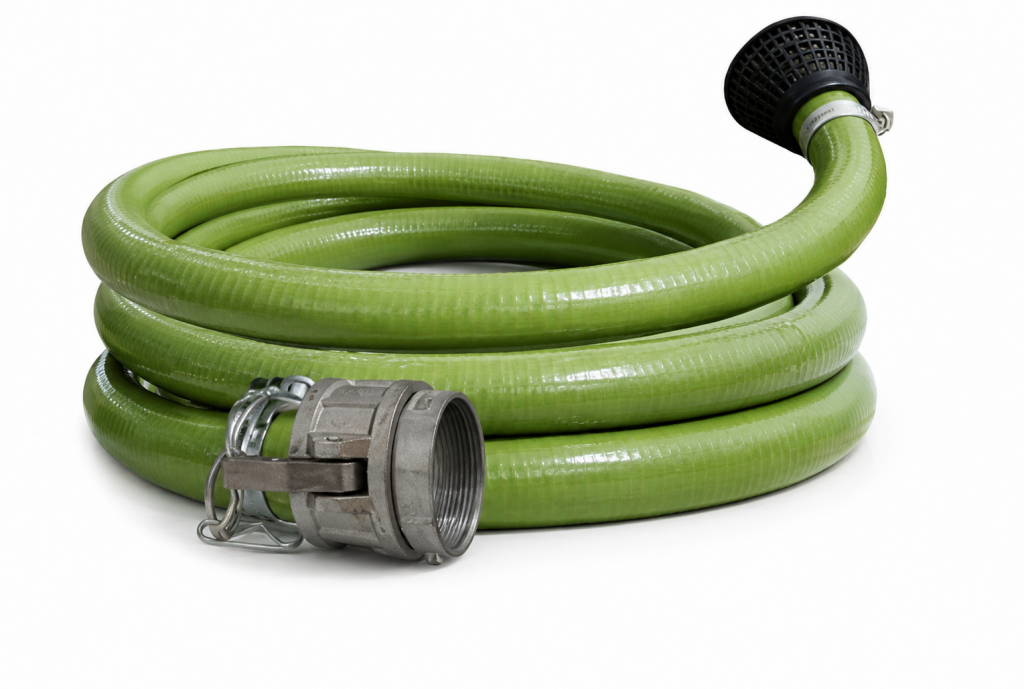
Key points for selecting suction pipes:
- Material: Preferentially choose rigid PVC or EPDM reinforced suction pipes (commonly green rigid pipes). Ordinary soft pipes tend to collapse under negative pressure, causing the semi-trash pump to fail to draw water. Rigid pipes can maintain a stable inner diameter, ensuring suction force.
- Diameter: Must be exactly the same as the inlet and outlet of the semi-trash pump (commonly 2 inches or 3 inches). A smaller diameter will significantly increase resistance and reduce flow rate.
- Length: Suggested range is 12–20 feet (approximately 3.5–6 meters). Too long will increase suction loss and both actual head and flow rate will decrease; too short will be inconvenient to use. Most semi-trash pump kits come with a 12-foot or 15-foot standard length, which is a relatively balanced choice.
- Interface type: Recommend using Camlock (cam lock) quick couplings, which are convenient to install and remove and have good sealing performance. There are also NPT threaded interfaces, and when using, they need to be paired with sealing tape or gaskets to prevent air leakage.
- Pressure resistance and wall thickness: Able to withstand negative pressure and not prone to deformation are more reliable.
Recommended configuration:
- 2-inch semi-trash pump: 12–20 feet of rigid suction pipe + Camlock or threaded interface
- 3-inch semi-trash pump: The same principle, prefer to choose reinforced rigid pipes
Usage Reminder: The suction pipe must be fully submerged in water and the connection must be absolutely sealed. Air leakage is one of the most common reasons for the failure of self-priming of the semi-trash water pump. Before use, check whether all interfaces are tightened or locked.
How to Choose a Discharge Hose for a Semi-Trash Water Pump
The drainage pipe is responsible for transporting water to the discharge area. When choosing, the main factors to consider are pipe diameter, length, material, and usage environment.
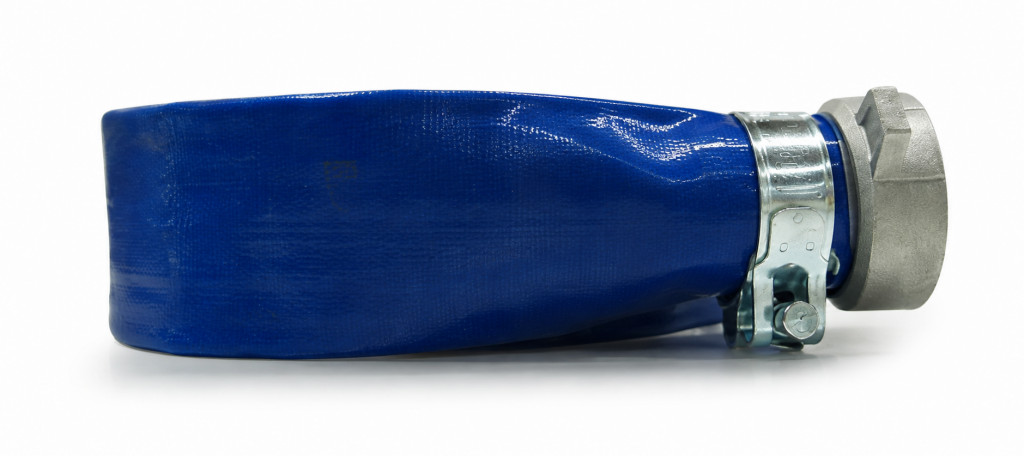
Key points for choosing drainage pipes:
- Material: Commonly used is blue PVC Lay-Flat (flat flexible pipe), which is lightweight, easy to store, and has sufficient pressure resistance. If it needs to be dragged frequently on hard or rough surfaces, a more wear-resistant reinforced pipe can be selected.
- Diameter: Consistent with the outlet of the semi-trash pump (2 inches or 3 inches).
- Length: Commonly 25–50 feet (about 7.5–15 meters). 25 feet is sufficient for short-distance drainage; for long-distance transportation, consider 50 feet or an extendable kit. An excessively long pipe will increase resistance and result in a decrease in actual flow.
- Interface: The Camlock quick connector is also recommended for convenience in extending or replacing.
- Pressure resistance: The maximum pressure of the semi-trash pump is generally around 40–50 PSI. Choosing a pipe with a pressure resistance of about 80 PSI will suffice.
Recommended configuration:
- Drainage for domestic ponds and swimming pools: 25-foot blue flat pipe
- Irrigation for construction sites and farmlands: 50-foot or extendable modular set
Tips: Try to keep the drainage pipes in a straight layout to minimize the number of bends and turns. The longer the pipes and the more bends there are, the more obvious the actual flow loss of the semi-trash water pump will be.
How to Choose a Strainer (Filter) for a Semi-Trash Water Pump
Although semi-trash pumps can handle smaller solid particles (typically ½ – ¾ inches), large impurities can still clog the impeller or damage the mechanical seal. A filter (water intake screen) is an important accessory for extending the lifespan of semi-trash pumps.
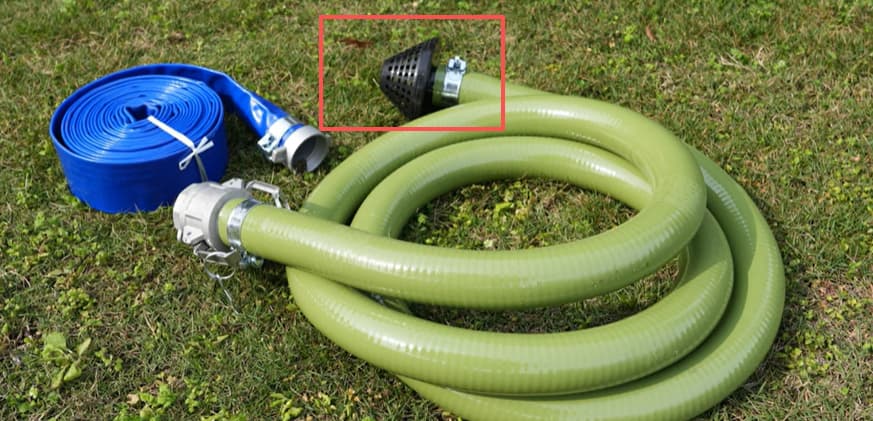
Key points for filter selection:
- Type: Circular hole steel plate filter net is the most common. The hole size should match the solid passing capacity of the semi-trash pump (slightly smaller than the maximum solid diameter of the pump).
- Material: Galvanized steel or galvanized steel plate, corrosion-resistant, sturdy and durable.
- Size: Must be completely matched with the water intake pipe diameter (2 inches or 3 inches).
- Flow area: The total flow area of the filter net is recommended to be no less than 2-3 times the intake area. Otherwise, it will increase the suction resistance.
Recommended configuration:
Most semi-trash pumps come with or are packaged with standard circular hole steel filter nets. Preferentially use original factory or matching products.
When the water quality is dirty, an additional detachable and washable filter net can be prepared for convenient daily maintenance.
Important Reminder:
The pump must not be operated without a filter. Once sand, leaves and small stones enter the pump body, it will cause a decrease in flow rate in the mild cases and damage to the impeller and seal in the severe cases.
After use, clean the filter screen in time to avoid blockage. The filter screen must be fully immersed in water and installed firmly.
How to Choose a Wheel Kit for a Semi-Trash Water Pump
The self-weight of a semi-trash water pump usually ranges from 25 to 40 kilograms. It becomes even heavier when including the oil tank and water pipes. The wheel kit makes movement much easier and is a common practical accessory for semi-trash water pumps. It is recommended to choose non-inflatable solid tires (Never-Flat) as they are not prone to punctures and are suitable for construction sites, muddy ground, and gravel roads. The wheel diameter is typically around 10 inches, and the larger the diameter, the easier it is to pass through obstacles.
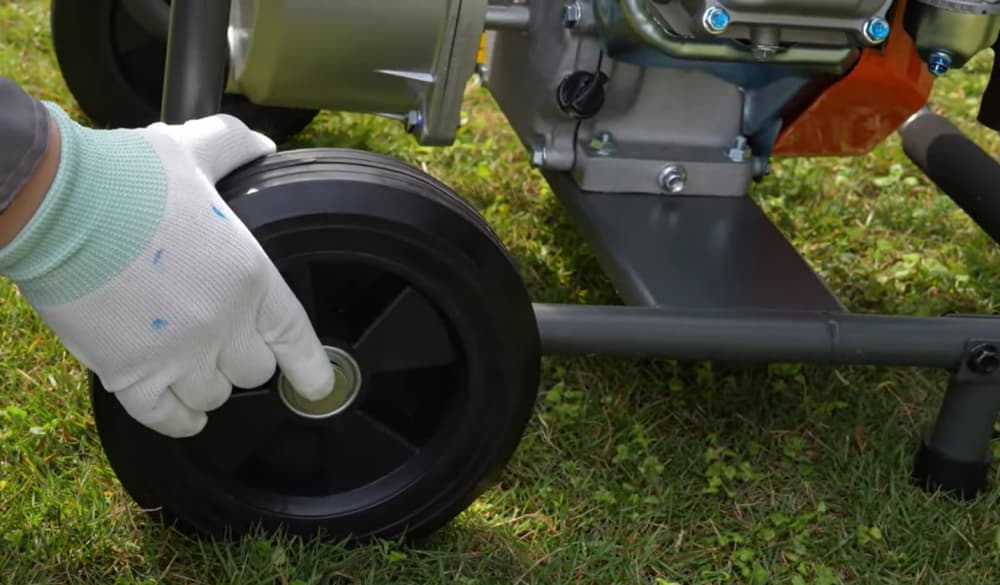
Recommended scenarios:
- Frequently need to be moved (drainage at multiple construction sites, rotation of farmland, emergency use) → Strongly recommend installing the wheel kit
- Fixed position use → Can be omitted, but it is recommended to at least retain the handle or frame protection
Note: After installation, check if the wheels are securely matched and fastened to the pump body frame to avoid shaking or unstable center of gravity.
Recommended Accessory Combinations by Application
| Application | Suction Hose | Discharge Hose | Strainer | Wheel Kit |
| Home pool / pond draining | 12–15 ft rigid | 25 ft lay-flat | Standard steel | Optional |
| Agricultural irrigation | 15–20 ft rigid | 25–50 ft | Steel + cleanable | Recommended |
| Construction site dewatering | 15–20 ft rigid | 50 ft | Heavy-duty strainer | Strongly recommended |
| Emergency flood control | 12–20 ft rigid | 25–50 ft | Standard + spare | Strongly recommended |
Summary for Purchasing Partial Wastewater Pump Accessories
Prioritize Complete Sets: Many brands offer complete sets including a partial wastewater pump, suction hose, drain hose, filter, and wheel kit. These sets offer high interface compatibility, saving you the hassle of fitting different components.
When purchasing separately, carefully check: the diameter, interface type (Camlock or NPT), and length to ensure they match your partial wastewater pump.
Budget Allocation Principle: Prioritize the quality of the suction hose and filter before considering the drain hose and wheel kit. The suction hose and filter directly affect the normal operation of the partial wastewater pump and are essential components that cannot be omitted.
Daily Maintenance: Clean the filter and pipes after use. Before long-term storage, drain any accumulated water from the pipes to prevent freezing, cracking, or corrosion.
Choosing the right four partial wastewater pump accessories will significantly improve the user experience—faster self-priming, fewer malfunctions, and easier movement. Before purchasing, it is recommended to check the specific model (2-inch or 3-inch) of your partial wastewater pump and your main usage scenarios to confirm the specifications.


Leave feedback about this