

Most modern inverter generators include an Eco Mode (also called Economy Mode) button, but many first-time users are unsure when they should use it. Some leave Eco Mode on all the time, while others avoid it because they worry it might reduce power output or make the generator less responsive.
In reality, Eco Mode is designed to improve fuel efficiency without sacrificing power quality. However, it isn’t the best choice for every situation. Understanding how it works will help you get the most from your inverter generator, whether you’re camping, powering an RV, or using it as a home backup.

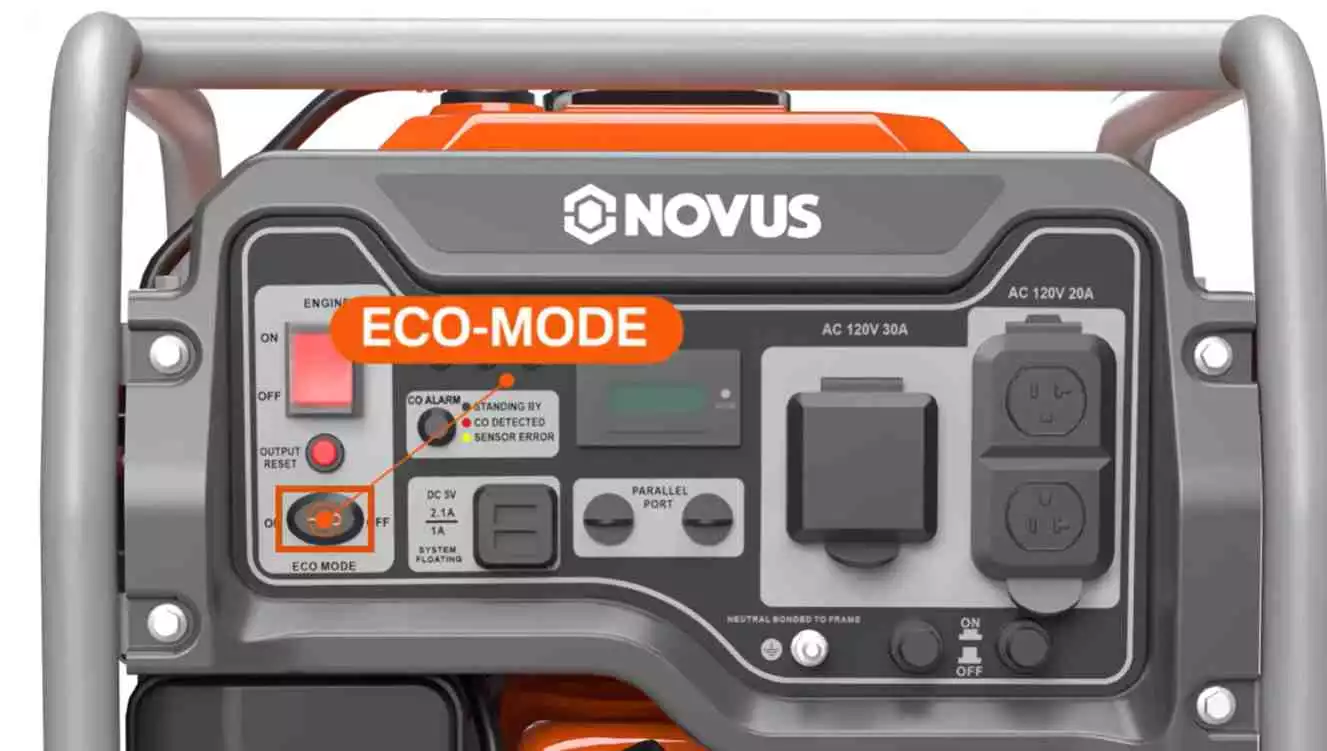
What Does Eco Mode Do on an Inverter Generator?
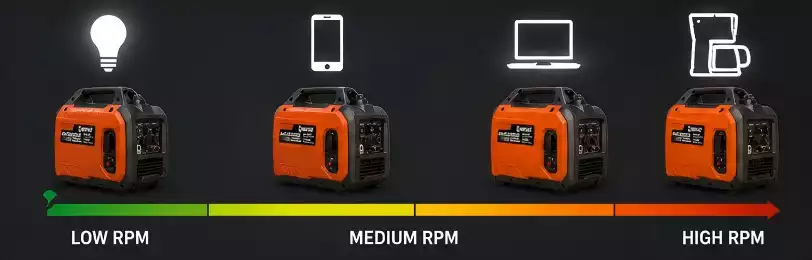
Traditional generators always maintain a fixed rotational speed during operation, while inverter generators can flexibly adjust the engine speed according to the actual electricity load.
After enabling the eco mode, the generator detects a low electricity load and automatically reduces the engine speed; when the power consumption of electrical appliances increases, it will promptly increase the speed. Relying on the inverter control system, this intelligent speed regulation mechanism can stably maintain voltage and frequency, and at the same time avoid unnecessary fuel consumption.
Here are a few examples of daily usage scenarios:
- Only charging mobile phones and laptops, with a very low electricity demand, the engine will operate at a low speed;
- Starting large-power appliances such as microwave ovens and electric kettles, the load suddenly increases, and the engine will automatically accelerate;
- After the large-power appliances are turned off, the load decreases, and the speed will subsequently drop to a low-speed state.
How Much Fuel Can Eco Mode Save?
The fuel-saving ratio of the eco mode does not have a fixed value. The final fuel-saving effect is influenced by multiple factors:
- The overall power of the generator and the engine displacement
- The actual electricity load size
- The duration of continuous operation
- Environmental temperature
- Fuel quality
Generally speaking, the advantages of the eco mode are most prominent when operating with medium and small loads.
For example: merely lighting LED lights, charging electronic devices, or powering laptops, the electricity demand is relatively low, and the engine does not need to maintain full-speed operation. A lower rotational speed not only reduces fuel consumption but also reduces engine wear and prolongs the single charging duration.
Conversely, when the generator is carrying high-power equipment and operating close to the rated power full-load, regardless of whether the eco mode is activated or not, the engine needs to maintain a high rotational speed. In this working condition, the fuel-saving effect achievable by the eco mode will be significantly reduced.
Does Eco Mode Affect Generator Performance?
Many users have a misconception that turning on the eco mode will reduce the output power of the generator. However, this is not the case. The eco mode does not change the upper limit of the generator’s rated power.
High-quality inverters, even when the engine speed fluctuates, can still continuously output stable voltage and pure sine wave electrical energy. Precise electronic devices such as laptops, televisions, routers, and chargers can operate safely. The core reason for this is that the inverter module can independently control the power output and is not directly constrained by the engine speed.
The only noticeable difference brought by the eco mode is the response speed of the engine’s load.
When large-power equipment with motors, such as air conditioners and air compressors, suddenly start up, the electricity load surges instantly. The engine needs a short period of time to increase its speed before it can output full power. Currently, mainstream inverters can automatically complete this transition process. Users can only hear slight changes in the engine’s sound as it increases in speed.
For ordinary household appliances and camping equipment, this brief response delay basically does not cause any usage problems.
Should You Leave Eco Mode On All the Time?
The short answer is not always.
The best setting depends on the type of equipment you’re powering.
Turn Eco Mode On When:
- Charging phones, tablets, and laptops
- Running LED lighting
- Powering TVs or small household electronics
- Camping or RV use with light electrical loads
- Running the generator overnight for low-power appliances
These applications benefit from lower noise levels, reduced fuel consumption, and extended runtime.
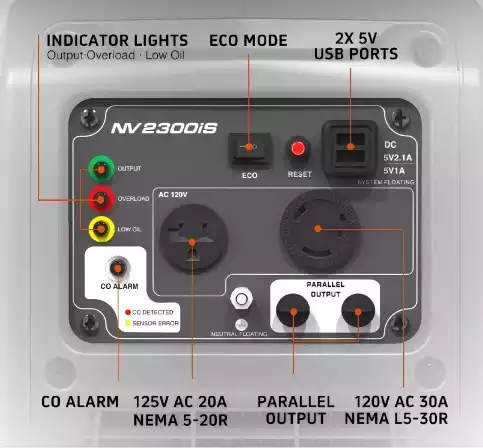
Turn Eco Mode Off When:
- Starting an air conditioner
- Running air compressors
- Operating high-powered construction tools
- Powering water pumps
- Using equipment with high startup (surge) current
Heavy inductive loads often require significantly more power during startup than during normal operation. Keeping the engine at a higher RPM can improve throttle response and help the generator react more quickly to sudden demand.
Once the equipment is running steadily, many users choose to switch Eco Mode back on if the load remains stable.
Eco Mode vs Normal Mode: Which Is Better?
Neither mode is universally better—they simply serve different purposes.
| Feature | Eco Mode | Normal Mode |
| Engine Speed | Automatically adjusts with load | Runs at higher, more consistent RPM |
| Fuel Consumption | Lower during light loads | Higher |
| Noise Level | Quieter | Louder |
| Runtime | Longer | Shorter |
| Heavy Load Response | Slightly slower engine response | Faster response to sudden loads |
| Best For | Camping, RVs, home backup, light appliances | High-demand equipment and frequent startup loads |
For most daily applications, Eco Mode offers the best balance of efficiency, noise reduction, and convenience. Normal Mode becomes more useful when powering equipment with frequent or heavy startup demands.

The eco mode is one of the core advantages of the inverter generator compared to traditional models, as it is more efficient. This system can automatically adjust the engine speed according to the real-time electricity demand, ensuring stable power supply quality while reducing fuel consumption, lowering operating noise, and extending the cruising time.
However, the eco mode is not universal and is not suitable for all working conditions. In scenarios with light load electricity usage, activating the eco mode is the most appropriate choice. If a device with a large power surge load needs to be started, switching to the normal mode during the startup stage will result in better performance.
By mastering the timing for switching between the two operating modes, it is possible to fully balance the output performance of the generator and fuel economy, allowing the inverter generator to perform at its best in various usage scenarios.


Leave feedback about this