

During every winter and snowstorm, clearing shit in front of the house is hard labor. Snow blowers have advantages over traditional snow removal tools by being more efficient, less tiring, and safer. Nevertheless, the same question still arises among many families, when they are about to buy:
What are the differences between single-stage snow blowers and two-stage snow blowers? Which one is more suitable for my home?
The comparison will be made systematically between single-stage and double-stage snow blowers in terms of working principle, performance differences, usage scenarios, and purchase considerations, thus enabling you to make a logical decision according to your own circumstances.
What Are The Differences Between Single-Stage and Two-Stage Snow Blowers?
Firstly, let’s distinguish between the two kinds of snowplows and their most basic difference—which is their operating mechanism and power source—before comparing them.
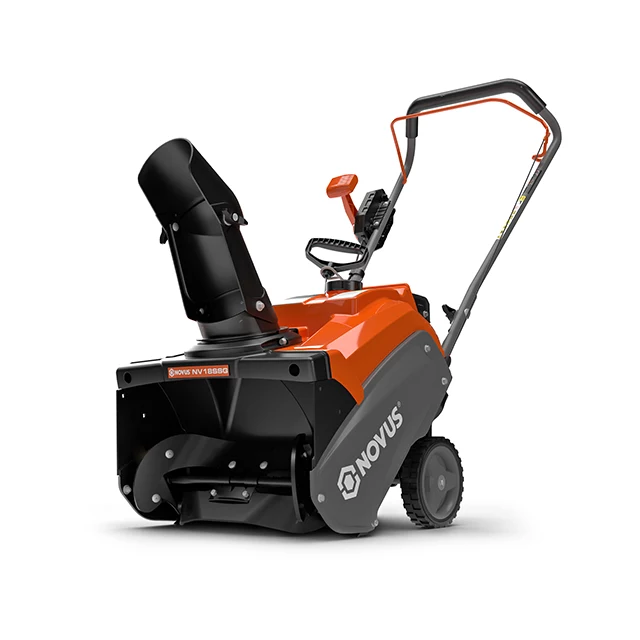
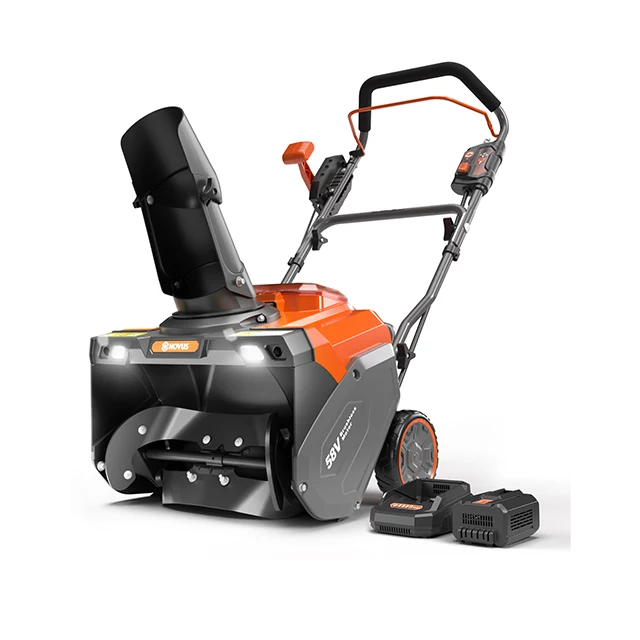
What Is a Single-Stage Snow Blower?
The single-stage snow blower has only one auger (screw blade), which performs two tasks simultaneously:
- “Grabbing” the snow on the ground
- Directly throwing the snow out of the snow discharge port
Because the auger blade comes into contact with the ground, single-stage snow blowers are usually small in size and light in weight, and require manual pushing to move forward.

Summary of key features:
- Simple structure
- Light weight, flexible operation
- Suitable for thin snow and medium snow accumulation
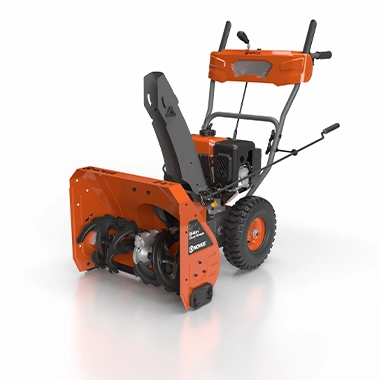
What Is a Two-Stage Snow Blower?
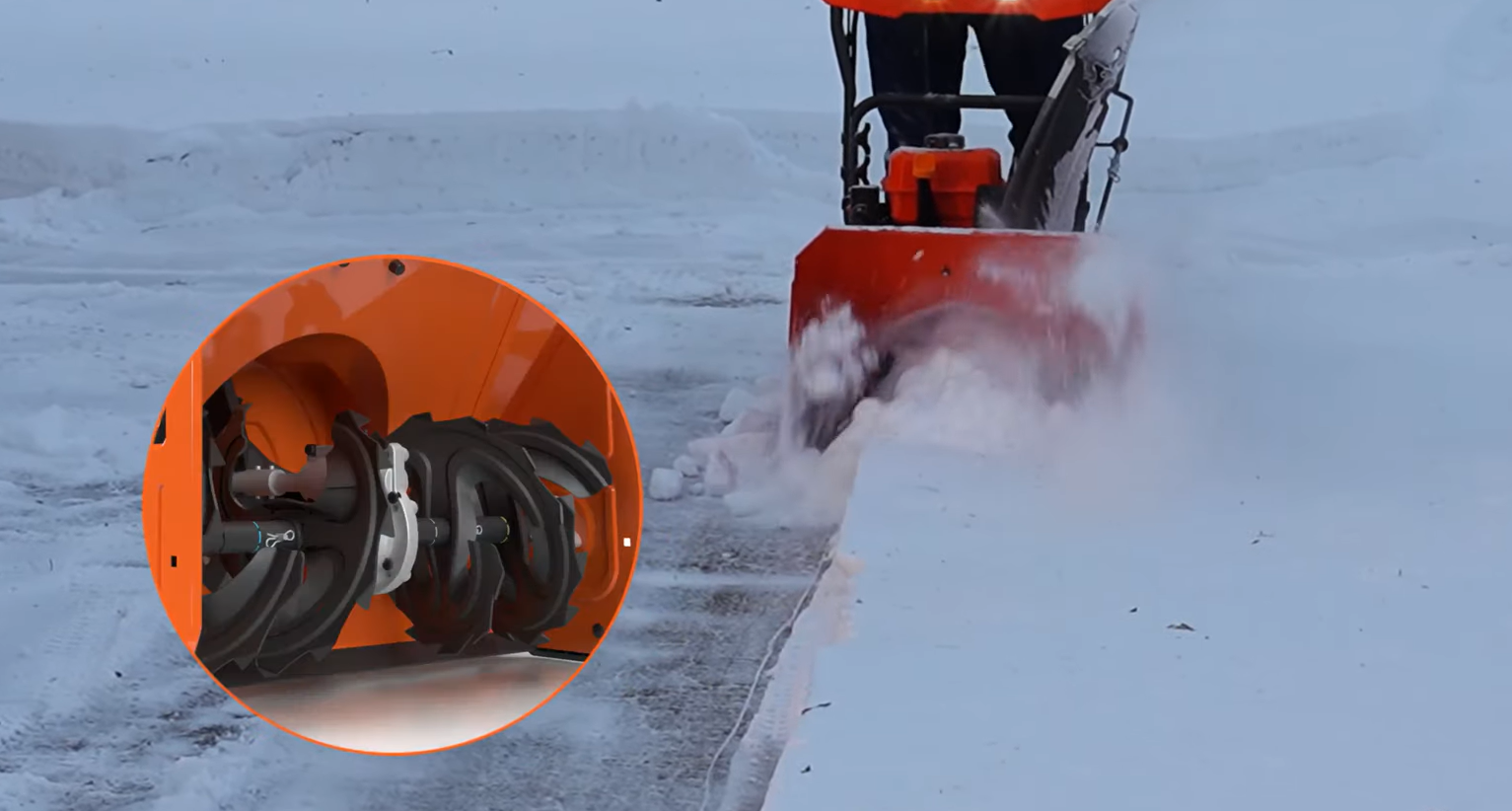
The dual-stage snow blower adopts a two-stage structure:
- The first stage: The spiral blades concentrate the snow in the middle of the machine.
- The second stage: The high-speed fan (Impeller) forcefully throws the snow out.
The spiral blades do not directly contact the ground. The machine itself is mostly self-propelled, and has stronger power.
Summary of core features:
- Greater power
- Longer snow-throwing distance
- Capable of dealing with deep snow, wet snow and compacted snow
Single-Stage vs Two-Stage Snow Blowers
| Comparison dimension | Single-stage snow blower | Two-stage snow blower |
| Suitable for snow depth | Light snow / Moderate snow (up to about 20–25 cm) | Deep snow, heavy snow, wet snow |
| Snow removal capability | Weaker, shorter distance | Powerful, snow thrown farther |
| Propulsion method | Manual pushing | Mostly self-propelled |
| Ground adaptability | Flat paved surface | Can handle gravel, uneven ground |
| Machine weight | Light weight, easy to move | Heavier, better stability |
| Price range | More economical | Higher cost but comprehensive performance |
Choose By Home Use Scenario: Which Is More Suitable For You?
Scene 1: Light Snow Region & Small House
If you are in an area where:
- The snowfall is not deep each time
- The main task is to clear sidewalks or short driveways
- You value storage and ease of operation more
A single-stage snow blower is usually sufficientIt starts quickly, is easy to operate, and is suitable for urban residences or areas with a relatively small amount of snowfall.

Scene 2: Frequent Snowfall & Large Areas of Driveways
If you need to deal with:
- More than 25 cm of accumulated snow
- Compact snow, wet snow or wind-blown snow piles
- Long driveways or parking areas
Two-stage snow blowers are more time-saving and labor-saving
The self-propelled system, combined with stronger power, has a significant advantage when clearing large areas.

Scene 3: Complex terrain or variable conditions
If your lane:
- Has an incline
- Uses gravel or unimproved pavement
- Has significant snow variations in winter
The dual-stage snow blower has greater adaptability
It can avoid scooping up ground materials while maintaining stable snow removal efficiency.
Five Key Factors To Consider When Purchasing a Snow Blower
- Annual average snowfall and maximum snow depth
This is the primary factor determining whether to choose “single-stage” or “two-stage”. - The size of the cleaning area
The longer the lane and the larger the cleaning range, the more suitable it is to choose the more efficient two-stage model. - Propulsion methods
Manual push: Suitable for small areas and light snow
Self-propelled: Suitable for long-term or heavy snow removal - Clearing width and snow-throwing distance
The wider the width and the farther the throw, the higher the efficiency of each cleaning operation. - Storage and Maintenance
Single-level is easier to store, while double-level is more suitable for long-term and frequent use.
Recommended Snow Blower Types for Different Needs
If you are browsing different models, you can quickly filter them by your requirements on the snow blower product collection page, for example:
Light snow / Small-scale users: Pay more attention to lightweight and easy-to-operate single-stage models
Medium to heavy snow users: Focus on two-stage and self-propelled snow blowers
Frequently Asked Questions About Snow Blowers
Can a single-stage snow removal device handle wet snow?
Yes, but the efficiency is relatively low. It is more prone to getting stuck in thick wet snow.
Is a two-stage snow blower necessarily better?
No. If the snowfall is not heavy, a two-stage model will actually increase costs and storage burdens.
Do I have to buy a self-propelled model for my home?
For a small area, it’s not necessary. However, for a long driveway or frequent use, it is more recommended.
Conclusion
When choosing a snow blower, it’s not about seeking the “strongest power” or the “lowest price”, but finding the balance that suits your specific situation.
- Light snow, small space → Single stage is more flexible
- Deep snow, large area → Double stage is more efficient
After clearly understanding your own snow conditions, usage frequency and budget, and then combining the actual product parameters for selection, you can truly purchase a snow blower that “lasts long and doesn’t cause regret”.


Leave feedback about this