

When the temperature drops below freezing, snow removal machines, especially gasoline-powered models, will become more difficult to start. This is not an isolated case. According to statistics, over 70% of seasonal failures of snow blowers occur during the first cold wave, and the core cause is mostly directly related to “coldness”. Cold weather can thicken engine oil, affecting fuel quality and increasing the load on ignition components.If your snow blower fails to start in cold weather, please don’t panic. This guide will introduce you to 7 effective solutions to help you restart your machine within minutes.
Why It Difficult to Start Snow Blower in Low Temperatures?
The engine oil thickens (affecting starting resistance)
Low temperatures can make ordinary engine oil as thick as honey, causing the engine to fail to turn.
Technical principle
- The viscosity of SAE 10W-30 at -20 °C can exceed 10,000 cP
- The torque that needs to be overcome to start the motor may exceed 150% of the design peak
- The crankshaft fails to reach the minimum starting speed (approximately 80 to 100 rpm).

Battery performance decline
The colder it gets, the less powerful the battery becomes, and the starting motor current is insufficient.
Technical principle
- For every 10°C drop in temperature, the available capacity of the battery decreases by 35 to 40%
- The internal resistance almost doubles at -18 °C
- CCA (Cold Start Current) is a key indicator at low temperatures
Poor atomization of fuel
Gasoline becomes “less volatile”, and the engine cannot draw in sufficient combustible mixture.
Technical principle
- The RVP decreases in winter and the atomization quality is poor
- The SMD of the droplet may increase by more than 50%
- Water freezing may clog the oil passage or filter
Cold shrinkage of mechanical components
The coefficients of expansion of different metals vary. Extreme low temperatures may lead to:
- Imbalance of fit clearance
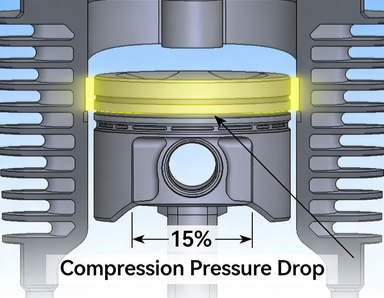
- The compression pressure of the cylinder drops by 10 to 15%
- The sealing performance of the valves has deteriorated
The 7 Most Effective Solutions
The following solutions, ranked by effectiveness and execution difficulty, are currently the most mature and efficient winter start-up repair processes.
1. Use winter-specific fully synthetic engine oil
Low-temperature environments require:
SAE 0W-20 or SAE 0W-30
This type of engine oil has a lower viscosity at -30 °C (approximately 6,000 cP), which can significantly reduce starting resistance.
2. Insulate the battery or replace it with a high CCA battery
Most of the difficulty in starting comes from insufficient battery discharge
In extremely cold regions, batteries with a CCA of ≥500A should be selected
AGM batteries perform better at low temperatures
Tip: Before starting, bring the battery into the room and preheat it for 15 minutes. The effect is very significant.
3. Use fresh winter gasoline with additives
Key points of operation
- The old oil must be emptied before the first cold wave of each season
- Use RON 92+ fresh gasoline
- Add winter fuel enhancer
- Check if the oil circuit is frozen
4. Preheat the engine moderately before starting
Applicable scenarios: < -15 °C environment
Available
- Infrared warm air blower
- Engine heater
- Insulation cover
- The goal is to raise the temperature of the cylinder block above 0°C.
5. Check and clean the spark plugs
Key point
- The gap is 0.7-0.8 mm
- Carbon deposits and cracks need to be replaced
- The jumping fire should be a strong blue fire

6. Clean the frost from the air intake, filter element and exhaust pipe
Freezing of the air filter element can cause the mixture to be too rich
A blocked exhaust pipe can cause abnormal internal pressure in the engine
It should be cleaned up in time after each use in winter.
7. Use the correct startup steps
Incorrect operation may result in:
- The carburetor is over-supplying fuel
- The spark plug is moist
- Incomplete atomization
Correct steps
- The damper is fully closed
- Set the throttle to “Start”
- Each electric start-up lasts less than 5 seconds, with an interval of no less than 30 seconds
- When starting by hand, the rope should be pulled completely and quickly
Professional Optimization and Long-term Maintenance Plans
Application of active preheating technology
Cylinder block heater: Installed on the engine cooling water jacket or oil passage, with a power typically ranging from 400 to 600 watts, it can preheat the engine in an environment of -30℃ for 2 to 3 hours before reaching the normal starting temperature.
Battery insulation system: The battery box integrating temperature control and insulation layer can increase the working temperature of the battery by 10-15℃.
Fuel line heating tape: Self-limiting temperature type electric heating tape to prevent fuel from solidifying during transportation.
Seasonal maintenance procedures
Autumn preparation stage (carried out when the ambient temperature drops below 10℃ for the first time)
Replace the engine oil and filter with the specified winter viscosity grade
Check and clean the spark plugs, and adjust the gap to the specified value
Add antifreeze cleaning fluid to the windshield cleaning system
Fill the fuel system and add the stabilizer. Run the equipment for 10 minutes to circulate the stabilizer throughout the system
During winter operation:
Start the equipment and run it for at least 15 minutes every week to bring the engine to its normal operating temperature
Check the specific gravity of the battery electrolyte (if it is a non-sealed battery) and the connection status of the terminals every month
After each use, remove the snow and ice from the equipment to prevent it from freezing again
Spring sealing stage
Completely drain the fuel system or fill it up after adding an adequate amount of stabilizer
Remove the spark plugs, inject about 15ml of engine protective oil into the cylinder, manually rotate the crankshaft several times, and then reinstall the spark plugs
Clean the exterior of the equipment, lubricate all moving parts, cover with a dust cover and store in a dry environment
Adaptation measures for extreme environments (<-25℃)
Use -35 diesel or special low-temperature gasoline that complies with GB 19147 standard
Install an engine heat shield to reduce heat loss after the machine stops
Consider using fully synthetic lubricating oil based on synthetic hydrocarbon (PAO) base oil, whose pour point can be below -50℃
The equipment is permanently stored in an indoor environment with basic insulation
Technical Limitations And Professional Service Intervention Standards
When the following situations occur, it is recommended to stop self-repairing and seek professional technical services:
After multiple start-up attempts, unburned fuel (with a strong gasoline smell) appears in the exhaust, indicating a persistent ignition failure
If the starting motor can rotate at high speed but there is no compression sensation in the engine, it may be that there is a fault in the valve timing system
Abnormal vibration of the equipment or a metallic knocking sound indicates mechanical damage inside
The electrical system has repeatedly experienced short circuits of unknown causes or blown fuses
The oil spill hole of the carburetor keeps leaking oil, and the float valve system has failed
Novus Snow Blowers offers a two-year warranty. During the warranty period, for non-human faults, we will provide professional support and repair services to avoid unnecessary risks or losses for you.
Conclusion
The start-up failure of snow blowers in low-temperature environments is a complex engineering problem involving the coupling of multiple physical fields. By understanding the specific impact mechanisms of low temperatures on lubrication, electrical, fuel and mechanical systems, users can carry out effective preventive maintenance and targeted troubleshooting.
Regular maintenance and correct seasonal adaptation modifications can significantly enhance the reliability of equipment in extremely cold conditions. It is recommended to establish a detailed maintenance log to record each maintenance project, replaced components and abnormal phenomena, providing data support for long-term reliability management.
The rational application of technology combined with the maintenance and management of the system can ensure that the snow blower can still provide reliable services under the harshest winter conditions, guaranteeing the continuity and efficiency of winter operations.


Leave feedback about this