
When many people are preparing to manage their gardens, vegetable plots or courtyard lands, they often encounter a problem: Should they choose a Tiller or a Cultivator?
Both of these devices are related to soil treatment and their appearances are somewhat similar. Therefore, many users mistakenly think that they only differ in name but actually have similar functions. However, after using them, they realize that there are significant differences in power, purpose, applicable scenarios and working depth.
In simple terms:
- Tiller is more suitable for “deeply turning hard soil” and “opening new land”
- Cultivator is more suitable for “loosening the soil for maintenance” and “daily weeding”
If you just want to maintain your existing garden, Cultivator might be sufficient; but if you need to deal with compacted soil, create a new vegetable plot or perform deep soil turning, then Tiller is usually more appropriate.
What Is a Tiller?
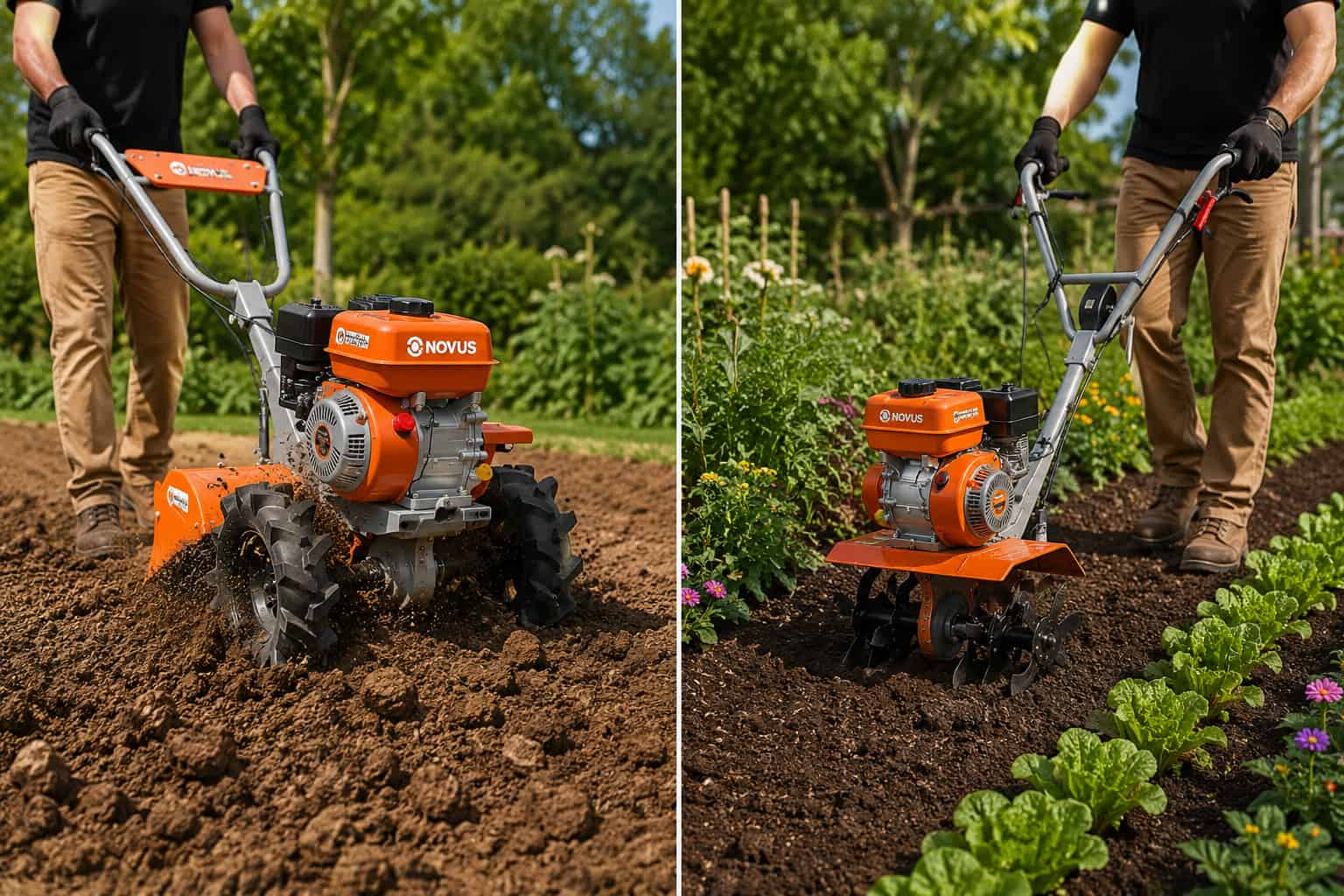
The main function of a tiller (or rototiller) is to deeply turn over the hard and compacted soil, making the land become soft again and facilitating subsequent planting.
Main types of Tillers
- Mini Tiller: A compact and versatile hybrid machine, lying between large tillers and cultivators, suitable for small gardens and narrow spaces.
- Front Tine Tiller: The blades are located at the front of the machine, with relatively affordable prices and suitable for smaller gardens or already cultivated soil. It is flexible to operate, but requires more physical effort in hard soil.
- Rear Tine Tiller: The blades are located behind the engine, with greater power and better stability. It is suitable for large agricultural fields and hard, rocky soil, but has a higher price and outstanding performance.
Advantages of the tiller
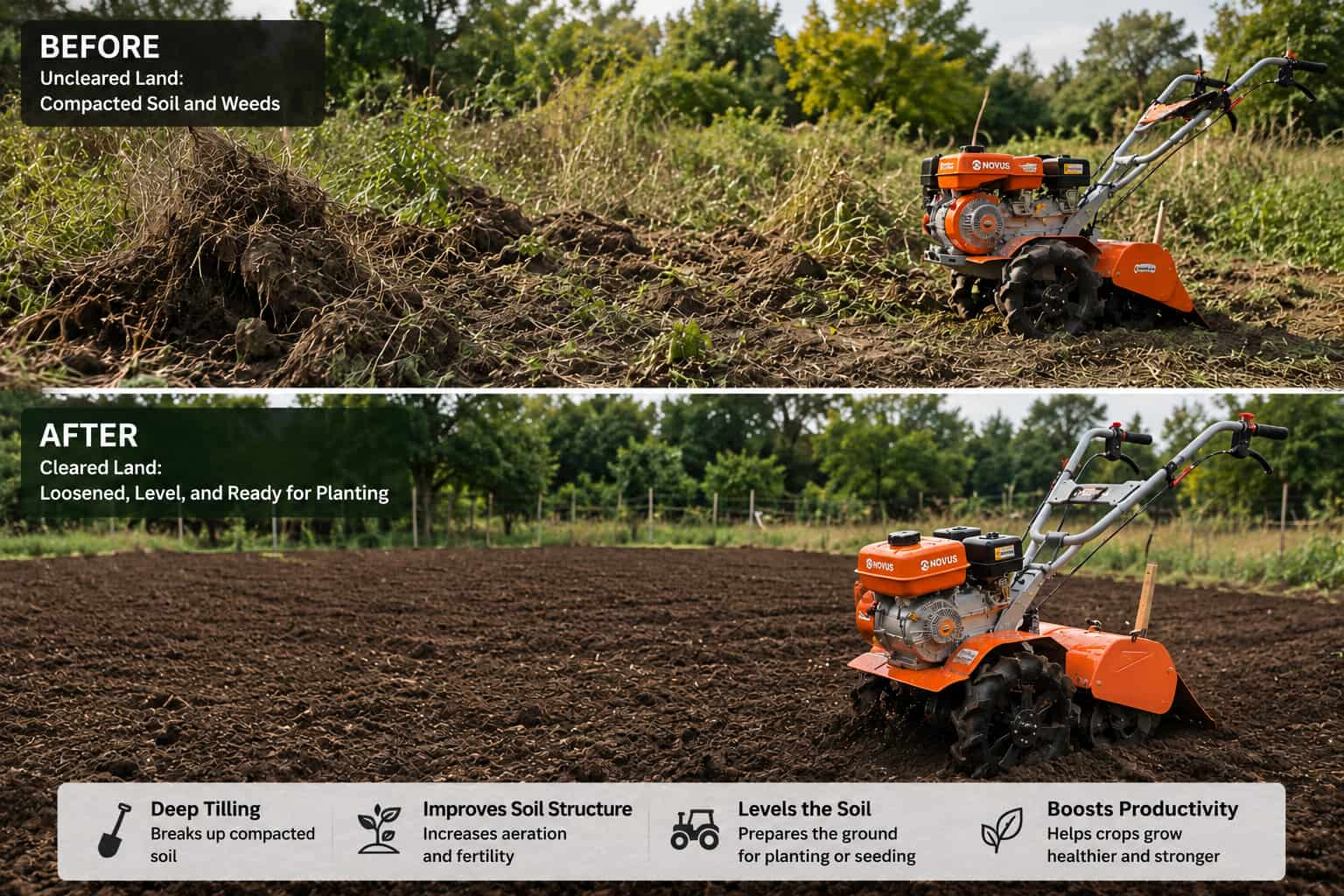
- It can penetrate the soil to a depth of 8-12 inches
- Suitable for cultivating fresh soil and extremely compacted soil
- Can efficiently mix in a large amount of organic materials
- Has a wide coverage area and high efficiency
- Available in electric and fuel-powered models
Disadvantages of tiller
- The body is heavy and difficult to operate in narrow spaces
- High purchase and maintenance costs
- “Overqualified” for routine maintenance of a small garden
- Use in planted areas may damage plant roots
- Excessive digging can damage soil microbial ecology and organic matter structure
What is a Cultivator?
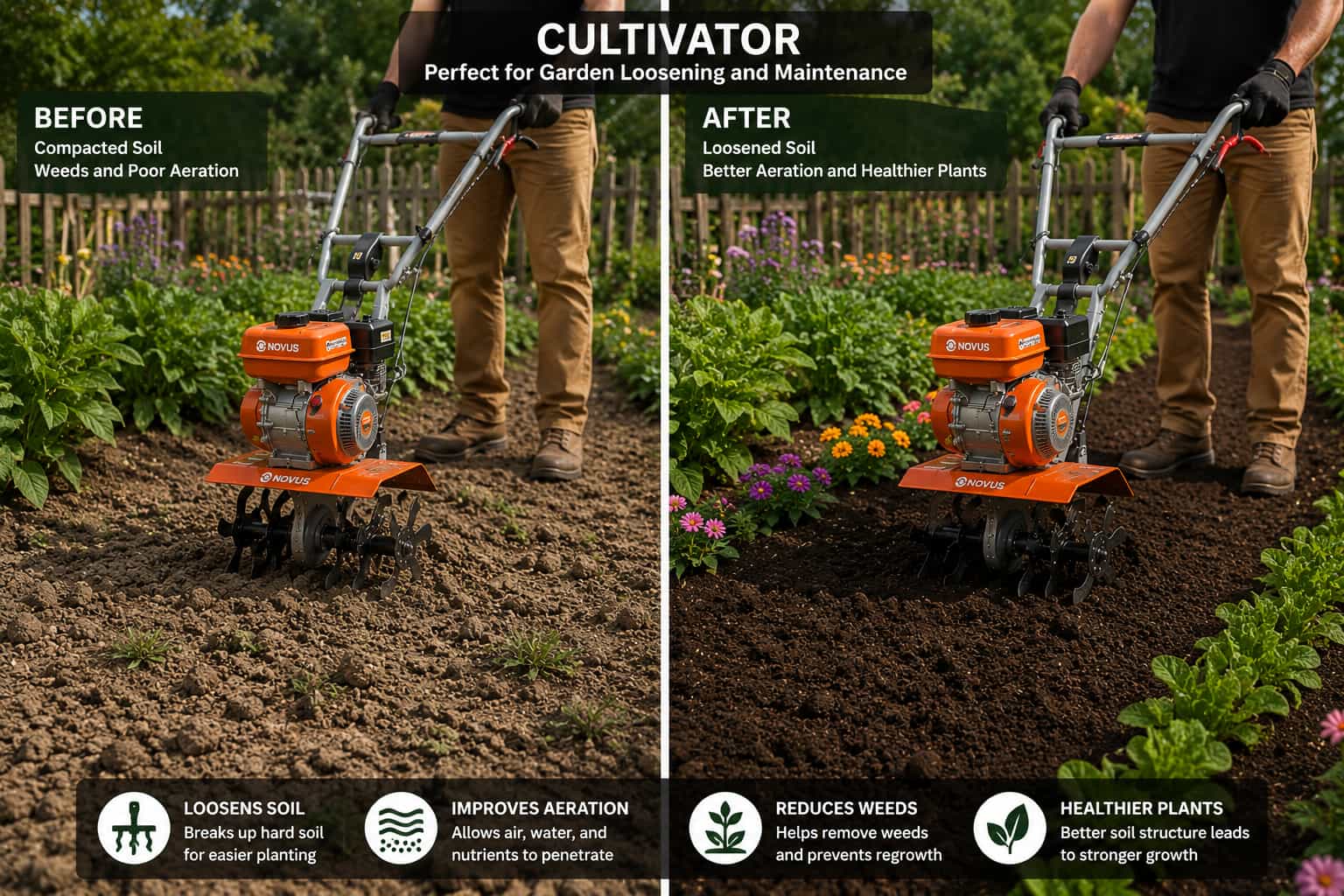
The main function of a cultivator is not to deeply turn the soil, but to maintain the gardens or planting beds that have already been planted. The cultivator can be regarded as a “maintenance tool” rather than a “land clearing tool”. After the garden is established, the cultivator can keep the soil healthy, breathable, and free of weeds, and it is also easy to operate.
Main types of cultivators
- Electric corded cultivator: Lightweight, low maintenance, suitable for small to medium-sized gardens near power sources.
- Wireless (lithium battery) cultivator: Unmanned and freely movable, ideal for elevated beds and compact spaces.
- Fuel-powered cultivator: More powerful than electric models, suitable for larger-scale maintenance work, but still lighter than rotary cultivators.
- Manual tiller: A purely human-driven rotary blade tool ideal for fine work in small raised beds, container gardens, or plant Spaces.
Advantages of the cultivator
- Light and flexible, easy to operate
- Perfect for weeding and routine soil maintenance
- Less likely to damage the roots of nearby plants
- Cheaper than the tiller
- Electric model is quiet, clean and easy to maintain
- Suitable for elevated beds and narrow row spacing gardens
Disadvantages of the cultivator
- It is unable to cultivate freshly tilled soil or highly compacted soil
- The working depth is limited (5–15 centimeters), not suitable for deep land preparation
- Its effectiveness in mixing in a large amount of organic materials is limited
- It may be ineffective when encountering dense weeds or soil with high clay content
Tiller vs Cultivator: Detailed Comparison
| Feature | Tiller | Cultivator |
| Working Depth | 8–12 inches | 2–6 inches |
| Power | High | Low to Medium |
| Best For | New gardens, deep prep | Maintenance, weeding |
| Ideal Plot Size | Medium to Large | Small to Medium |
| Price Range | $300–$1,500+ | $50–$400 |
| Weight | Heavy (50–200+ lbs) | Light (10–50 lbs) |
| Ease of Use | Moderate | Easy |
| Good for Beginners | Sometimes | ✅ Yes |
| Soil Type | Compacted, clay, virgin | Loose, previously worked |
| Near Existing Plants | Not recommended | ✅ Safe with care |
When to Use a tiller?
tillers are suitable for situations requiring deep, powerful tillage. They are the ideal choice in the following situations:
1. Breaking Up New Vegetable Gardens or Land for Farming
If you intend to use a piece of land or lawn for a vegetable garden, a tiller is required. The soil in this case is generally very dense and covered with weeds. A cultivator cannot penetrate such soil due to lack of sufficient power.
2. Breaking up Very Compact or Clayey Soil
Clay soil is generally characterized by poor drainage and lack of permeability. A rear blade tiller can break up the soil up to 25–30 cm deep and mix sand or compost to improve soil composition.
3. Incorporation of Many Inches of Compost, Peat Moss or Manure
In situations where one wants to incorporate many inches of compost, peat moss, or manure into the soil, it can only be achieved by using a tiller since the cultivator can do it superficially.
4. Post-Autumn Harvest Land Preparation
Deep tillage after the planting season and before winter exposes underground pest larvae to low temperatures and begins decomposing crop residues. tillers make this large-scale operation highly efficient and feasible.
5. Large Areas (50 square meters or more)
For large vegetable gardens or small farms, tillers are a practical and efficient choice. Preparing large areas of land with a cultivator is both laborious and time-consuming.
When to Use a Cultivator?
Cultivators excel at routine maintenance and keeping prepared soil in good condition. They are the most convenient tool for the following scenarios:
1. Weeding between rows
This is where cultivators shine. A single pass between the plant rows interrupts the growth of weed seedlings, preventing them from taking root. It’s faster, less strenuous, and more thorough than manual weeding.
2. Loosening the topsoil before sowing
Before direct sowing or transplanting seedlings, quickly loosen the topsoil with a cultivator to create a fine seedbed, allowing for better seed-soil contact and increasing germination rates.
3. Mixing fertilizers and soil conditioners
Granular compound fertilizers, bone meal, or small amounts of compost can be quickly incorporated into the top 5–10 cm of soil with a cultivator without disturbing the deeper root systems.
4. Maintenance of raised beds and container gardens
Cultivators—especially manual or small electric models—are the perfect size for raised beds. tillers are often too wide and powerful, easily damaging the edges of raised beds and existing plants.
5.Routine Soil Maintenance During the Growing Season
Throughout the growing season, regular cultivation helps maintain soil aeration, prevents surface compaction after rain, and makes watering more efficient. This is a routine procedure for maintaining healthy plant growth.
Can a Cultivator Replace a Tiller?
This is a common question posed by many gardeners who maintain their gardens at home. The quick answer to this question is as follows: it depends.
In case you have an already established garden that features well-worked soil which has been in existence for decades now, the cultivator will suffice as the sole requirement throughout the entire year. There are many gardeners out there who make do with the use of a cultivator without ever considering the use of a tiller due to the damaging effects of tillage.
However, when setting up a garden from the ground up or tilling hard clay soil, a cultivator will not suffice and a tiller will be necessary.
Most people have both these pieces of equipment: one is used to create new garden beds or do heavy-duty tilling in the spring; the other, a cultivator, is used to maintain the garden through the entire growing season. If you don’t want to invest in a tiller because you have a small budget, renting it will be more economical.
Conclusion: A cultivator cannot replace a tiller for the arduous task of clearing and preparing the land. However, for a well-established garden, a cultivator can replace a tiller for the vast majority of daily tasks.
Summary
The choice between a tiller and a cultivator is not complicated. The key is to match the tool to the task:
- Select a tiller: When you need to clear new land, deal with hard soil, or need to deeply incorporate a large amount of organic matter.
- Select a cultivator: For all other situations – routine maintenance, inter-row weeding, light fertilizing, seasonal tidying of established beds.
For most home gardeners with established gardens, a good cultivator can handle 80-90% of the soil work throughout the growing season. The tiller is a powerful helper for large projects, but it is not essential – especially if you are willing to rent for seasonal deep tilling.


Leave feedback about this