

The air conditioner of a camper van is an essential component that must be considered when camping. Nevertheless, for the system to function smoothly in areas far away from the power supply, there must be an ideal inverter generator. Although the generator can support the use of lights, TV sets, and microwave ovens, it automatically cuts off once the air conditioner is used. The reason is not just “insufficient power”, but rather the RV air conditioning generates extremely high surge current (Startup Surge) at the moment of startup. This is why many 2000W generators seem to be sufficient, but in reality, they cannot stably power the RV air conditioning.
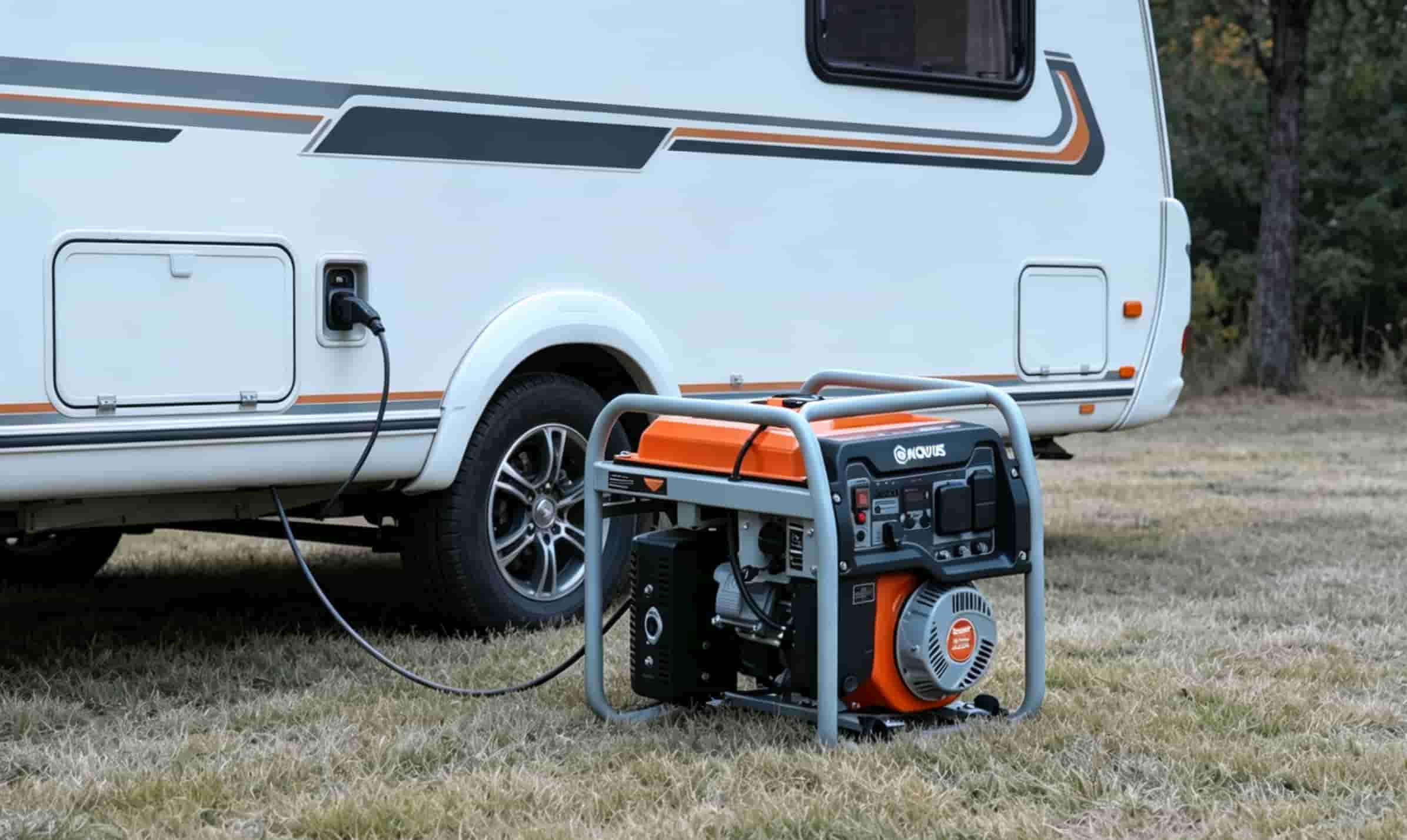
Why RV Air Conditioners Have High Demands on Generators
The RV air conditioner is a typical “high-starting-load device”. What is truly difficult to handle is not the continuous operating power, but the current surge when the compressor starts.
Startup Surge Current vs. Running Power
The power required by the RV air conditioner during startup is much higher than the power during normal operation. This instantaneous period is called “surge current” or “starting current”, and it typically lasts for 1–3 seconds, but the power can be 2-3 times that of the operating power. For example:
Operating power: 1,500W
Starting surge: Can reach around 3,000W
If the peak power of the generator is insufficient to support the starting current, the air conditioner will “lock up” and even damage the compressor.
Inverter vs. Traditional Generator Differences
Traditional generator: Fixed speed, high noise, high fuel consumption, slow response to startup surge current.
Inverter generator: Can adjust speed according to load, providing more stable, quieter and more fuel-efficient output. Especially suitable for starting inductive loads such as air conditioners.
Common RV AC BTU and Required Power Reference
The size of the RV air conditioner determines the basic type of the generator.
| BTU | Operating power (approximately) | Initiate surge power (approximately) |
| 11,000 BTU | 1,000–1,200W | 2,000–3,000W |
| 13,500 BTU | 1,300–1,500W | 3,000–4,000W |
| 15,000 BTU | 1,500–1,800W | 4,000–5,000W |
Note: The actual values may vary depending on the type of compressor, ambient temperature, and maintenance status.
Recommended Generator Size
Apart from the air conditioner itself, the actual usage scenario is also crucial.
Because the RV usually operates simultaneously inside:
- Microwave oven
- Battery charger
- Refrigerator
- Coffee machine
- Induction cooker
Therefore, it is best to leave some margin for the actual selection.
Single AC Unit
Recommended power: 2,000 – 3,000W
Example:
11,000 BTU → Above 2,200W inverter generator
13,500 BTU → 2,500 – 3,000W
15,000 BTU → Suggested starting at 3,000W, combined with a soft-start device for greater safety
Dual AC Units/Large RV
Recommended power: 3,500 – 4,000W+
Typical configuration: Two 13,500 BTU air conditioners → At least 4,000W
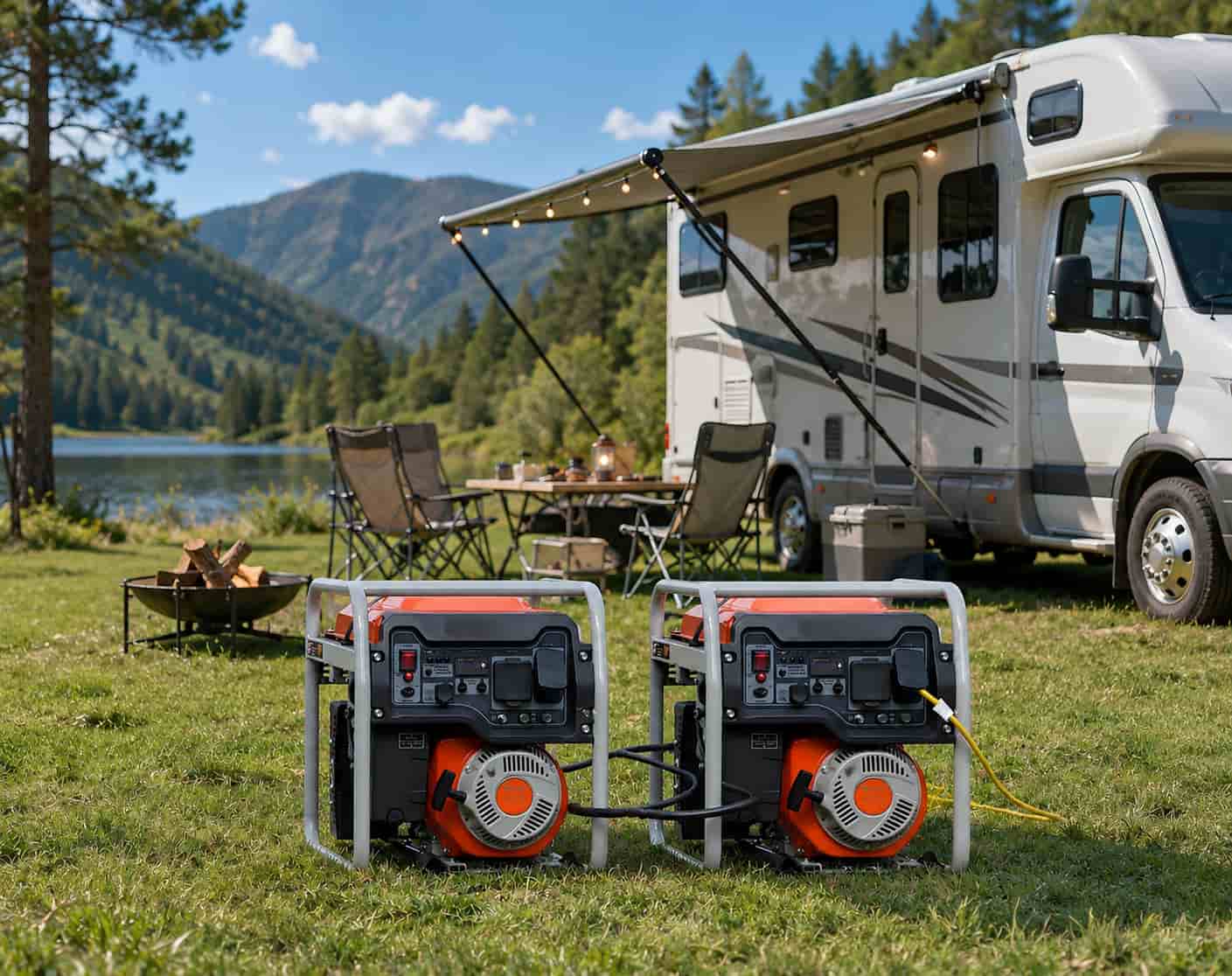
Parallel Setup
2×2,000W in parallel: Total power 4,000W, balancing portability and scalability
Suitable for: One air conditioner + other small loads, or occasionally starting a second air conditioner
Two units of the same model variable-frequency generators in parallel are more flexible and easier to transport than a single high-power generator.
Key Factors Affecting Your Choice
Even for the same air conditioner, its performance can vary significantly depending on the environment.
Altitude and Temperature
Altitude: For every 1000 feet increase in altitude, the actual power output of the generator decreases by approximately 3–3.5%.
High Temperature: When the ambient temperature is above 35°C, the generator’s heat dissipation deteriorates, and its continuous output capacity decreases.
Simultaneous Power Loads
In addition to the air conditioner, the following should also be considered:
Microwave oven (1,200–1,500W)
Electric water heater (1,500W)
Battery charger (200–800W)
Recommendation: The total operating power should not exceed 80% of the generator’s rated power.
Soft Start
Soft Start is currently a very popular upgrade solution for RVs. It can significantly reduce the surge during compressor startup, decrease the instantaneous power demand, and typically can reduce the startup impact by 30% to 50%.
For RV users, installing Soft Start is often cheaper than directly upgrading a high-power generator.
RV Type
Travel trailers: prioritize generator weight and portability.
Motorhomes: may consider built-in or higher-powered generators.
Off-road motorhomes: require higher levels of shock resistance and sealing.
Popular Inverter Generator Model Comparison
| Model | Rated/Peak Power | Advantages |
| Novus NV4000i | 3500W/4000W | Strong power, good value for money, fuel-efficient |
| Champion 3400W Dual Fuel | 3,100W / 3,400W | Sufficient power, compatible with gasoline/propane |
| Honda EU2200i | 1,800W / 2,200W | Extremely quiet, high reliability |
Fuel Saving & Noise Reduction Tips
Eco Mode and Load Management
Activate Economy Mode: In this mode, the engine’s speed depends on the load applied. It is very economical and quiet at low speeds.
Do not operate under a light or heavy load for a prolonged time.
Try switching off other heavy electrical appliances before switching on the air conditioner.
Maintenance cycle and fuel recommendations
Oil: Replace every 50-100 hours (or as per the manual)
Fuel: Use unleaded gasoline (E0 or E10 or below), avoid fuel with excessive ethanol
Air filter: Clean or replace every 100 hoursWhen not in use for a long time: Drain the fuel or add a fuel stabilizer
Using an appropriate generator not only helps the air conditioner work without any difficulty, but it also gives you a noiseless, economical, and reliable source of energy for all your RV-related needs. Whenever you have to operate your RV air conditioner often, it is advised that you should opt for a generator with higher power rating.


Leave feedback about this