

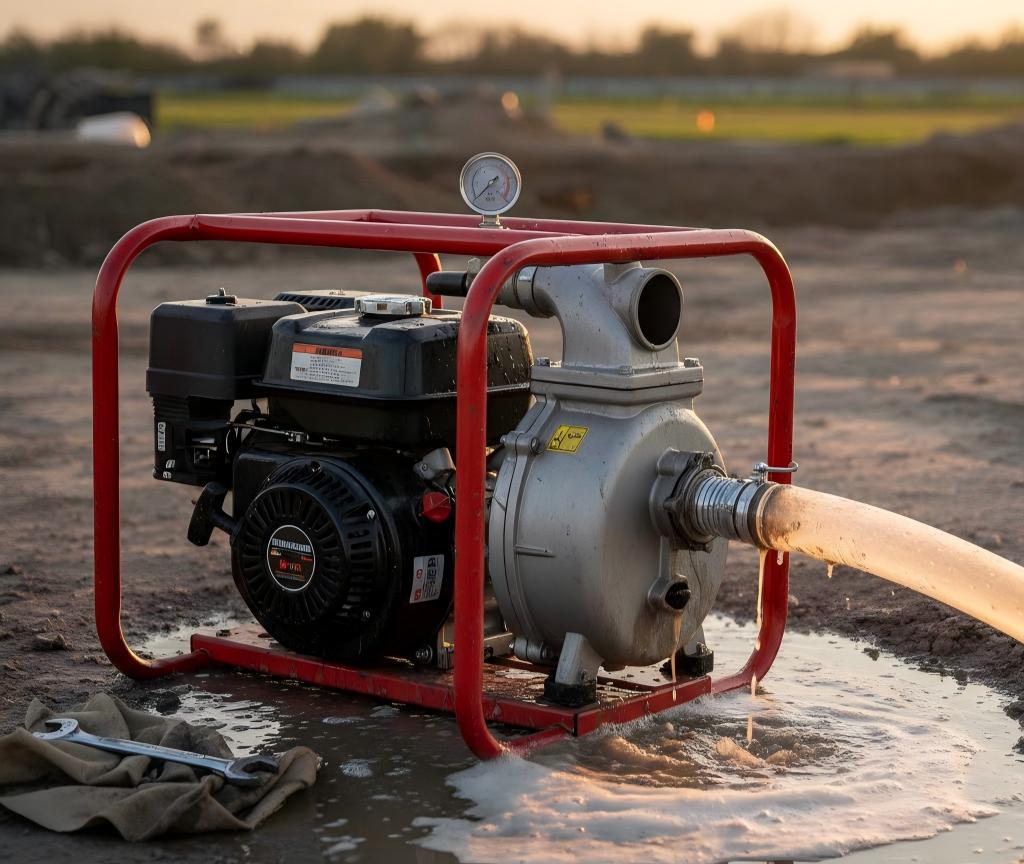
If you have ever encountered such a situation while using the Semi-Trash pump: the pump starts normally, but suddenly loses pressure and stops flowing after running for a while; or it can briefly recover when restarted after stopping, and then loses suction again – then you are not alone. The pump suction failure of Semi-Trash is one of the most common faults in the field. Usually, it is not caused by a single factor, but is the result of the combination of “air intake, blockage, insufficient filling, wear, cavitation”, etc.
This article will guide you to investigate and solve the problem of continuous pump suction failure of Semi-Trash step by step from the phenomenon to the essence.
Determine which type of “suction loss” your pump belongs to?
Before starting the troubleshooting process, first determine the general direction based on the on-site performance, which can save a significant amount of time.
- It can suck in after starting, but pressure drops / flow stops after running for a while.
Common causes: Leakage on the suction side, cavitation, dry running, and wear of the impeller. - It is difficult to fill water after the machine stops and restarts, and the self-priming time is particularly long.
Common causes: leakage of the bottom valve, insufficient water intake, and presence of air in the pipeline. - The flow rate has been consistently low, unable to increase the pressure, and the pump body is overheating.
Common causes: excessive suction resistance, clogged filter, worn impeller, or too small pipe diameter. - The pump makes a shrill noise, experiences increased vibration, and the flow rate fluctuates erratically.
Common causes: cavitation, excessive suction height, and excessively high medium temperature.
The 8 Key Causes and Solutions for the Pump Failure to Suction in Semi-Trash
Below, the list is sorted in descending order of “probability of occurrence”, allowing you to start your investigation from the most likely cause.
1. Suction Side Leakage (Most Common)
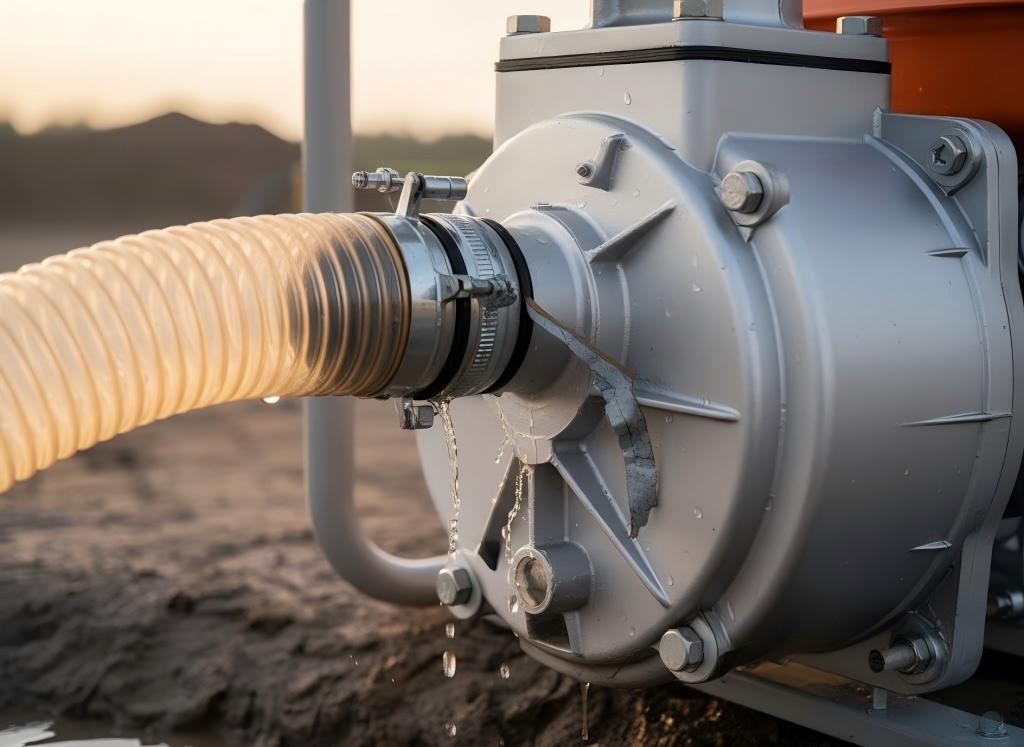
Performance
- After running for a period of time, the pressure suddenly drops.
- The machine stops and restarts, and the pressure can briefly recover.
- There is a slight suction sound from the pump body or suction pipe.
- The mechanical seal is abnormally hot or there is abnormal water leakage.
Causes
- Sealing of the suction pipe joint, flange, and valve has aged or become loose
- Poor sealing of the pump cover O-ring and the impeller chamber
- Air leakage in the self-priming chamber of the self-priming pump
- Wear of the mechanical seal or damage due to dry running
Solution
- After the shutdown and depressurization, conduct a comprehensive leak check on the suction side using soapy water.
- Replace the aged gaskets and O-rings, and tighten them according to the specifications.
- If the mechanical seal has ever been dry-running, it is recommended to replace it directly.
- Check whether the vent valve is tightly closed or damaged.
2. Insufficient Priming or Excessive Suction Lift
Performance
- The suction is lost as soon as the liquid level drops.
- The flow rate fluctuates significantly with the liquid level.
- The sound of the pump becomes louder.
Causes
- The suction liquid level is lower than the pump’s allowable suction height.
- The self-priming pump is not filled with water or the water is constantly leaking out.
Solution
- Reduce the installation height of the pump and shorten the vertical suction distance.
- Deepen the suction pool or raise the liquid level.
- Self-priming pumps ensure that the pump chamber is completely filled with the water being drawn in.
- Check whether the water intake port and the vent valve are leaking.
3. Excessive Resistance on the Suction Side
Performance
- Low flow rate and low pressure
- Pump body overheating
- Suction pipe noticeably congested
Causes
- Filter screen or suction inlet clogged with fibers, sediment, or plastic bags
- Bottom valve stuck or insufficient opening
- Suction pipe diameter too small, pipe length too long, too many bends
Solution
- Clean the filter screen and suction inlet. If necessary, replace with a larger diameter filter screen.
- Inspect the bottom valve, remove foreign objects, and replace the spring or valve disc.
- Configure the suction pipe diameter according to the pump nameplate (suction ≥ discharge).
- Reduce the number of bends, shorten the pipeline, and try to keep the pipe straight.
4. Poor Ventilation or Air Trapping in Self-Priming Pumps/Pipelines
Performance
- Prolonged self-priming time
- Gurgling sound inside the pump but no water flow
- Unstable flow rate
Causes
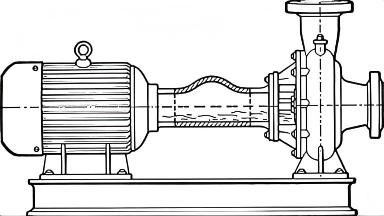
- A “hump” in the suction pipe causes air accumulation.
- The exhaust valve is blocked or not open.
- Accumulation in the air-water separation chamber.
Solution
- Reposition the suction pipe to avoid “rising and then sinking”
- Install an exhaust valve at the high point
- Clean the air-water separation chamber
- Make sure the exhaust valve is open during startup until continuous water flow is achieved
5.Cavitation (Insufficient NPSHa)
Performance
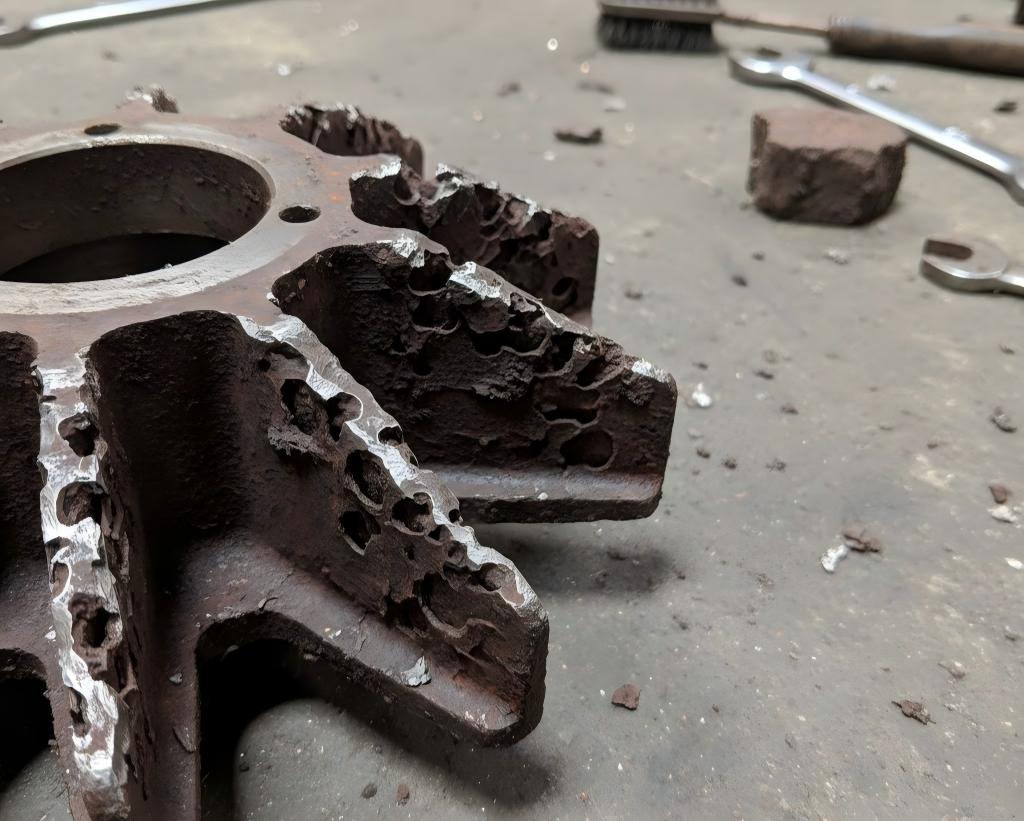
- There is a metallic knocking sound inside the pump.
- Pressure and flow fluctuate greatly.
- Honeycomb-like pitting has appeared on the impeller.
Causes
- Excessive suction height
- High suction resistance
- Excessive medium temperature
- High pump speed
Solution
- Reduce the suction height
- Increase the diameter of the suction pipe, reduce the number of elbows and valves
- Lower the temperature of the medium
- If the selection is inappropriate, consider replacing with a pump with better anti-suction erosion performance
6.Dry Running/Lack of Fluid Causing Component Damage
Performance
- Initially normal, but gradually lost suction after some use
- Sealing area leaks and gets hot
- There are abnormal sounds inside the pump
Causes
- Large fluctuations in liquid level
- Continuing operation after filter screen gets clogged
- No protection against overloading
Solution
- Install low liquid level switches, flow switches or pressure switches
- Fix the blockage on the suction side and the infusion problems
- Replace the damaged mechanical seals, impellers or sealing rings
7.Impeller/Seat Wear or Pump Scaling
Performance
- The suction force and head have significantly decreased.
- The current is low.
- The pump body is overheating.
Causes
- Sand-containing media cause the gap to widen
- Scale deposition narrows the flow channel
Solution
- Inspect and replace the worn impeller or sealing ring
- Clean the scale inside the pump
- If the sand content is high, consider using a wear-resistant material or adding a filter
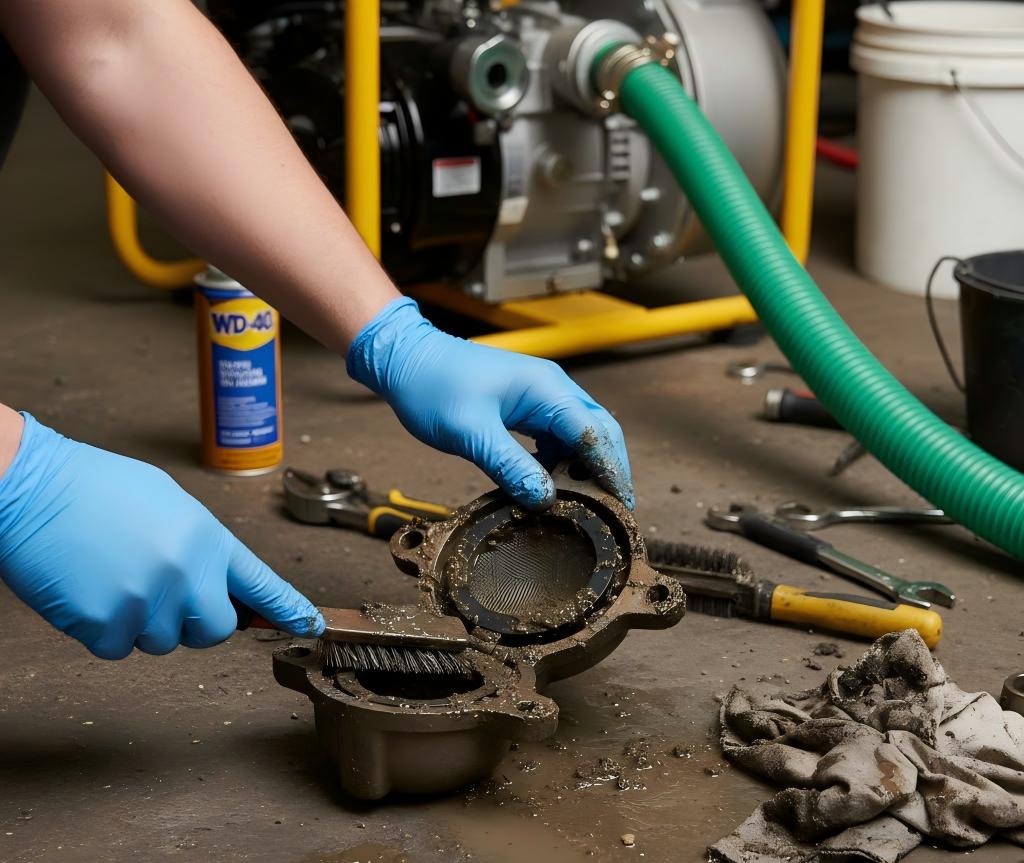
8.Foot Valve Leakage (Causes Water Loss After Shutdown)
Performance
- It is difficult to refill the water after the machine is shut down.
- The self-priming time is getting longer and longer.
Causes
- Sealing surface of the bottom valve is worn out
- Foreign objects get stuck in the valve disc
- Spring fails
Solution
- Inspect and clean the bottom valve
- Replace the valve disc, spring, or the entire bottom valve
- If the clogging occurs frequently, consider installing a pre-filter or replacing with a more reliable check valve
How to prevent the Semi-Trash pump from losing suction again?
1. Installation instructions:
The suction pipe should be as short and straight as possible.
The diameter of the suction pipe should be no less than the pump’s diameter.
Ensure there is sufficient water depth.
Avoid forming “humps” on the suction pipe.
2. Daily Maintenance
Regularly clean the filter
Check if the seals are aging
Avoid prolonged idling
Keep the water collection tank clean to prevent impurities from entering
Conclusion
Semi-Trash pumps experiencing persistent suction loss are 90% likely to be caused by air leaks, blockages, insufficient priming, and wear on the suction side. Most suction loss issues can be quickly resolved through proper suction pipe configuration, reasonable installation height, and regular maintenance.


Leave feedback about this