

When in search of a good source of power for off-grid expeditions or in the occurrence of a surprise power outage, 4000 watts is considered to be the “optimal power level”. This is because it is exactly adequate to run the operational demands of a standard 13500 BTU RV air conditioner unit, a full-size household refrigerator, or a variety of high-power electrical tools.
Once this is established, however, a major architectural tradeoff is then posed to you: should you invest in a powerful inverter generator rated at 4000 watts, or should you invest in two highly portable inverter generators rated at 2000 watts and use them in parallel?
Next, in this article, we shall move on to discuss the “parallel operation” vs “single machine” debate, including aspects such as portability, technical efficiency, and long-term value, to help you decide which one suits your energy needs the best.
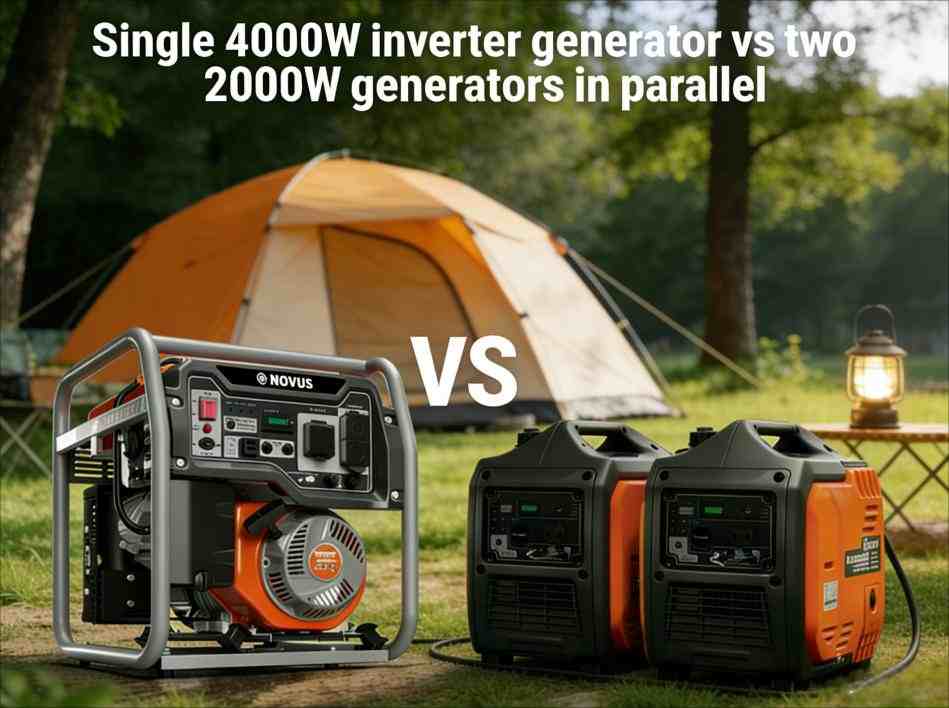
Option 1: Two 2000W Generators in Parallel (The Modular Strategy)
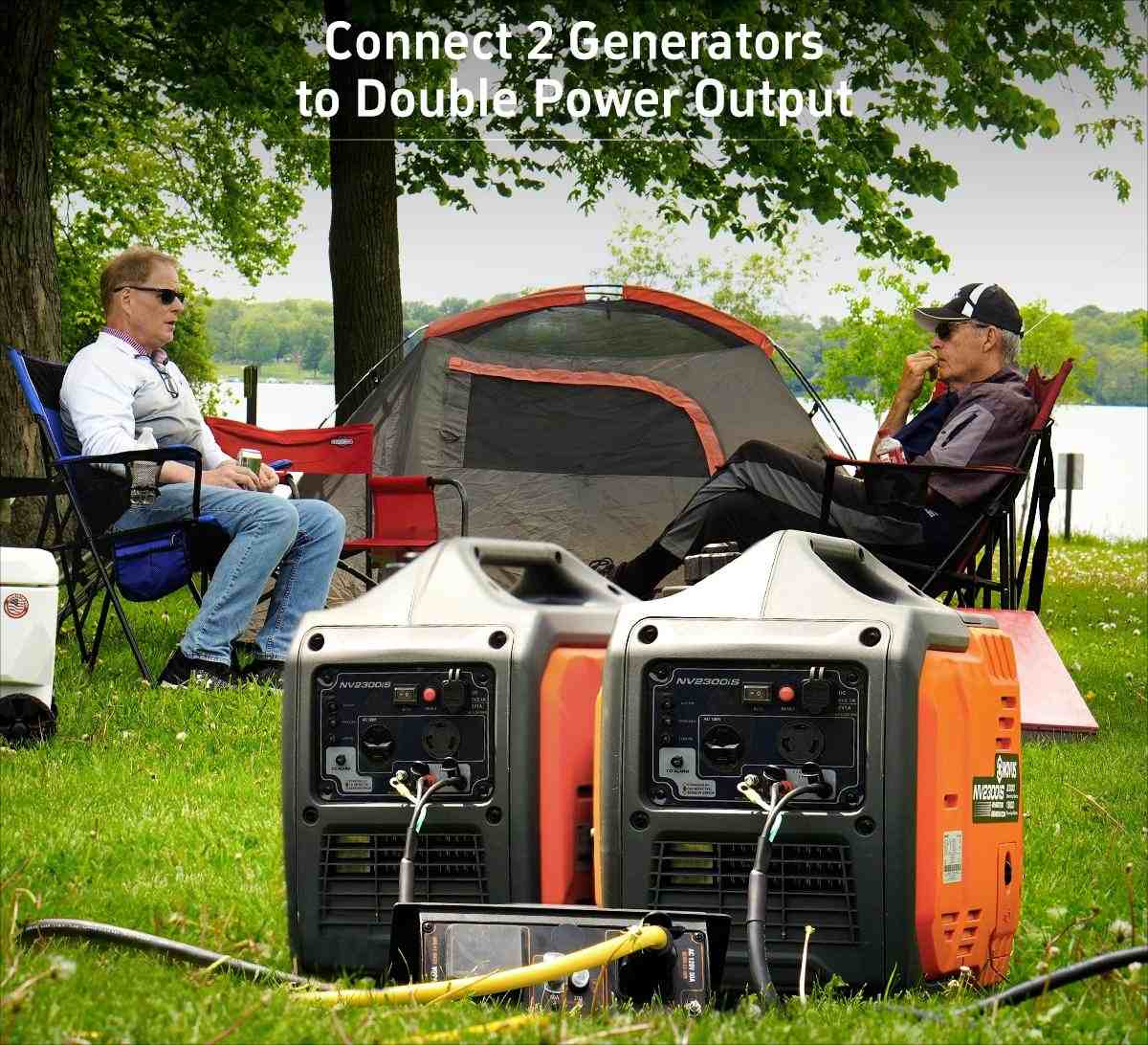
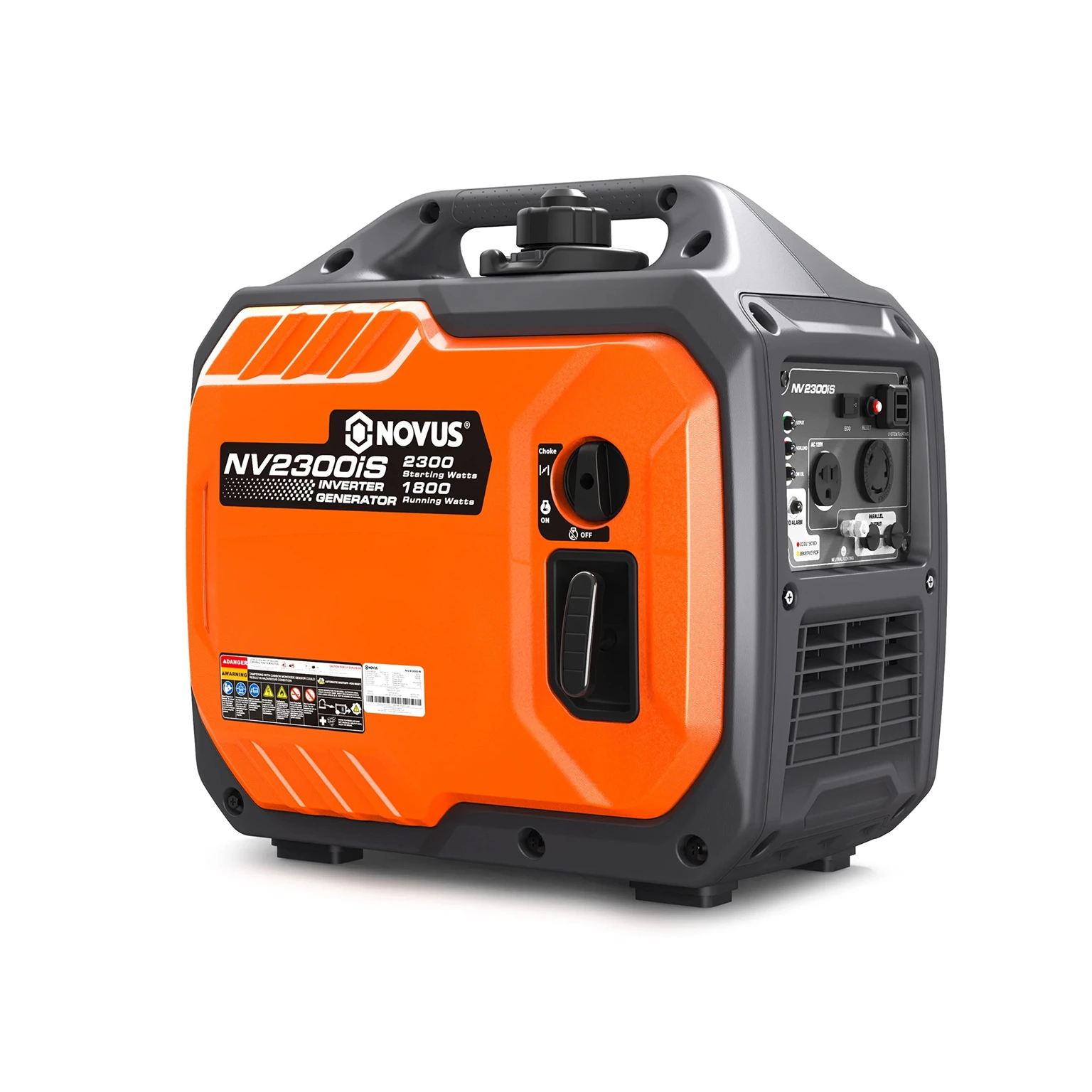
The parallel inverter generator is designed to be connected together using a dedicated parallel kit. After the connection, they will output simultaneously and combine their power, thereby providing a higher total power.
The Advantages: Why “Two is Better Than One”
- Ultra-portable (effort-saving design): A typical 2000W inverter generator weighs between 45 and 50 pounds (20 to 23 kilograms). Most adults can easily lift this weight with one hand. In contrast, a 4000W generator might weigh over 100 pounds. If you often travel alone or have mobility issues, it is much easier to carry two small generators side by side than to struggle to fit one heavy generator into the trunk of a car.
- Redundancy and reliability: Mechanical equipment always malfunctions. If your 4000W generator gets carburetor clogged during a storm, you will lose power completely. However, in a parallel configuration, even if one generator fails, you can still obtain 2000W of stable power, ensuring lighting and mobile phone charging.
- Scalable efficiency: You don’t always need 4000W of power. If you’re just charging your laptop and turning on a few LED lights at night, a 2000W power supply can operate in “energy-saving mode”. Compared to leaving a 4000W high-power power supply idling with such a small load, this can significantly reduce fuel consumption and engine wear.
The Drawbacks
Although it is theoretically very attractive, there are actually some drawbacks.
- Initial investment: Purchasing two high-end motors of 2000W each, along with a parallel kit costing between 80 and 150 US dollars, is almost always more expensive than buying one 4000W unit.
- Maintenance complexity: Now you need to maintain two motors. This means changing the oil twice, checking the spark plugs twice, and cleaning the air filters twice.
- Installation is complex: This requires you to: purchase a compatible parallel kit, then correctly connect the cables and ensure synchronization. Although it’s not overly complicated, it does add an additional operational step.
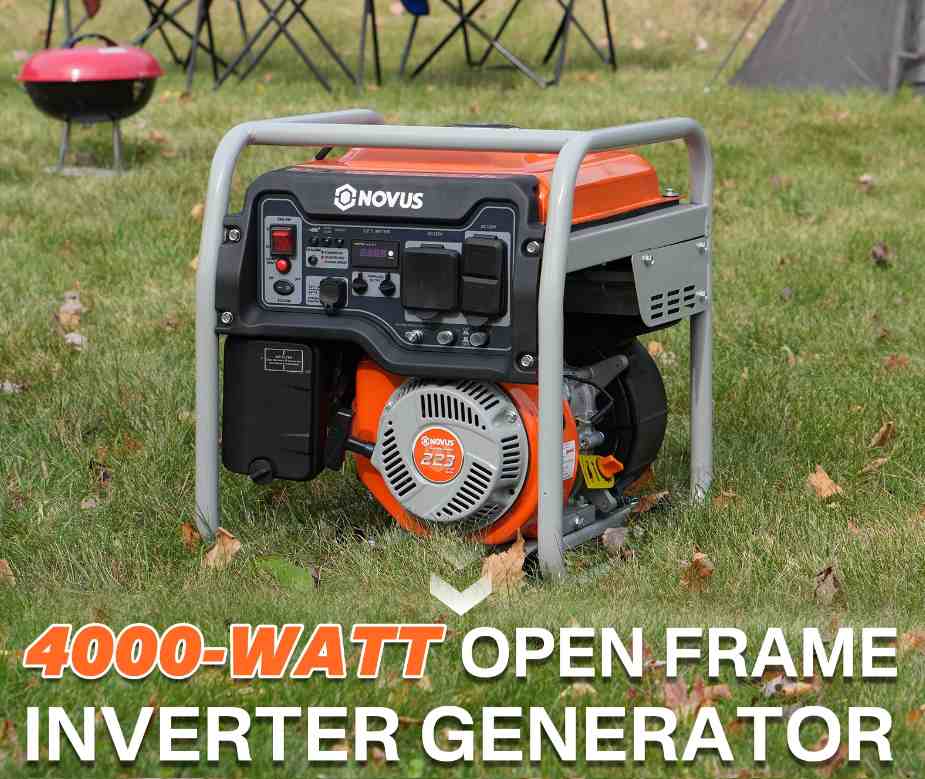
Option 2: The Single 4000W Inverter Generator (The Powerhouse)
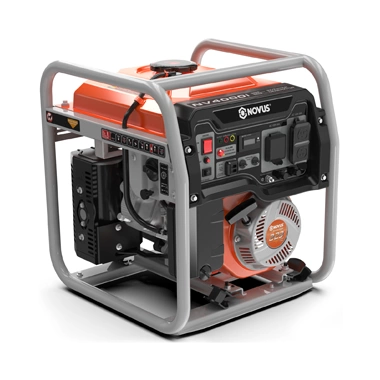
For those users who value the convenience of “plug-and-play”, the standalone inverter generator is the traditional choice. These machines are designed to serve as the main inverter generators for backup power in households or for use in recreational vehicles.
The Advantages: Power without the Fuss
- Exceptionally high value for money: From the perspective of “price per watt”, a single 4000-watt generator offers greater advantages. Manufacturers can expand the size of the engine and the casing more economically without having to produce two separate small machines. Choosing a single generator typically saves 20% to 30% of the cost.
- Longer running time: Generators with greater power are equipped with larger fuel tanks (usually 2-4 gallons). Due to their larger capacity, they can typically operate for 10-12 hours at 25% load, allowing you to sleep peacefully without having to refuel in the middle of the night.
- Simple operation: There is no need to worry about losing extra cables or synchronizing steps. Just pull the start rope (or press the electric start button), and plug in the 30-amp RV power cord.
The Drawbacks
- Weight factor: Even with wheels and telescopic handles, a 100-pound machine would be extremely difficult to move on sandy, muddy or steep terrains.
- Low-load noise: Even in energy-saving mode, the larger-displacement engine (200cc versus 80cc) typically produces a deeper and more pronounced humming sound than the smaller engine.
However, for long-term caravan travellers or homeowners preparing for power outages, the convenience and stability of such systems often make up for these drawbacks.
Related Articles: Can a 4000W Inverter Generator Run Air Conditioners, Microwaves, and More?
Technical Deep Dive: 3 Things You Must Know
Before you pull the trigger, you need to understand the physics that marketing brochures often gloss over.
1. The Reality of Parallel Power Loss
It is commonly believed that 2000W + 2000W = 4000W is the available power. In fact, there is always “transmission loss”. Due to the internal resistance of the parallel cables and the electronic components required for synchronizing the sinusoidal waves of the two inverters, the total continuous output power is usually 5% to 8% lower than the sum of the individual powers.
In the 4000W power supply system, the expected continuous (rated) output power is approximately 3600W to 3800W.
2. The Decibel Myth: Is Two Twice as Loud?
Many buyers are concerned that running two generators would double the noise level. The truth is that noise (measured in decibels) follows a logarithmic relationship. If one generator produces 52 decibels of noise, adding a second identical generator will not result in the noise reaching 104 decibels. In fact, doubling the sound source only increases the noise level by 3 decibels. Therefore, when two 52-decibel generators are operating, the total noise is 55 decibels. To the human ear, this sounds only slightly louder, far from being a “doubling” of the noise.
3. Surge Watts vs. Starting Amps
When your RV air conditioner or household sewage pump is turned on, a significant amount of instantaneous power is required.
- A single 4000W Unit usually has a larger engine displacement (ranging from 212cc to 225cc), providing greater rotational inertia to handle this sudden peak power output.
- The Parallel Setup relies entirely on the inverter’s capacitors to make up for the power shortfall. Although modern 2000W motors perform well in this regard, when starting large power inductive loads, a single high-power motor is usually more “powerful”.
Which Type of User Are You?
Your usage habits ultimately determine which investment is more sensible.
The “RV Nomad” (Winner: 2 x 2000W Parallel)
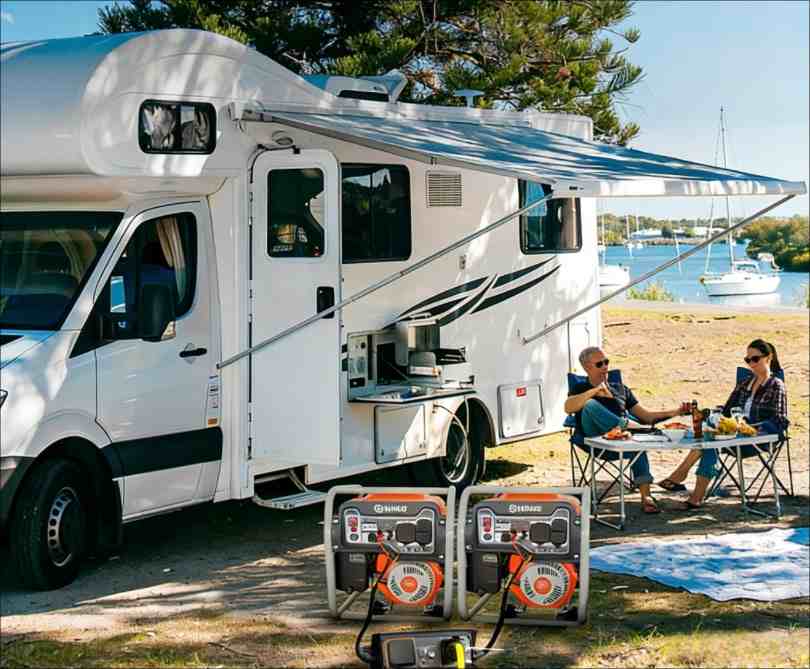
If you are driving a van or a small travel trailer, space and weight are your biggest enemies. The parallel configuration allows two small generators to be stored separately in different storage compartments. During short trips or in cold weather, you can choose to carry only one, making it the gold standard for caravan travelers.
The “Home Backup Planner” (Winner: Single 4000W)
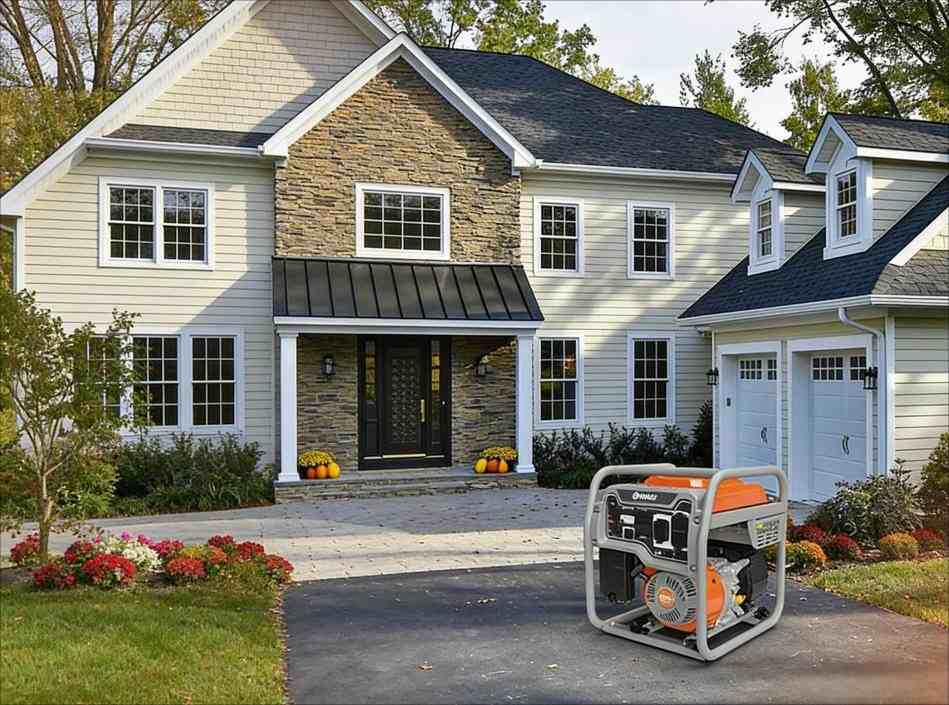
If your generator is kept in the garage for 360 days a year, ready to deal with power outages at any time, then consider purchasing a 4000-watt inverter generator. In an emergency, what you need is not “portability” but “simplicity”. It is cheaper, easier to maintain, and can provide a stable 30A output for your transfer switch.
The “Mobile Professional” (Winner: Single 4000W)
For the restaurant owner or contractor, time is money. Every morning, they have to painstakingly connect the parallel cables, which is really troublesome. A 4000W power supply with a large fuel tank can ensure you work continuously for 8 hours without interruption.
Summary
There are no “wrong” choices; there are only choices that suit your lifestyle.
If you value flexibility, redundancy and good health, please choose the 2000W parallel configuration. For those who want to purchase the most comprehensive power system, it is the best choice.
If you value simplicity, high cost-effectiveness and ease of maintenance, please choose the 4000W single-unit inverter generator. It remains the most reliable way to power homes or large recreational vehicles at an affordable price.
However, if your priority is stable RV air conditioning performance or reliable home emergency power supply, then a well-designed 4000-watt inverter generator is usually a more powerful and simpler solution.


Leave feedback about this