

Pumps are one of the essential pieces of equipment for effective water transport. Irrespective of whether you need pumps to irrigate plants in a field, drain the water collected in basements during storms, provide water for animals, or conduct drainage work in construction sites, selecting the correct pump could help you save both time and money.
In the United States, pumps are widely used in residential, agricultural, commercial and industrial sectors. Choosing the appropriate pump requires comprehensive consideration of factors such as water source, flow rate, total head, and power source. Understanding the common application scenarios of pumps can help household users, contractors, farmers and enterprises make better choices for their own equipment.
This article will introduce the most common application fields of water pumps and explain how to select the appropriate water pump according to actual needs.
What Are Water Pumps Used For?
The main function of a water pump is to transfer water or other liquids from one place to another. Depending on different usage requirements, water pumps can be used for:
- Conveying clean water
- Removing water accumulation and floods
- Agricultural irrigation
- Increasing water pressure
- Draining water from construction sites
- Providing water for industrial production
- Providing emergency water supply during power outages
- Circulating water in ponds and water tanks
Modern water pumps come in various types, including centrifugal pumps, self-priming pumps, transfer pumps, utility pumps for multi-purpose drainage, and portable gasoline pumps, etc. Each product has been optimally designed for different working environments.
Residential Water Pump Applications
Many families use water pumps every day for various water supply and drainage tasks. In the United States, many residences rely on private wells for water supply, so water pumps are an important part of the household water supply system.
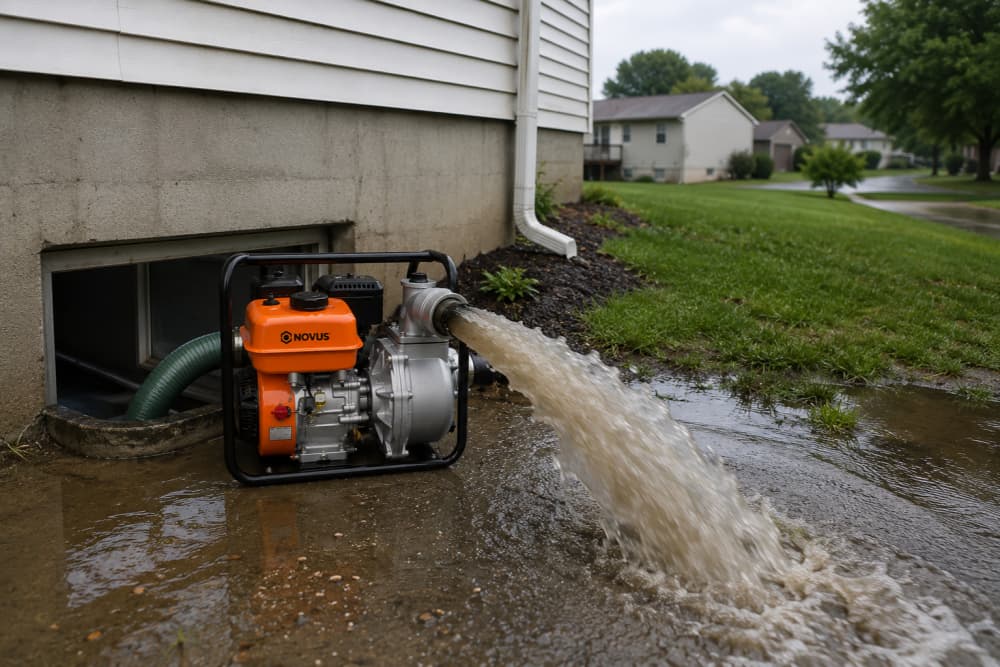
Common household applications include:
Well water supply
For residences without municipal water supply, water needs to be pumped out from the well to provide a stable source of drinking water for the entire household.
Basement Drainage
Water in the basement may be caused by heavy rains, hurricanes, or pipes breaking. With portable pumps, water is easily eliminated from the basement, reducing the risks of mold or structural damages.
Lawn and garden irrigation
Many households use pumps to provide irrigation for lawns, gardens, vegetable plots, and courtyard landscapes, especially in areas with seasonal drought.
Rainwater collection system
Water collected in rain barrels or tanks can then be extracted and utilized for watering flowers, cleaning cars, or any other purpose outside the house, hence reducing the amount of water used from the municipal source.
Watering and maintenance of the swimming pool
The pump can also be used for filling the swimming pool with water or for conducting water circulation during maintenance.
For most household applications, an electric water pump is usually the preferred choice for fixed installation; while in situations where there is no power supply, a portable gasoline water pump offers greater flexibility.
Agricultural Irrigation and Livestock Water Supply
Agriculture is one of the largest application markets for water pumps in the United States. Farms and ranches rely on stable water supply systems to ensure the normal growth of crops and livestock.
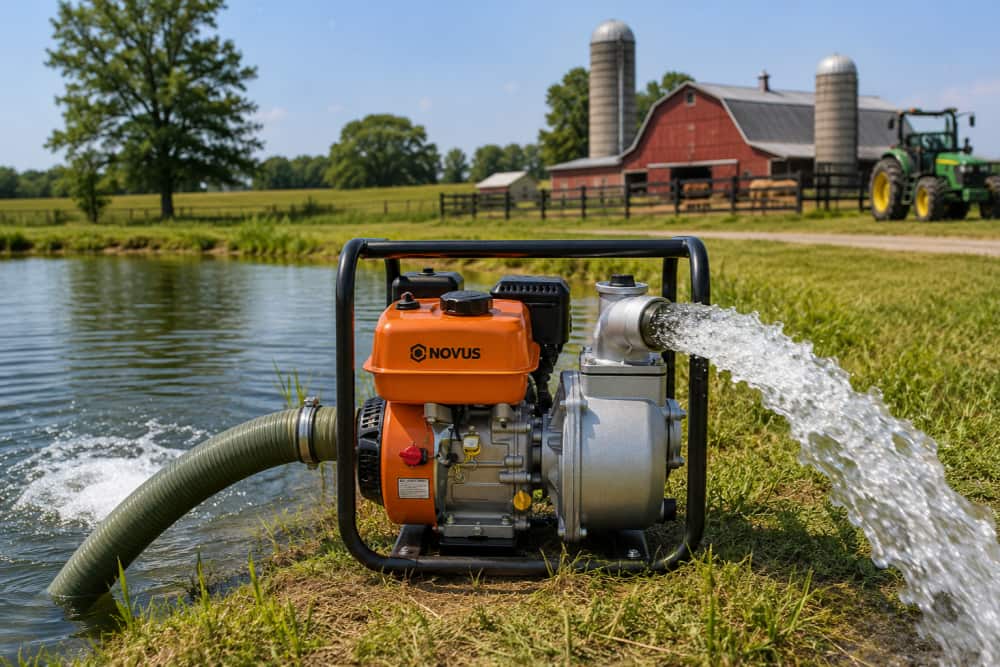
Common applications include:
- Agricultural irrigation
- Orchard irrigation
- Vineyard irrigation
- Greenhouse water supply
- Livestock drinking water
- Water transfer between ponds and water storage tanks
Portable gasoline pumps are especially important for large farms since most irrigation areas lack electrical power supply. Portable gasoline pumps can draw water directly from rivers, lakes, canals or reservoirs to be used in the irrigation system.
In the ranches, these pumps can be used to supply water to the water troughs located some distance away, thus providing a regular source of water for the cattle. Choosing a pump that will have the right flow rate and head will not only make irrigation effective but also reduce fuel usage.
Construction Site Dewatering
During the construction process, groundwater, rainwater and surface water in the ground are often encountered, and they need to be promptly drained to ensure the smooth progress of the construction.
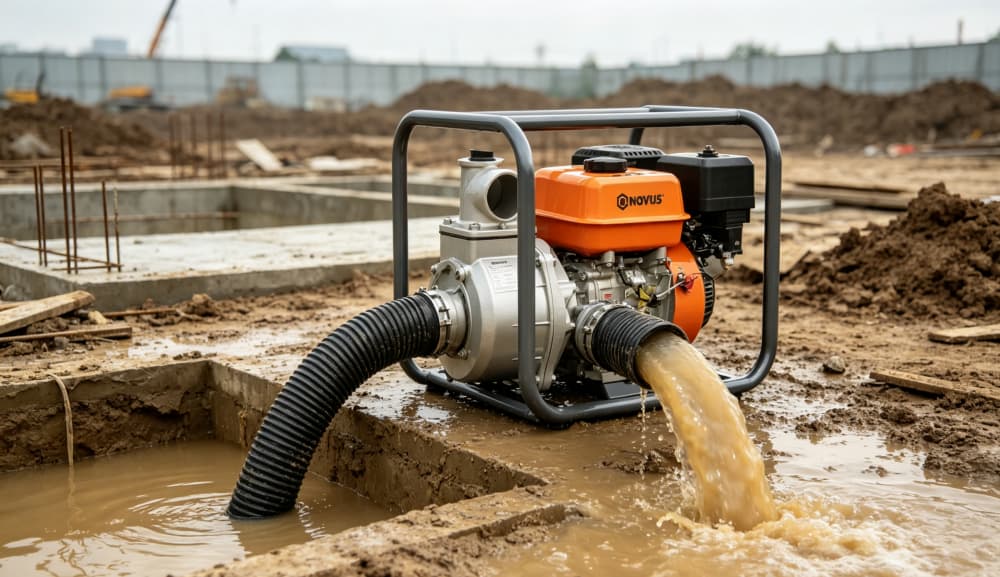
Typical applications include:
- Foundation excavation and drainage
- Basement construction
- Drainage of pipeline trenches
- Road construction
- Bridge construction
- Tunnel construction
On a construction site, portable conveyor pumps and self-priming pumps are the most popular choices that are used to keep the construction site dry to make sure that the process is safe. In case there are some impurities in the water collected in the pool, like sand and gravel, then construction companies tend to choose a sewage pump (Trash Pump). Reliable drainage facilities not only can prevent project delays but also can protect construction machinery and enhance the overall construction efficiency.
Emergency Flood Removal
In recent years, many regions in the United States have experienced increasingly frequent extreme weather events, such as hurricanes, heavy rains, flash floods and tropical storms. Pumps play a crucial role in emergency drainage.
Main applications include:
- Basement drainage
- Drainage of underground parking lots
- Removal of residential water accumulation
- Drainage of commercial buildings
- Rainwater and flood discharge
- Post-disaster recovery work
The gasoline water pump has particular advantages in emergency situations because it can start working immediately even if there is a power outage.
Furthermore, its portability enables emergency responders and household users to quickly transport the equipment to the locations where drainage is needed.
Landscaping and Irrigation Systems
Professional landscapers and property managers use water pumps to maintain healthy outdoor spaces throughout the year.
Typical applications include:
- Residential sprinkler systems
- Commercial landscaping
- Parks
- Golf courses
- Sports fields
- Decorative ponds
Efficient irrigation helps reduce water waste while maintaining attractive landscapes, particularly in states where water conservation is a priority.
Depending on the size of the irrigation system, centrifugal pumps are commonly selected for their consistent performance and energy efficiency.
Municipal Water Supply and Wastewater Management
Both the urban water supply and sewage treatment systems rely on large pumps for stable operation.
Common applications include:
- Water transport
- Sewage treatment
- Sewage lift
- Rainwater discharge
- Pump station
- Water treatment plant
These systems typically employ large centrifugal pumps, which can pump thousands of gallons of water per minute and operate continuously throughout the year. A reliable water supply and drainage system can ensure that urban residents have access to safe drinking water and that sewage is properly treated.
Choosing the Right Water Pump for Your Application
Choosing a water pump is not merely about purchasing the one with the highest power; it is more about matching it to the actual working conditions. Correct selection not only enhances work efficiency but also prolongs the equipment’s service life and reduces operating costs.
| Application | Recommended Pump Type |
| Home Water Supply | Jet Pump or Booster Pump |
| Basement Flooding | Semi-Trash Pump |
| Farm Irrigation | Centrifugal Pump |
| Livestock Water Supply | Portable Gas Water Pump |
| Construction Dewatering | Self-Priming Pump or Trash Pump |
| Flood Emergency | Gasoline Water Pump |
When comparing pumps, consider the following factors.
Water Source
First, determine what is being transported:
- Clear water
- Dirty water
- Water containing sediment or impurities
Different types of liquids require matching with different types of pumps.
Flow Rate (GPM)
Flow rate, measured in gallons per minute (GPM), determines how much water the pump can move within a given time.
Larger irrigation systems and construction projects typically require higher GPM ratings.
Total Head
Total head measures how high or how far the pump must move water.
Higher head requirements generally call for more powerful pumps with greater pressure capabilities.
Source of power
Choose different power sources based on the working environment:
- Electric water pump: Suitable for fixed installation in places with stable power supply.
- Gasoline water pump: Applicable for farms, construction sites, and emergency rescue in areas without electricity.
- Diesel water pump: Suitable for large commercial projects and long-term continuous operation.
Portability
If frequent use between different construction sites or farms is required, it is recommended to choose lightweight portable pumps to enhance transportation and operational efficiency.
Summary
There are many pumps utilized in contemporary households, farming, construction sites, industrial manufacturing, and municipal facilities. Regardless of whether it is used for water supply in houses, irrigation in agriculture, or flood drainage, proper selection of a pump will greatly increase the efficiency of work done and durability of the equipment.
When you buy a water pump, you have to pay attention to several issues such as the type of water, flow rate, total head, and power source. Only when the selected water pump suits the practical application scenario will its performance be increased and cost reduced.
If you want to save your house from being flooded, need to manage irrigation in your farmland, or organize drainage while building something, the proper choice of a pump will allow you to do your job better and safer.


Leave feedback about this