

Weeds are constantly a major concern in the management of agricultural lands and vegetable gardens, influencing the crops’ vigour and production. Manual weeding is traditionally the method used, but it is very slow, makes inefficient use of labor, and it becomes unfeasible as the area for planting increases. Therefore, more and more growers are beginning to ponder a question: Can tillers be used for weeding?
The answer is: Yes, but only if the correct method is used and in the appropriate scenario.
This article will comprehensively analyze the actual effect of the tiller for weeding from aspects such as principle, applicable conditions, operation techniques, and common misunderstandings, helping you determine whether it is worth using.

Working Principle of Tillers for Weeding
Can a tiller be used to remove grass?
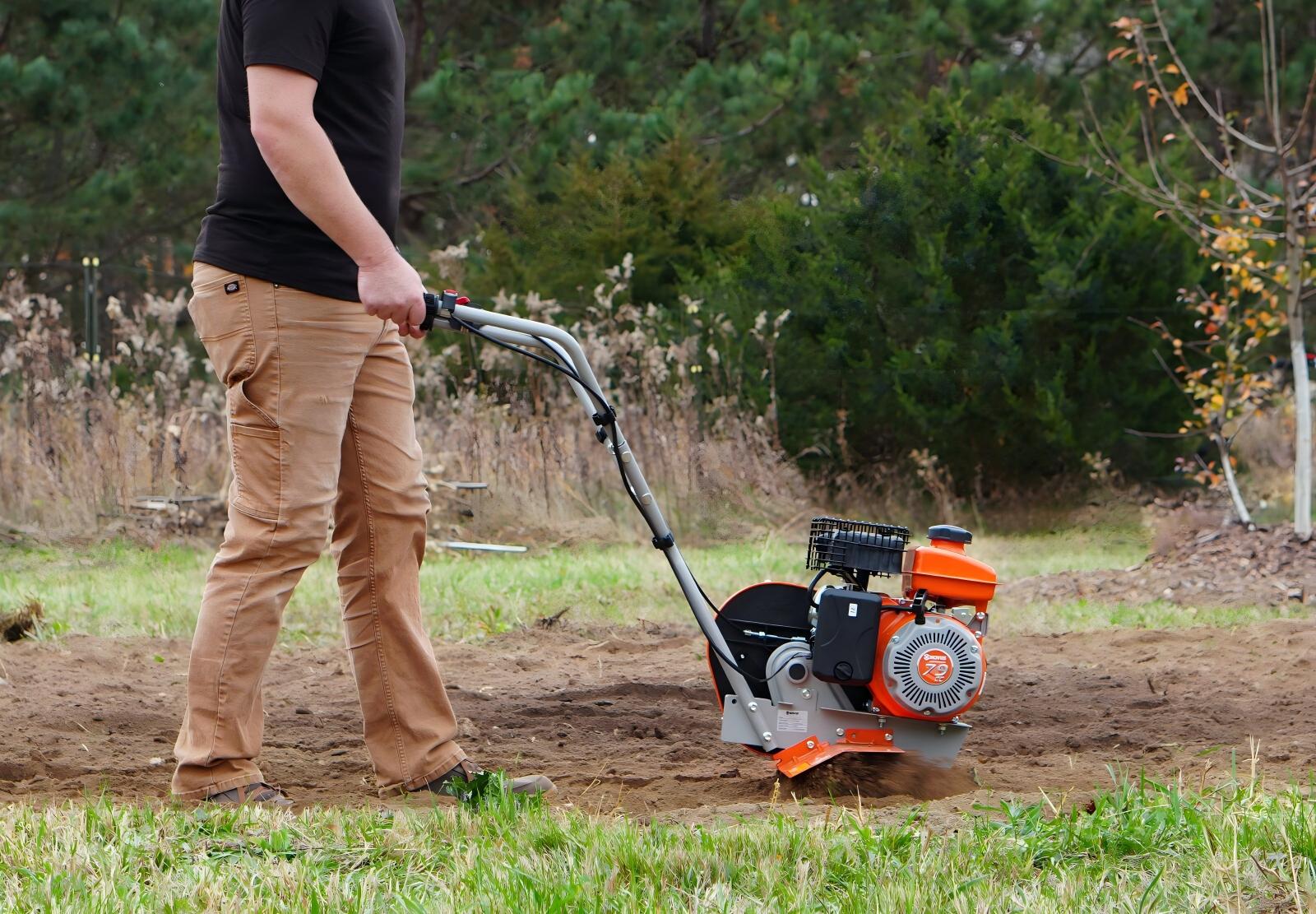
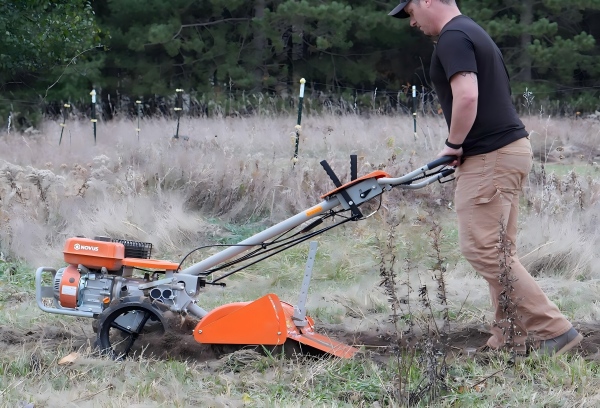
The micro tiller machine can effectively remove weeds and is an important tool in modern agriculture for replacing manual weed removal.
It turns the soil by rotating the blades, and at the same time pulls up or cuts the weeds, achieving the weed control effect.
- Cutting the root systems of weeds, making them lose the ability to continue growing
- Turning or burying the weeds, exposing them on the surface or burying them in the soil for decomposition
- Disturbing the surface soil, disrupting the growth environment of weeds
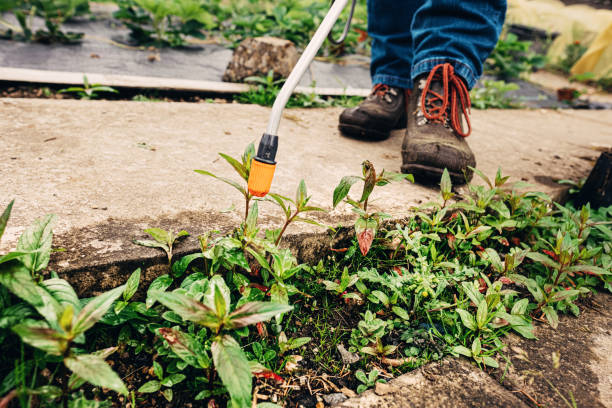
The tiller machine for weed control is a physical and eco-friendly solution that differs from herbicides in that it does not involve chemical interventions. This machinery is especially favorable for organic agriculture, ecological planting, and other crop cultivation that imposes strict limits on pesticide residues.
Mechanical weeding vs Chemical Weeding
Compared with chemical weeding, mechanical weeding has the following characteristics:
- No pesticide residues are produced, making it more environmentally friendly.
- It has a relatively minor impact on soil microorganisms.
- It can also perform soil loosening operations at the same time, achieving multi-purpose functionality with one machine.
However, it should be noted that mechanical weeding is not a “one-time solution” and requires the combination of the correct plowing depth and timing.
Under What Circumstances Is A tiller Suitable For Weeding?
Weed before sowing or ploughing
This is the most ideal scenario. When using a tiller before sowing:
- It can remove most of the weeds at once
- Reduce the number of weed seeds remaining on the surface
- Provide a clean and loose soil environment for subsequent sowing
For most crops, this step can significantly reduce the weeding pressure throughout the entire growth period.
Shallow cultivation for weeding between crop rows
When the crops have emerged but the row spacing is large, the tillage machine can also be used for weeding between the rows, for example:
- Corn
- Potato
- Beans
- Sweet potatoes and other crops
The key to the operation lies in shallow plowing to avoid damaging the roots of the crops.
Garden, small farmland and orchard row
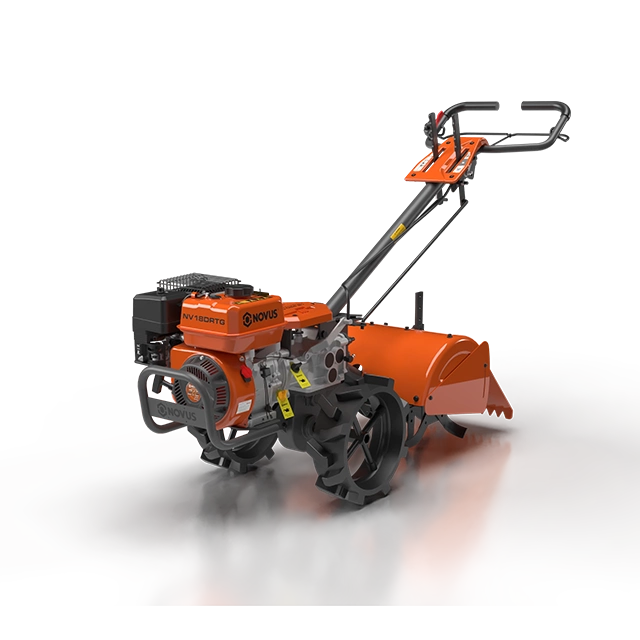
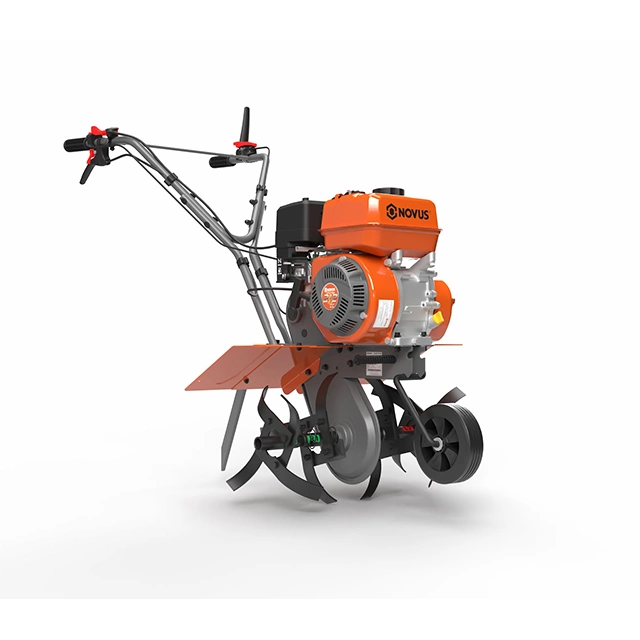
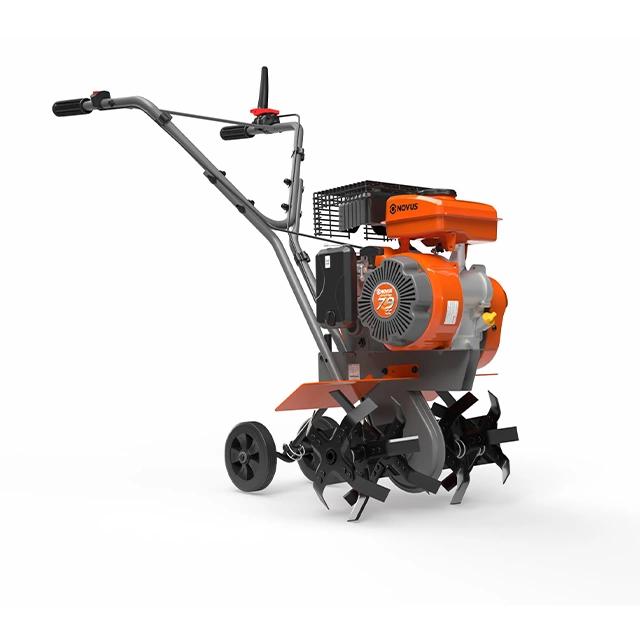
For home gardens or small-scale growers, small or hand-held tillers are very practical:
- High efficiency in weeding between rows
- Also improves soil aeration
- Perfect for between-tree rows of fruit trees and greenhouse environments
→ Click to learn more about the same product
Under What Circumstances Is It Not Recommended To Use a Tiller For Weeding?
Intensive period of crop growth
When the crop root systems have fully expanded and the plant spacing is relatively small, using a tiller machine poses a higher risk:
- It may damage the root systems
- It may cause the crops to topple or result in reduced yields
This stage is more suitable for manual weeding or cover cropping methods
Perennial and stubborn weed plots
Some perennial weeds, such as:
- St. Augustine grass
- Smartweed
- Weed species like reeds
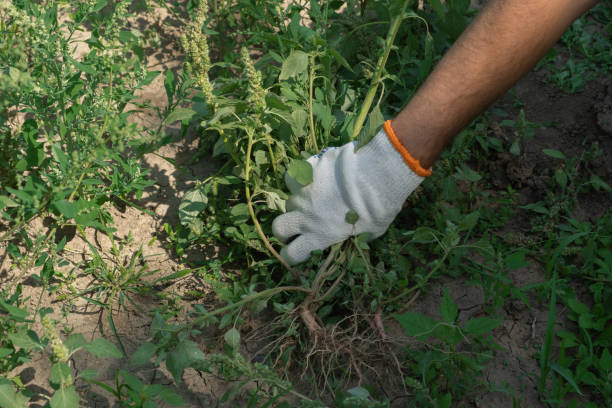
They have extensive root systems. Cutting them with a tiller machine might even lead to more growth. Such plots require combined manual removal, covering, or rotation measures.
When the soil conditions are not suitable
- If the soil is too wet: It is prone to become compacted and the blades get stuck in the mud.
- If the soil is too dry: The tilling is insufficient and the weeding effect is poor.
The optimal condition is that the soil is slightly moist, not sticky or hard, and it is in a state where “it forms a ball in your hand and disperses upon touching the ground”.
How to Use tiller for Weeding Correctly? Practical Tips
Reasonably control the plowing depth
- Recommended weeding plowing depth: 1–2 in
- If the plowing depth is too deep, it will expose deep-rooted weed seeds
- Shallow plowing is more conducive to damaging the roots of young grasses
Choose the appropriate type of tool
- Narrow knife / Straight knife: More suitable for inter-row weeding
- Standard rotary tiller: Suitable for both plowing and weeding
Different tools are applicable to different scenarios. Do not use the same tool for all purposes.
Manage the time for tasks and the weather conditions
- The best results are achieved on sunny days
- The weeds that are turned over can be quickly dried and killed
- Avoid working immediately after rain
Comparison of Weed Control by tiller with Other Weed Control Methods
| Weeding methods | Cost | Efficiency | Environmental friendliness High | Applicable scenarios |
| Weeding with a tiller | In China | High | High | Garden, small farmland |
| Manual weeding | Low | Low | Low | Fine operations on a small scale |
| Chemical weeding | Low | High | High | Large-scale farmland |
| Covering weeding | In China | In China | Environmental friendliness High | Agricultural facilities |
Tiller Frequently Asked Questions (FAQ)
Will cultivating the area not lead to more weeds?
If the depth control is improper, it can indeed happen, especially for perennial weeds.
Can a small household tiller remove weeds?
Yes, it is particularly suitable for vegetable gardens and shallow cultivation between rows.
Does the weeding done by the tiller affect the crop yield?
Proper use actually benefits the growth of the crops.
How many times a year is a tiller needed to remove weeds?
Usually 2 to 4 times, adjusted according to the growth of the weeds.
Conclusion
In summary, the cultivator is a highly efficient and eco-friendly gadget for weeding that can be used primarily in places where not too many weeds have been planted yet and in between the rows of crops at shallow depths. But, it is not a miracle tool. When it comes to the toughest weeds or during the season when the crops grow thickest, then it has to be assisted by hand, mulching, and other tools along with methods.
Only at the right time, with the right depth, and with the proper tools can the cultivator really demonstrate its worth in the process of weeding.


Leave feedback about this