

Whether it’s weekend camping, lake cruising, or long-distance towing trips, RVs, Boats and Trailers are bound to get dirt, dust, sap, oil stains and even salt on them. If not cleaned in time, it will not only affect the appearance but also lead to problems such as corrosion of the body, rusting of the metal, and aging of the seals.
Compared to ordinary water pipes, the high-pressure washer offers greater cleaning power. The Gas Pressure Washer, with its higher pressure, larger flow rate and the advantage of being power-free, is particularly suitable for cleaning large outdoor equipment.
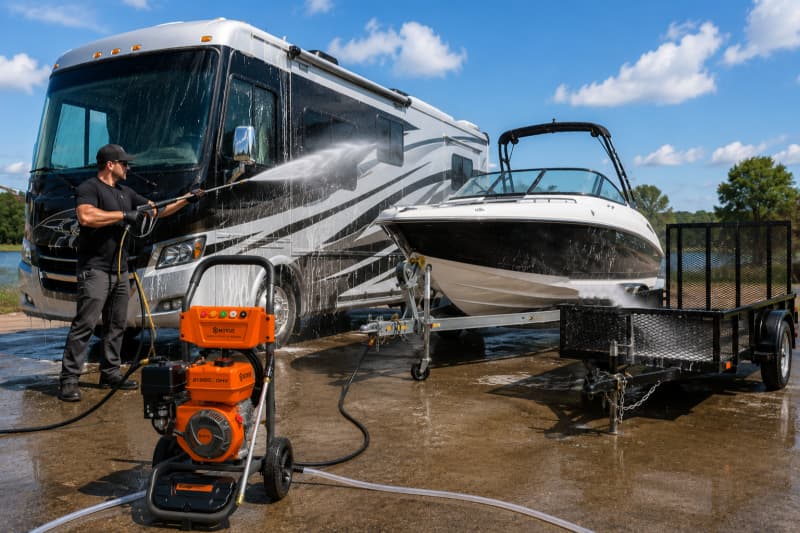
Why Gas Pressure Washers Are Perfect for RV, Boat & Trailer Washing
RVs, boats, and trailers are typically large and parked in complex environments (outdoors, beaches, muddy areas). Electric washers, limited by power supply and capacity, often struggle with stubborn stains. Gasoline-powered pressure washers, on the other hand, offer high mobility and stable power, making them particularly suitable for these scenarios.
- Pressure Selection: The 3000-4000 PSI range is an ideal balance point, effectively removing stubborn dirt without easily damaging fiberglass, aluminum alloys, rubber seals, or painted surfaces.
- Flow Rate Importance: Higher GPM (gallons per minute) washes away dissolved dirt faster, improving overall cleaning efficiency.
- Portable Design: Large wheels and a sturdy frame allow the machine to move easily on grass, gravel, or docks.
Before cleaning, it is recommended to cover windows, electrical components, and sensitive areas, and prepare an environmentally friendly pressure washer-specific cleaning agent.
Preparations Before Cleaning
Safety precautions: Wear goggles, waterproof gloves, long-sleeved clothing and slip-resistant shoes.
Tool accessories: Prepare different angle nozzles (recommended for daily use: 25° and 40°, 15° for stubborn areas), foam sprayers or built-in soap boxes, long-handled brushes and a water source.
Cleaning agent: Choose a dedicated formula for salt stains, mold or de-lubrication, spray it and let it penetrate for 10-15 minutes.
Water source: Ensure adequate water supply (minimum 40 PSI inlet pressure), and it is best to use a filter to prevent impurities from entering the pump.
Deep Cleaning Process Using Gas Pressure Washers
Step 1: Initial rinsing
Start from the top and use a wide-angle nozzle (40°) at low pressure to remove loose dust, sand particles, and bird droppings from the surface. Keep the spray gun at least 30-45 centimeters away from the surface to avoid direct impact on fragile components.
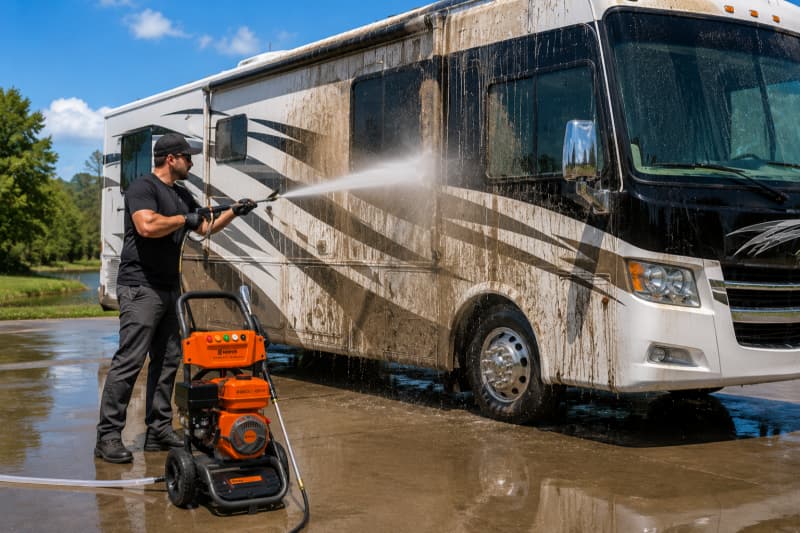
Step 2: Applying cleaner
Use a soap box or foam cannon to spray the cleaner evenly, focusing on the shadow areas where mold accumulates and the bottom areas with severe salt deposits. Work from top to bottom to allow the cleaner to fully act. The RV side walls, Boat deck, and Trailer chassis are key areas.
Step 3: Main cleaning
- Boat hull and RV exterior walls: Switch to 25° nozzles and use medium pressure to sweep downwards. For fiberglass and aluminum surfaces, use lower pressure and, if necessary, use a soft brush for assistance.
- Trailer chassis and wheels: Use 15° nozzles to clean oil stains and brake dust. Be careful to protect the braking system and electrical wiring.
- Roof and sunshade: Operate with caution to prevent high-pressure water from seeping into the joints. For stubborn mold areas, repeat the application of cleaning agents.
Step 4: Treatment of stubborn stains
For stubborn oxide layers or thick algae, a 15° nozzle can be used briefly, but a safe distance must be maintained and a small area should be tested first. Combining with the mechanical friction effect of a brush is more effective.
Step 5: Final rinsing and drying
Use a 40° wide-angle nozzle to thoroughly rinse away all remaining cleaning agents. Rinse from top to bottom to ensure no residual streaks. Allow it to air dry naturally or use low-pressure air to dry the moisture at the seams.
The entire process can usually be completed within 1-3 hours, depending on the size of the vehicle and the degree of dirtiness.
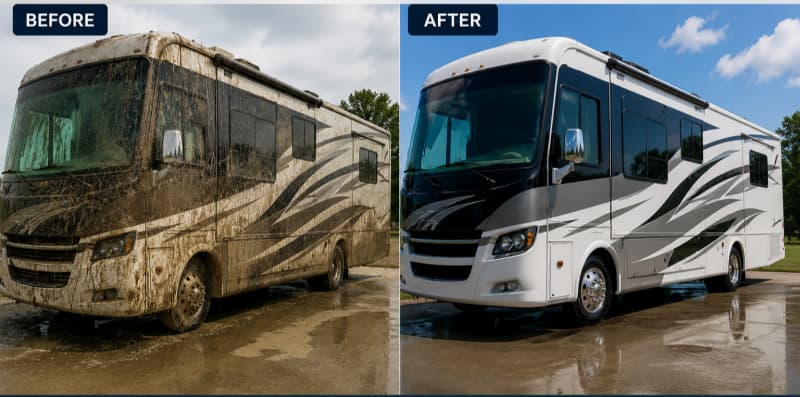
Daily Maintenance Suggestions
Good cleaning habits can extend the service life of RVs, boats and trailers.
Suggested measures are as follows:
- Rinse off the dirt promptly after each camping or off-road outing;
- Immediately rinse the Boat and Trailer of salt after using seawater;
- Carry out a thorough deep cleaning before long-term parking;
- Regularly inspect for corrosion or damage to the tires, chassis and connecting parts.
For users who frequently engage in outdoor activities, a reliable Gas Pressure Washer not only enables efficient deep cleaning of RVs, boats, and trailers, but can also be used for routine maintenance of gardens, fences, driveways, and other large equipment, significantly enhancing cleaning efficiency and helping to maintain the good appearance and performance of the equipment over the long term.
Conclusion
RVs, boats, and trailers are important assets for many families. Regular deep cleaning not only maintains their appearance but also protects their investment value. A reliable and easy-to-use gasoline pressure washer is the ideal tool to easily tackle various outdoor cleaning challenges.
If you are looking for cleaning equipment suitable for this type of work, Novus NV3400PWG, when paired with suitable accessories, can achieve excellent performance.


Leave feedback about this