

If you examine your pressure washer carefully, you will notice five differently colored nozzles. The colors used here have nothing to do with aesthetics; they are part of an industry standard color coding scheme. It is important for you to identify what color the nozzles of your pressure washer are because it can make all the difference between getting professional cleaning results and putting yourself at risk. Applying the incorrect nozzle may cause your car’s paint to peel or put scratches on your wood patio as well as putting you at risk of serious physical injury.
This article provides a color chart for the nozzles of a general pressure washer and also shares which color nozzle should be used for some common cleaning tasks.
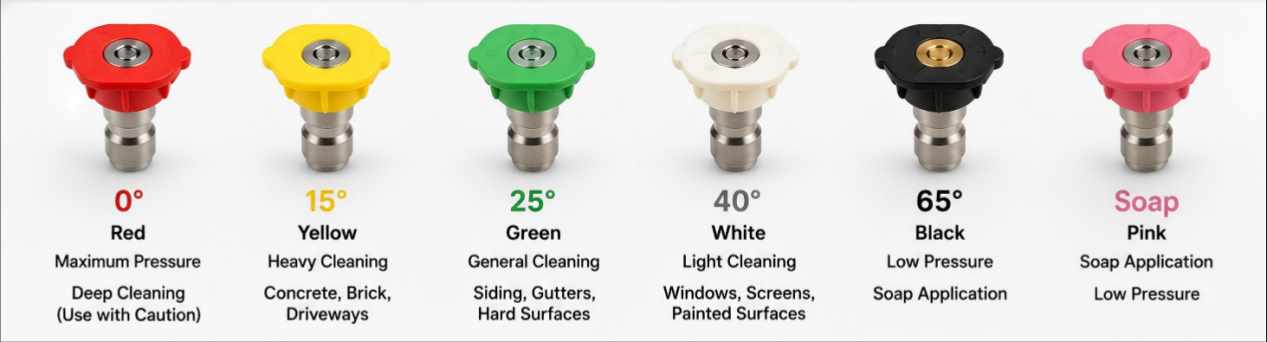
Pressure Washer Nozzle Color Chart: What Each Color Does
This coding of color on the quick-connect nozzle on the pressure washer represents the water angle from which water sprays out. In case of a narrower angle, water will form an impact effect, whereas, in case of a wider angle, water will spread and form less impact effect but a wider coverage area.
To help you identify the right tip instantly, here is the universal pressure washer nozzle color chart used by professionals and manufacturers worldwide:
| Nozzle Color | Spray Angle / Type | Impact Level | Primary Use Cases | Safety Warning |
| Red | 0° (Straight Stream) | Extreme (Blaster) | Rust removal, unpainted metal, stubborn concrete stains. | Dangerous. Can cut through skin, tires, and wood. Avoid residential use. |
| Yellow | 15° (Narrow Fan) | High (Stripper) | Heavy mildew removal, stripping paint, deep concrete cleaning. | High Risk. Can damage wood and soft masonry if held too close. |
| Green | 25° (Medium Fan) | Medium (Cleaner) | Home siding, brick patios, sidewalks, standard backyard cleaning. | Safe for most hard surfaces when maintaining a 12-inch distance. |
| White | 40° (Wide Fan) | Light (Rinser) | Vehicles, windows, stucco, fragile outdoor furniture. | The safest high-pressure option for delicate surfaces. |
| Black | 65° (Low-Pressure) | Low (Close Soap) | Applying chemical detergents and soap suds at close range. | Low Pressure. Internal wide orifice prevents high-pressure engagement. |
| Pink | Long-Range Soap | Low (Jet Stream) | Shooting soap suds up to a 2nd story or high walls without a ladder. | Safe for delicate materials. Uses an oversized orifice to draw chemicals safely. |
Which Pressure Washer Nozzle Should You Use for Different Cleaning Jobs?
Although the chart provides a quick technical overview, practical application requires considering more details. Let’s delve into the most common problems we encounter when conducting the actual cleaning process.
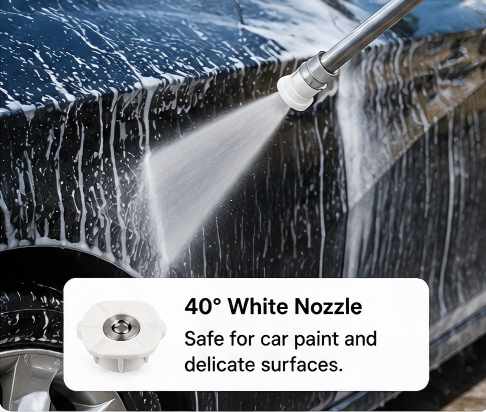
What Pressure Washer Nozzle is Safe for Car?
When using a high-pressure cleaning machine to clean vehicles, using an overly sharp angle may scratch the paint layer, blow off the stickers or puncture the tires.
When choosing the appropriate car washing nozzle, the white (40-degree) nozzle is always the best choice. This 40-degree fan-shaped nozzle can evenly distribute the water pressure, easily remove mud, salt deposits and road dirt without damaging the car’s paint surface.
To achieve the best car washing results, please make sure to follow the two-step method:
- First, replace the black (65-degree) nozzle and draw the detergent from the soap tank. Spray a thick layer of foam onto the vehicle surface. Let it stand for a few minutes to allow the foam to fully dissolve the organic dirt on the vehicle’s surface.
- Then, switch to the white (40-degree) nozzle and rinse off the remaining detergent. Keep the nozzle at least 12 to 15 inches away from the vehicle body.
Related Articles: Gas Pressure Washer for Car Wash: Is It Safe and How to Use It Properly?
What Color Nozzle to Pressure Wash Deck?
Wood is a relatively soft fibrous material. If the spray range of the nozzle is too narrow, it will immediately cause the wood to crack, leaving permanent marks from the spray gun and damaging the wood grain.
If you want to know which color nozzle is safe for cleaning the patio wood boards, the standard choice is the green (25-degree) nozzle. It provides just the right pressure to remove the gray weathered fibers, algae, and mold without damaging the wood. However, if your patio is made of softwood (such as old cedar or preservative-treated pine) or has structural defects, for safety reasons, you should use the white (40-degree) nozzle.
Whether you choose the green or white nozzle, make sure to keep the spray gun moving smoothly along the grain direction of the wood. Do not stop moving or pull the trigger when the spray gun is directly aimed at a certain point on the wood.

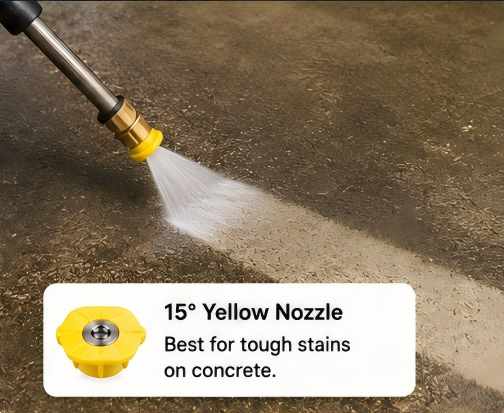
Which Pressure Washer Nozzle for Concrete?
Concrete, bricks and asphalt driveways are all dense and durable surfaces that can withstand the maximum pressure. However, they are also prone to stubborn stains such as oil, rust, mold and tire marks.
When choosing the nozzle for the pressure cleaning machine used to clean concrete driveways or sidewalks, the yellow (15-degree) nozzle is your top choice. The 15-degree nozzle is like a powerful scraper, capable of easily removing years of accumulated dirt and moss.
If you are only conducting routine seasonal cleaning of large concrete terraces, such as removing dust, fallen leaves or a small amount of pollen, then you can switch to a green (25 degrees) nozzle. The wider spray path enables you to complete the cleaning task more quickly, thereby saving water and time.
⚠️ Note: Reserve the Red (0-degree) nozzle only for extreme spot-cleaning on concrete, such as dried construction adhesive or deeply embedded grease. Holding a red tip too close to concrete can actually etch lines into the surface or pop off the top finish coat.
Related Articles: Is 3100 PSI Sufficient for Concrete Cleaning?
Pressure Washer Nozzle Color vs. Orifice Size: Why Color Alone Isn’t Enough
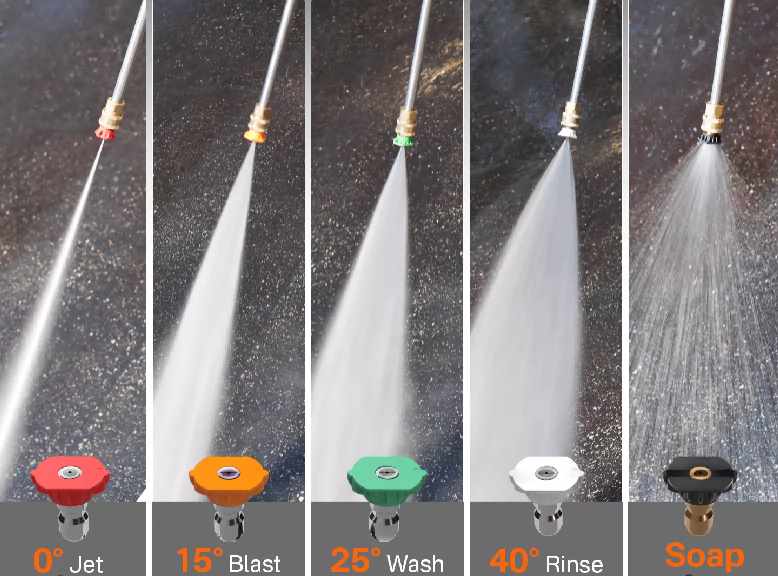
Many beginners mistakenly believe that purchasing any generic color nozzle kit online will result in exactly the same pressure effect. This is a serious mistake that could damage your machine.
Although the color of the nozzle of a pressure washer determines the angle of water spraying, it does not determine the pressure (PSI) or flow rate (GPM). The pressure and flow rate are determined by the nozzle’s aperture – the tiny holes inside the metal tip of the nozzle.
- If the aperture is too small: the machine’s flow capacity will be restricted, which will cause overheating of the pressure pump and overload or trigger the release valve and hence damage the inner seals.
- If the aperture is too large: there will be an excess water flow in the high-pressure cleaning machine. Its pressure will be too low, thus affecting the machine’s performance more than that of the garden hose.
Hence, while looking for a replacement for the broken nozzle, please do not consider only the color. Rather, look at the specifications provided in the user manual of your pressure washer with regard to its PSI and GPM, then buy a chart whose colors will match the code of your nozzle hole size.


Leave feedback about this