

Many first-time buyers of gas pressure washers often ask, “Do I need to add engine oil?” Some even mistakenly believe that simply adding gas will enable the machine to start directly. In fact, gas and engine oil serve completely different purposes, and both are essential for proper operation.
If the engine is started without engine oil, it will either have a minor impact on performance or may even cause permanent damage to the engine. This article will explain why gas pressure washers require engine oil, which type of oil should be used, how often it should be replaced, and how to properly maintain the equipment to ensure its stable operation.
Do Gas Pressure Washers Need Oil?
The answer is: Yes.
gas pressure washer is driven by a four-stroke gas engine and uses a high-pressure water pump. Inside the engine, there are a large number of high-speed rotating metal parts, such as pistons, crankshafts, and connecting rods. If there is not enough engine oil for lubrication, these parts will undergo intense friction, causing the engine to heat up rapidly. In severe cases, it may even seize the cylinder and be completely damaged.
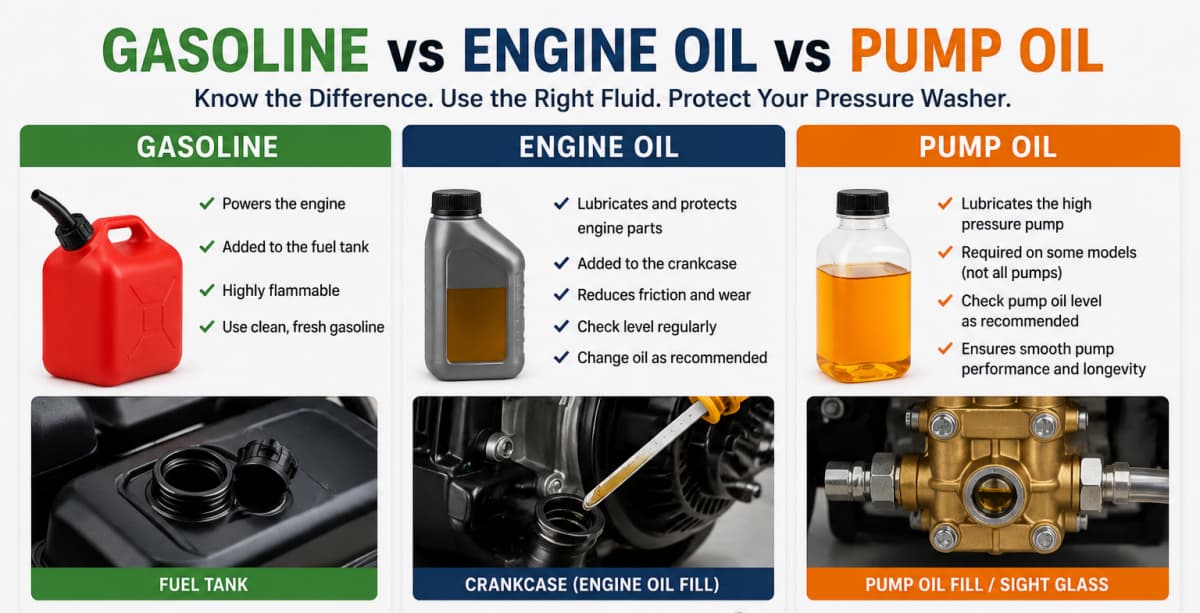
It should be noted that many beginners tend to confuse the following three liquids:
- gas: Provides fuel for the engine.
- Engine Oil: Lubricates the internal parts of the engine.
- Pump Oil: The lubricating oil used by some high-pressure pumps, not necessary for all models.
Before starting a new gas pressure washer for the first time, always check that the engine has the correct amount of oil.
Why Do Gas Pressure Washers Need Engine Oil?
The gas pressure washer is actually composed of two parts: the gas engine and the high-pressure water pump. Among them, the engine is responsible for providing power, and the high-pressure pump is responsible for pressurizing and outputting water.
The internal parts of the engine will continuously undergo high-speed friction during operation. The engine oil mainly plays the following several important roles:
- Lubrication: Reducing wear between metal components.
- Heat dissipation: Helping to lower the engine’s operating temperature.
- Cleaning: Removing impurities and carbon deposits generated inside the engine.
- Anti-rust: Preventing metal parts from rusting due to moisture.
- Sealing: Improving the engine’s compression efficiency and ensuring power output.
If there is a long-term lack of engine oil or the oil becomes old, not only will the engine make abnormal noises and have reduced power, but it may also shorten the lifespan of the entire equipment.
What’s the Difference Between gas, Engine Oil, and Pump Oil?
When many users first use a pressure washer, they tend to mistakenly believe that all oils are the same. In fact, their functions are completely different.
| Type | Purpose | Required? |
| gas | Provide fuel for the engine | ✔ Must |
| Engine Oil | Lubricate the engine | ✔ Must |
| Pump Oil | Lubricate some of the high-pressure pumps | Depends on the product |
Nowadays, many household gas pressure washers adopt maintenance-free high-pressure pumps (Maintenance-Free Pump). During normal use, there is no need to replace the pump oil regularly, which greatly reduces the daily maintenance work.
If you are purchasing equipment, you can give priority to models equipped with maintenance-free high-pressure pumps. Not only is the maintenance simpler, but it is also more suitable for novice users.
What Type of Oil Should You Use?
Different brands of engines may have slight differences, but most gas-powered pressure washers usually recommend the following types of engine oil:
- SAE 10W-30: Suitable for most climates, and the most common choice.
- SAE 30: Suitable for summer or higher environmental temperatures.
- 5W-30: Suitable for cold regions and easier to start in cold conditions.
When choosing engine oil, the specifications recommended in the product manual should be followed. It is not advisable to mix different types of engine oil at will.
At the same time, do not misuse the following products:
- Two-stroke engine oil
- Automatic transmission fluid (ATF)
- Hydraulic oil or other industrial lubricants
Using the wrong type of lubricant may affect the engine’s lubrication performance and even cause damage.
Do You Need to Add Oil Before the First Use?
Yes—always check before starting the engine.
Many gas-powered high-pressure washers are not filled with engine oil before leaving the factory for transportation. To prevent leakage during transportation, they usually do not have the oil filled to the full capacity.
Therefore, before starting the machine for the first time, you should follow the instructions:
- Place the machine on a level surface.
- Open the oil filler port.
- Check the oil level in the dipstick.
- If the oil level is insufficient, add the recommended type of oil to the specified position.
Do not assume that the new machine has been filled with enough oil and start it directly.
How Often Should You Change the Oil?
Regularly changing the engine oil can effectively extend the lifespan of the engine.
| Usage stage | Replacement Suggestion |
| First use of the new machine | Replace the oil for the first time after approximately 5 hours of operation |
| Daily use at home | Replace every 25-50 hours or once a year |
| Frequent use in business | Adjust the replacement cycle as needed based on the operating conditions |
| Before long-term storage | It is recommended to replace the new oil before storage |
If the machine is frequently operated under conditions of high temperature, high dust content or long-term heavy load, it is also advisable to replace the engine oil in advance.
How to Check the Oil Level
Before each use, take a few minutes to check the oil level. This can prevent many malfunctions.
The operation steps are very simple:
- Place the pressure washer on a level surface.
- Pull out the oil dipstick and wipe it clean.
- Insert the dipstick again (follow the instructions).
- Remove the dipstick again to check the oil level.
- The oil level should be between the lowest and highest marks.
If the oil level is too low, replenish it promptly; if it exceeds the highest mark, also release some of the engine oil to avoid affecting the normal operation of the engine.
Can You Run a Gas Pressure Washer Without Oil?
It is not recommended, nor should it be done.
Without engine oil, internal engine parts will operate at high speeds with almost no lubrication, potentially causing severe wear in a short period.
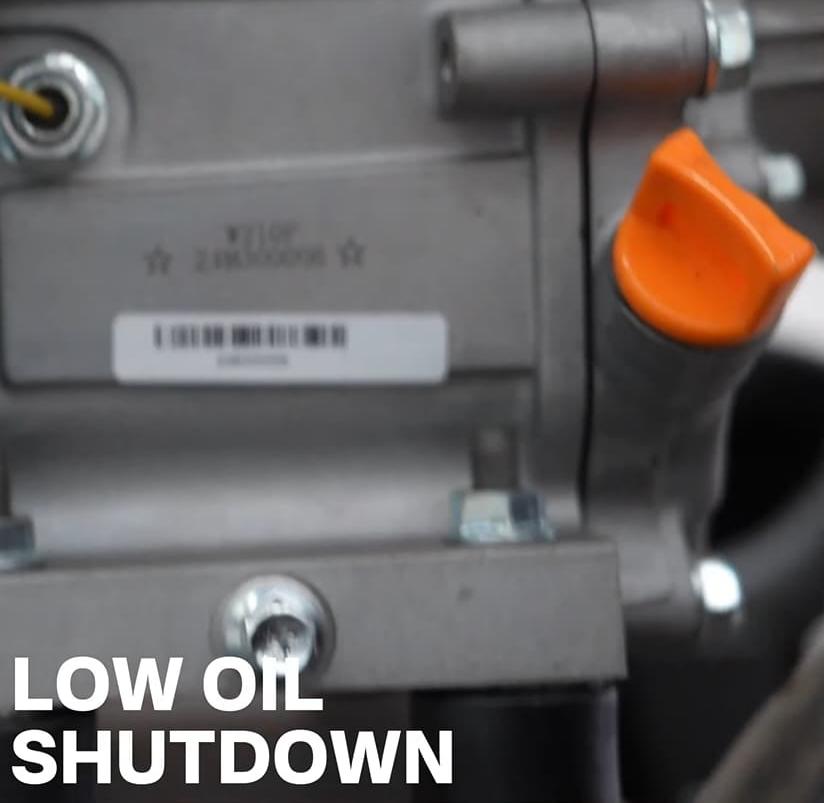
Currently, an increasing number of gas pressure washers are equipped with a Low Oil Shutdown function. When low oil is detected, the engine will automatically stop running, helping to prevent damage caused by insufficient oil.
If you are purchasing equipment, it is recommended to prioritize models with this safety feature, as it not only protects the engine but also reduces repair costs due to operational errors.
Common Oil Mistakes Beginners Make
Many engine failures actually result from inadequate daily maintenance. The following are the most common mistakes:
- Adding gas to the oil port by mistake
- Using the wrong type of engine oil
- Not checking the oil level for a long time
- Not replacing the oil after exceeding the recommended time
- Adding too much oil, causing the engine to emit blue smoke
- Ignoring the maintenance requirements in the manual
Developing the habit of regular inspection and maintenance can significantly enhance the stability and lifespan of the equipment.
Tips to Reduce Engine Maintenance
In addition to changing the engine oil on time, the following daily maintenance measures are also recommended:
- Use fresh and qualified gas
- Regularly clean or replace the air filter
- Empty the fuel before long-term storage or add fuel stabilizer
- Regularly check the spark plug condition
- Check the oil level before each use
For household users, choosing a gas pressure washer with an OHV four-stroke engine, low oil level protection (Low Oil Shutdown), and maintenance-free high-pressure pump can further reduce maintenance work and enhance equipment reliability.
Summary
The gas pressure washer must use engine oil because it is an essential component for the normal lubrication and heat dissipation of the engine. Besides adding gas, it is necessary to regularly check the oil level and replace the oil in a timely manner according to the recommended schedule.
For beginners, understanding the differences between gas, engine oil, and oil pump, and developing good maintenance habits can not only prevent engine damage but also extend the service life of the equipment.
If you are purchasing a gas pressure washer suitable for home or light commercial cleaning, it is recommended to choose a model equipped with an OHV four-stroke engine, low oil level automatic protection (Low Oil Shutdown), and maintenance-free high-pressure pump. These designs not only reduce the difficulty of daily maintenance but also provide a more stable and safe cleaning experience.


Leave feedback about this