

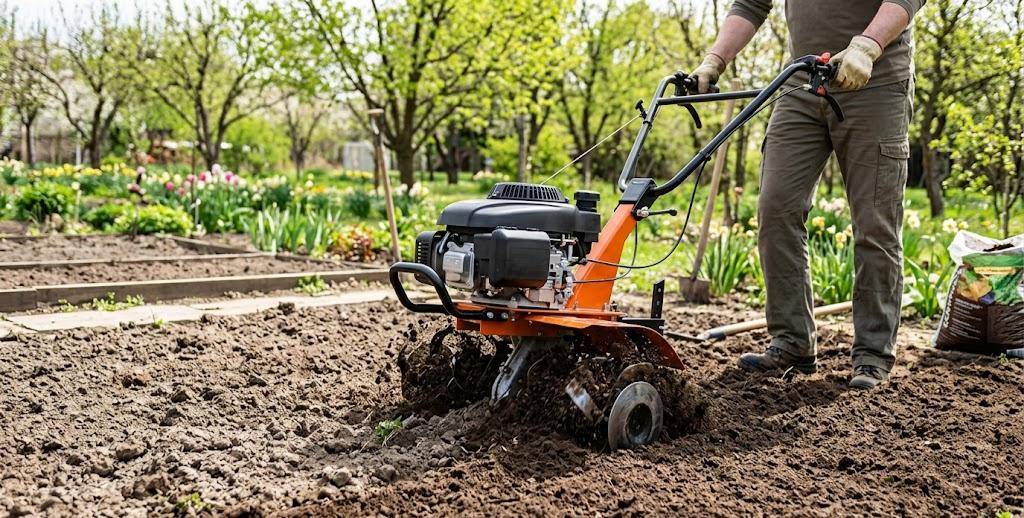
In small-scale farmlands, family vegetable gardens or complex terrain areas, large agricultural machinery is difficult to operate, and manual farming is time-consuming and labor-intensive, especially for the elderly, who find it an even heavier burden. The emergence of tillers, with their features of being lightweight, flexible, and easy to operate, has become an ideal tool for solving the problems of farming on small plots of land, allowing the elderly to complete the farming tasks easily.
However, when elderly people are choosing a tiller, they have to make a choice between a rear tine tiller and a front tine tiller. So, which one is more suitable for them? Compared to the standard front tine tiller, the price of the rear tine tiller is much higher, but is it really worth the cost?
Front Tine vs. Rear Tine: How They Work
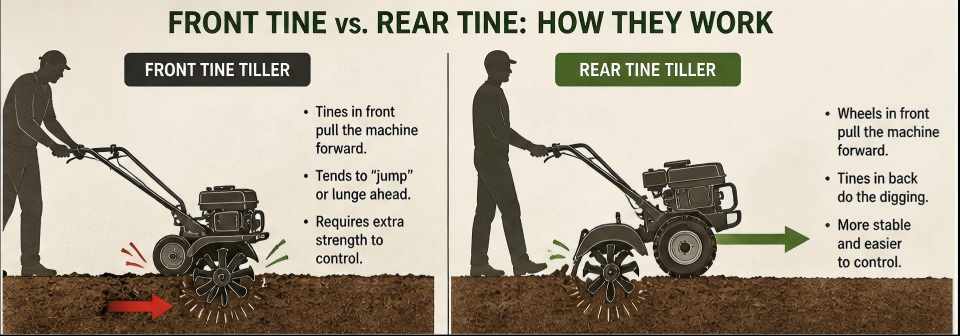
The most significant difference between these two machines isn’t just the position of the blades; it’s how they interact with your body.
Front Tine Tillers
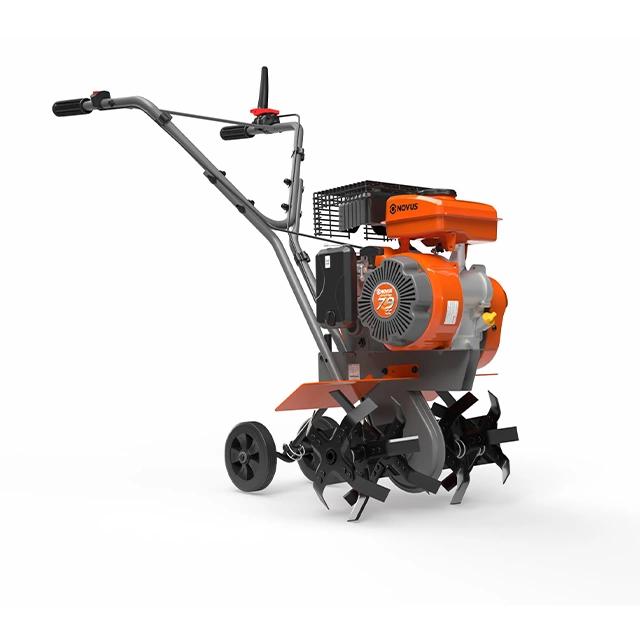
Place the blade at the front and the wheels at the back. Since the blade is the main power source, the machine is prone to “jump” or “charge forward” when encountering hard soil or rocks. To keep the machine stable and ensure the digging depth, the operator must use strong upper body strength to press down on the handle. For those with arthritis or limited shoulder movement, this continuous “confrontation” may cause pain.
Rear Tine Tillers
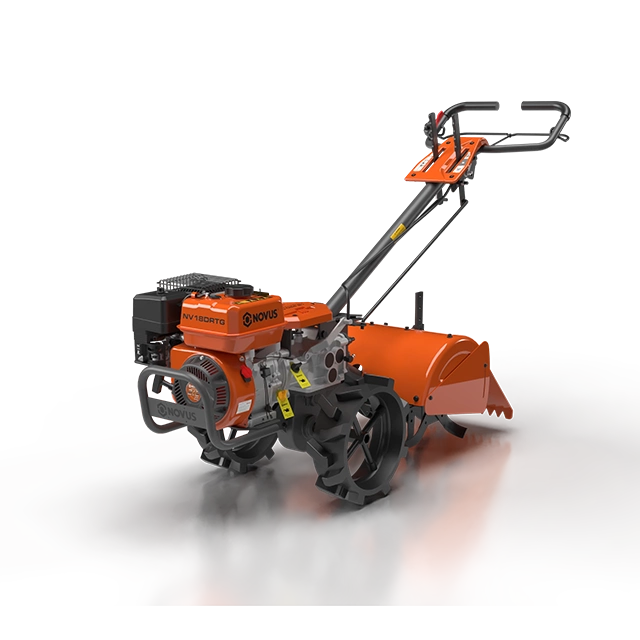
On the other hand, the front part of this device is equipped with large power-driven wheels, and the rear part is fitted with rake teeth. This configuration creates a driving experience similar to that of a tractor. The wheels pull the machine forward at a stable speed, while the rake teeth are responsible for digging. This separation of driving and farming makes the machine inherently very stable.
Why “One-Hand Operation” is the Gold Standard
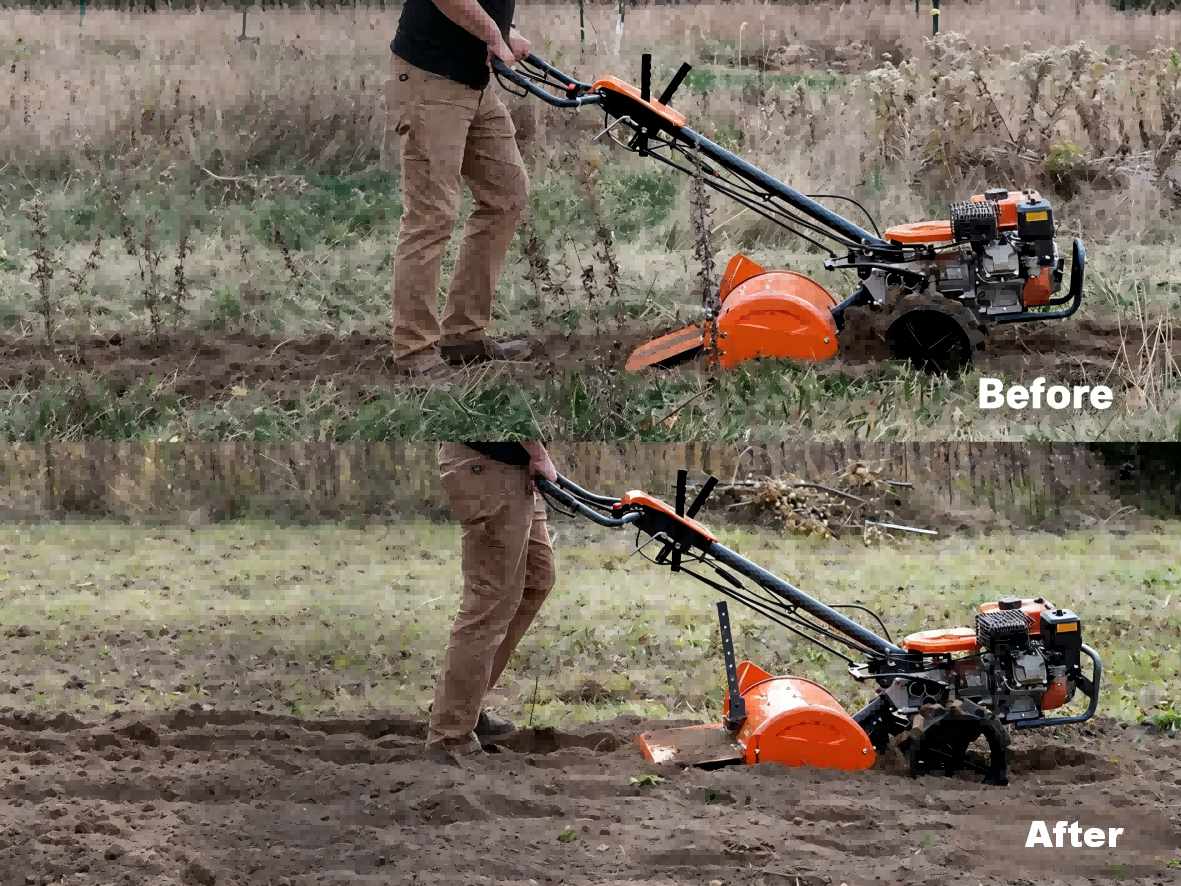
The most important criterion for evaluating whether a tiller is suitable for senior to use is the ability to operate it with one hand.
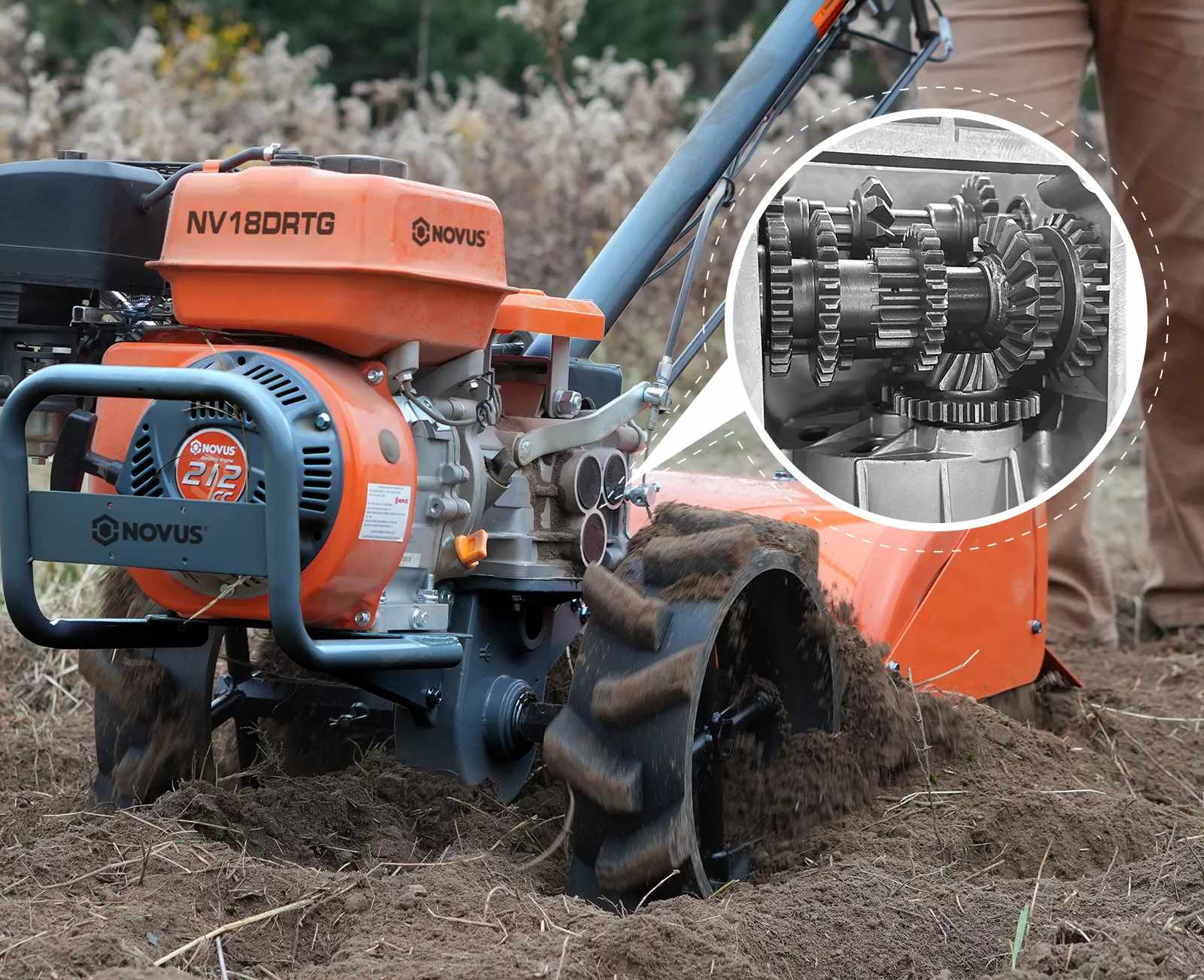
A well-designed rear tine tillerr, such as the one with full gear transmission, can eliminate the common jerky feeling of belt-driven models. Since there is no risk of belt slipping or breaking, the power output is more linear and stable. For elderly gardeners, this means they can usually operate the machine with one hand and walk along with the machine, instead of following behind it in the freshly plowed soil as they did before. This allows them to maintain an upright posture and avoid pressure on their lower backs from bending over to operate.
Breaking Hard Ground Without the Stress
Spring tilling often involves breaking through soil that has compacted over the winter. This is where “Bi-directional” or counter-rotating tines (CRT) become a lifesaver.
In the CRT mode, the rotation direction of the blade is opposite to that of the wheel. This creates a natural “digging” effect, preventing the machine from rushing forward forcefully. It enables the tiller to easily penetrate hard clay or grassland without the operator having to exert much effort to control it. For the elderly, this feature transforms a strenuous and high-impact agricultural task into a controllable and predictable one.
The Hidden Value of Low-Maintenance Design
Low-cost tillers usually consist of belts and chains which need to be frequently adjusted and replaced. For seniors, fixing the equipment is more difficult than gardening because bending over the machine’s engine can be tiring for them.
Investing in a machine that utilizes a geared system along with airless tires is definitely an investment worth considering, since it will provide you with long-term freedom. One aspect of using airless tires is especially undervalued, as there is nothing more aggravating than having to prepare for a sunny day only to discover a flat tire inside your shed.
When is the Investment Justified?
So, is a rear tine tiller worth the investment? The answer depends on your gardening goals:
The Case for a Front Tine Tiller: If you have a small, established raised bed with soft, sandy soil and you still feel confident in your upper body strength, a high-powered front tine tiller (like a 212cc compact model) is a cost-effective and nimble choice. It’s easier to store and great for tight corners.
The Case for a Rear Tine Tiller: If you manage a medium-to-large plot, deal with heavy clay, or—most importantly—if you want to keep gardening independently for the next decade, the investment is justified. You aren’t just buying a piece of machinery; you are buying the ability to garden without injury.
Final Thoughts for the Senior Gardener
When elderly people use a tilter, they pay more attention to the ease of operation and safety. They usually do not need to carry out intense farming on large areas of land, but prefer to grow some vegetables, flowers, etc. on their family gardens or small plots of land.
When choosing, look for models that emphasize stability, are easy to start and can be operated with one hand (such as NOVUS NV18DRTG). Prioritize the engineering design rather than the low price, so as to ensure that your garden is always a place for relaxation and rest, rather than a source of stress. After all, the best tool is the one that allows you to continue doing the things you love.


Leave feedback about this