

In gardening and land preparation work, many people focus on engine power, speed or brand, but often overlook a key component – the tiller blade. In fact, the blade is the core component that directly contacts the soil. Its condition directly determines the efficiency of soil turning, soil structure and the service life of the equipment.
Timely identification and replacement of worn blades not only make farming easier but also protect your tiller and garden.
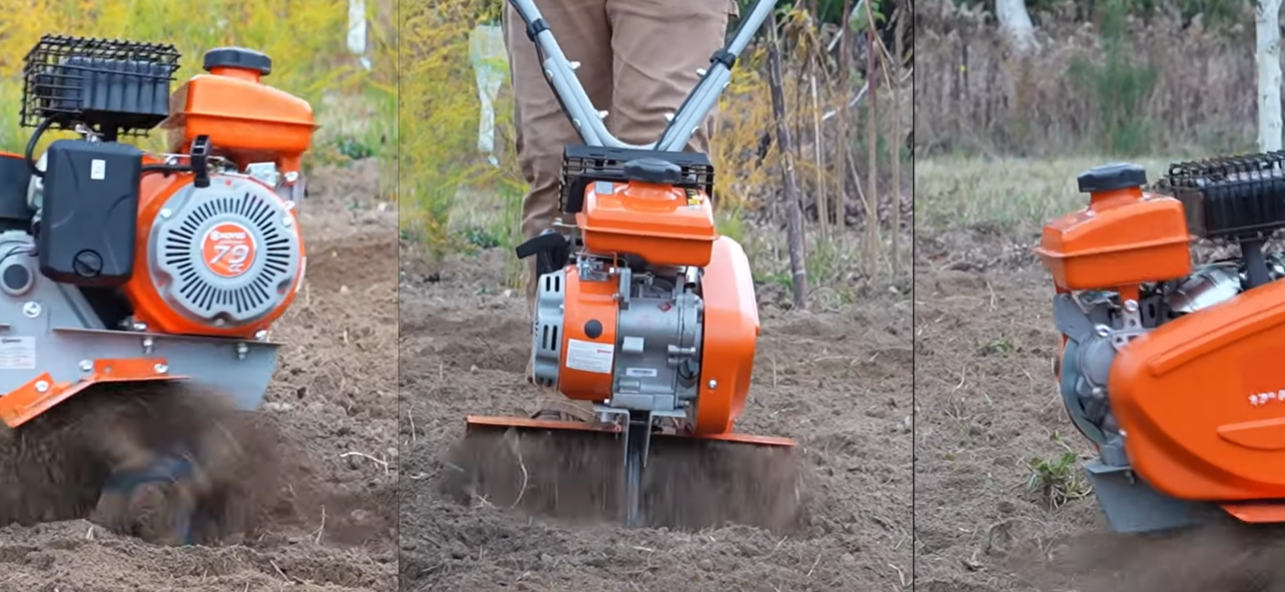
The Key Role Of Tiller Blades
The tiller blades cut into the soil through high-speed rotation, achieving:
- Break up compacted soil and improve aeration
- Mixed fertilizers, compost or organic matter
- Remove the shallow weeds to prepare for sowing
- The sharpness of the blade directly affects the depth of soil turning, the uniformity of particles and the efficiency of the operation.
The importance of blade sharpness and integrity
- Maintaining the integrity of the blade structure is the foundation for the stable operation of the tiller.
- Sharp blades: Smooth cutting, low load, and fine soil turning
- Worn or deformed blades: They can only “slap” the soil, increasing resistance, damaging the machine and consuming more fuel
Obvious Signs That a Replacement Is Needed
Don’t wait until it’s completely damaged. Look for the following clear signs:
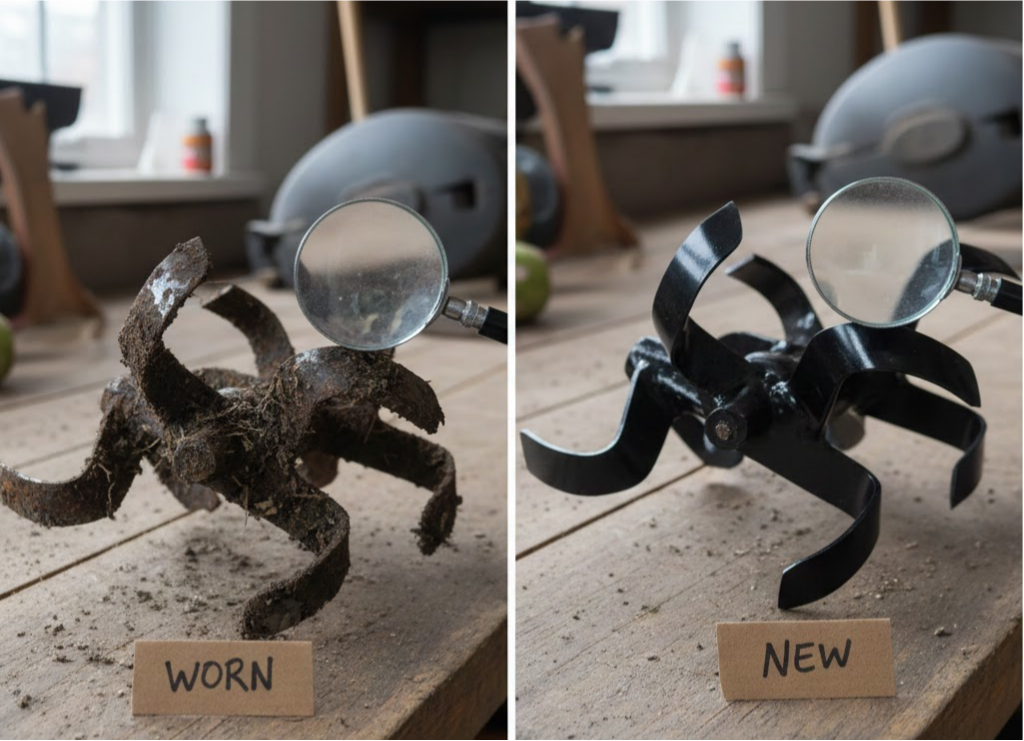
1. Visible signs of wear and damage on the surface
Regularly inspect the appearance of the blade, with a focus on:
- The blade has become noticeably blunt and smooth
- The length of the blade has significantly shortened
- Cracks, bends or notches appear
- Severe rusting affects structural strength
If the shape of the blade has changed significantly, it is usually not recommended to continue using it.
2. Manifestations of declining job performance
Even if the appearance is not obvious, the following manifestations may indicate that the blade has aged:
- The depth of soil turning becomes shallower
- It is necessary to pass through the same area repeatedly
- The machine is “jumping” and moving forward unsmoothly
- When the engine load increases, it is prone to stall
If the tiller “feels more difficult than before”, the blades are often the first thing to check.
3. Warning signals for abnormal sounds
- The sound of metal knocking
- Irregular vibration noise
- The operating sound suddenly became shrill
These sounds may come from blade deformation, imbalance or edge breakage. The machine should be stopped immediately for inspection.
Key Factors Accelerating Blade Wear
Understanding the causes of wear is helpful for predicting the lifespan of the blade.
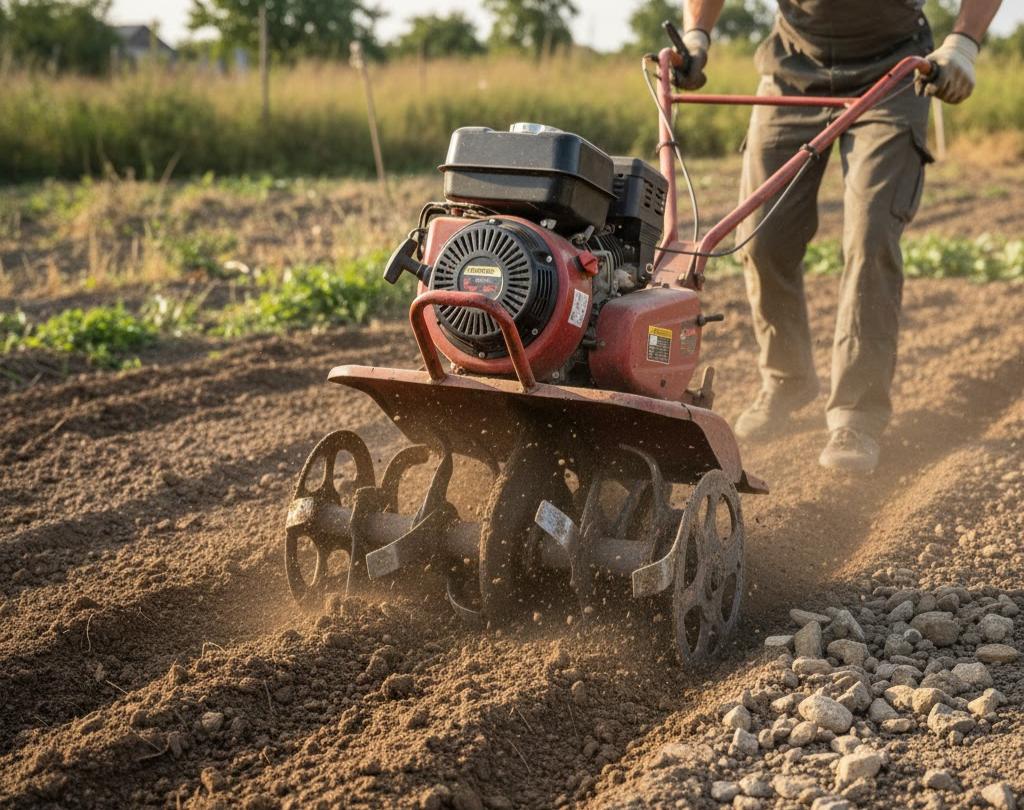
- Soil type and conditions: Stony, sandy or heavy clay soil is more abrasive than loose loam. Tillage when the soil is too wet (compacted) or too dry (hard) will also accelerate wear and tear.
- Obstacles and debris: Hidden stones, tree roots, garden cloths and other debris are the main causes of immediate blade damage (such as bending or cracking).
- Farming frequency and intensity: The blade wear rate of large-scale commercial operations will far exceed that of household users who only prepare a few seasonal seedbeds.
- Blade material and quality: Cheap, soft steel blades will passivate and deform more quickly than quenched high-carbon steel or alloy blades.
The Hidden Cost of Blunt Blades: Why Replace Them in Advance?
Delaying the replacement of the blade will lead to greater expenses:
- Increased machine burden: Blunted blades force the engine and transmission system to work harder, causing premature wear of belts, gears and bearings – these maintenance costs are far more expensive than a set of blades.
- Low operational efficiency: While you achieve poor results, you waste time and fuel.
- Soil health damage: Crushed soil loses its structure, leading to poor drainage, compaction, and reduced microbial activity, ultimately harming plant health and yield.
The Best Time For Replacement
The best strategy is to take the initiative to prevent rather than respond passively.
- Regular inspection system: Develop the habit of visually inspecting the blades before and after each major farming task. This is your best defense.
- Consider usage and season: A good rule of thumb is to assess the blade once a year before the start of the main farming season. For users who use it frequently, it may be necessary to replace it every 1-2 farming seasons.
- Take advantage of the design features: Some blades can be flipped or have multiple cutting edges. Flipping the blades in the middle of their service life can double their service cycle.
- Don’t wait until it’s completely damaged: Replacing the blades before they are completely scrapped can prevent collateral damage to the tiller and the soil.
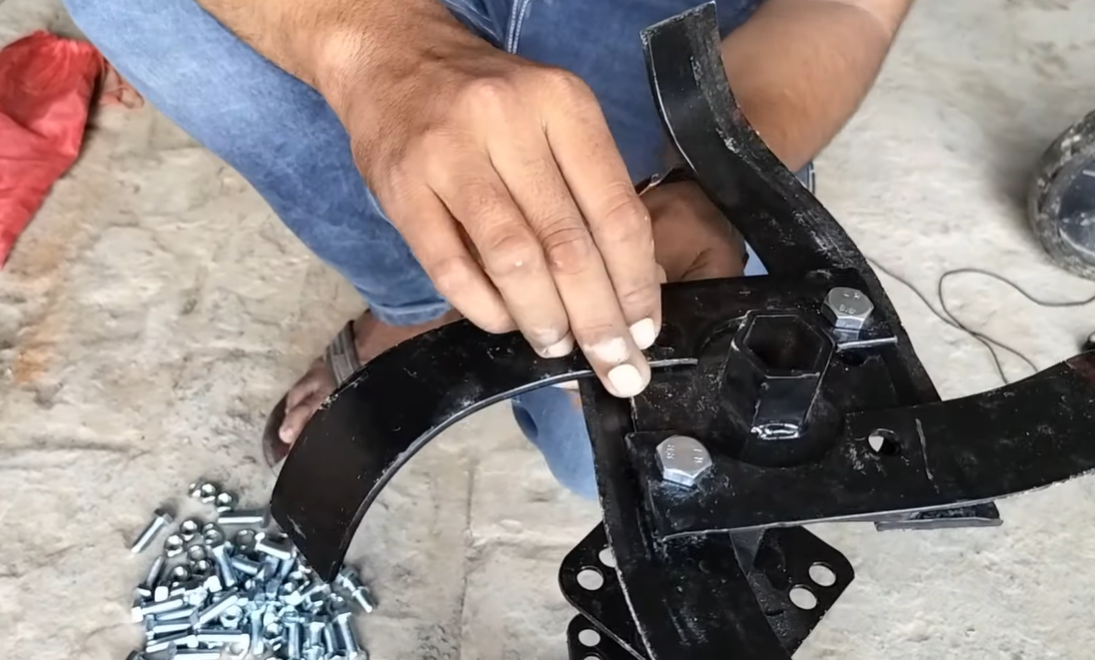
Replace Practical Tips
- Safety first: Be sure to disconnect the spark plug wires. Firmly prop up the tiller and put on thick gloves – even the blunted blade edges remain sharp.
- Identify the correct blade: Match the model number according to your user manual or the old blade itself. Photos can be taken before disassembly for reference.
- Replacement process: Use the correct socket wrench or impact wrench. Spray penetrating oil on stubborn bolts. Replace the blades in sets (or in pairs on vertical axis tillers) to maintain balance. Tighten the bolts according to the torque specified by the manufacturer.
- Post-replacement care: After installation, run the tiller for a short time in loose soil to “break in” the new blades and ensure that all components are firmly fixed.
Extend the Lifespan of The Tiller Blade
Correct operation technique: Operate at the recommended speed – not too fast. Let the blade do the job.
Cleaning and inspection: After use, knock off the compacted soil and check for any damage. Quick cleaning with a wire brush can prevent corrosion.
Proper storage: Keep the tiller in a dry place. Consider applying light engine oil to the blades after cleaning to prevent rusting during the idle season.
Conclusion
Replacing the tiller blades is not merely a maintenance task; It is a direct investment in tool efficiency and land fertility. By understanding the clear signs of wear and tear, recognizing the factors that accelerate it, and taking proactive inspection and replacement plans, you can ensure that every tillage in your garden is efficient and constructive. Sharp and intact blades can transform your tiller from a simple soil crushing tool into a precise instrument for cultivating healthy and fertile soil – and this is precisely the true foundation of any successful garden. Treat your blades well, and they will reward you with a bountiful harvest in the coming seasons.


Leave feedback about this