

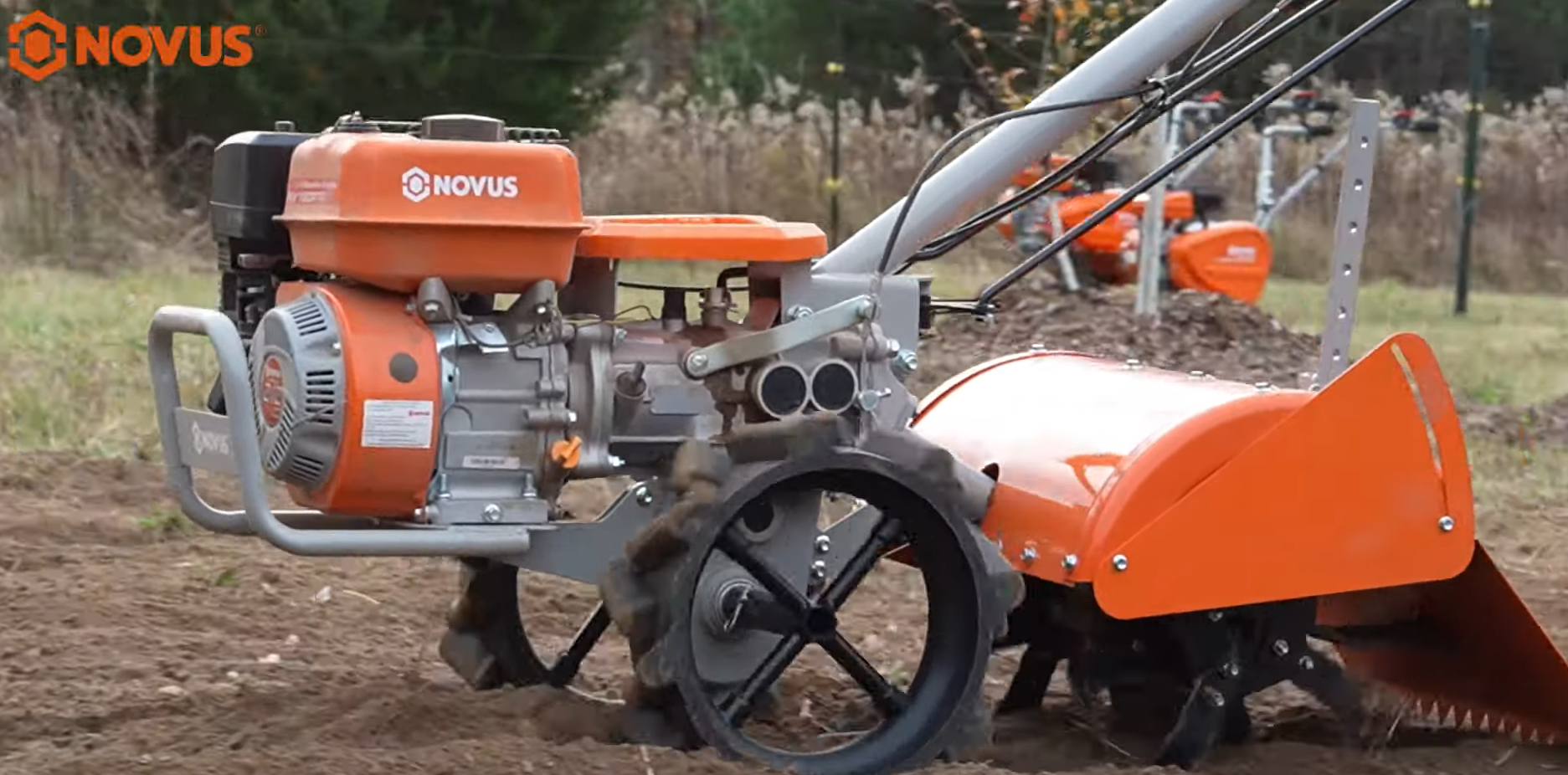
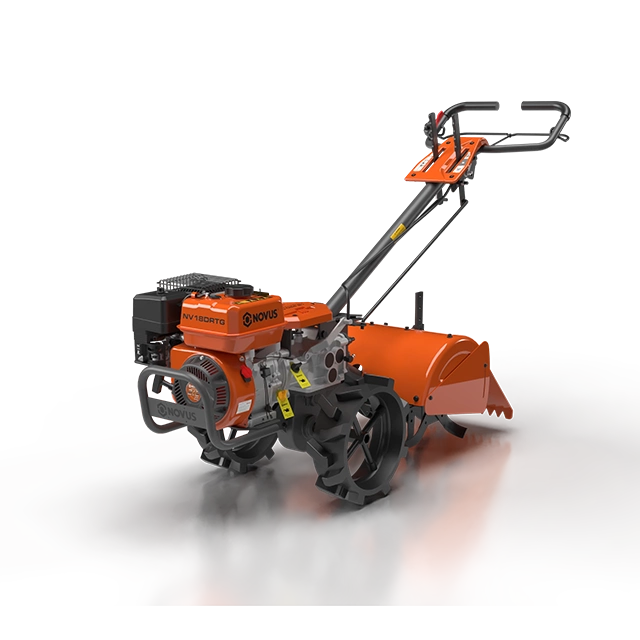
The Rear Tine Tiller has its blades positioned at the rear of the machine. This design makes the machine more stable during operation and provides better traction and tilling capabilities. Compared to the common front-mounted tillers, it is better suited for working with hard soil, unprepared land, and large gardens.
In practical applications, these devices can typically achieve a tilling depth of 6–10 inches, making them ideal for the following scenarios:
- Breaking new ground in a new garden
- Compacting or heavy soil
- Medium to large-sized yards or farmlands
If your goal is to establish a planting environment starting from “untreated land”, then the Rear Tine Tiller is usually a more efficient choice.
Preparation Before Use
Before starting the operation, the preparatory work often directly determines the final outcome. The first step is basic safety protection, such as gloves, goggles, and slip-resistant shoes. This is not only for standard operation but also an important measure to avoid injuries from flying stones and broken soil.
Secondly, the operation area needs to be cleared. Stones, tree roots, and debris on the ground can interfere with the blade’s operation and, in severe cases, even damage the equipment. Therefore, a simple pre-clearance can significantly improve efficiency.
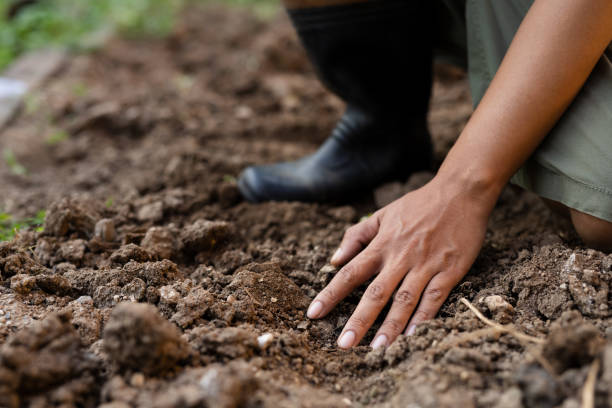
The most crucial aspect is the judgment of the soil condition. The ideal soil should be in a “slightly moist but not sticky” state:
Too dry → The blade has difficulty penetrating
Too wet → It is prone to clumping, affecting the soil structure
Properly Setting Up The Machine
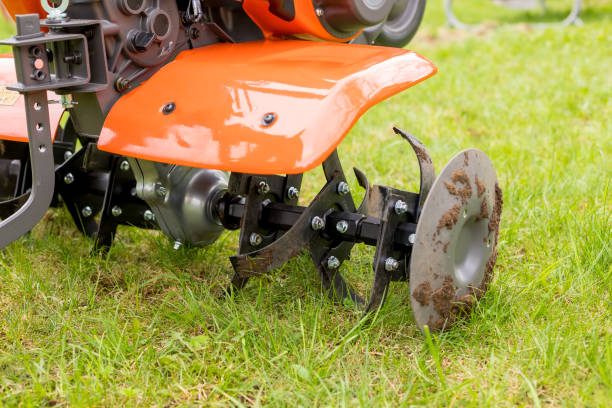
Before using the Rear Tine Tiller in a formal manner, it is extremely important to set up the equipment properly, especially regarding the working depth and blade mode.
Firstly, depth control. It is recommended to adopt the “from shallow to deep” approach:
- The first pass: approximately 2–4 inches
- The second pass: gradually increase to more than 6 inches
This layered farming method not only protects the machine but also allows for a more uniform soil turnover.
Secondly, the blade rotation mode. Most rear-mounted tillers support two modes:
- Forward rotation: suitable for loosening the soil and daily maintenance
- Reverse rotation: more suitable for hard soil or land clearing
If you are dealing with unexploited land, choosing reverse rotation first will be more efficient.
In addition, the adjustment of the depth stake (Depth Stake) is also not to be overlooked. It not only affects the working depth but also changes the forward speed of the machine – the greater the depth, the slower the forward speed, but the soil turnover effect is stronger.
How to Use the Rear Tine Tiller Correctly
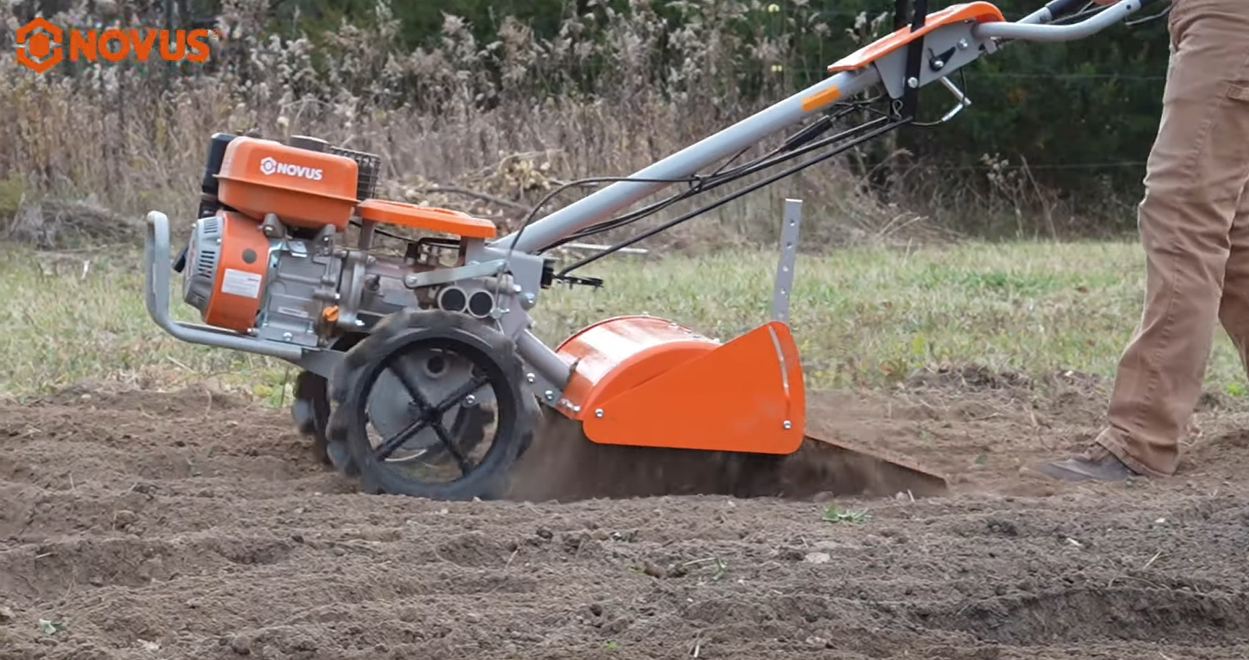
The actual operation is not complicated, but details determine the experience. At the beginning, move the machine to the starting point and make sure the blades are not touching the ground → After starting the equipment, slightly adjust the handle to allow the blades to slowly enter the soil instead of pressing down directly.
During the farming process, remember a core principle: let the rear tine tiller do the work, not push hard. You only need to maintain a stable rhythm and direction control.
To improve efficiency, it is recommended to carry out farming in the following way:
- Move in a straight line, similar to the grass-cutting path
- Have each row slightly overlap to avoid omissions
- After completing one round, change direction for cross-farming
Cross-farming can significantly improve soil uniformity, making subsequent planting more likely to succeed.After the first round is completed, gradually increase the farming depth for the second round processing. This is both safe and efficient.
Practical Tips for Improving Efficiency
After mastering the basic operations, you can further enhance your efficiency through some techniques.
When dealing with hard soil or clearing land, it is recommended to use the method of “low speed + multiple shallow tillage” instead of a single deep plowing. At the same time, using the reverse rotation mode can significantly enhance the tilling ability.
If you plan to improve the soil quality, you can add compost or organic fertilizer after the first round of plowing, and then carry out the second round of plowing to evenly mix the nutrients into the soil.
In terms of operational details, the control of the handle is also very important:
- Press down → Increase the plowing depth
- Lift lightly → Reduce resistance and make the machine more stable
In addition, try to avoid working in overly wet soil, otherwise it is likely to form large soil clumps, affecting the subsequent planting results.
Common Problems and Solutions
Why can’t Tiller dig the soil?
The main reasons are that the soil is too dry, the depth setting is too deep, and the reverse mode is not used; the solutions are to first carry out shallow cultivation, then appropriately water the soil, and for hard soil areas, the reverse mode can be enabled to assist in the cultivation.
What should be done if the machine’s vibration is difficult to control?
Adjust the depth lever, appropriately reduce the plowing depth; slow down the moving speed, raise the handle slightly during operation to keep the machine stable.
How many times do we need to plow to be sufficient?
Generally, it is recommended to plow 2-3 times, using a cross-farming method, which will result in better soil loosening.
Can it replace weeding?
Yes, it can, but it is only suitable for large-scale plots and has limited effectiveness in removing deep-rooted weeds.
Summary: Master the method, efficiency doubles
Overall, the key to using the Rear Tine Tiller does not lie in complex techniques, but in whether the method is correct. As long as the following three points are mastered, the farming effect can be significantly improved:
- Start from the shallow layer and avoid deep plowing at once
- Maintain a stable rhythm and let the machine take the lead in the work
- Use cross-farming to improve soil uniformity
When the equipment is selected appropriately and combined with the correct operation method, even beginners can easily complete high-quality soil treatment.


Leave feedback about this