

The tiller is an indispensable and important mechanical tool in modern agriculture and horticulture production. The process of turning and crushing and loosening soil creates perfect growing conditions for crops. The important matter of when to use the tiller remains unknown to most farmers and gardening enthusiasts. Improper timing not only reduces work efficiency but also may damage the soil structure and affect the normal growth of crops.
This article will systematically introduce the optimal usage timing of the tiller from multiple dimensions such as seasons, soil conditions, and crop growth cycles, to help you make scientific and reasonable farming decisions and achieve efficient agricultural production.
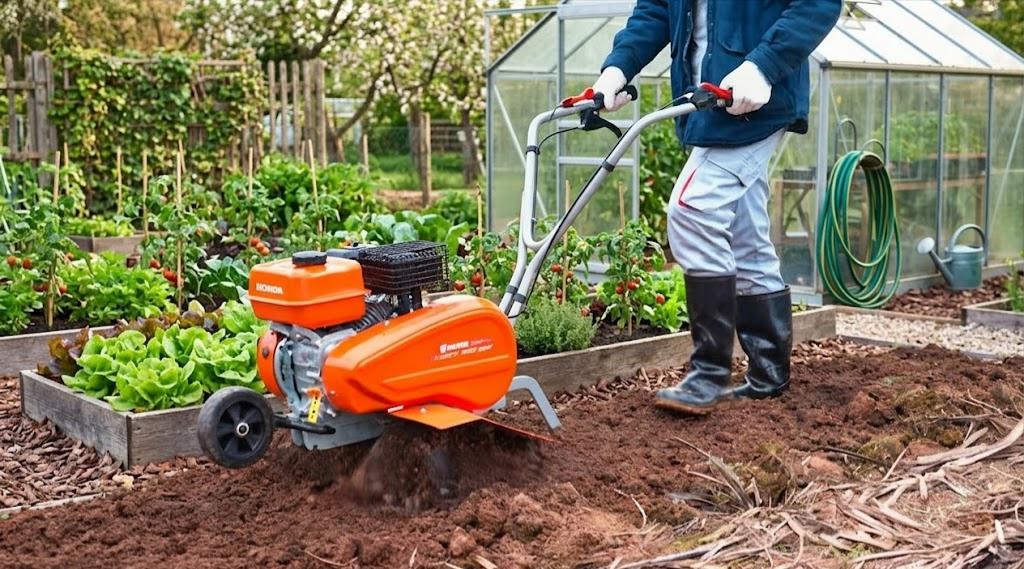
The Best Usage Times Classified By Seasons
Season is the most fundamental factor influencing the timing of farming. The temperatures, soil moisture levels and crop planting requirements vary in different seasons, which determine the frequency and method of using the tiller.
Spring: Land Preparation Before Sowing
Spring is the busiest season for agricultural activities throughout the year, and it is also the prime time to use tiller. As the temperature rises and the ice melts, the soil begins to thaw. At this time, conducting farming can achieve twice the result with half the effort.
The best time for spring ploughing is usually within 2 to 4 weeks after the soil has thawed and before sowing. If the ploughing is done too early, the soil temperature is too low, which is not conducive to the activities of microorganisms in the soil; if it is done too late, it may miss the best window period for sowing. It is recommended to start spring ploughing preparations when the early spring temperature stabilizes above 5℃.
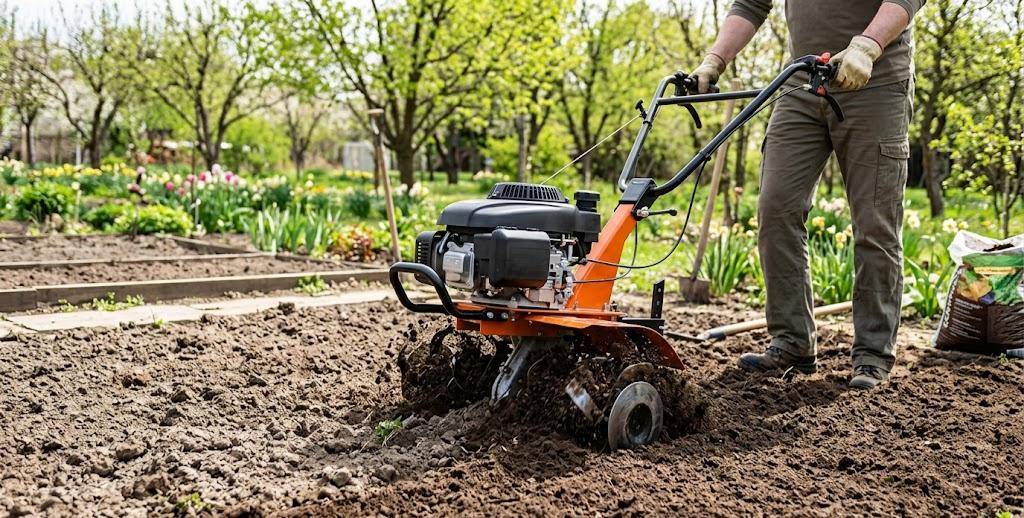
The primary objectives of spring farming work to accomplish four tasks which include: killing overwintering weeds through burial, breaking up compacted winter soil, doing organic fertilizer application along with soil mixing, and building a seedbed which maintains proper air circulation through its loose structure.
Autumn: Soil Preparation After Harvest
Autumn is the second major farming peak period. Deep plowing after harvest is beneficial for soil rejuvenation. The depth of autumn plowing is 20-30 centimeters, deeper than that of spring plowing. It can break the bottom layer of the plow and improve soil aeration. Its functions are: to cover crop residues, kill overwintering pests and diseases, accumulate soil nutrients, and prepare for the next year’s sowing; it can also enhance the soil’s water retention and moisture conservation capabilities.
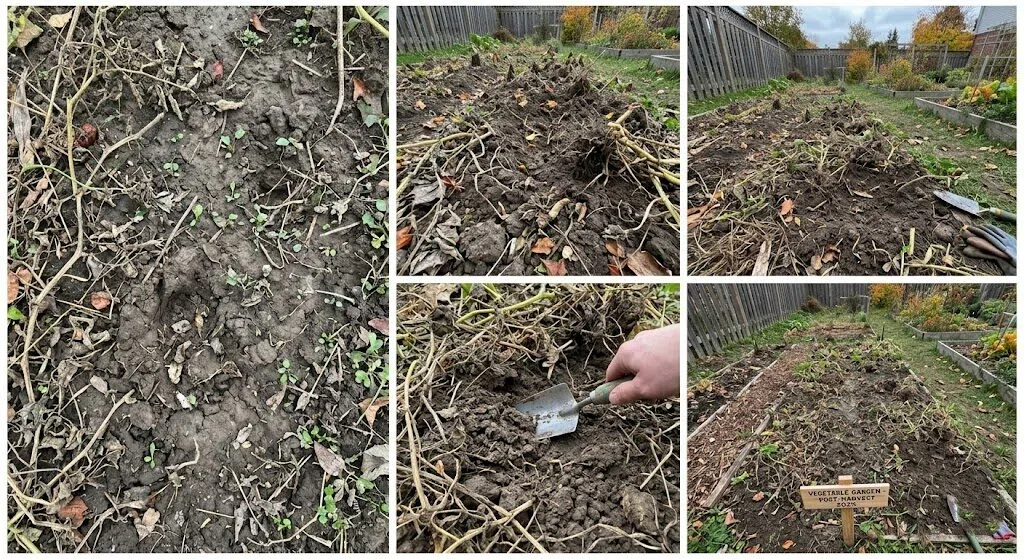
Winter: Reasons for Not Recommended Use
Winter is generally not suitable for using a tiller. The main reasons are as follows:
- Low temperatures cause the soil to freeze, and the friction between the blades of the tiller and the frozen soil will cause severe mechanical wear, significantly shortening the service life of the equipment;
- The frozen soil is extremely hard, and forced operation will cause overload damage to the tiller’s transmission system and engine;
- Winter farming will destroy the beneficial microbial communities in the soil that are overwintering, affecting the soil’s ecological balance.
- In regions with higher winter temperatures and unfrozen soil in the south, winter plowing can be carried out appropriately based on the actual situation.
Judging The Timing of Use Based on Soil Conditions
Apart from seasonal factors, the actual condition of the soil is the most direct indicator for determining whether to use a tiller. Even in an appropriate season, if the soil condition is poor, the tillage should be postponed.
When the soil moisture is moderate
Soil moisture is crucial for determining the timing of tillage. Ideally, it should be moist but not sticky, producing no dust, with a water content of 60%–80% of field capacity.
Simple testing method: Grab a handful of soil and form it into a ball, then drop it from a height of 1 meter.
- If it crumbles: Moderate moisture, ready for tillage.
- If it doesn’t crumble: Too wet.
- If it doesn’t form a ball and produces dust: Too dry.
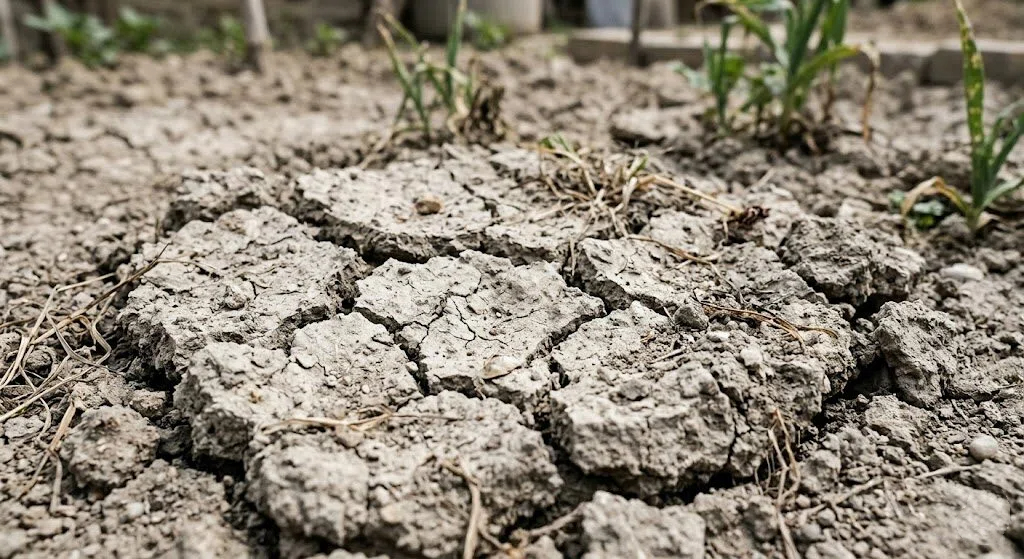
When the soil becomes compacted and hard
Soil compaction is mostly caused by prolonged compaction, excessive irrigation or rain erosion. It reduces the air and water permeability and hinders the growth of crop roots. Deep loosening operations by tillers can effectively break the compacted layer and restore the soil to a loose state.
When weeds are abundant and need to be removed
Before the land is left idle or before sowing, the tillage can efficiently remove weeds: Tilling can expose the roots of weeds to the sun and kill them, and the stems and leaves buried in the soil can be used as green manure and increase soil organic matter.
However, for perennial stubborn weeds (such as dog tooth grass and sweet flag), simple tillage is not suitable as it may lead to the fragmentation of the roots and stems, resulting in a large number of new plants. It is recommended to use chemical weed control first, followed by tillage.
Use According to The Growth Cycle of Crops
The use of the tiller needs to be closely coordinated with the growth cycle of the crops, and it should play different roles at different stages.
Before sowing: Deep plowing and soil preparation
The period before sowing is a crucial time for using a tiller: first, deeply till the soil to a depth of 15–25 centimeters, loosen the soil and mix in the base fertilizer to provide a favorable environment for seed growth; the final tilling should be shallow, at a depth of 5–10 centimeters, to keep the topsoil compact and facilitate seed germination.
Mid-growing stage of crops: Cultivation and weeding, loosening the soil
During the mid-growing stage of crops, a small tiller can be used to perform shallow tillage operations (depth of 3 to 8 centimeters) between the rows. The main purpose of tillage is to: remove weeds between the rows, reduce nutrient competition; loosen the surface soil to promote root respiration; cut off soil capillaries to reduce water evaporation.
The timing of mid-season weeding is crucial: it is best to carry out the operation after rainfall or irrigation, when the soil is slightly dry but not sticky. At this time, the humidity is moderate, the operation is convenient, and it can reduce the disturbance to the roots of the crops. During the operation, a sufficient row spacing should be reserved to avoid mechanical damage to the plant stems.
After Harvest: Stubble Handling and Land Restoration
After the harvest of crops, the residual stalks should be promptly processed using a tiller. The straw and root stubble should be plowed into the soil, which can accelerate the decomposition of organic matter, replenish soil nutrients, and at the same time eliminate the hidden diseases and pests in the residual stalks and cut off the transmission routes. The plowing depth at this stage should be 15 to 20 centimeters, ensuring that the residual stalks are fully plowed and buried.
Usage Recommendations in Special Circumstances
Newly cultivated wasteland
For newly cultivated wasteland, the use of tillers should be carried out in stages. Due to the presence of a large number of tree roots, stones, and dense root layers in the soil of the wasteland, it is recommended to first use a rotary tiller for initial crushing, and then repeatedly cultivate the land multiple times to gradually improve the soil quality. Generally, new wasteland needs to be continuously cultivated for 2 to 3 years before it can reach a suitable soil condition for planting.
Turn the soil after fertilization
After applying organic fertilizers, chemical fertilizers or soil conditioners (such as lime, biochar, etc.), timely plowing and mixing should be carried out to ensure the uniform distribution of the fertilizers and avoid excessive concentration in certain areas that could damage the roots. The plowing and mixing depth is generally 15 to 20 centimeters, which should be consistent with the designed application depth of the fertilizers.
The optimal waiting time after irrigation or rainfall
After irrigation or rainfall, do not immediately operate the tiller. Wait until the excess water in the soil has fully permeated and evaporated before carrying out the operation to avoid damaging the soil structure. The specific waiting time varies depending on the soil type:
- Sandy soil: 1 to 2 days
- Loamy soil: 2 to 3 days
- Clayey soil: 3 to 5 days
You can determine whether the soil is in a suitable state for tillage by checking if it can be formed into a ball by hand and then disperses when dropped to the ground.
Situations Where a Tiller is Not Suitable
Knowing when not to use a tiller is just as important as knowing the best time to use it. The following situations should be avoided or postponed for tillage:
- When the soil is overly wet or waterlogged: When the overly wet soil is compacted and stirred by a tiller, it is prone to form a dense plow layer, severely damaging the soil structure. In waterlogged or poorly-drained plots, it is necessary to wait until the water completely drains away and the soil dries for 2 to 3 days before plowing.
- During extreme high temperatures or droughts: Under high-temperature and drought conditions, plowing causes rapid loss of soil moisture, forming a hard surface layer that affects sowing and seedling emergence. If operation is necessary, it should be done in the cool hours of the morning or evening, and moisture retention or water replenishment should be promptly applied.
- Crop root sensitivity period: During the flowering period, fruit expansion period, or rapid root growth period of the crops, avoid deep plowing around the plants to prevent damage to the roots, which will affect the absorption of nutrients and water, resulting in flower and fruit drop. If weeding is necessary during this period, we can replace mechanical tillage with manual weeding or surface covering.
If you are planning to improve soil preparation efficiency, you can explore different types of tillers to find the model that fits your farming needs.


Leave feedback about this