

Generators are an essential tool for outdoor activities, and their use has been extended to cover emergencies too. Among the types of portable generators, the inverter generator has gained much attention for its low noise, high fuel efficiency, and ability to provide clean electricity, which is necessary for precise electronic devices.
Nevertheless, although it offers a great deal of convenience and flexibility to its users, it is also accompanied by exhaust gas containing carbon monoxide (CO), which is a major concern when it comes to safety. To deal with this problem effectively, many of today’s generators have been provided with carbon monoxide sensors that have the ability to identify any occurrence of carbon monoxide at harmful concentrations and stop the generator before any danger arises. For individuals who often use outdoor portable devices, an inverter generator with CO sensor is very safe to use.

The Risk of Carbon Monoxide from Generators
Carbon Monoxide (CO) is often referred to as the “Silent Killer.” It is a colorless, odorless, and tasteless gas produced by the incomplete combustion of carbon-based fuels. In an outdoor setting, many users mistakenly believe that “open air” is enough to stay safe. This is a dangerous misconception.
The Problem of “Micro-Environments”
Imagine this: when we use a 2300-watt inverter generator at a campsite or during an outdoor gathering, in an environment that is already relatively spacious, there may still be the following situations that would impede air circulation:
- Tent entrance: The generator was placed too close to the tent curtain.
- Vehicle gap: Place the generator between two parked SUVs or beneath the rear cargo hatch of a truck.
- Low-lying areas: In situations where the air is stagnant and humid, carbon monoxide can accumulate in the low-lying areas or “sheltered spots” where campers sleep.
Since carbon monoxide cannot be detected by human senses, a change in wind direction at 2 a.m. could cause the exhaust fumes to enter the sleeping area. Without an active monitoring system, occupants would have no warning before the gas concentration reaches a toxic level.
What Is a CO Sensor in an Inverter Generator?
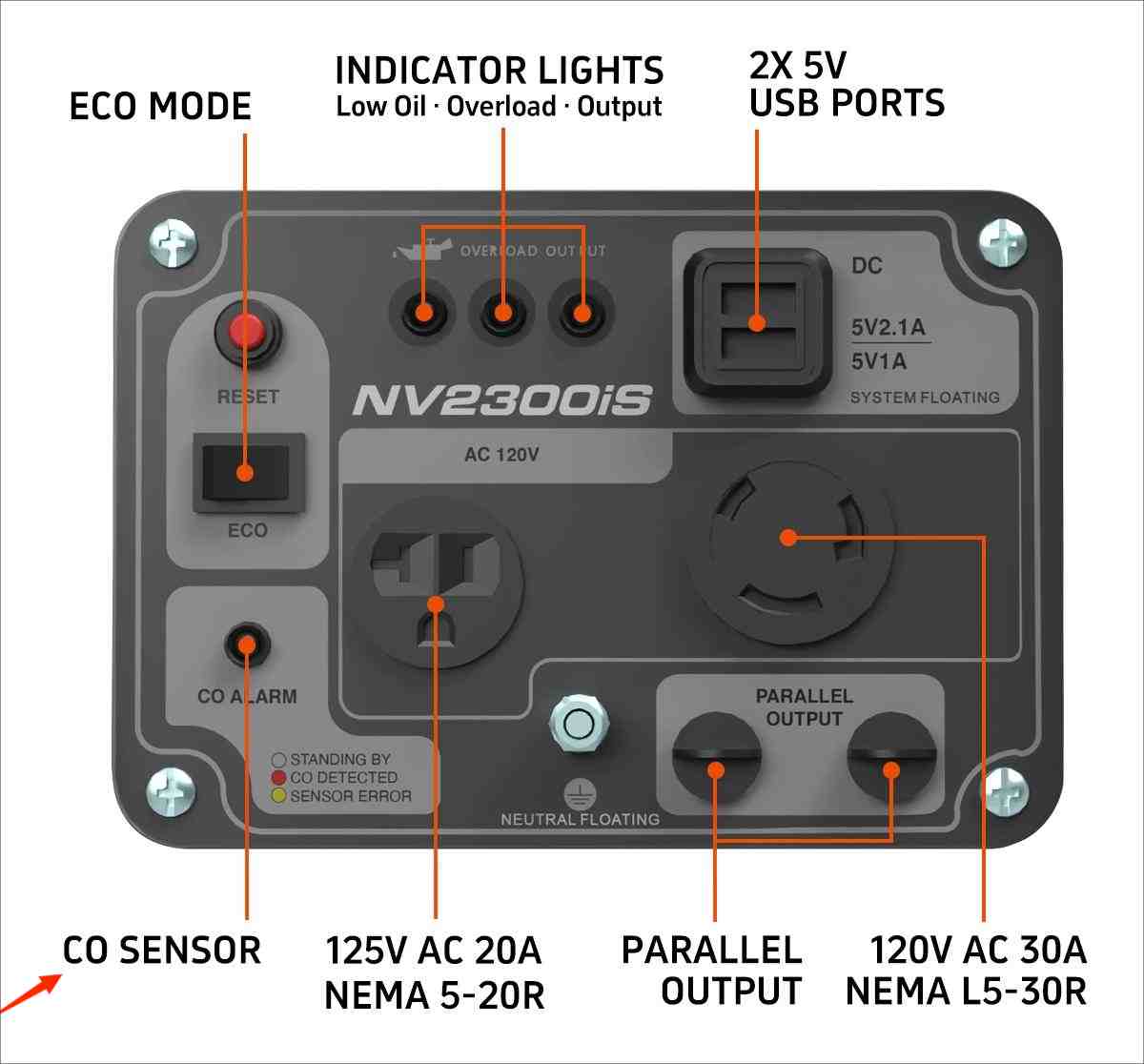
Technically known as a CO Detection and Automatic Shutdown System, the CO sensor is a specialized electrochemical module integrated into the generator’s control board.
How it Works:
- Continuous Sampling: While the engine is running, it continuously samples the ambient air around the engine.
- Threshold Detection: It is set to detect a given level of carbon monoxide concentration (in parts per million – PPM).
- The Kill-Switch Logic: Once it detects an increase in carbon monoxide concentration beyond a given threshold level (as defined by various safety standards such as ANSI/PGMA G300-2018), it immediately sends a signal to the Ignition Control Unit of the engine.
- Automatic Shutdown: The engine is killed instantly. The power is cut, and a warning light (usually a red LED on the front panel) illuminates to notify the user that a CO buildup has occurred.
For the 2300W inverter generator, the CO system must be designed to withstand the vibrations of the engine and the moisture of the environment, making sure it does not “false trip” while remaining sufficiently sensitive to save lives.
Why CO Sensors Make Outdoor Generators Much Safer
The integration of a sensor fundamentally changes the safety profile of the generator from “passive” to “active.”
Compensating for “Silent” Risks
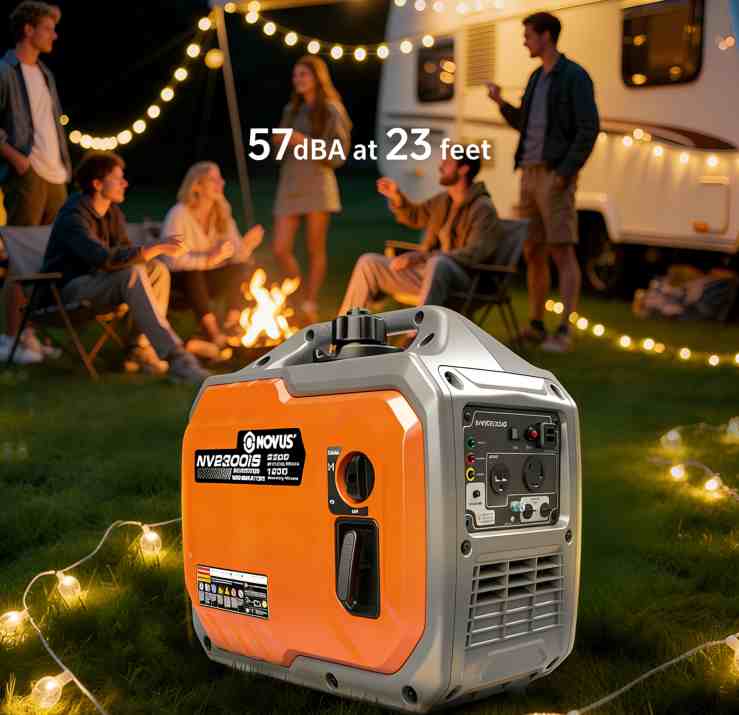
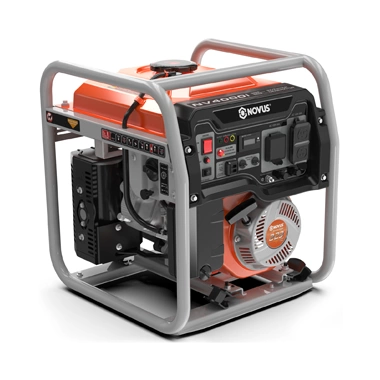
The primary selling point of an inverter generator is its low decibel rating. However, a quiet engine is easy to ignore. Traditional open-frame generators are so loud they provide a constant auditory reminder of their presence. The NOVUS 2300W inverter generator, running at roughly 57 decibels, can be easily forgotten. The CO sensor acts as a digital sentry that never sleeps, providing a failsafe for when human memory fails.
Adaptation to Shifting Winds
Outdoor conditions are never static. A “safe” placement in the afternoon can become a “deadly” placement by midnight if the wind direction reverses. Since you cannot manually monitor wind direction while sleeping, the CO sensor provides a 24/7 autonomous safety net.
Protection in High-Density Areas
For instance, in music festivals or campsites, owing to the high density of people in such areas, it is likely that your generator may be close to other people’s tents. Therefore, despite all precautions taken to avoid it, it is likely that exhaust fumes may still reach the neighboring tents. A generator with a sensor for carbon monoxide will ensure that once the air quality in the neighboring tents deteriorates (not caring whose tents they are), it will stop working, thus preventing the tragic incident of people being poisoned.
Related Articles: Generator CO Sensors: Why They’re Non-Negotiable for Safety
Tips for Using Generators Safely Outdoors
Although the CO sensor is considered a revolutionary safety device, it should be considered as the last line of defense and not the first. To maximize safety with your inverter generator, here are some professional protocols to follow:
The 20-Foot Rule
Always place your generator at least 20 feet (6 meters) away from any occupied structure, including tents, RVs, and vans. Ensure the exhaust muffler is pointed away from your living area.
Maintain Clear Airflow
Never operate a generator inside a “tent porch,” under a low-hanging tarp, or in a truck bed with a cap. Although a CO sensor is present, heat and gas build-up in these areas could damage the unit or shut it down too soon.
Regular Sensor Inspection
- Keep it Clean: Make sure the sensor vent on the generator panel is clear of any dust, mud, or spider webbing.
- Watch the Lights: Be familiar with the LED lights on the CO Sense unit. A blinking yellow light could be a sensor problem, and a solid red light means the CO shutdown has been triggered.
- Avoid Chemical Interference: Never spray any cleaning solutions or insect repellents directly on the generator panel, as they will contaminate the electrochemical sensor.
Related Articles: How to Use an Inverter Generator Safely When Camping Outdoors
The New Standard for Portable Power
Therefore, it is a very wise decision for outdoor enthusiasts planning to venture out on their next outdoor adventure to choose a device with an active carbon monoxide detection feature. It not only protects your devices with its pure inverter power supply but also protects you with its active carbon monoxide detection feature.


Leave feedback about this