

3000 PSI pressure washer is a versatile cleaning device, belonging to the mid-to-high-end household/light commercial category. Its cleaning power far exceeds that of ordinary household models with 2000 PSI, while being safer and easier to control than professional models with 4000 PSI or above. It can efficiently handle most outdoor hard surface cleaning tasks and is currently one of the most cost-effective power segments.
So, what exactly can a 3000 PSI pressure washer do? Can it clean concrete and driveways? Can it be used to clean cars or outdoor power equipment? The actual effect depends on the material of the cleaning surface, nozzle type, spraying distance, and specific cleaning methods.
What Can a 3000 PSI Pressure Washer Do?
3000 PSI pressure washer can handle various moderate to severe cleaning tasks. It has particular advantages for tough, durable surfaces that are difficult to clean with ordinary water pipes or manual scrubbing.
Common applications include:
- Cleaning concrete driveways and sidewalks
- Removing dirt from patios and outdoor floors
- Cleaning fences and outdoor walls
- Cleaning outdoor power equipment
- Removing dirt from trailers and vehicles
- Removing algae, mold, and long-term accumulated dirt
- Pre-treating for repainting or refurbishing some surfaces
The main advantage of the 3000 PSI machine is that it can provide strong cleaning power while maintaining good flexibility in use. However, higher pressure does not necessarily mean better cleaning results. Correct selection of nozzles and maintaining an appropriate spraying distance are also very important.
What Can You Clean With a 3000 PSI Pressure Washer?
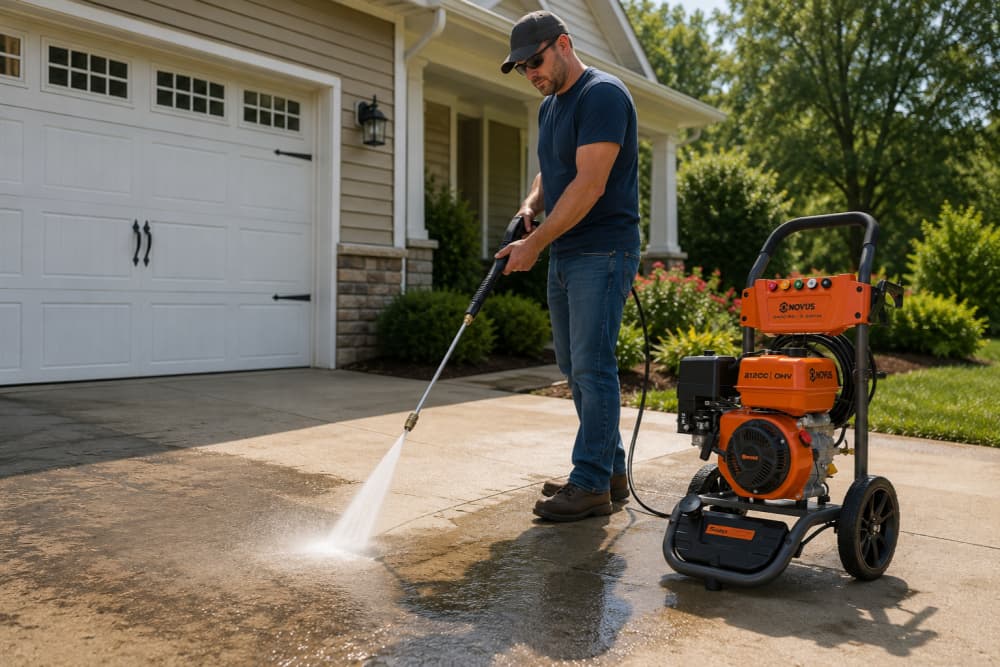
Cleaning driveways, sidewalks, patios and garage floors (strong suit)
This is where 3000 PSI excels. It can:
- Remove tire marks, oil stains, rust stains
- Wash off accumulated moss, algae and black spots
- Make darkened concrete regain its shine
Using a 25° or 15° nozzle, combined with the right cleaner, the results are usually immediate. Many users report that after cleaning the driveway, it is “as clean as freshly poured cement”.
Cleaning House Siding, Brick, Stone, and Fences
- Vinyl wall panels, aluminum wall panels, brick walls, and stone exteriors can all be easily cleaned.
- Effectively remove mold, algae, dust and black marks left by air pollution.
- Wooden fences can also be cleaned, but a 40° wide-angle nozzle should be used and a sufficient distance maintained to avoid wood fraying.
Note: Be particularly careful with old mortar or loose bricks. It is recommended to conduct a small-scale test first.
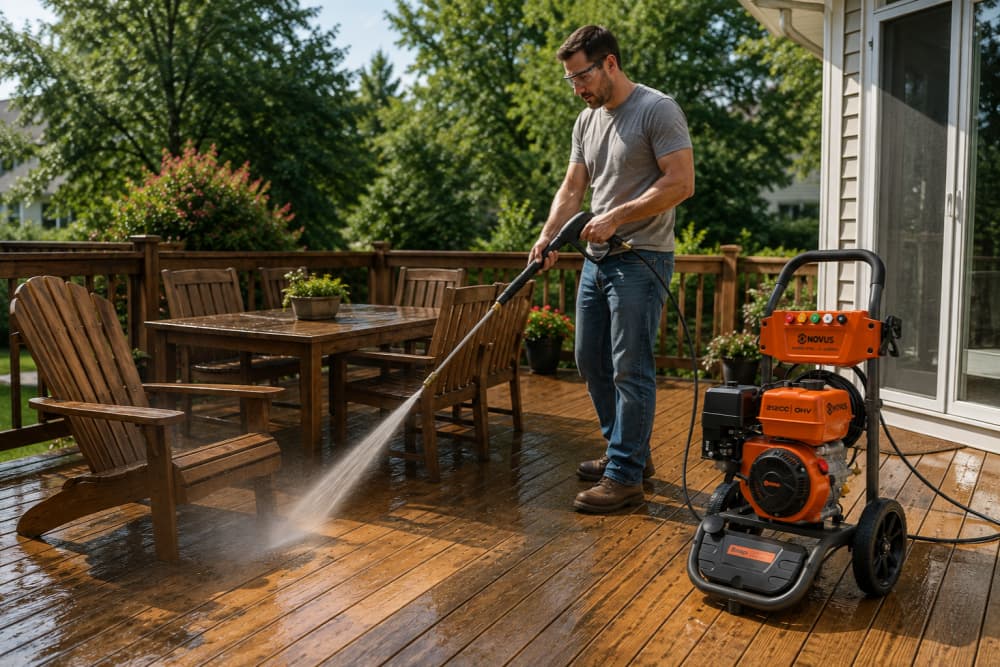
Cleaning the terrace, deck, and outdoor furniture
For wooden or composite material decks, outdoor tables and chairs, swing sets, etc., 3000 PSI is sufficient. The key points are:
- Use a low-pressure nozzle (40°)
- Keep a distance of 30–45 centimeters
- Rinse along the wood grain
Combined with a dedicated deck cleaner, the effect will be even better.
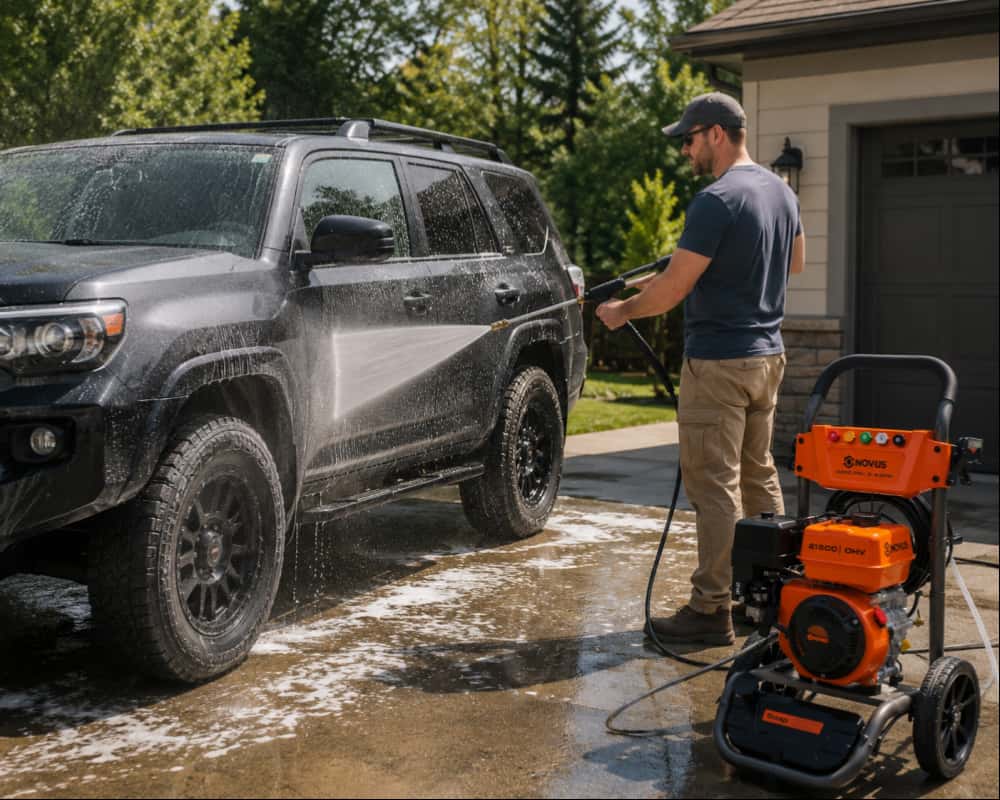
Cleaning cars, campers, boats, trailers
Although not the most gentle option, it can be fully effective if the method is correct:
- Use a 40° or soap nozzle
- Keep at a considerable distance
- Avoid direct impact on the edges of the car paint, sealing strips, and hub bearings
Many users of campers and boats will use a 3000 PSI machine for regular deep cleaning.
Remove old paint and prepare the surface for re-coating
3000 PSI can remove peeling and flaking old paint, preparing the surface for re-painting. It is much faster than manual scraping, but be aware of:
- Not all paint can be washed off at once
- It may damage the substrate at close range
It is suitable for surface pre-treatment, but should not completely replace sanding.
Other practical scenarios:
- Cleaning barbecue grills, outdoor kitchenware, and tools
- Cleaning roofs (extremely careful handling is required. It is recommended to use roof-specific attachments)
- Washing agricultural equipment, lawn mowers, trailers
- Cleaning trash cans, pet activity areas, and other stubborn dirt and grime
What a 3000 PSI Pressure Washer Is Not Ideal For
Being honest about limitations helps you avoid problems:
- Delicate surfaces: Thin paint, old cork, and some composite materials may be damaged.
- Fine cleaning: Car interiors, glass (easily left with watermarks or subjected to excessive impact).
- Heavy industrial oil stains: For truly heavy industrial oil stains, higher pressure + heating models are more suitable.
- Long-term continuous operation: Home-use models have limited continuous operating time; pay attention to the machine’s overheat protection.
2000 PSI VS 3000 PSI VS 4000 PSI
| Pressure Levels | Suitable scenarios | Cleaning power | Difficulty of Operation | Recommended for |
| 1500–2000 PSI | Light pollution, vehicles, furniture | Medium | Low | Light residential users |
| 3000 PSI | Driveways, exterior walls, decks, medium to heavy pollution | High | Medium | Most households |
| 3500–4000+ PSI | Industrial applications, heavy oil pollution, professional contracting | Extra High | High | Professionals/Contractors |
For the vast majority of home users, 3000 PSI is currently the golden range that is “sufficient and unlikely to cause problems”.
Practical Tips and Safety Advice for Using a 3000 PSI Pressure Washer
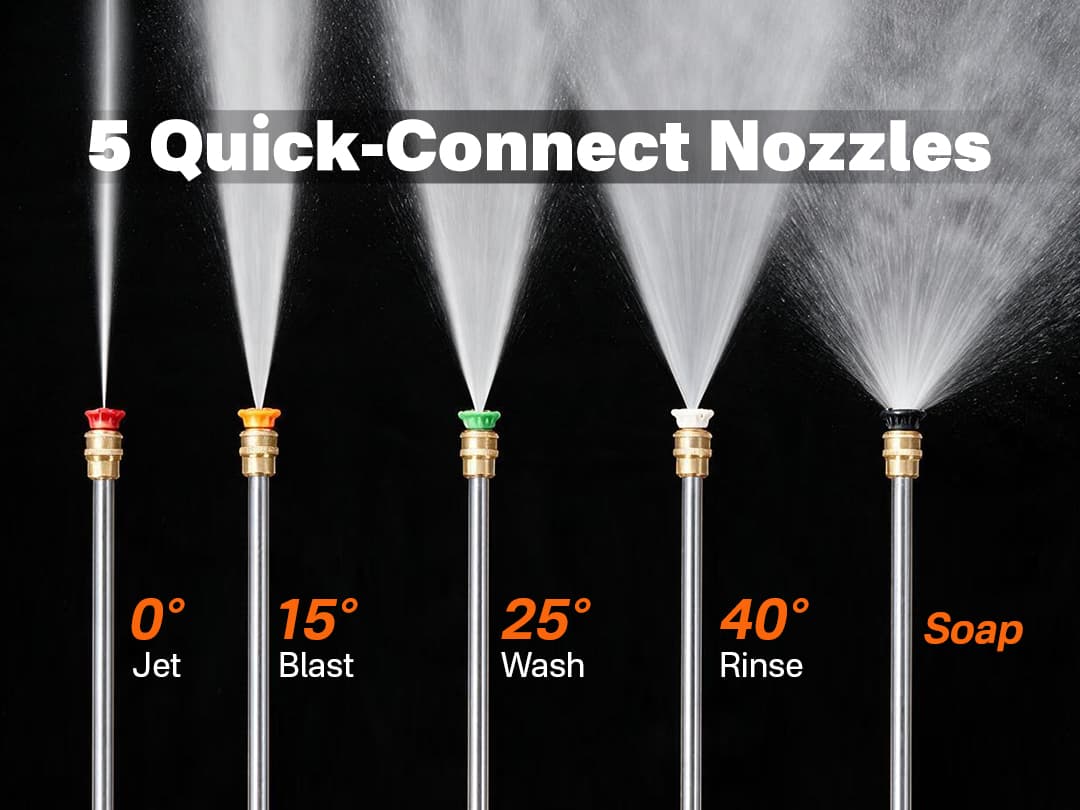
- 0°: Extremely intense point spray (rarely used, prone to damaging the surface)
- 15°: Heavy-stained concrete
- 25°: General exterior walls, driveways
- 40°: Furniture, vehicles, wood
- Soap nozzle: First apply the cleaning agent
Maintain the correct distance
Start by testing from about 60 centimeters, then gradually get closer. Always test in an inconspicuous area first.
Cleaning agent usage
First, apply the special cleaning agent at low pressure and let it sit for a few minutes before conducting a high-pressure rinse. The effect will be doubled.
Safety First
Wear goggles and slip-resistant shoes
Do not direct the water stream at people or pets
Be cautious of freezing in winter and empty the water lines in the rear section
Rinse the pump body after each use, inspect the water inlet filter screen, and replace the engine oil (for gasoline engines) regularly.
Summary: Is a 3000 PSI Pressure Rating Worth It?
If your main needs are to clean driveways, house exteriors, patios, fences, and occasionally clean vehicles and outdoor furniture, a 3000 PSI is currently the most balanced option. It is significantly more powerful than 2000 PSI and safer, more suitable for non-professional users compared to 4000 PSI.
What truly determines the effectiveness, apart from the machine itself, are the correct nozzle, distance, cleaner, and usage method. Mastering these elements, a 3000 PSI pressure washer can give your outdoor space a fresh look.


Leave feedback about this